Amit Shah meets the team after 21 days in cinemas
Ramayana: Part 1 has moved past Pushpa 2 at the worldwide box office, reaching ₹1,755.60 crore in 21 days and becoming the Indian film with the fourth highest gross on the figures available. The Nitesh Tiwari film, released on November 5, 2026, went ₹13.50 crore beyond the ₹1,742.10 crore lifetime total attributed to Pushpa 2.
Contents
- Amit Shah meets the team after 21 days in cinemas
- How the film moved into fourth place
- A festive Tuesday surge followed by a 45.1% fall
- Why a record gross is separate from a hit verdict
- The opening and release plan behind the scale
- What the reported Oscar visual effects longlist means
- The next Oscar dates and the RRR precedent
- What to Know
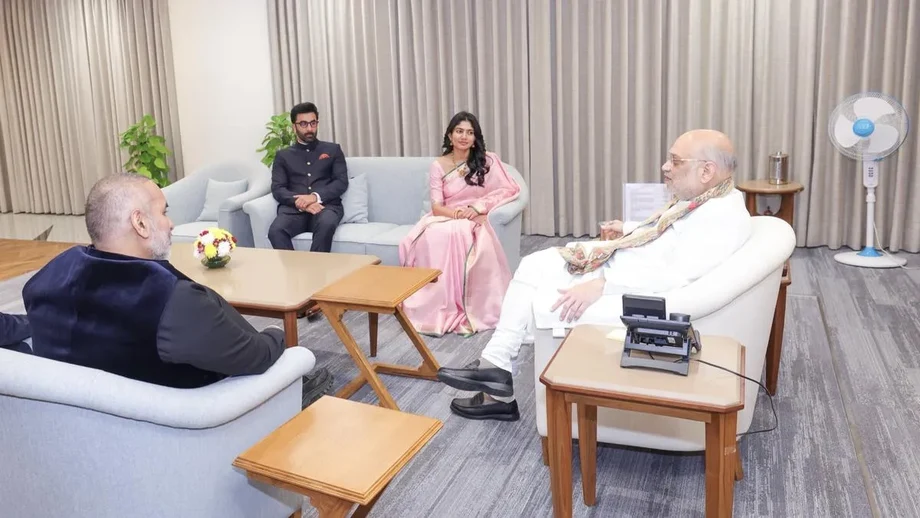
On Thursday, the film team met Union Home Minister Amit Shah. Producer Namit Malhotra, director Nitesh Tiwari, actors Ranbir Kapoor and Sai Pallavi, and Neeraj Sanghay, who attended as a producer, were present. Shah congratulated them and praised the success that the adaptation of the Ramayana was achieving around the world.
The makers have also announced that Ramayana has become the Indian film with the highest gross in 27 countries. Their announcement did not identify those countries or provide a territory by territory breakdown. The claim adds an international dimension to a commercial run that has already carried the production past one of Indian cinema's biggest recent hits.
The same week brought reported progress in the race for the 2027 Academy Awards. Ramayana is said to have secured a place among the 20 films being considered further for Best Visual Effects, although the Academy had not published the official list at the time of that development.
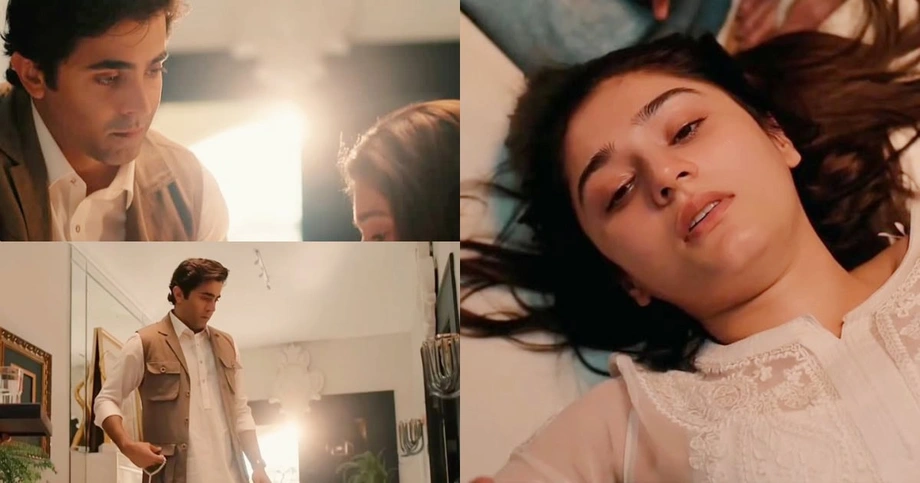
The ₹1,755.60 crore figure is equivalent to ₹17.556 billion because one crore represents 10 million. It combines gross ticket receipts in India with gross receipts from overseas markets. Ranbir Kapoor plays Rama, Sai Pallavi plays Sita and Yash plays Ravana in the production directed by Tiwari and backed by Malhotra.
How the film moved into fourth place
After 21 days, India had supplied ₹1,173.60 crore in gross receipts and ₹982.55 crore in net collections. Overseas gross stood at ₹582 crore. Adding India gross to overseas gross gives ₹1,755.60 crore exactly, which explains how the worldwide total was assembled.
Figures attributed to box office tracker Sacnilk show that the film added ₹9.60 crore net in India on Wednesday from 15,700 shows. Its domestic net total consequently moved from ₹972.95 crore after 20 days to ₹982.55 crore after 21 days, while India gross rose from ₹1,162.15 crore to ₹1,173.60 crore.
The worldwide ranking provides a clearer picture of the achievement. Dangal remains at the top with business exceeding ₹2,000 crore. Dhurandhar 2 is listed at ₹1,813.39 crore, followed by Baahubali 2 at ₹1,788.06 crore and Ramayana at ₹1,755.60 crore. Pushpa 2 follows with ₹1,742.10 crore.
A further ₹32.46 crore would take Ramayana to the stated total for Baahubali 2. Reaching Dhurandhar 2 would require ₹57.79 crore more from its present position. Dangal's exact lead cannot be calculated from the available description because its collection is given only as more than ₹2,000 crore.
A festive Tuesday surge followed by a 45.1% fall
Tuesday, November 24, delivered a sharp improvement in domestic business. The film collected ₹17.50 crore net on its 20th day, rising 37.8% from Monday's ₹12.70 crore. It played across 15,817 shows and sold approximately 11.03 lakh tickets that day. One lakh equals 100,000, so that daily attendance figure represents about 1.103 million tickets.
Hindi supplied ₹14.25 crore of Tuesday's net collection. Malayalam contributed ₹1.25 crore, Kannada ₹90 lakh, Tamil ₹70 lakh and Telugu ₹40 lakh. The makers had also introduced ticket prices starting at ₹99 for Guru Parv, announcing the offer alongside their greetings on Monday. The discounted entry price and the rise in collections formed part of the same day's trading picture.
By Tuesday, more than 4.03 crore tickets had been sold since release, exceeding 40.3 million admissions. India gross stood at ₹1,162.15 crore, overseas gross at ₹573 crore and worldwide gross at ₹1,735.15 crore. The film entered Wednesday just ₹6.95 crore below the lifetime worldwide total for Pushpa 2.
Wednesday then brought the steepest daily reversal in this sequence. Net domestic collection fell 45.1%, from ₹17.50 crore to ₹9.60 crore. It was the first time after 20 consecutive days of collections of at least ₹10 crore that the film finished below that mark in India.
Hindi earned ₹6.75 crore net on Wednesday, followed by Malayalam at ₹1.10 crore, Kannada at ₹75 lakh, Tamil at ₹70 lakh and Telugu at ₹30 lakh. Overseas business added ₹6 crore on the 21st day, compared with ₹5 crore on Tuesday, taking the cumulative overseas gross to ₹582 crore.
Why a record gross is separate from a hit verdict
Three measurements appear throughout the film's commercial figures. India gross is the value of tickets sold, including taxes. India net removes Goods and Services Tax from those ticket sales. Worldwide gross combines India gross with gross collections from overseas markets, rather than mixing overseas receipts with India's lower net figure.
Ticket gross also differs from the money received by producers. Cinemas and distributors retain shares of ticket revenue, while income from streaming, television, music and other rights belongs to separate parts of the business. This distinction matters for a production whose scale has made its costs almost as widely discussed as its collections.
Trade analyst Sumit Kadel said the commercial label attached to a film depends on distributor share, meaning the portion flowing through the distribution business rather than the headline gross alone.
Whether a film is a hit or a flop is determined by its distributor share.
The makers have told the High Court that the first part of Ramayana has a budget of ₹2,000 crore. Kadel's assessment sets two demanding commercial yardsticks: at least ₹1,100 crore from Hindi and ₹2,800 crore worldwide before describing the film as a hit. Those thresholds are his trade assessment, while the court statement concerns the production budget.
At ₹1,755.60 crore, worldwide gross represents 62.7% of Kadel's ₹2,800 crore benchmark, leaving ₹1,044.40 crore to that figure. The 21-day data provides daily collections for each language but no cumulative Hindi total against which to measure his separate ₹1,100 crore Hindi requirement.
The opening and release plan behind the scale
The film began with an opening day collection of ₹64.85 crore net in India on November 5, alongside ₹77.50 crore in domestic gross receipts. Those sales came from approximately 25,200 shows in five languages. The opening arrived before Diwali and on a day without a national holiday, leaving the production with festive business still to pursue.
That start set the career opening benchmarks listed for Kapoor, Pallavi and Tiwari. It ranked third among the Indian openings listed for 2026, behind Dhurandhar: The Revenge at ₹102.55 crore and Toxic at ₹101.10 crore. The subsequent climb to ₹1,755.60 crore worldwide therefore rested on more than three additional weeks of business.
Hindi has remained the largest domestic contributor. Its ₹47.50 crore opening net represented 73.2% of that day's ₹64.85 crore total, and its 20,678 shows represented 82.1% of the opening schedule. On Wednesday, Hindi supplied ₹6.75 crore of ₹9.60 crore, or 70.3% of net domestic receipts.
The scale had been prepared through a global release plan that included IMAX screenings and dubbing in nearly 40 languages. Malhotra backed the project through Prime Focus Studios, Sony Pictures handled international distribution, and A R Rahman and Hans Zimmer shared the music credits. A second instalment was planned for Diwali 2027.
The earlier planning account put the combined production budget for the two instalments at about ₹4,000 crore. The more recent ₹2,000 crore statement concerns Part 1 specifically. Those different scopes help explain why the two budget figures can appear alongside each other.
What the reported Oscar visual effects longlist means
Visual effects, usually shortened to VFX, involve imagery created or altered through digital production techniques. They can build environments, extend physical sets or create action that cannot be photographed directly. The Academy's visual effects branch executive committee selects the initial group of 20 films for further assessment before later voting reduces the field.
Ramayana's reported inclusion places it at the first stage of that process. The field is scheduled to narrow to ten films on December 15, then to five nominees on January 21, 2027. One winner will receive the visual effects Oscar at the 99th Academy Awards on March 14, 2027.
DNEG and Yash's Monster Mind Creations handled the film's visual effects. Malhotra owns DNEG, whose earlier credits include Dune, Interstellar and Inception. The company has won eight Academy Awards, and five of the 20 titles on the reported list used DNEG for visual effects production.
The competing titles include Avengers: Doomsday, Odyssey and Dune 3. Ramayana has also been shortlisted for the Critics Choice Awards scheduled for next year in Best Visual Effects and Best Stunt Design, giving its technical work another awards route outside the Academy process.
The next Oscar dates and the RRR precedent
The awards campaign had already attracted attention through a reported Oscar submission ahead of the Academy's November 12 general entry deadline. At that stage, the film's spokesperson did not confirm the application, and the categories sought and Academy acceptance remained unconfirmed. Its campaign is separate from Gondhal, India's official selection for International Feature Film, because general categories have their own entry process.
The remaining Academy schedule gives readers specific dates to follow:
- December 7 to 11, 2026: preliminary voting determines which visual effects contenders advance.
- December 15, 2026: the Academy announces the official shortlist of ten films.
- January 11 to 15, 2027: voting takes place for nominations.
- January 21, 2027: the five final nominees are announced.
- February 25 to March 4, 2027: final voting takes place.
- March 14, 2027: the visual effects winner is named at the 99th Academy Awards.
RRR provides an Indian precedent for both the opportunity and the difficulty ahead. S S Rajamouli's film reached the corresponding group of 20 visual effects contenders for the 95th Academy Awards in 2023 but did not advance to the final five nominations. Ramayana's immediate awards objective is therefore the December 15 cut to ten films.
The commercial race has its own nearby markers. Ramayana needs ₹32.46 crore to reach Baahubali 2's stated worldwide total, while Wednesday's domestic figures showed a slower pace after Tuesday's festive increase. The next collection updates will determine how quickly it can close that gap as the Oscar shortlist approaches.
What to Know
- Ramayana: Part 1 reached ₹1,755.60 crore worldwide in 21 days, passing Pushpa 2 by ₹13.50 crore.
- India contributed ₹1,173.60 crore gross and ₹982.55 crore net, while overseas gross reached ₹582 crore.
- The film now ranks fourth among Indian productions by worldwide gross on the figures supplied, ₹32.46 crore behind Baahubali 2.
- Amit Shah met Malhotra, Tiwari, Kapoor, Pallavi and Sanghay on Thursday and congratulated the team.
- The makers claim a record for an Indian film across 27 countries, but their announcement did not name those markets.
- Wednesday's ₹9.60 crore India net ended a run of 20 days with domestic net collections of at least ₹10 crore.
- The makers put Part 1's budget at ₹2,000 crore in the High Court; Sumit Kadel assesses the hit threshold at ₹2,800 crore worldwide.
- The film is reportedly among 20 Oscar visual effects contenders, with the shortlist due on December 15 and nominations on January 21, 2027.