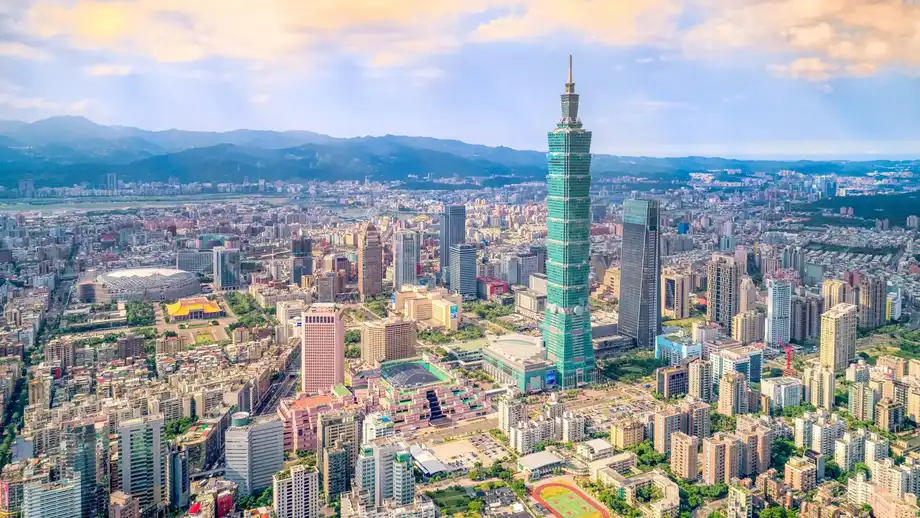
A Record Gain Erased in One Session
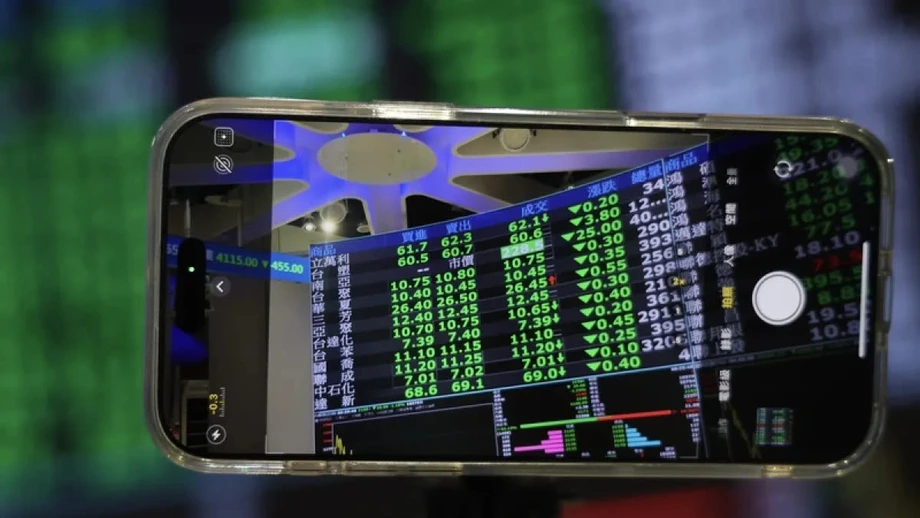
Taiwan's benchmark stock index fell 1,926.92 points, or 4.80%, to close at 38,195.43 on November 25, its sixth largest closing drop on record, one day after a record gain of 3,310.46 points. The TAIEX had fallen as much as 3,440.45 points in the morning, the second largest intraday drop in its history, before bargain hunters helped it recover from a low of 36,681.90. Turnover jumped to NT$1.188 trillion (US$35.86 billion) from NT$419.405 billion a day earlier. Taiwan Semiconductor Manufacturing Co fell 3.59% and MediaTek hit its 10% limit down.
Contents
- A Record Gain Erased in One Session
- A Collapse, a Rescue and a Record Rebound
- What the Regulator's Numbers Show
- How the Selling Spread Across Asia
- Why AI Doubts Returned So Quickly
- Tariffs Add a Second Shock
- TSMC's Business Is Strong. Its Stock Is Not.
- The Case for Boring, Regular Investing
- Taiwan's Favorite ETF Has One Big Bet
- What Comes Next
- Key Points
The reversal wiped out part of the 8.99% rally that followed Jensen Huang's return as Nvidia chief executive, and it pushed the index back below 40,000. The Financial Supervisory Commission, Taiwan's financial regulator, said in a November 25 statement that securities lending short selling had fallen and that 57 listed and over the counter companies were running share buyback programs with a maximum possible purchase value of NT$332.65 billion.
A Collapse, a Rescue and a Record Rebound
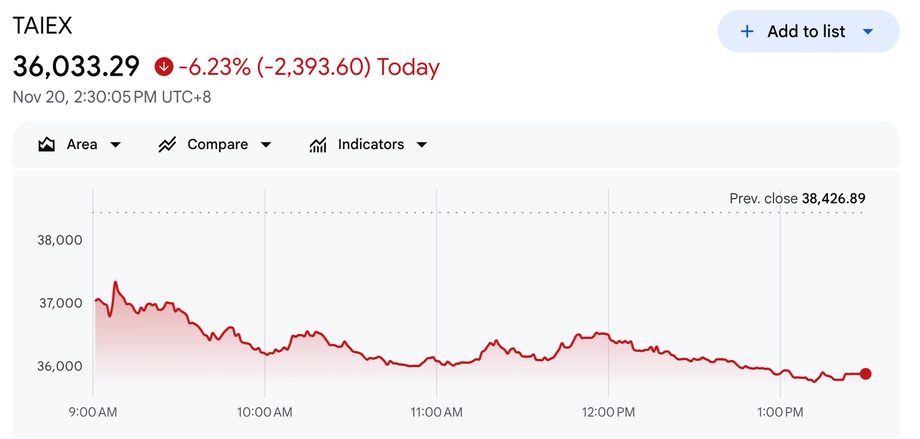
The swing began with a collapse. On November 20 the TAIEX dropped 2,393.60 points, or 6.23%, to 36,033.29, the third largest closing fall on record. The week's loss reached 7,641.83 points, or 17.5%, after a historic weekly drop that regulators and the government tried to contain with an emergency short selling ban and government support.
The Financial Supervisory Commission announced a package that included a ban on short selling below the previous close across listed stocks, over the counter shares and Taiwan depositary receipts, a rise in the minimum margin for short sales from 130% to 150%, and a suspension of new put warrant applications. The National Stabilization Fund, with about NT$500 billion (US$15.2 billion) available, had already entered the market.
Huang's return on November 23, 11 days after he stepped down, lifted sentiment. The next day the TAIEX rose 3,310.46 points, or 8.99%, to 40,122.35, the largest closing gain in history, with 621 listed and over the counter stocks at their daily limit up. Turnover was only NT$419.405 billion, a low for the year, and the three main groups of institutional investors were net sellers of NT$123 billion.
The optimism lasted one session. On November 25 foreign investors sold a net NT$123.655 billion, the seventh largest one day net sale on record, while domestic investment trusts bought a net NT$53.532 billion. Taiwan index futures kept falling after the cash market closed, touching 36,659 in the night session, down as much as 1,464 points and below 37,000. The contract was last quoted near 36,736.
What the Regulator's Numbers Show
The Financial Supervisory Commission's November 25 statement focused on the tools it had used since early November. It lowered the cap on intraday securities lending short sale orders to 3% on November 9 and to 1% on November 20. Securities lending short selling means borrowing shares and selling them, a bet that the price will fall.
Between November 9 and November 24, the value of securities lending short sales on the main board ranged from 0.27% to 2.00% of market turnover, below 2.97% on November 6, the last trading day before the first cap took effect. The daily value ranged from NT$25.62 billion to NT$175.91 billion, below NT$392.70 billion on November 6. On November 24 the market wide ratio was 1.64%.
Margin accounts also held up. The whole account maintenance ratio was 172.39% as of November 24, above the 130% minimum at which brokers can demand more collateral. The ratio compares the value of collateral to the money borrowed. The aggregate cushion was above the minimum, though individual accounts can still fall below it.
The commission counted 57 buyback programs still running as of November 24, 19 at listed companies and 38 at over the counter companies, with a maximum possible repurchase value of NT$332.65 billion. 47 were new since November 6, 15 listed and 32 over the counter, with a maximum value of NT$297.29 billion.
A buyback is a company's purchase of its own shares. It can support the share price and raise earnings per share by reducing the number of shares in circulation. The commission said buybacks completed or expired between the fourth quarter of 2026 and the first quarter of 2027 could count toward a company's score in the 2026 ESG evaluation. The 2026 ESG evaluation scores companies on environmental, social and governance measures.
How the Selling Spread Across Asia
The drop was not confined to Taiwan. By the close, South Korea's KOSPI had fallen 6.19% to 4,697.51, with Samsung Electronics down 9.87% and SK Hynix down 11.05%. Japan's Nikkei 225 lost 2.78% to 57,011.62. Hong Kong's Hang Seng fell 1.14% to 21,966.01, and the Shanghai Composite dropped 2.03% to 3,476.47, its lowest level in more than a year. SoftBank Group fell 14.83% and Kioxia 14.18%.
The commission measured the regional moves at 1:30 p.m. on November 25, before some markets closed. Its figures showed South Korea down 6.09%, Taiwan down 4.80%, Japan down 2.94%, Shanghai down 1.32%, Hong Kong down 0.20% and Singapore down 0.12%. For November through that time, South Korea had fallen 17.97%, Taiwan 15.52%, Japan 10.06%, Singapore 7.89%, Hong Kong 4.80% and Shanghai 2.71%. Taiwan's November decline was smaller than South Korea's 17.97% but larger than Japan's 10.06%.
Wall Street supplied the first shock. The Nasdaq had fallen 3.6% and the S&P 500 2.4% in the previous session, while Nvidia dropped almost 6% after jumping more than 31% a day earlier. The Philadelphia Semiconductor Index plunged 7.88% and stood about 40% below its June high. Anthropic PBC fell 6.5% and slipped below its US$83 initial public offering price, with its shares last quoted at US$81.71 before the November 25 session.
Futures pointed to more losses. Nasdaq futures fell more than 2%, Dow futures about 0.8% and S&P 500 futures more than 1%. Nvidia fell more than 5% before the opening bell and TSMC's American depositary receipts, which let US investors trade its shares, fell 3% to 4% in premarket trading. Money moved into US Treasuries and the dollar. Selling was heavy in Sydney, Singapore, Bangkok and Jakarta, while Wellington, Mumbai and Manila rose.
Why AI Doubts Returned So Quickly
Huang's return removed a leadership question at Nvidia, but not the larger ones. Alex Huang, deputy general manager at Mega International Investment Advisory, said the November 24 rally was built on the returning chief executive and faded when investors looked ahead to his appearances in Washington.
Tuesday's 8.99 percent rally reflected Jensen Huang's return as Nvidia CEO.
Today, worries over AI development re-emerged ahead of Huang's appearance at a congressional hearing in early December as part of a national security investigation.
Huang also pointed to the tariff headlines as a reason investors sold. He said the recovery from the day's lows, the rebound in TSMC and other technology shares, and the higher turnover made him suspect state buying.
I suspect the National Stabilization Fund stepped in to ease market volatility.
Nick Twidale, chief market analyst at AT Global Markets, described a market still trading on Nvidia's every move.
The market has been revolving around Nvidia's share price movements because it is clearly the key to the AI boom-and-bust scenario. We are still in a highly volatile market and are prone to corrections, and sentiment is clearly swinging day by day.
Tariffs Add a Second Shock
Washington gave investors another reason to sell. The Trump administration was preparing Section 301 tariffs on 16 major trading partners, and Taiwan was named among 14 economies facing proposed excess capacity tariffs. For partners that hold deals, rates were expected to stay within existing caps, including 15% for Taiwan.
No date has been set for the tariffs. The proposal still faces a comment period and a hearing, which could push implementation into January. TSMC is also expanding in Arizona, Japan and Germany and had filed a US$22.6 billion application for a Texas facility, spending that could dilute margins while new plants ramp up.
US export restrictions on high end chips sold to Chinese customers remained another drag. TSMC had paused some shipments while it assessed the scope of the rules. The combination left investors selling AI shares first and asking questions later, even when company results were strong.
TSMC's Business Is Strong. Its Stock Is Not.
TSMC's October revenue reached NT$586.89 billion, up 59.7% from a year earlier. Third quarter 2026 revenue rose 50.9% to NT$1.494 trillion (US$46.72 billion), with a gross margin of 66.4% and an operating margin of 58.7%. The company guided fourth quarter revenue to US$52.3 billion to US$54.3 billion.
Its American depositary shares still fell 6.65% to US$325.98 at 9:35 a.m. Eastern time on November 25, within an intraday range of US$323.77 to US$331.86. They had risen about 14% two sessions earlier and remained roughly 33% below their high over the past year of US$487.47. The Taipei shares had already fallen 3.59%.
The gap between the Taipei and New York moves pointed to selling of AI exposure rather than a reaction to TSMC's results. November revenue, due in early December, is the next check on demand.
The Case for Boring, Regular Investing
For retail investors, the violent swings revived a simple argument. Chou Kuan-nan, a finance professor at National Chengchi University, wrote on Facebook that the market's behavior had made his case.
Recent market action proves the market is like a drunk madman.
Chou said an investor who knows nothing about stocks can still beat 85% of investors by buying a market capitalization ETF and holding it for the long term. An ETF is a basket of shares that trades like a single stock. A market capitalization ETF weights each company by its size, so the largest companies carry the most influence.
The hard part is self control. Chou suggested setting up a regular fixed amount investment plan, putting in the same sum every month, and then deleting the trading app. He joked that the app is a mobile game for investing. If an investor cannot delete it, he said, asking him to enter the wrong password three times would lock the account.
He said the stock market is not a casino and that people who really want to gamble lose less buying lottery tickets. His point was that frequent trading turns investing into entertainment and that most active traders lose more as they gain experience.
Taiwan's Favorite ETF Has One Big Bet
Taiwan's largest market capitalization ETF shows both the appeal and the risk. The Yuanta Taiwan Top 50 ETF, known as 0050, held about NT$2.4 trillion (US$72.2 billion) in net assets as of November 25. TSMC made up 60.48%, MediaTek 6.17% and Hon Hai 2.9%.
Money has kept arriving. Net subscriptions to 0050 passed NT$1 trillion (US$30.1 billion) this year as of November 23, including more than NT$220 billion (US$6.6 billion) in November. The fund was on course to be the Asia Pacific leader in net subscriptions for a second year. It had 1.3098 million regular fixed amount investment accounts in October, the only ETF in Taiwan above one million.
That popularity makes Chou's advice practical for many households. It also means the promise of a return close to the market average comes with a heavy concentration in one company. When TSMC and other AI shares fell on November 25, 0050 weakened with them.
What Comes Next
Three dates matter for the market. Huang is due to appear at a congressional hearing in early December as part of a national security investigation. TSMC is due to report November revenue in early December. US inflation data were due on Wednesday and could shape the Federal Reserve's next move.
The tariff proposal has no implementation date. It must pass a comment period and a hearing, a process that could extend into January. For now, the tools it has used are visible in the numbers: short selling has fallen, margin accounts remain above the threshold for forced selling, and 57 companies are buying their own shares.
Key Points
- Taiwan's TAIEX fell 1,926.92 points, or 4.80%, to 38,195.43 on November 25, the sixth largest closing drop on record, after a record gain of 3,310.46 points the day before.
- The index fell as much as 3,440.45 points intraday and touched 36,681.90 before bargain buying pared the loss. Turnover rose to NT$1.188 trillion.
- Foreign investors sold a net NT$123.655 billion, the seventh largest one day net sale on record, while domestic investment trusts bought NT$53.532 billion.
- The Financial Supervisory Commission said securities lending short sales fell to between 0.27% and 2.00% of turnover from November 9 to 24, below 2.97% on November 6.
- 57 listed and over the counter companies were running buybacks as of November 24, with a maximum possible purchase value of NT$332.65 billion.
- TSMC's October revenue rose 59.7% from a year earlier, but its American depositary shares fell 6.65% as AI shares sold off worldwide.
- Taiwan was named among 14 economies facing proposed US excess capacity tariffs, with rates for partners holding deals expected to stay within existing caps, including 15% for Taiwan.
- Chou Kuan-nan of National Chengchi University said regular investment in a market capitalization ETF can beat 85% of investors, though 0050 holds 60.48% of its assets in TSMC.