A Record Export Year With a Narrow Engine
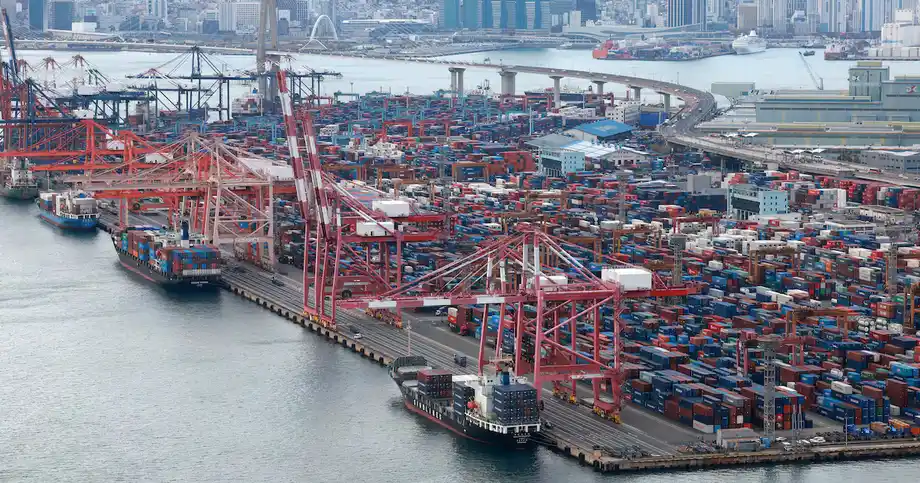
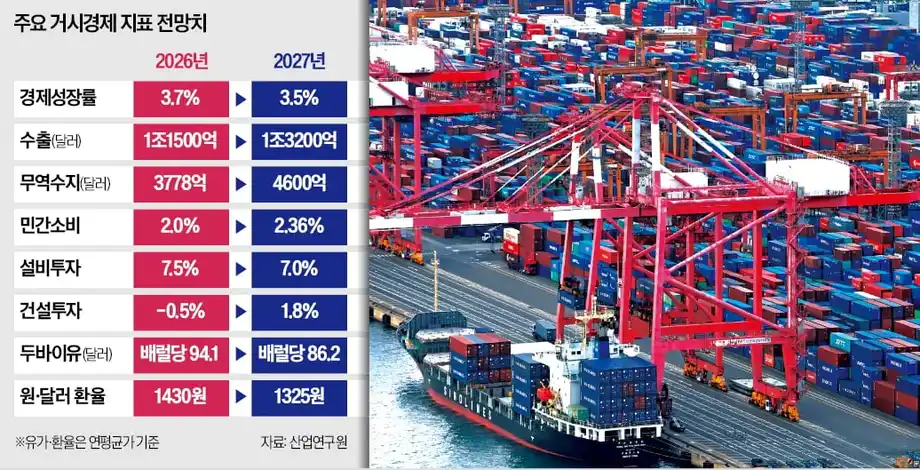
South Korea's exports are expected to reach $1.3202 trillion in 2027, up 14.1 percent from an estimated $1.1566 trillion this year, according to the Korea Institute for Industrial Economics and Trade. The state run institute released its 2027 Economic and Industry Outlook on Nov. 23 at the Government Complex Sejong. If the forecast holds, Korea will stay above $1 trillion for a second year, just weeks after cumulative exports passed the trillion dollar mark for the first time on Nov. 19.
Contents
- A Record Export Year With a Narrow Engine
- What the Outlook Counts
- Why Chips Keep Winning
- The 94 Percent Problem
- Cars Stall While Ships Surge
- Oil, Petrochemicals and Steel Face Price Pressure
- Growth Reaches Homes and Shops, Slowly
- What Could Break the Forecast
- How Korea Can Avoid a One Product Trade Model
- A Short Timeline of the Export Surge
- Key Points
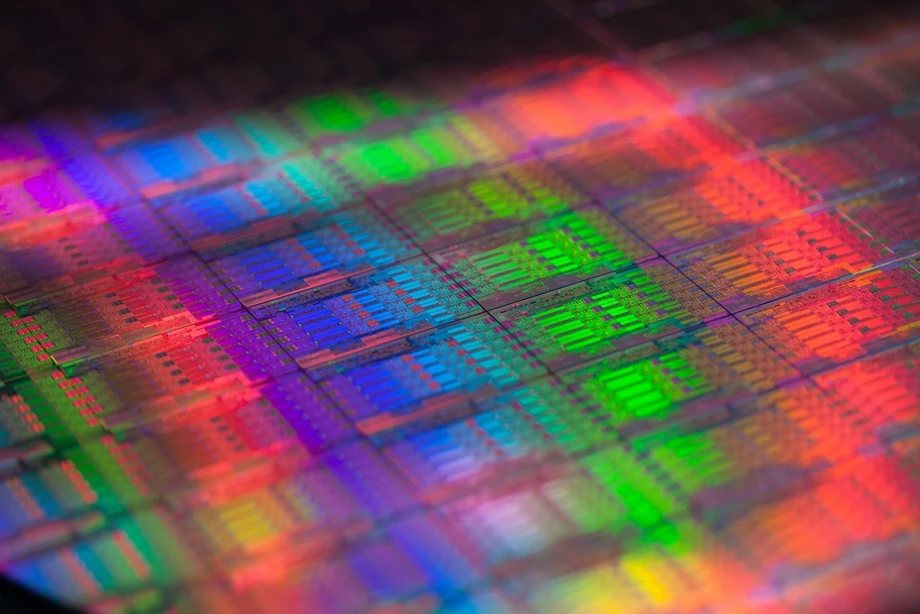
The headline number hides a sharper story. Semiconductors are projected to account for 50.7 percent of all exports next year, up from 44.5 percent this year and 24.4 percent last year. Chip exports are expected to rise 29.9 percent, while exports excluding semiconductors are forecast to grow only 1.5 percent. That gap is why researchers describe the export boom as a split economy, with advanced technology racing ahead and older industries losing ground.
The shift is already visible in customs data. By Nov. 20, cumulative exports had reached $1.0076 trillion, and chip exports in the first 20 days of November were $38.5 billion, up 294.4 percent from a year earlier. The same week, chip exports quadrupled and supplied nearly half of all overseas shipments in that period. The 2027 outlook turns that surge into a full year forecast, with a warning that the same concentration could become a weakness.
What the Outlook Counts
The Korea Institute for Industrial Economics and Trade, known as KIET, forecasts imports of $864.3 billion next year, up 11.0 percent, and a trade surplus of $455.9 billion, compared with $377.8 billion this year. Exports plus imports would reach about $2.18 trillion, opening what the institute called the trade $2 trillion era, 16 years after Korea first reached $1 trillion in total trade in 2011.
Import growth is tied to the same chip cycle. KIET expects imports by the information technology and new industries group to rise 16.7 percent, with semiconductor imports up 21.1 percent and information and communications device imports up 10.9 percent. Secondary battery imports are seen rising 16.3 percent as electric vehicle production expands, while petrochemical imports are expected to fall 10.5 percent as prices weaken.
The timing is uneven. Exports are expected to grow 33.9 percent in the first half to $664.1 billion, then fall 0.7 percent in the second half to $656.1 billion. The 13 core industries show the same pattern: their exports are forecast to rise 17.8 percent to $1.1473 trillion next year, after a record 77.5 percent jump this year, with a 43.4 percent gain in the first half and a 0.5 percent decline in the second.
KIET assumes the won averages 1,325 per dollar and Dubai crude trades around $87 a barrel. A large trade surplus should support the won, but the institute expects the currency to settle gradually rather than keep falling sharply.
Why Chips Keep Winning
Chips are the center of the forecast because artificial intelligence is being built in physical form. Data centers need servers, memory, processors, cooling, power and storage. High bandwidth memory, or HBM, stacks memory layers vertically so processors can move data faster. It has become a scarce part of AI systems, and Samsung Electronics and SK hynix are among the main suppliers.
Kim Yang paeng, a senior researcher at KIET, said the AI investment cycle will not fade quickly enough to stop chip exports from reaching the $600 billion level next year. His detailed number was about $669 billion, while the briefing described $600 billion as the milestone to be achieved.
The first half of next year will see the current semiconductor market strength continue. Growth will be smaller than this year, but $600 billion in chip exports is achievable.
Kim said factories overseas will start full scale production in the second half. He explained that more supply will slow the rise in unit prices, which matters because export value is the price of each item multiplied by the number of items sold.
When global semiconductor plants begin full scale production, increased supply will inevitably slow the rise in prices.
Information and communications devices are also set to benefit. KIET forecasts a 18.3 percent rise in exports of those devices, helped by demand for enterprise solid state drives used in AI data centers.
The 94 Percent Problem
The arithmetic explains the anxiety. Total exports are forecast to increase by $163.6 billion next year. Semiconductors alone are expected to add about $153.8 billion, roughly 94 percent of the increase. In other words, almost every extra dollar in Korea's export growth would come from one product group.
Other technology sectors are growing, but none at the same scale. Biohealth exports are forecast to rise 12.0 percent and secondary batteries 11.5 percent. Displays are seen up 4.9 percent, while home appliances are expected to fall 2.4 percent because more production moves overseas and demand remains weak.
Hong Seong uk, head of the Industrial Economic Data Analysis Division at KIET, said the institute sees both shipments and export value rising. He was explaining why the 14.1 percent export forecast is not based only on higher chip prices.
Semiconductor exports are likely to rise close to 30 percent as both volume and value increase. Even with price adjustment in the second half, the 14.1 percent export increase means volume is also rising.
Kwon Hyo sung, an economist at Bloomberg Economics, gave a specific downside calculation in the outlook. His point was that higher shipments cannot protect export revenue if chip prices fall faster.
If semiconductor prices fall 10 percent, Korea's exports will fall by about 4.3 percent.
Production plans show the split inside factories. KIET expects semiconductor production to rise 19.9 percent, information and communications device production 9.8 percent and shipbuilding output 15.2 percent. Auto production is forecast to fall 1.9 percent and textile output 0.4 percent.
Cars Stall While Ships Surge
Automobiles are going the other way. Vehicle and parts exports are forecast to fall 1.3 percent in 2027, under pressure from overseas production and stronger Chinese competition. Hyundai Motor Group's Metaplant America in Georgia is a major example. As plants like it produce more cars locally, fewer vehicles need to be shipped from Korea.
Domestic complete vehicle production is expected to fall 1.9 percent to 4.03 million units. Auto parts exports are likely to stagnate because overseas car plants buy more parts locally. A factory in the United States or India can serve local buyers and avoid trade friction, but it reduces work at Korean assembly lines.
Kim Kyung yu, a senior research fellow at KIET, said the industry faces a harder problem than a simple loss of market share. He said the move to electric vehicles has brought China into the race with force, so opening a new market is no longer a single fix.
The auto industry faces a complex crisis as China becomes a strong variable during the transition to electrification. It is difficult to offer one response such as opening new markets as in the past.
Kim urged short term relief through production tax credits or bigger subsidies, then longer term support for smart manufacturing and future vehicle technology such as autonomous driving. The same split appeared in China trade, where a recent surplus sat alongside a non chip deficit that reached $41.5 billion through October.
The machine group as a whole still grows, because shipbuilding and general machinery offset cars. Shipbuilding exports are forecast to rise 24.1 percent as vessels ordered during the high price period of 2024 and 2025 are delivered. Korean shipyards are also expanding work at facilities in the Philippines and the United States. General machinery exports are seen up 4.8 percent on United States advanced manufacturing investment and Chinese equipment replacement demand, lifting the machinery group by 5.3 percent.
Oil, Petrochemicals and Steel Face Price Pressure
Material industries remain the weak side of the forecast. The group is expected to contract 5.8 percent in exports, dragged down by refining and petrochemicals. Refiners are likely to ship 8.4 percent more volume as crude imports normalize and export restrictions end, but export value will fall 10.8 percent because unit prices drop 19.0 percent along with lower international oil prices and normalizing refining margins.
Petrochemicals face a similar mismatch. Raw material supply is recovering and the Shaheen plant will add output, but Chinese oversupply and lower product prices are expected to cut export value by 3.0 percent. Hwang Kyung in, head of the Strategic Industry Analysis Division at KIET, said plant closures in Korea will remove more output than the new facility adds.
Daesan and Yeosu industrial complexes are pursuing voluntary restructuring of 1.1 million tons and 1.39 million tons. The volume lost through restructuring of existing facilities will be larger than the new output from the Shaheen project.
Steel is a small exception. Exports are forecast to rise 1.2 percent as demand recovers in India, the Middle East and other emerging markets, and as unit prices improve. Textiles are expected to fall 1.8 percent because exports of yarn and fabric, the intermediate materials used to make clothes and other goods, remain weak.
Growth Reaches Homes and Shops, Slowly
KIET expects exports and technology investment to keep economic growth above Korea's potential rate. Gross domestic product, the total value of goods and services made in the country, is forecast to grow 3.5 percent in 2027, after an estimated 3.7 percent this year. Growth is split into 3.6 percent in the first half and 3.4 percent in the second. The Korea Development Institute, another public economic research body, has a 3.9 percent forecast for next year, 0.4 percentage points higher.
Lee Hyung il, deputy prime minister and finance minister, told a news briefing that the export trend put a stronger growth rate within reach. He was describing the government's view of this year, not the institute's 2027 forecast.
At the current pace, growth in the high 3 percent range is possible. Arithmetically, 4 percent is within range.
Private consumption is expected to grow 2.3 percent, up from 2.0 percent this year but still modest. Export profits take time to reach wages and household spending, and high living costs, debt payments and an aging population limit how much families increase purchases. Yoon Seong hyuk, presidential secretary for industrial policy, said a year end trade surplus in the high $300 billion range was possible if the current trend held. Hong Seong uk said the benefit will arrive unevenly.
It takes time for export companies to turn better performance into household income and consumption, and the effect can differ by household.
Investment is stronger. Facility investment is forecast to rise 7.0 percent after 7.5 percent this year, driven by HBM capacity, advanced chip processes and the three megaprojects cited by the institute. Construction investment is expected to move from a 0.5 percent decline this year to a 1.8 percent increase next year as semiconductor plants, data centers and public infrastructure offset weak housing building.
What Could Break the Forecast
The outlook rests on several assumptions. The first is that large technology companies keep spending on AI infrastructure even if stock markets wobble. The KOSPI has fallen below 5,000, and KIET notes that higher interest rates, lower expected profits from AI or tighter financing could slow investment.
The global backdrop is assumed to be steady but uneven. The United States may face weaker consumption from high prices and rates, while AI investment supports growth. China may struggle with property weakness but gain from high technology exports and government spending. The eurozone and Japan are expected to grow slightly, with energy prices, central bank policy and fiscal support as swing factors.
Trade policy is another risk. KIET points to uncertainty after the United States midterm elections, along with the Middle East conflict and the durability of global AI investment. Higher raw material prices and changes by major central banks could also change the path. At home, property project financing, a form of short term lending for building projects, household debt and weaker consumer sentiment could keep the export boom from becoming a broad expansion.
Kwon Nam hoon, president of KIET, said at the Government Complex Sejong briefing that industries outside AI still carry structural risks. He said 2027 will be a year to prepare for life after the chip boom and to handle the wider social and economic effects of AI.
Next year, strong semiconductor led growth will continue, but structural risk factors in other core industries such as autos, machinery, steel, refining and petrochemicals may resurface as domestic and overseas conditions change.
How Korea Can Avoid a One Product Trade Model
KIET's policy review, Korea's $1 Trillion Export Era: Sustainable Diagnosis and Policy Tasks, compares Korea with Germany and China. Korea is on course to become the third country to lift annual exports from the $700 billion range to more than $900 billion in a single year, after Germany and China.
Germany's experience is a warning about aging industrial strengths. After Germany passed $1 trillion in exports, its world market share ranking fell from second to fifth in automobiles and from first to third in machinery. The review links that decline to slower digital and AI change. China fell from $1.4289 trillion in exports in 2008 to $1.202 trillion in 2009 during the global financial crisis, then climbed to $1.5784 trillion in 2010 and $1.8993 trillion in 2011 as manufacturing exports recovered.
KIET recommends raising the share of high value products in traditional industries and building new growth pillars in secondary batteries, biohealth and Korean consumer goods. It also proposes a concentration alert when chips pass a set share of exports, plus regular publication of the gap between export value and shipment volume and the concentration of final demand, meaning how many end buyers sit in one sector. No threshold was given for that alert.
Hwang Kyung in said leading sectors and older industries need different answers, but both must move up the value chain. Han Byung do, floor leader of the Democratic Party, met vice heads of six economic organizations this week and said export gains should spread to ordinary livelihoods.
Leading sectors such as memory chips must maintain their substantial technological lead, while traditional core industries facing intense price pressure must respond by expanding high value added products.
A Short Timeline of the Export Surge
The numbers arrived in a compressed sequence, which helps explain why the outlook reads as both a celebration and a caution.
- Nov. 19: South Korea's cumulative annual exports passed $1 trillion, the first time the country reached the mark.
- Nov. 20: Customs figures put cumulative exports at $1.0076 trillion and exports in the first 20 days of November at $77.4 billion, up 101.5 percent from a year earlier.
- Nov. 23: KIET released its 2027 Economic and Industry Outlook in Sejong, projecting $1.3202 trillion in exports and a 50.7 percent chip share.
- Nov. 24: Officials and researchers underlined the split between chip led growth and weaker cars, refining and petrochemicals.
Korea's move ahead of Japan in several major markets and its new status as the fourth country with annual exports above $1 trillion add context to the forecast. The next check will be whether the first half surge appears in monthly customs data and whether non chip exports can grow faster than the 1.5 percent path in the outlook.
Key Points
- South Korea's exports are forecast at $1.3202 trillion in 2027, up 14.1 percent from an estimated $1.1566 trillion this year.
- Semiconductors are expected to make up 50.7 percent of exports next year, up from 44.5 percent this year.
- Chip exports are forecast to rise 29.9 percent, while exports excluding chips are seen growing only 1.5 percent.
- Exports are expected to rise 33.9 percent in the first half and fall 0.7 percent in the second half.
- Auto exports are forecast to fall 1.3 percent, while shipbuilding exports are seen rising 24.1 percent.
- Refining exports are expected to fall 10.8 percent because lower prices outweigh higher shipment volume.
- Growth is forecast at 3.5 percent, with facility investment up 7.0 percent and private consumption up 2.3 percent.
- KIET urges new growth industries and a concentration alert as Korea becomes more dependent on chips.