Surging Delinquencies Among Middle-Aged Borrowers
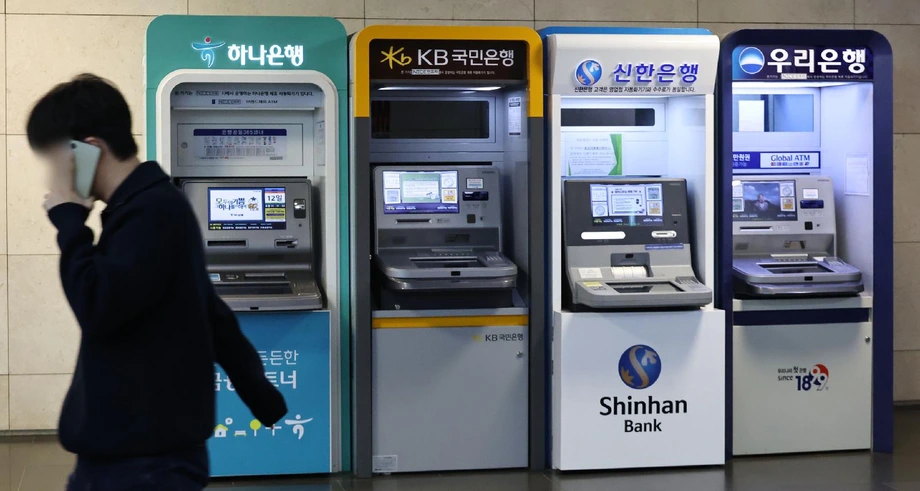
South Korean banks are seeing a sharp rise in unpaid debts on revolving lines of credit known as overdraft accounts, or minus tongjang in Korean. These accounts allow customers to borrow money up to a pre-approved limit and pay interest only on what they use. Data released on November 22, 2026, show that overdue loan balances for borrowers in their forties at five major commercial banks reached 399 billion 840 million won by the end of October. This figure represents an 81.6 percent increase compared to the end of the previous year, when overdue balances for this age group stood at 220 billion 1749 million won. Financial institutions tracked in the data include KB Kookmin, Shinhan, Hana, Woori, and NH Nonghyup.
Contents
The rapid accumulation of unpaid debt highlights mounting financial pressure on the demographic that traditionally forms the backbone of the national economy. Overdue amounts for borrowers in their fifties also climbed steeply, rising 77 percent from 194 billion 30 million won to 343 billion 99 million won over the same ten-month period. Together, borrowers in their forties and fifties accounted for 68.7 percent of the total increase in overdue overdraft balances across all age groups. Industry observers note that while older workers face pressures reminiscent of past periods of economic strain, the current environment differs due to the convergence of higher borrowing costs and shifting investment returns.
The Acceleration of Financial Distress in the Second Half
The speed at which these debts turned delinquent accelerated significantly during the latter half of the year. During the first six months, the monthly average increase in overdue balances for borrowers in their forties stood at 1 billion 371 million won. Between July and October, that monthly average nearly doubled to 2 billion 434 million won. This acceleration coincided with broader shifts in financial markets, including climbing borrowing costs and sharp corrections in domestic equities. As living expenses and loan repayments consumed a larger share of household income, many middle-aged individuals found themselves unable to meet their financial obligations on schedule.
Average interest rates on overdraft accounts at the five major banks climbed from around 4.8 percent at the end of the previous year to approach 5.5 percent by late autumn. For a customer maintaining a 50 million won balance, this rate adjustment adds 35 million won in extra annual interest payments, raising the yearly cost from 2.4 million won to 2.75 million won. Such incremental increases strain household budgets already stretched by the costs of housing and child-rearing. Economists point out that families in their thirties and forties carry the heaviest burden of fixed living expenses, making them particularly vulnerable to simultaneous spikes in consumer prices and loan rates.
The Impact of Stock Market Corrections on Borrowed Funds
Many borrowers had turned to revolving credit lines earlier in the year to finance stock purchases during periods of high market optimism. When the benchmark Kospi index experienced steep pullbacks after reaching highs above 9000 points earlier in the year, many of these investments lost value. The Kospi index dropped sharply to close at 4869.96 points on November 20, breaking through the 5000-point threshold. Investors who used borrowed money to buy shares found themselves trapped in falling markets while facing rising interest expenses on the underlying debt.
Financial specialists suggest that the widespread practice of borrowing to invest, often referred to locally as debt-fueled investing, left a segment of the population exposed when asset prices retreated. 서은숙, a professor of economics and finance at Myongji University, explained the vulnerability of this demographic.
40, 50대가 소득과 신용이 있어 대출 한도가 크고, 주거비나 교육비 같은 생활자금 수요도 가장 많은 연령층이어서 마이너스통장 연체액이 늘어나고 있다. 주가 하락과 금리 상승이 이어지면 자산 손실과 이자 부담이 커져 위험이 현실화할 것이다.
Rising Delinquency Rates Among Older and Younger Generations
While borrowers in their forties recorded the largest absolute increase in overdue debt amounts, actual delinquency rates tell a different story across age brackets. The overall delinquency rate for overdraft accounts across the five major banks rose from 0.18 percent at the end of last year to 0.27 percent by October. Borrowers aged sixty and older recorded the highest delinquency rate among all age groups at 0.44 percent, up 0.10 percentage points over the ten-month period. Borrowers aged twenty and younger followed closely with a delinquency rate of 0.37 percent.
A closer look at the data reveals that older borrowers carried smaller total debt loads compared to middle-aged peers, yet struggled disproportionately with repayments. Total overdraft balances for individuals aged sixty and above stood at 4 trillion 554 billion won by October, which is roughly 28.6 percent of the amount borrowed by those in their forties. Despite this smaller total balance, the overdue amount for the older group reached nearly half of the forty-something demographic total. 조성목, head of the Korea Inclusive Finance Research Institute, noted the risks facing financially vulnerable segments.
60대 이상은 대출 규제 때문에 현 자산을 기반으로 대출을 못 보고 있고, 20대는 금융 거래가 적기 때문에 추가 대출 심사에서 거절당해 대환을 못하는 상황이다. 결국 더 금리가 높은 2 금융업, 대부업, 사채업으로 향하기 쉬운 만큼 일자리 창출이나 채무조정 등의 대책을 서둘러야 한다.
Banks Tighten Credit Limits as Total Balances Expand
Commercial banks responded to the rising credit risks by adopting a more conservative approach toward household lending. Total overdraft balances across the five major lenders reached 44 trillion 428 million won by November 19, marking an 11.3 percent increase from the end of the previous year. At the same time, the total approved credit limits offered by these banks decreased slightly from 96 trillion 619 million won to 95 trillion 132 billion won, representing a 1.5 percent reduction as institutions sought to comply with government caps on household debt growth.
Because total credit limits shrank while outstanding balances grew, the amount of untapped credit available to customers dropped by more than 6 trillion won. The utilization rate, which measures how much of the approved credit limit customers have actually drawn down, rose from 41.31 percent to 46.70 percent. Banking officials warn that because revolving credit lines and general personal loans require interest rates to be recalculated upon maturity, further upward pressure on market rates will likely translate into additional delinquency increases in the near future. Employees leaving public financial institutions and seeking commercial stability reflect broader shifts in the wider banking sector, as detailed in earlier coverage of policy bank turnover.
At a Glance
- Overdue overdraft balances for borrowers in their forties at five major commercial banks reached 399 billion 840 million won in October, an 81.6 percent increase from the end of last year.
- Total overdue overdraft balances across the five banks rose 67.7 percent over ten months to 1 trillion 187 billion 446 million won, with borrowers in their forties and fifties accounting for 68.7 percent of the increase.
- The delinquency rate for borrowers aged sixty and above reached 0.44 percent, the highest among all age groups and well above the overall average of 0.27 percent.
- Total outstanding overdraft balances across the major banks climbed 11.3 percent to 44 trillion 428 million won by mid-November, while total approved credit limits decreased by 1.5 percent to 95 trillion 132 billion won.
- Average overdraft interest rates at commercial banks rose toward 5.5 percent, increasing annual interest burdens for households managing stagnant incomes alongside rising housing and education costs.