A Five Year Bet on Wings and Satellites
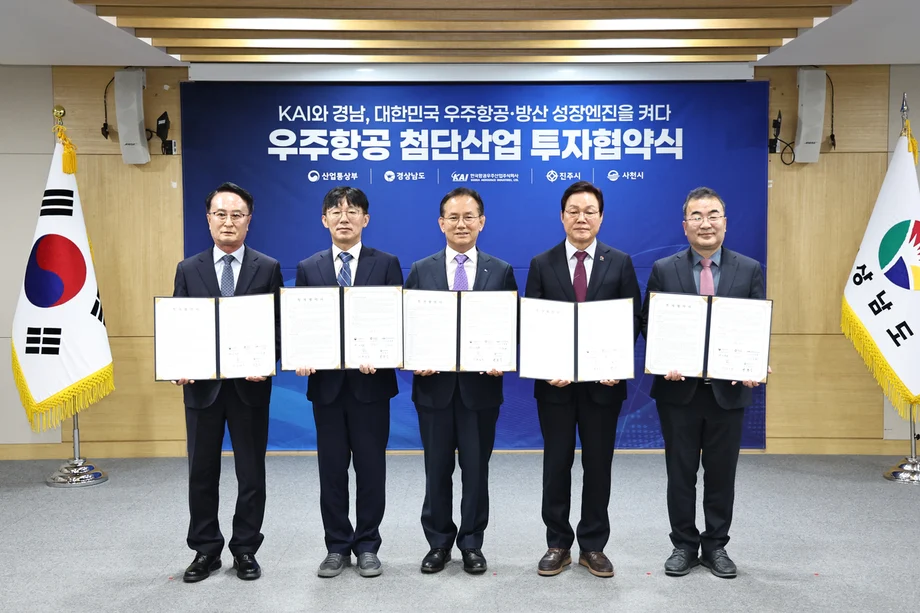
Korea Aerospace Industries will put 1.5 trillion won, about $1.1 billion, into South Gyeongsang Province from 2027 through 2031, a plan that aims to make the region a stronger base for aircraft, satellites and defense systems. The Ministry of Trade, Industry and Energy said the investment agreement was signed on Nov. 23 at the provincial headquarters in Changwon.
Contents
- A Five Year Bet on Wings and Satellites
- Who Signed and What Each Side Will Do
- Where the Money Will Go
- Why Sacheon Is at the Center
- A Timeline That Explains the Speed
- How Suppliers Will Get Help
- Why KAI Can Consider Such a Large Plan
- What Officials and Company Leaders Said
- What Remains to Be Worked Out
- Key Points
The plan covers next generation civil aircraft technology and parts, high value aircraft components made in South Korea, satellite systems and infrastructure, and components for future combat systems. KAI also plans to train specialists, expand production facilities and work with local companies on research and supply chains.
For ordinary readers, the project is about more than one company building bigger factories. Aircraft and satellites depend on many suppliers, from firms making small precision parts to universities training engineers. The agreement tries to connect those pieces in one place, with KAI as the anchor.
Who Signed and What Each Side Will Do
The agreement was signed by the ministry, South Gyeongsang Province, Jinju City, Sacheon City and KAI. It follows the government's five mega regions and three special self governing provinces policy, which chooses growth industries for different parts of South Korea so economic strength is less concentrated in the Seoul area. Aerospace and defense is one of the growth engines chosen for the southeast.
Under the deal, KAI will work out and carry out the detailed investment plan. The ministry will support investment and review regulatory and institutional changes. The province and the two cities will help secure sites, handle permits and support power and water supply, along with industry, university and research institute cooperation.
About 20 people attended the ceremony, including Governor Park Wan-su, KAI Chief Executive Kim Jong-chul, Lee Min-woo, head of the ministry's industrial growth office, Sacheon Mayor Park Dong-sik and Jinju Deputy Mayor Park Il-dong.
Where the Money Will Go
KAI named four main targets for the 2027 to 2031 spending period. These are broad categories, not a list of construction projects, and the public details did not break the total into yearly amounts.
- Next generation civil aircraft development technology and parts
- Local production of high value aviation components
- Satellite systems and related infrastructure
- Components for next generation combat systems
Civil aircraft means passenger or transport planes used by airlines and other operators. Working on their technology and parts can help South Korean companies build skills that are useful beyond military projects. Local production means making components in South Korea instead of buying them abroad, which can shorten supply lines and give domestic firms more work.
Satellite systems include spacecraft and the ground equipment needed to control them or use their signals. Combat system components are parts of military platforms such as aircraft, sensors and mission equipment. The province said the plan also includes training skilled workers and building supply chains with regional businesses.
Why Sacheon Is at the Center
Sacheon is home to KAI's headquarters and the Korea AeroSpace Administration, the national space agency. That gives the city a concentration of aircraft makers, engineers and government work that few other places in South Korea can match. Jinju, also part of the agreement, is expected to share in the industrial network through universities, research institutions and supplier firms.
The province has been trying to turn that base into an aerospace complex city. Governor Park told officials on Nov. 17 to push for a special law this year and to prepare an urban plan with Sacheon that includes conference, exhibition and lodging facilities.
Sacheon City said it will provide permitting help, administrative support and financial support within legal limits. South Gyeongsang Province said it will run a dedicated investment support office, improve living conditions and help with regulations and permits. Government level measures under discussion include special subsidies for growth engines, mega special zones and regulatory exemptions, though their use depends on follow up procedures and talks with agencies.
A Timeline That Explains the Speed
The KAI agreement came after a series of decisions from July to November. The sequence shows how a broad regional plan was turned into a company specific pledge.
- July 3: The government announced a 312 trillion won advanced industry investment plan for the Yeongnam region at an event in Jinju chaired by President Lee Jae-myung.
- July 6: Governor Park ordered a dedicated task force three days after the announcement.
- July 20: The Gyeongnam Great Leap Advanced Industry Task Force began work under the then administrative vice governor.
- August: The southeast was given growth engines under the 5 Poles 3 Special strategy, including aerospace and defense.
- Oct. 20: South Gyeongsang signed agreements worth 2.643 trillion won with 17 companies in Seoul, including Samsung Heavy Industries in shipbuilding and Doosan Enerbility in nuclear power.
- October: The Gyeongnam Aerospace and Defense Industry Exhibition, known as GADEX, was held with KAI taking part.
- Nov. 17: Governor Park again called for enactment of an aerospace complex city special law this year.
- Nov. 23: KAI signed the 1.5 trillion won investment agreement and a defense trade finance agreement in Changwon.
- Early December: A special bill on the aerospace complex city was pushed back to this stage in a National Assembly subcommittee.
The KAI pledge is 1.5 trillion won out of the 312 trillion won Yeongnam plan, about 0.5 percent. It equals about 57 percent of the 2.643 trillion won in agreements signed by the province on Oct. 20. Those figures show how the province is turning a broad investment promise into named company commitments.
How Suppliers Will Get Help
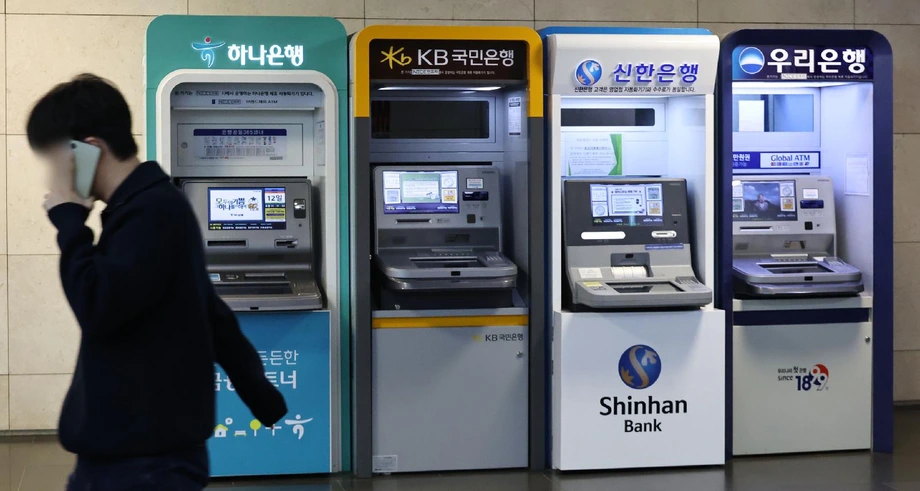
After the investment ceremony, the ministry hosted a trade finance agreement for defense suppliers. South Gyeongsang Province, the Korea Trade Insurance Corporation, Hanwha Aerospace, Hyundai Rotem, KAI, Woori Bank, Hana Bank and KB Kookmin Bank took part.
The ministry said the three defense companies and banks would provide 58.4 billion won in funds. The Korea Trade Insurance Corporation would use that base to offer about 820 billion won in preferential guarantees to partner companies. A KAI and KB Kookmin Bank portion of the wider finance effort was also described at 216 billion won.
A guarantee is a promise to pay a lender if a borrower cannot repay. That promise makes banks more willing to lend to small suppliers. The participating banks will offer better loan rates and support for guarantee fees. South Gyeongsang Province will subsidize part of the interest on loans backed by trade insurance certificates, the first local government to do so in this form.
Woori HQ, D&M Aviation and Youngpoong Electronics received the first guarantee certificates. A company meeting after the ceremony covered cash flow problems in defense exports and ways to improve finance for suppliers.
Why KAI Can Consider Such a Large Plan
KAI's sales have risen sharply. The company logged 3.3249 trillion won in sales in the first three quarters of 2026, up 49.1 percent from the same period a year earlier. Its order backlog reached 26.2855 trillion won at the end of the third quarter. An order backlog is the value of orders already won but not yet delivered.
Production of the KF-21 fighter and deliveries of the LAH helicopter helped drive the results. The planned 1.5 trillion won investment averages about 300 billion won a year. That yearly average is about 30.8 billion won, or roughly 11 percent, above KAI's 269.2 billion won operating profit in 2025.
Daol Investment & Securities projected that KAI's annual aircraft output could rise from 40 this year to 80 in 2028. It also projected revenue of 6.7811 trillion won and operating profit of 605.4 billion won for 2027. Those figures show why KAI is being asked to turn current orders into long term capacity, worker training and supplier networks.
What Officials and Company Leaders Said
KAI Chief Executive Kim Jong-chul framed the agreement as a way to link advanced technology with supplier growth. He said the partnership would strengthen the competitiveness of South Korea's aerospace and defense industry.
will serve as an important catalyst for strengthening the competitiveness of South Korea's aerospace and defense industry through expanded investment in the future aerospace sector and shared growth with partner companies.
Kim's wording points to the supplier side of the plan. The deal expects partner companies to share in design work, parts production and training.
Governor Park Wan-su has pushed the province to move from signing ceremonies to actual spending. He said the value of the agreement would come from fast execution and visible results.
What matters is that the investment is actually carried out quickly and produces results.
Park added that the province would work with Jinju and Sacheon as the plan moves forward.
Sacheon Mayor Park Dong-sik welcomed the decision because the city hosts KAI and the national space agency. He said the pledge gives Sacheon a central role in future aerospace technology.
I sincerely welcome KAI's decision to invest 1.5 trillion won in future core technologies in Sacheon, the heart of Korea's aerospace industry.
Lee Min-woo, head of the ministry's industrial growth office, linked the investment to the government's regional growth policy and the defense finance deal. He said regional growth begins with company investment and a strong supplier base.
Regional growth starts with bold corporate investment and a strong industrial ecosystem.
Lee said the ministry would use the 5 Poles 3 Special growth engine strategy to improve investment conditions and spread the gains of defense exports to partner companies through finance support and help with problems on the ground.
What Remains to Be Worked Out
Several practical details remain open. The text of the investment agreement was not released. The public details did not name the facilities to receive spending, the amount to be spent in each year or the number of jobs to be created. KAI will need to turn the four broad areas into project plans, and local governments will then handle site and permit work.
The aerospace complex city special law is also still pending. It was placed on a National Assembly subcommittee agenda but was pushed back to early December because earlier items were not finished. People Power Party lawmaker Seo Cheon-ho, whose constituency covers Sacheon, Namhae and Hadong, and other political figures are working with the province to pass the bill this year.
The province is also continuing talks with Hanwha Aerospace, Hanwha Ocean and Hyundai Wia about their own investment plans. The aerospace and defense exhibition known as GADEX is expected to be expanded as a place for domestic and foreign companies to find partners and export opportunities. The next clear dates are the 2027 start of KAI's investment period and the early December subcommittee step for the special bill.
Key Points
- KAI plans to invest 1.5 trillion won, about $1.1 billion, in South Gyeongsang from 2027 through 2031.
- The money is set for next generation civil aircraft technology, aviation parts made in South Korea, satellite systems and infrastructure, and components for future combat systems.
- The ministry, province, Jinju, Sacheon and KAI signed the deal on Nov. 23 at the provincial headquarters in Changwon.
- A defense trade finance deal pairs 58.4 billion won in funds with about 820 billion won in preferential guarantees for suppliers.
- Open details include facility sites, annual spending, new jobs and passage of an aerospace complex city bill now set for early December deliberation.