Memory Becomes the Bottleneck Buyers Want to Control
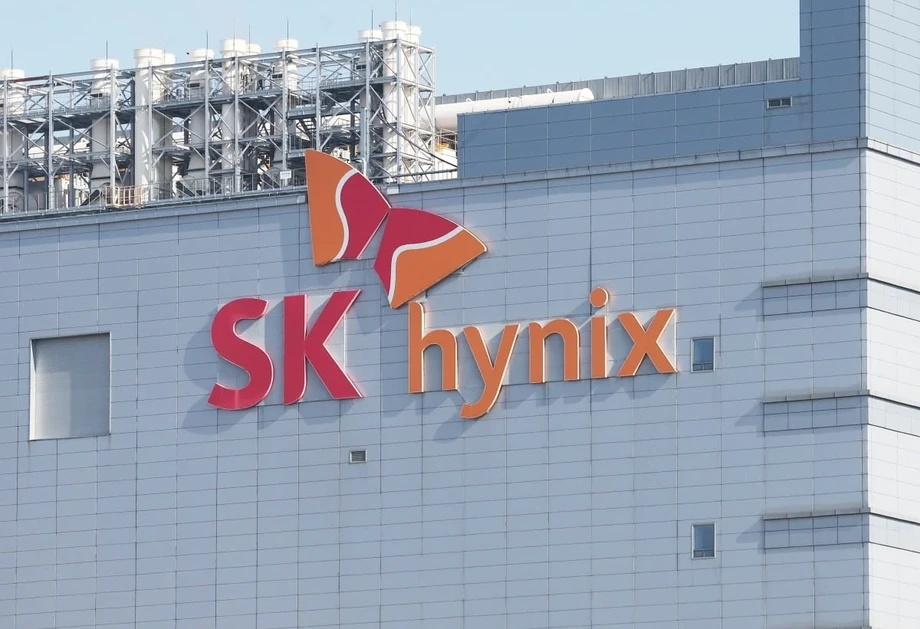
On Nov. 23, 2026, Meritz Securities said memory chips had become a strategic asset in artificial intelligence, with buyers moving well beyond ordinary purchase orders to secure supply. The most striking example was SoftBank chair Masayoshi Son, who, according to the securities firm, explored raising $1 trillion in United States financial markets toward acquiring SK hynix. Meritz also said several memory buyers were considering equity stakes, special corporate bonds, joint ventures and investment in production facilities. No deal or formal acquisition offer has been announced, and no timetable was given.
Contents
- Memory Becomes the Bottleneck Buyers Want to Control
- Why Artificial Intelligence Turns Memory Into Leverage
- SoftBank's Reported Plan for SK hynix
- What Supply Deals Stretching Past 10 Years Look Like
- Nvidia's Order Book Keeps Growing
- Samsung and SK hynix Sell Ahead
- Why Buyers Have Little Room to Walk Away
- Share Prices Tell a Different Story
- Nvidia Is Big, but the Customer Map Is Wider
- Smaller Cloud Rentals and Oversupply Fears
- What Remains Unclear
- Key Points
At stake is high bandwidth memory, or HBM, a type of dynamic random access memory, or DRAM, made of stacked memory chips placed close to an AI processor. An AI accelerator can perform huge numbers of calculations, but it needs data fed to it very quickly. HBM acts like a nearby shelf of fast memory. If the shelf is empty or too small, the expensive processor waits. That makes memory supply a practical limit on how fast AI systems can be built.
The shift is visible in the terms being discussed. Meritz said cloud companies and other large technology buyers had begun proposing supply agreements stretching beyond 10 years, with commitments that could reach 20 years. A typical LTA, or agreement covering future chip supply, has often run for three to five years. The new approach asks memory makers to plan factories far into the future, and it asks buyers to commit before they know exactly how the AI market will look.
The sequence over the past weeks shows how quickly the issue moved from earnings to control of supply:
- Nov. 12: Jensen Huang resigned as Nvidia's CEO, 33 years after co-founding the company.
- Nov. 17: Nvidia reported record quarterly revenue and disclosed a big rise in supply and capacity commitments.
- Nov. 20: The Kospi fell 5.21 percent to 4,869.96 as investors worried about AI memory stocks.
- Nov. 23: Meritz described buyers seeking deeper roles in memory supply, while Goldman Sachs analyzed how hard it would be to break supply deals.
- 2027 to 2029: Contracted and negotiated memory supply already reaches deep into those years.
Those dates put the central change in plain terms. Large technology companies no longer want to buy memory only when they need it. They want a seat near the factory, the contract and the technology roadmap.
Why Artificial Intelligence Turns Memory Into Leverage
Kim Sun-woo, a researcher at Meritz Securities, said the change starts with how advanced AI models are developed. Developers and accelerator makers believe models can test their own performance, find weak points and train improved versions in repeated cycles. Each cycle consumes more computing power and more memory. As the models grow, the need for fast memory rises with them.
Kim said extreme memory shortages could become a bottleneck over the medium term alongside logic and system chips. Logic chips carry out calculations. Memory chips hold the data and instructions those calculations need. AI systems need both, and a shortage in either part can slow the building of data centers. Recent inflation, funding worries and political or personal issues around company leaders have added doubt, yet Kim expected memory to gain importance over the medium term.
SoftBank's Reported Plan for SK hynix
Meritz said SoftBank had explored ways to secure SK hynix supply and an HBM business role from various angles since last year and up to the present. The proposals went beyond a simple purchase contract. They pointed toward participation in production, which would give SoftBank a longer claim on output and a route to share in the gains from HBM.
SoftBank owns ARM, the chip design company whose technology is used in a wide range of processors. Meritz said SoftBank is pursuing an ASIC project called Izanagi ASIC, a chip designed for specific AI computing work. That project would need steady access to HBM and other memory over many years. An ASIC is the opposite of a general processor in one important way: it is built around a narrow task and can be very efficient at it.
SoftBank's Vision Fund has invested in electronic commerce, mobility, financial technology, the sharing economy and, more recently, software companies such as OpenAI and Perplexity. Meritz said the company may want to combine that software exposure with hardware. Its possible partners could include Intel's foundry business, which manufactures chips designed by other companies, and United States government projects linked to its political ties.
SK Group's position complicates any approach. Meritz said SK Group had virtually no intention of selling SK hynix, a core asset at a time when other growth engines are weaker. The analyst also noted that SK Group holds about 20 percent of SK hynix, enough in the firm's view to meet a minimum corporate threshold and to make shareholder pressure involving memory buyers possible. That is a market judgement, not an announced shareholder campaign.
What Supply Deals Stretching Past 10 Years Look Like
Meritz said the proposed deals go by the label LTA but look different from older agreements. Instead of three to five years, some proposals start with terms over 10 years and ask for commitments up to 20 years. Such length is unusual in an industry known for sharp swings between shortage and surplus.
Memory makers are cautious about simple purchase promises. Kim Sun-woo said producers hesitate to lock in production based only on a buyer's pledge, because capacity expansion brings fixed costs that a factory pays even before output rises. Past crashes also left a strong memory of prices and profits collapsing after customers ordered too much. Buyers are therefore exploring ways to share risk. Equity financing gives an investor influence over decisions, which chipmakers may resist because of secrets around process technology and factory operations. Debt financing, including prepayments or bonds, can lower the business risk for the memory maker because decision rights stay clearer. A joint venture can bring money and a customer, but it also raises questions about control and technology leakage.
Nvidia's Order Book Keeps Growing
Nvidia reported revenue of $115.84 billion for the third and fourth quarters of fiscal 2027, up 103 percent from a year earlier. Data center revenue reached $107.6 billion, up 110 percent and about 93 percent of total revenue. Vera Rubin, Nvidia's next AI platform, contributed about $20 billion as production and shipments increased.
Nvidia also widened its supply and capacity commitments. The company said commitments for supply and production capacity stood at $390 billion, up from $279 billion in the previous quarter, an increase of $111 billion. Nvidia said it has secured memory and advanced packaging, which links chips into a working unit, and is working with partners to expand capacity for wafers and substrates. Wafers are the silicon disks on which chips are made. Substrates help connect the finished chip to the rest of the system.
Nvidia separately forecast fourth quarter revenue of $130 billion, above market expectations of $125.1 billion, and lifted its fiscal 2028 revenue growth forecast to 75 percent from 70 percent. Those figures point to demand that is still expanding, even as investors question the pace of AI investment.
Jensen Huang resigned as Nvidia's CEO on Nov. 12, 33 years after co-founding the company. Nvidia's latest results and comments reflected business before that change. No drop in orders appears in those figures, though the effect after the resignation is not yet visible in them.
Samsung and SK hynix Sell Ahead
Samsung said HBM4 revenue more than tripled from the previous quarter and that HBM4 made up 60 percent of its HBM revenue. HBM4 is the sixth generation of high bandwidth memory and is designed for Nvidia's Vera Rubin platform. Samsung also shipped samples of HBM4E, the next generation, in May, which the company said was first in the world.
SK hynix said shipments of its HBM4 product with 12 stacked layers were on schedule. The company completed HBM4E sample supplies in the second quarter and is developing and testing the product to customer timetables. Both companies are moving quickly because the newest AI systems need more memory capacity and faster data movement than older accelerators.
Samsung has effectively sold out HBM supply for next year. SK hynix has said contracts lock up more than 50 percent of production capacity for 2027 and 2028, and that DRAM and HBM output is effectively sold out through 2029 when signed contracts and demand under negotiation are counted. These are commitments that shape how much memory the world can buy before new factories add meaningful output.
Samsung executives used a Morgan Stanley conference in Singapore to argue that this cycle differs from past booms because spending is linked to actual demand. Meritz Securities analyst Kim Sun-woo made the same point about supply discipline and said Samsung would adjust output in 2028 to protect profitability. He put the case this way:
[The company] will flexibly adjust supply in 2028 as well to protect profitability.
Why Buyers Have Little Room to Walk Away
Goldman Sachs put a number on how far memory prices would have to fall before buyers had a real economic reason to break these agreements. Its analysis dated Nov. 23, 2026, found that conventional DRAM prices would need to drop 32 percent to 54 percent below the bank's base case over two years. Even the lower end is a steep decline, measured against the bank's own forecast rather than against today's price.
The reason is in the contract design. Major suppliers including Samsung, SK hynix, Micron, SanDisk and Kioxia have been using longer terms, wider coverage and costlier exits. A typical LTA now lasts about five years, with some as short as three. Annual extensions can make the effective term longer than five years. The share of planned capacity tied to these deals at major firms has risen from about 50 percent to a target of 60 percent to 70 percent.
Prices are also less exposed to sudden market moves. Contracts increasingly use floors or bands linked to recent market prices. A price floor sets a minimum payment level. A band keeps the price within an agreed range. Some agreements require the buyer to pay for agreed volumes even if it does not take delivery, which makes the commitment harder to abandon.
Cash already paid deepens that commitment. Goldman said Micron expects $22 billion in prepayments, meaning money paid before delivery. SanDisk has more than $11 billion in guarantees and prepayments tied to binding clauses that apply before the contracts can be exited. For a buyer considering cheaper chips elsewhere, those sums matter. Finding a lower price may not offset penalties, sunk payments and the loss of priority for future supply.
Roh Geun-chang, head of the independent research firm Semicon Research Lab, said contract prices would soften less than market prices when memory prices fall. He added that current demand showed no sign of changing:
Above all, there are no warning signs at all of a change in demand right now.
For memory makers, this changes the risk of expansion. For buyers, it trades freedom for certainty. The AI boom has moved bargaining power toward the companies that can deliver large volumes of HBM and DRAM on schedule.
Share Prices Tell a Different Story
Samsung Electronics and SK hynix posted their best ever third quarter results, yet their shares have fallen to about half their peaks. On Nov. 20, the Kospi fell 5.21 percent to 4,869.96, closing back below 5,000. Samsung's memory chips sold at an average of about 3.7 times the previous year's average price in the first nine months, and production lines at both companies were running without a break.
The market's worry is not whether memory companies are earning money now. It is whether those earnings can last. Investors are watching AI capital spending, Nvidia's leadership change and the possibility that data center projects are delayed or canceled. Meritz said that even after the fall in memory company share prices, a solid 2027 and 2028 memory cycle and a business ecosystem tilted toward suppliers could support a recovery.
Nvidia Is Big, but the Customer Map Is Wider
Nvidia remains central to HBM demand, but SK hynix's customer mix is changing. Sales to SK hynix's largest customer, presumed to be Nvidia, reached 34.98 trillion won, or $26.2 billion, in the first nine months. That customer accounted for 14.8 percent of SK hynix's total sales, down from 27 percent a year earlier. Sales to that customer doubled, but SK hynix's total sales grew faster.
A second customer now accounts for 10.1 percent of SK hynix's sales, or 23.9 trillion won. Alphabet and Amazon, both of which design their own AI chips, appear among Samsung's five biggest customers. Those five customers together account for about 24 percent of Samsung's sales. Nvidia is not on that list.
KB Securities estimates that Nvidia will account for 38 percent of global HBM demand in 2027, Google 37 percent and AMD 13 percent. Kim Dong-won, head of research at KB Securities, said Nvidia's CEO change would widen the group of companies driving AI growth. He said the industry around the chips would expand rather than collapse.
Jensen Huang's departure will be a turning point at which the players driving growth diversify and the ecosystem expands, not a crisis for the AI industry.
Smaller Cloud Rentals and Oversupply Fears
Huang's resignation also sharpened concern about neocloud companies, smaller cloud providers that rent AI computing power and have borrowed heavily to build data centers. If their financing becomes harder, orders for GPUs and memory could slow. Kim Yong-kwan, president of management strategy at Samsung's chip division, told a Morgan Stanley conference in Singapore that these companies are a limited part of the market, about 8 percent of it. He said their troubles were not a major threat to AI growth as a whole:
We do not expect these concerns to pose a significant threat to the broader AI growth trajectory.
SemiAnalysis cut its forecast for global HBM bit demand in 2028 by about 30 percent. Bit demand means the total amount of memory measured in bits. The research firm also lowered its forecast for AI accelerator spending that year from $1.054 trillion to $758 billion. UBS estimated that about 30 percent of new data center capacity expected in the United States in 2028 faces regulatory risk. Those numbers explain why investors are nervous about new factories coming online at the same time.
The lowered forecast still points to growth. AI accelerator spending would rise about 21 percent in 2028 from $627 billion in 2027, and HBM bit demand would keep increasing each year. LS Securities analyst Jung Woo-sung said existing excess demand limits the chance of a move into oversupply in the near term. DS Investment & Securities analyst Lee Su-rim said global AI server shipments would rise 30 percent in 2028 even if capital spending growth, meaning money spent on equipment and buildings, at the four biggest United States cloud companies slows to 14 percent from 53 percent.
Lee also estimated that SK hynix's DRAM shipments would increase 23 percent through 2029 as server numbers and memory per server both rise. Supply discipline is the other answer. Memory makers remember past cycles in which speculative investment created too much capacity. Kim Sun-woo said the strategy of controlling supply remains valid, and that Samsung would adjust output in 2028 if needed. Whether that discipline works depends on how much customers actually take delivery and how quickly new plants ramp up.
What Remains Unclear
Some terms that matter most are still private. Neither Samsung nor SK hynix disclosed exact contract volumes, prices or delivery schedules in the quarterly reports. Both companies said volumes and delivery periods can change with customer demand and business conditions. Nvidia said in a filing with the U.S. Securities and Exchange Commission that some supply commitments can be canceled or rescheduled before formal orders are placed.
The headline figures, including sold out capacity and $390 billion in Nvidia commitments, describe a strong position but not a guarantee of every delivery. The coming markers are clearer: HBM demand shares in 2027, supply adjustments in 2028, the spending path for 2028 and SK hynix's sold out position through 2029.
Key Points
- Meritz Securities said memory has become a strategic asset in AI, with buyers exploring stakes, bonds, joint ventures and factory investment.
- SoftBank chair Masayoshi Son explored raising $1 trillion toward acquiring SK hynix, but no deal or timetable was announced.
- Buyers are discussing supply agreements beyond 10 years, with commitments up to 20 years.
- Nvidia reported $115.84 billion in quarterly revenue and raised its supply and capacity commitments to $390 billion.
- Samsung and SK hynix are expanding HBM4 supply, with sold out or heavily contracted capacity reaching 2029.
- Goldman Sachs found conventional DRAM prices would need to fall 32 percent to 54 percent below its base case over two years before buyers had a strong reason to default.
- Shares of Samsung and SK hynix have fallen to about half their peaks despite record third quarter results.
- The main risks are delayed AI projects, contract flexibility, Nvidia's leadership change and possible oversupply in 2028.