Super Nintendo Meets Modern Artificial Intelligence
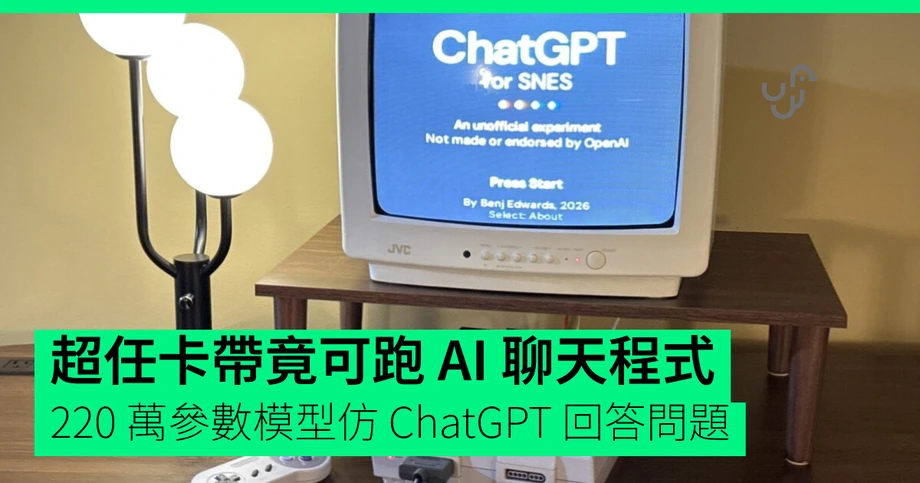
Technology journalist and retro computing enthusiast Benj Edwards has successfully engineered a working chatbot named ChatGPT for SNES that operates entirely on a 1990s Super Nintendo Entertainment System. The project runs without any internet connection or cloud servers, performing all necessary text generation locally on vintage gaming hardware. Released on November 21, 2026, the experiment combines an open-weight model with a customized cartridge setup to bring text-based conversations to a console that debuted 35 years ago. Players and curious observers can experience the software through a browser-based simulator complete with period-appropriate chiptune music and sound effects, or download the ROM file to run on physical hardware.
Contents
Understanding the Hardware Engine
The technical centerpiece that makes local text generation possible is the Super FX 2 coprocessor, a chip originally developed by Argonaut to handle complex graphics in titles like Yoshi-s Island and the Super Nintendo port of Doom. The original console relies on a 16-bit Ricoh 5A22 main processor running at a modest 2.68 megahertz in typical mode. By contrast, the cartridge-mounted Super FX 2 chip operates at 21.47 megahertz using a RISC architecture. That processing speed is roughly eight times faster than the main console CPU, providing the necessary computing power to prevent responses from stalling completely.
Running a language model on this vintage hardware requires careful memory management and data representation. The system uses an 8-bit representation of model weights read directly from the cartridge read-only memory. When users type questions into the chat window, the system generates text at a rate of roughly two tokens per second. A token represents a chunk of text rather than a full word, meaning each individual token takes between 0.4 and 0.5 seconds to appear on screen. The output builds gradually while typing sound effects play, creating a deliberate and nostalgic rhythm.
How the Miniature Model Works
The chatbot running on the console is not an official product from OpenAI, nor is it a massive cloud-based neural network transferred to a game cartridge. Instead, the software uses a distilled language model containing approximately 2.2 million parameters. The training dialogues for this compact system were generated using a much larger open-weight model known as gpt-oss-120b. To help average readers understand the scale, modern commercial AI assistants rely on billions or even hundreds of billions of parameters running on massive data center graphics cards. This retro adaptation shrinks that core concept down to a fraction of a percent of its normal size.
Because the parameter count is so low, the model possesses a very restricted vocabulary containing about 8,000 English words. The creator has noted that the software lacks the capability to function as a reliable daily assistant. When asked complex questions, the system frequently makes mistakes, occasionally delivering incorrect answers with total confidence. Describing the charming nature of these technical limitations, Benj Edwards offered this assessment in project notes:
It is not a useful assistant: the model is millions of times smaller than the models behind ChatGPT, knows about 8,000 words, and often gets things wrong, sometimes confidently.
Two Distinct Builds and Knowledge Bases
Users can choose between two different versions of the software depending on their hardware setup and desired experience. The basic build is roughly 4 megabytes in size and relies entirely on the tiny internal neural network to generate every word from its own stored weights. While functional, this pure version demonstrates severe knowledge gaps due to its restricted vocabulary. A second, larger build spans approximately 19 megabytes and includes an integrated fact book compiled from the opening sentences of roughly 150,000 simple English Wikipedia articles.
This secondary build stores its massive auxiliary text database inside a data file utilizing the MSU-1 aftermarket extension, which provides compact disc level streaming capabilities to the console. When users ask questions of the fact book build, the program can reference these Wikipedia introductory sentences and even handle basic arithmetic calculations. Running the exact same prompt through the basic build versus the fact book build yields starkly different results, highlighting how much supplementary text improves conversational coherence on constrained hardware.
Requirements for Playing on Real Hardware
Running the project on an actual Super Nintendo console requires specific physical accessories beyond just a standard game cartridge shell. Enthusiasts must own a compatible flash cartridge, such as an FXPak Pro or an SD2SNES, which allows users to load custom ROM files onto a physical board. Furthermore, running the advanced version with the integrated Wikipedia knowledge base requires flash cartridge support for the Media Streaming Unit 1 audio and data extension. Without this streaming capability, the console cannot access the external reference text required for the enhanced answers.
The creator points out that a stripped-down variant of the pure model can technically run on a custom cartridge without needing a Super FX chip at all. However, removing that secondary graphics coprocessor degrades the quality and speed of the responses significantly, demonstrating why the high-speed chip is vital for a smoother experience. For individuals who do not own a 35-year-old console or specialized flash hardware, the browser-based emulator provides an accessible entry point to test the chat interface directly on modern computers and mobile devices.
The Broader Vision of Tiny Talking Machines
This retro experiment represents a broader personal exploration by its creator into what he terms tiny talking machines. Over the preceding year, the developer has investigated how small a functional language model can become while remaining operable on severely restricted computing architectures. This work follows an earlier project called Séance, which deployed an even smaller AI model onto an 8-bit Nintendo Entertainment System to simulate a conversation with a ghost trapped inside a haunted game cartridge. These efforts illustrate how far model compression techniques have advanced, proving that the underlying mechanics of neural text generation can be decoupled from modern data centers.
The development process itself relied heavily on modern automation tools. While the conceptual scope, chip targeting, interface design, and soundtrack were human creations, the actual coding work was executed by artificial intelligence coding agents acting under the developer direction. Interestingly, those same AI coding agents advised their human director that the project had reached the absolute hardware limit of what the Super Nintendo can achieve. Rejecting that pessimistic assessment, the developer continues to investigate new software techniques to push the boundaries of what micro-scale models can accomplish.
What the Future Holds for Retro AI
The public reaction to the experiment highlights a growing fascination with squeezing advanced software onto primitive silicon architectures. Although the chatbot frequently misunderstands queries and delivers eccentric responses, those quirks contribute to the entertainment value of the project. Rather than viewing errors as a failure, the creator embraces the playful interface and unexpected answers as an endearing homage to early computing limitations. As research into model distillation continues to progress across the technology industry, demonstrations of this nature serve as a vivid reminder that the core mathematics of language processing require far less raw computing power than is typically deployed today.
At a Glance
- Benj Edwards created ChatGPT for SNES, a miniature chatbot running on a 35-year-old Super Nintendo console.
- The system uses a 2.2 million parameter model distilled from OpenAI open-weight data, relying on an 8-bit weight representation.
- A cartridge-mounted Super FX 2 coprocessor running at 21.47 megahertz powers the text generation instead of cloud servers.
- Two builds are available: a 4-megabyte basic version and a 19-megabyte version featuring a fact book from 150,000 Wikipedia articles.
- Physical execution requires flash carts like the FXPak Pro or SD2SNES, while a browser version runs on an embedded Snes9x emulator.