A 50-day test moves Japan closer to a decision on seabed minerals
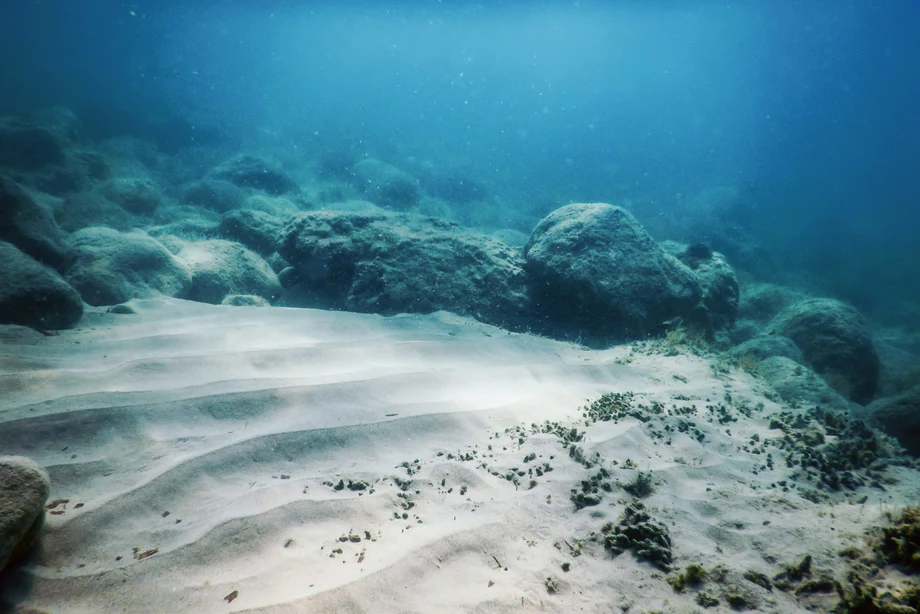
Japan plans to begin a 50-day test of rare earth mining from the seabed near Minamitorishima Island on February 2, 2027, Shoichi Ishii, director of a Cabinet Office program for ocean development, said. The site lies about 1,900 kilometers southeast of Tokyo, where mud containing rare earth elements rests roughly 6,000 meters below the sea surface.
Contents
- A 50-day test moves Japan closer to a decision on seabed minerals
- What has Japan recovered from the seabed?
- Why the composition of the mud matters
- How Japan and the United States are joining forces
- What the test must show about cost and scale
- Environmental and regulatory work is part of the plan
- Key dates in the project
- What is known, and what remains undecided?
- Key Points
The test will help Japan determine what stands between research and commercial production. After it ends, officials plan to assess the results, including whether mining could make economic sense. Japan expects to compile its findings by March 2028. Commercial production is being targeted for 2028 at the earliest, although a target is not the same as a decision to begin full scale mining.
Japan's interest is driven by supply security as well as cost. Rare earths are a group of 17 metals used in products such as electronics, motors and other advanced equipment. Japan depends heavily on overseas supplies, while China has tightened controls on exports. The government wants more options so that manufacturers are less exposed to a sudden shortage or price surge.
Ishii said the project remains research and testing, and that its goal is to identify obstacles to commercial operations. He described supply diversity as a higher priority than the project's immediate economic feasibility.
We are still in the phase of testing and research toward industrialization.
The government backed project has received about 50 billion yen, roughly $314 million, from April 2018 through March 2027. That public spending has supported years of work before any decision on commercial mining.
What has Japan recovered from the seabed?
Japan's work reached a new stage in February 2026, when researchers recovered rare earth bearing mud from about 6,000 meters down near Minamitorishima. The Japan Agency for Marine Earth Science and Technology, known as JAMSTEC, reported that about 50 tonnes of mud were recovered during trials. The first material reached the research vessel Chikyu on February 1.
The next challenge is to establish whether the mud can be brought up and processed in a way that works at a much larger scale. Plans call for recovered material to be dewatered on Minamitorishima, then shipped to mainland Japan for tests to separate, purify and refine the minerals. Dewatering means removing much of the water from the mud before transport.
The planned campaign has been described in two ways: Ishii gave a start date of February 2 and a duration of 50 days, while project plans have also described a month long trial in February. Both refer to testing, not routine commercial extraction. The test's detailed schedule and how much material it aims to recover have not been specified here.
Why the composition of the mud matters
Analysis of material recovered from the seabed found that medium and heavy rare earths made up about 54% of its total rare earth content. These categories include elements that can be harder to source and are used in a range of industrial applications. The figure describes the share of rare earth content, not 54% of the entire weight of the mud.
Yttrium, a heavy rare earth, illustrates the supply risk Japan is watching. Ishii said its price had risen sharply after Chinese export controls began in 2025. He put the increase at 180 times its former level. That dramatic rise strengthens the case for looking for alternative sources, even as the test must determine how much usable material can be produced and at what cost.
The composition result is one piece of the assessment. To judge the project as a supply source, Japan will also need to understand how consistently the mud can be collected, how much processing is required and whether the resulting material meets industrial needs.
How Japan and the United States are joining forces
Japan and the United States are linking the seabed project to wider cooperation on critical minerals. The governments issued a joint statement on November 12, 2026, after officials met in Toyama on November 11 and 12. The statement says the countries aim to build secure and diversified mineral supply chains and identifies the Minamitorishima rare earth mud project among the subjects discussed.
The work builds on a U.S. Japan framework for securing critical minerals and rare earths through mining and processing, signed in October 2025. In March 2026, the U.S. Department of Commerce and Japan's Ministry of Economy, Trade and Industry signed a memorandum of cooperation. The November meeting was the second meeting of the working group established under that cooperation.
The governments propose working together on seabed exploration, mapping, resource assessment, environmental assessment and monitoring. They also plan to explore whether research vessels, autonomous underwater vehicles and other equipment can support joint research and technology demonstrations. Autonomous underwater vehicles are uncrewed machines that can travel underwater to collect data or carry out tasks.
The statement also points to processing capacity, commercial partnerships and clearer regulatory approaches. Japan and the United States want trusted partners to be able to process minerals, not simply recover them from the seabed. The statement does not announce a new funding package or a date for commercial mining.
What the test must show about cost and scale
Collecting mud at great depth is only one part of producing a usable supply. Japan must test whether equipment can operate reliably, how much material can be lifted, and whether the mud can be processed efficiently after it reaches the surface. Each step affects the amount of finished rare earth material available to manufacturers.
The planned economic assessment is meant to weigh those practical questions alongside the cost of the project. Japan has already committed about 50 billion yen through March 2027, but that total covers research and development to date, not a confirmed budget for building a commercial mining industry.
There is also a difference between having a domestic source and becoming self sufficient. The announced aim is to diversify supply and reduce dependence on any single country. The test results will help show whether seabed mud could become one part of that wider supply mix.
Environmental and regulatory work is part of the plan
Deep seabed mining involves disturbing the sea floor and lifting material through thousands of meters of water. The U.S. Japan statement includes environmental assessment, mitigation and monitoring among its cooperation priorities. In plain terms, the governments say they want to study possible effects and ways to track and reduce them as the technology develops.
The statement also calls for exchanges on regulatory practices, including environmental reviews, monitoring and data management. Clear rules matter to any company considering investment, while environmental information will be needed to guide decisions about where and how a project could operate.
The statement describes areas for future cooperation, rather than reporting a completed environmental review for the Minamitorishima trial. The upcoming test and later assessment will provide more information about the mining process, while decisions on commercial activity remain ahead.
Key dates in the project
The work has developed over several years, from initial research to seabed recovery and a planned test campaign:
- April 2018 to March 2027: Japan's project receives cumulative funding of about 50 billion yen.
- October 2025: The United States and Japan sign a framework on critical minerals and rare earths.
- February 1, 2026: The first recovered mud reaches the research vessel Chikyu.
- March 2026: The U.S. Commerce Department and Japan's METI sign a memorandum of cooperation.
- November 11 and 12, 2026: The second bilateral working group meeting takes place in Toyama.
- February 2, 2027: Japan plans to begin the 50-day seabed mining test.
- March 2028: Japan plans to complete a report that includes an economic assessment.
The dates show why the February test is a step in a longer process. Japan has recovered seabed material, but it still needs to test collection and processing and judge whether the whole chain can support a reliable supply.
What is known, and what remains undecided?
Japan has announced when the next test is expected to start, where it will take place and when it plans to report its assessment. The project has also established a research partnership with the United States that reaches beyond exploration to processing, environmental monitoring and regulation.
Key details are still to come: the amount of mud the 2027 test will target, its full operating schedule, the eventual cost of commercial production and whether the results will justify moving beyond research. The March 2028 report is the next stated milestone for a broad assessment, while commercialization is only a target for 2028 at the earliest.
Key Points
- Japan plans to start a 50-day rare earth mud mining test near Minamitorishima on February 2, 2027.
- Researchers recovered about 50 tonnes of rare earth bearing mud in 2026 from a depth of roughly 6,000 meters.
- Medium and heavy rare earths made up about 54% of the rare earth content in analyzed mud.
- Japan and the United States plan to cooperate on exploration, processing, environmental work and regulation.
- Japan expects an assessment by March 2028, with commercial production targeted for 2028 at the earliest.