A refusal paired with a challenge to the government
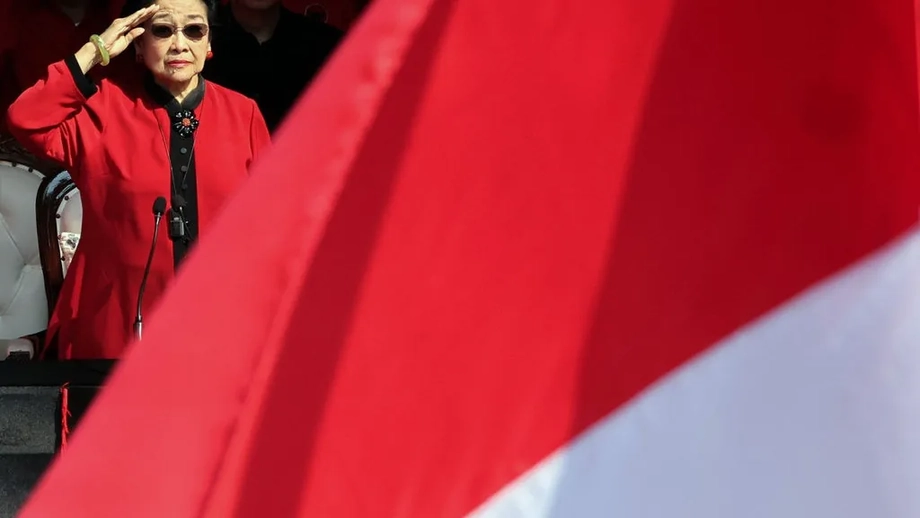
PDI Perjuangan chair Megawati Soekarnoputri said on November 19, 2026, that she would remain outside President Prabowo Subianto's government, even though she said she had been offered a place in it. Her refusal came at the end of a speech that challenged the government over law enforcement and the public's freedom to speak.
Contents
- A refusal paired with a challenge to the government
- What did she say about speaking freely?
- Why did she say she was challenging the government?
- What does staying outside government mean?
- What did she say about buzzers and journalists?
- Why did she call being president easy?
- What are her five dimensions of leadership?
- What was the occasion?
- Key Points
'If I am offered a place in government, I say thank you. I will stay outside,' Megawati told a graduation ceremony at the Abdi Negara School of Government, known as STIPAN. She also said her criticism was not a signal that her party wanted to join the Cabinet.
The speech linked her political stance to Pancasila, Indonesia's five principle state philosophy, and to her belief that citizens should be able to express their views without waiting for permission. Megawati, Indonesia's fifth president and the daughter of founding president Sukarno, urged students to understand Pancasila's history and put its values into practice.
Her comments therefore combined two messages: she would not take a government post, and she would continue to criticize how the country is governed. She said that criticism was a form of civic engagement, not an attempt to overthrow the state.
What did she say about speaking freely?
Megawati said people seemed increasingly reluctant to speak unless someone gave them a direction. She argued that the Constitution protects citizens' right to express their views, and urged the audience not to assume that voicing an opinion would lead to arrest.
Megawati described the atmosphere this way:
Everyone seems to like it this way now, as if they always need a command.
She also said she had been called in for questioning by police three times and by prosecutors once. She presented her attendance at those appointments as obedience to the law, not defiance of it, while insisting that she was not afraid to speak publicly.
In a sharply worded moment, she accused police of misleading the public and challenged the idea that authorities could arrest everyone who voiced criticism. The remarks were part of her broader argument that people should use their constitutional rights rather than stay silent out of fear.
Does the police want to arrest all of you? And then arrest me? I am not afraid.
Megawati also recalled her role in separating the Indonesian National Police, or Polri, from the military. She questioned why law enforcement powers could be abused, and referred to an allegation of illegal wiretapping associated in her remarks with former police chief Listyo Sigit Prabowo. Her speech did not set out details of the allegation.
Why did she say she was challenging the government?
Before rejecting a government role, Megawati said the country's direction troubled her. She described her statement as a challenge to the government, speaking in her personal capacity as Sukarno's daughter and asking what would happen to the republic if conditions continued as they were.
Megawati put the challenge this way:
As the child of the Proclaimer, subjectively, I challenge the government. If things continue like this, what will happen to the republic we love?
She stressed that her criticism was not an act of treason. In the same speech, she joked that some people might think she should be arrested for speaking so openly, then said she would still choose to remain outside the government if invited in.
The distinction matters to her political message: she presented a place in the Cabinet as separate from the right to support or criticize the government. Her statement did not give details about who made the offer or when it was made.
What does staying outside government mean?
Megawati's remarks reaffirmed that she did not want a government position and that her criticism should not be read as a request for one. For PDI Perjuangan, remaining outside the Cabinet leaves the party free to state its position independently of government appointments.
That does not by itself mean the party has no influence or that it has declared itself an opposition party in the strict parliamentary sense. Indonesia's political system is presidential: the president leads the executive branch, while parties in the legislature can support, question or oppose government policies. A party can therefore remain outside the Cabinet while still taking part in parliamentary politics.
Megawati tied her choice to a wider principle: political influence need not depend on holding a government job. Her speech focused on the responsibilities of power and the need for citizens and leaders to keep speaking about the country's direction.
What did she say about buzzers and journalists?
Megawati also criticized online political commentators commonly called buzzers, a term used in Indonesia for people who promote political messages on social media. She argued that the House of Representatives should create laws to regulate them and challenged them to meet her in person for discussion or debate.
During her STIPAN oration at Graha Ronatama in Depok, West Java, on November 19, 2026, Megawati brought up the journalists covering her and cautioned them, 'You are not a buzzer.' She said buzzers only dared to express their views on social media and should face her directly. 'If they or I are like that, they should face me,' she said.
She said she had invited people who criticized her online to speak with her directly, but none had accepted. She recalled challenging them: 'Why are you like that? Come here, meet me, discuss, debate.' She said, 'Never, not a single person dared.' Her argument drew a line between social media commentary and direct public debate, though she did not explain what legal rules she wanted lawmakers to adopt.
The proposal adds a separate issue to her appeal for free expression. Megawati urged ordinary citizens not to be afraid to speak, while also calling for laws governing a category of online political speech. The speech did not set out how such rules would protect open debate or what conduct they would cover.
Why did she call being president easy?
Megawati used her own experience in office to explain why she sees leadership as harder than holding the title of president. She recalled being treated with deference, including having doors opened for her, and said a president may not have to handle many everyday tasks personally.
She contrasted those privileges with the risks that come with leading. A leader, she said, carries responsibility and owes dedication to the people, the nation and the state. Carelessness can bring a leader down, she warned, using the image of sharp stones on a path.
Being a leader is difficult, but being president is easy.
Megawati described her life as a 'cakra manggilingan', a Javanese expression for a wheel that keeps turning through rises and falls. She said the tests of history had led her to think about what gives a leader a genuine sense of purpose, especially when power brings temptation.
She said leaders are tested on their consistency, resolve and conduct while in office. In her view, holding power makes those qualities especially important because leaders must make choices that affect other people.
What are her five dimensions of leadership?
Megawati said she had drawn five dimensions of strategic leadership from reflection on her life and experience. She named belief, steadfastness, courage, patience and, ultimately, truth. She connected those qualities to strategic thinking, meaning the ability to consider choices and consequences before acting.
Her speech presented the list as a lesson for future leaders rather than a detailed governing plan. Belief gives a leader a foundation, while steadfastness and courage help a leader maintain a position under pressure. Patience allows time for difficult work, with truth as the destination she described.
Megawati also asked students and young people to become independent and not to fear speaking up for what is right. She said her energy remained strong despite approaching her 80th birthday in 2027, comparing it to the spirit of a 17 year old.
What was the occasion?
The remarks came during the open senate graduation ceremony for STIPAN's undergraduate program XIX and postgraduate program XII, in the first semester of the 2026/2027 academic year, at Graha Ronatama in Depok, West Java, on November 19, 2026. Megawati's scientific oration was titled 'Building Strategic Government Leadership and Indonesia's Geopolitical Challenges.'
The ceremony graduated 150 students: 79 in government science at undergraduate level, 22 in political science at undergraduate level, and 49 in government science at postgraduate level. The undergraduate programs accounted for 101 graduates, about two thirds of the total; the postgraduate program accounted for the other 49.
Attendees included Ermaya Suradinata, chair of the Abdi Negara Nusantara Education Foundation; PDI Perjuangan Secretary General Hasto Kristiyanto; party official Ribka Tjiptaning; and Jakarta Deputy Governor Rano Karno, along with regional officials.
Key Points
- Megawati said on November 19, 2026, that she would stay outside President Prabowo Subianto's government despite an offer to join.
- She criticized law enforcement and urged people not to be afraid to express their views.
- She said her challenge to the government was not treason or a request for a Cabinet position.
- She proposed laws to regulate political buzzers and called for face to face debate.
- Her five stated leadership dimensions were belief, steadfastness, courage, patience and truth.
- The STIPAN ceremony graduated 150 students across three degree programs.