National Rate Reaches Highest Since June 2023
Sri Lanka's year on year inflation rose to 8.5% in October 2026, up from 8.1% in September, according to the Department of Census and Statistics. The national measure, called the National Consumer Price Index (NCPI), now stands at its highest level since June 2023. That means the price of a fixed basket of goods and services was 8.5% higher than in October 2025.
Contents
- National Rate Reaches Highest Since June 2023
- What Changed in October Prices
- Transport Pushes the Annual Number Higher
- Housing, Services and Education Add to the Bill
- A Short Timeline of Price and Policy Moves
- Food Costs Rise, but Some Staples Fall
- How the National Index Differs From Colombo's Measure
- The Central Bank Moved Before the National Data
- Why 9 Percent Is the Number to Watch
- Liquidity Is Part of the Policy Response
- What Households and Businesses Feel First
- What the Stock Market Did
- Reading the Fine Print in the Numbers
- What Remains Unclear and What Comes Next
- Key Points
The same data showed food inflation rising from 6.9% to 7.2%, while nonfood inflation rose from 9.1% to 9.5%. The gap matters for daily life: food affects what families buy at markets and shops, while nonfood costs include travel, rent, school fees, fuel, health and restaurant bills. In October, the nonfood side was the larger force behind the increase. Headline inflation is the all items rate most often quoted.
What Changed in October Prices
The NCPI, which uses 2021 as its base year, rose from 224.2 in September to 225.1 in October. A base year gives the starting point against which price changes are measured. The monthly increase was 0.41%, and it raised the expenditure value of the statistical market basket by Rs. 466.07. A market basket is the list of goods and services used to track prices. It is not one family's shopping list, but it helps show how the cost of similar purchases changes over time.
Nonfood items contributed 0.33 percentage points to the monthly rise, compared with 0.08 percentage points from food. Transport was the largest monthly contributor at 0.19%, led by petrol at 0.15%, with smaller contributions from diesel, vehicle servicing and three wheeler fares. Education added 0.05% because of tuition fees, and restaurants and hotels added 0.03%.
Food moved in both directions during the month. Vegetables rose 0.25%, limes rose 0.20% and milk powder rose 0.07%. Fresh fish fell 0.27%, green chilies fell 0.16% and fresh fruits fell 0.05%, softening the monthly food increase.
Transport Pushes the Annual Number Higher
Over the 12 months to October, nonfood items contributed 5.29 percentage points to the 8.5% national inflation rate, while food contributed 3.21 percentage points. Contribution figures explain how much each part adds to the total rate, so a category with a large contribution can have an outsized effect on the headline number.
Transport alone contributed 2.45 percentage points, the biggest nonfood item. Petrol contributed 1.21 points, bus fares 0.36, diesel 0.20 and school or preschool transport 0.19. Figures published with the national index put annual transport inflation at 20.9%, up from 18.7% in September.
The transport increase followed a fuel price decision at the end of October. The published pump price change took effect on November 2, as set out in the fuel price increase. Energy Minister Anura Karunathilaka said fuel import expenditure was about 50% higher than last year's level, and the energy import bill had reached about US$4.5 billion by September. Those figures help explain why the state supplier sought higher pump prices, while also adding costs for motorists and businesses.
Housing, Services and Education Add to the Bill
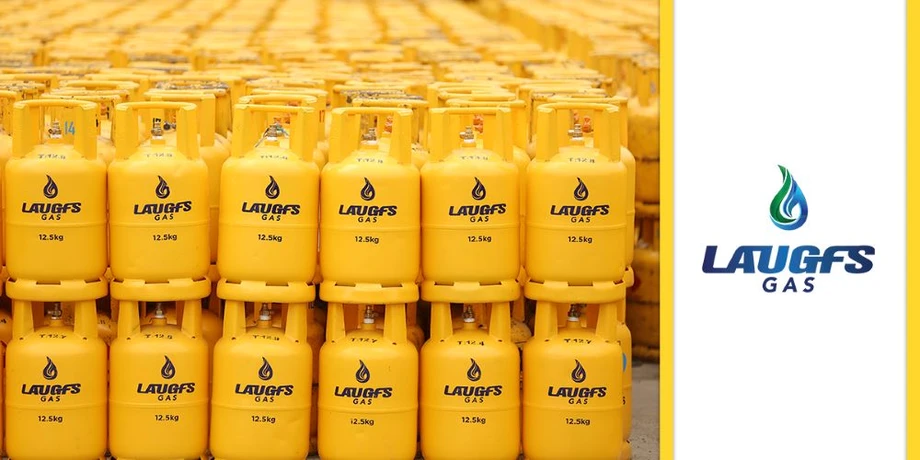
Housing, water, electricity, gas and other fuels contributed 1.17 percentage points to annual inflation. Within that group, housing rent added 0.46 points, maintenance materials 0.30 and LP gas 0.23. Those items show how price pressure reached both household budgets and the cost of running a home.
Restaurants and hotels contributed 0.52 points, education 0.39, miscellaneous goods and services 0.26 and health 0.17. Household furnishings and routine maintenance added 0.14, clothing and footwear 0.11, recreation and culture 0.04, alcoholic beverages, tobacco and narcotics 0.02, and communication 0.01.
Education prices also accelerated over the year. The annual education rate rose to 10.4% in October from 9.1% in September, while figures published with the national index showed recreation and culture at 2.6% and miscellaneous goods and services at 7.7%.
A Short Timeline of Price and Policy Moves
The inflation story unfolded over several weeks, with price changes, a budget date and a policy decision arriving in sequence.
- October 1: A fuel price adjustment took effect, adding pressure to travel and business costs during the month measured by the October Colombo index.
- October 2026: The NCPI reached 8.5%, while the Colombo Consumer Price Index reached 8.3%.
- November 2: Ceylon Petroleum Corporation raised petrol and diesel prices, with 92 Octane Petrol set at Rs. 424 per litre and Auto Diesel at Rs. 397.
- November 12: The 2027 budget was scheduled for presentation.
- November 19 to 20: The Monetary Policy Board met and announced a higher policy rate and a higher reserve requirement for commercial banks.
- November 23: The October NCPI figures were released.
- End of November 2026: The central bank expects headline inflation to be around 9%.
- Second half of 2027: The central bank expects inflation to return to its 5% target.
The order matters because the central bank tightened before the national inflation figure was published, using the Colombo measure and other indicators available at the time.
Food Costs Rise, but Some Staples Fall
Food inflation rose to 7.2% from 6.9%, but the detailed food basket shows that the increase was not uniform. Vegetables contributed 0.79 points to annual inflation, fresh fish 0.47, dried fish 0.40, big onions 0.38, milk powder 0.26 and fresh fruits 0.24. Dried chilies, chili powder, green chilies, chicken and eggs added smaller amounts.
Some staple prices moved the other way. Coconuts subtracted 0.48 points from annual food inflation, rice subtracted 0.32 and limes subtracted 0.07. That means their annual prices were lower than in October 2025, helping offset increases elsewhere in the basket.
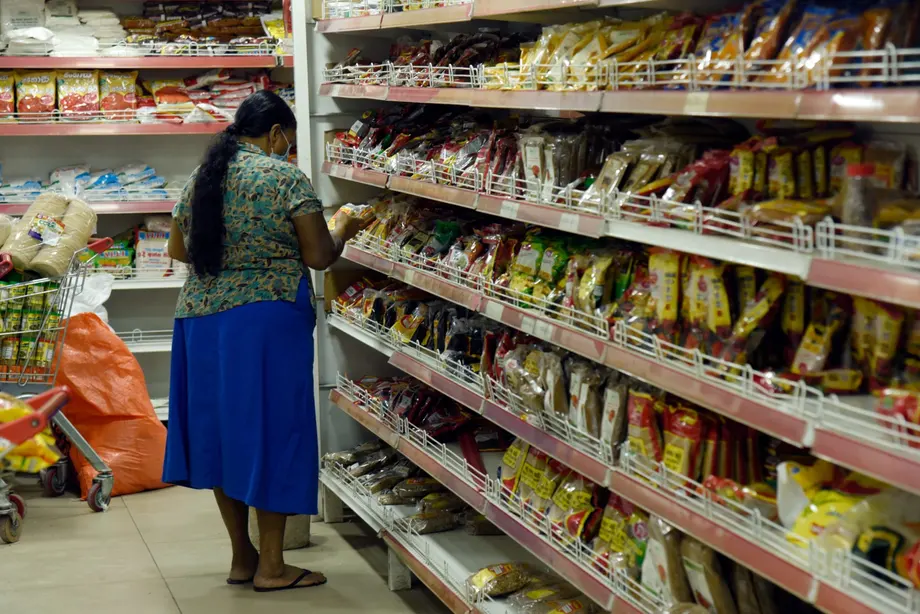
For shoppers, the pattern helps explain why one household may feel inflation more sharply than another. A family buying more fish, onions and vegetables would see a different change from one spending more on rice and coconuts. The index measures an average basket, not each household's exact bill.
How the National Index Differs From Colombo's Measure
The NCPI covers 485 items that represent household consumption across Sri Lanka. It is compiled about three weeks after each month ends and released alongside the Colombo Consumer Price Index (CCPI), the better known measure for the capital. The CCPI rose to 8.3% in October from 8.0% in September, according to the October CCPI reading.
Both measures showed prices rising above the Central Bank's 7% upper target for a fourth month. The target midpoint is 5%. Core inflation, which leaves out items whose prices can swing sharply, was 5.6% in the central bank's rate decision account and 6.7% in figures published with the national index.
The difference between national and Colombo inflation is useful because households outside the capital buy different things and face different transport and housing costs. A national index gives a broader view, while the Colombo index tracks the main commercial centre and often arrives earlier.
The Central Bank Moved Before the National Data
The Central Bank of Sri Lanka raised its Overnight Policy Rate by 25 basis points on November 20, taking the main policy rate from 8.75% to 9%. A basis point is one hundredth of a percentage point, so the move was a quarter of a percentage point. The decision was made at the Monetary Policy Board's November 19 meeting and announced the next day, before the October NCPI figures were released on November 23.
Governor Dr. Nandalal Weerasinghe said inflation was running above what officials expected when they tightened policy in May. The central bank linked price pressure to a prolonged conflict in the Middle East and higher global energy costs, even though global energy prices had eased somewhat in recent weeks. The full basket measure had risen from 2.2% in March.
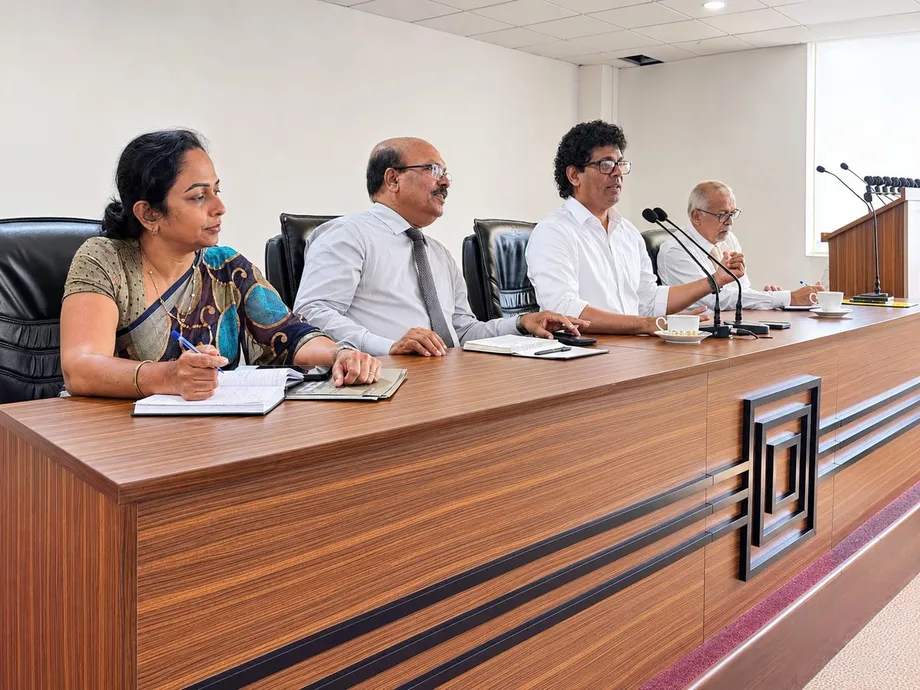
Dr. Weerasinghe told the monthly monetary policy review meeting that the latest forecast was worse than the earlier path. He said:
This is higher than what we expected, especially when we took the decision to tighten back in May.
The November rate rise also included an increase in the Statutory Reserve Ratio for commercial banks by 1 percent. That ratio is the share of deposits banks must keep at the central bank. Raising it leaves banks with less money to lend, which can cool demand and credit growth.
Why 9 Percent Is the Number to Watch
Central Bank Governor Dr. Nandalal Weerasinghe said the forecast chart pointed to headline inflation around 9% by the end of November 2026. He said the central path of that chart showed inflation staying near that level in the near term, with room for movement above or below it.
Dr. Weerasinghe explained the forecast by referring to the chart used in the policy review. He said:
If you look at the relevant chart, the middle path of the fan chart indicates that inflation, headline inflation, is likely to reach 9 percent by end of this month and it will remain around that level; may be a little bit higher or lower around that level in the near term.
Short term inflation expectations had also shifted upward, Dr. Weerasinghe said. Expectations matter because businesses may raise prices and workers may ask for higher wages when they believe high inflation will last. He acknowledged that higher rates may have little immediate effect on imported energy prices, so part of the value of the move is to signal the central bank's stance. The central bank expects inflation to stabilize and return to its 5% target in the second half of 2027.
Liquidity Is Part of the Policy Response
The central bank also used bank reserves to address what it described as excess structural liquidity. Liquidity means money available in the financial system. Structural liquidity is money that remains in the system for longer periods, rather than short term cash used for daily operations.
Dr. Weerasinghe said about Rs. 460 billion of structural liquidity could be absorbed permanently. He said the liquidity position had enough space for that move while still allowing the central bank to manage short term interest rates.
Central Bank Governor Dr. Nandalal Weerasinghe described the aim in direct terms at the policy review meeting. He said:
This is to prevent higher expansion of credit in the economy by the banking sector. We think we can bring inflation back to target level soon.
The policy choice links the price data to bank lending. When credit expands quickly, businesses and households can spend more, which can add pressure to prices when supplies of goods and services are tight.
What Households and Businesses Feel First
The October basket became Rs. 466.07 more expensive to buy than in September. That figure refers to the statistical basket, but the categories behind it match common expenses. Petrol, diesel and bus fares affect commutes, deliveries and school runs. Rent, maintenance materials and LP gas affect homes. Tuition fees, restaurants and hotels affect services that families cannot easily avoid.
The pump price changes show the scale in everyday terms. After the earlier increase, 20 litres of 92 Octane Petrol cost Rs. 8,480, Rs. 200 more than at the previous price. A business buying 100 litres of Auto Diesel paid Rs. 39,700, Rs. 500 more than before. Public transport authorities indicated bus fares would not rise immediately after the Rs. 5 diesel increase, even as the annual NCPI data showed bus fares adding 0.36 points to inflation.
Food changes were more mixed. Vegetables, fish, onions and milk powder became more expensive than a year earlier, while rice and coconuts were cheaper. Lower prices in some items help, but they do not cancel the effect of higher transport and housing costs for households that spend little on those falling items.
What the Stock Market Did
Sri Lankan shares fell again after the central bank tightening and the 8.5% inflation reading. The CSE All Share index dropped 0.6% to 21,242.52, following a fall on Friday. Healthcare and real estate stocks were among the main drags.
Trading also slowed. Turnover fell to Rs. 1.05 billion from Rs. 2.33 billion, and volume dropped to 46.5 million shares from 121.8 million. Foreign investors were net buyers of Rs. 63.6 million, while domestic investors were net sellers of Rs. 1.02 billion.
Higher interest rates can affect share prices through two simple channels. They raise the discount rate investors use to value future profits, meaning expected earnings years from now are worth less today, and they increase borrowing costs for companies and households. Real estate shares can be sensitive to both channels because property projects often rely on debt.
Thinner trading can make price moves sharper. When fewer shares change hands, a burst of domestic selling can outweigh modest foreign buying and push the index around more quickly.
Reading the Fine Print in the Numbers
The NCPI uses spending weights from the 2019 Household Income and Expenditure Survey. Those weights decide how much each item counts in the basket. Sri Lanka's economy has passed through shocks and changes in real income since 2019, so household spending patterns may have shifted. A fixed weight from 2019 may not fully reflect what families buy in 2026.
The data also comes with calculation limits. Some 12 month moving average cells in the tables were blank or misaligned. A moving average smooths month to month swings over a set period, so missing cells make it harder to see that smoothed trend. Component percentages do not always add exactly to group totals because of rounding, and percentage changes in the main trend table were calculated using rounded index numbers, which can create small differences when checked against expenditure values.
There were minor presentation errors too. One table repeated entries for payments to medical laboratories, some place names appeared in different spellings, and a television price decrease in the percentage column was missing its negative sign. These details matter for readers trying to audit each line of the index.
What Remains Unclear and What Comes Next
The census department did not give a separate estimate for how much of October's transport contribution came from the late October fuel decision, and it did not give an exact next release date. Its method is to compile the NCPI about three weeks after each month ends, so a November reading would be expected after November closes. The central bank's next marker is the end of November 2026, when it expects headline inflation to be around 9%.
The central bank also said it would consider new economic data and could lower rates again once inflation was moving down toward target. No return date was given beyond the second half of 2027.
For now, the concrete facts are the 8.5% national rate, the 8.3% Colombo rate, the 0.41% monthly rise and the central bank's decision to raise rates and bank reserve requirements. Together, they show a price problem spread across transport, housing, services and food, with policy makers trying to stop it from becoming a lasting pattern.
Key Points
- Annual NCPI inflation rose to 8.5% in October 2026 from 8.1% in September, the highest since June 2023.
- Food inflation rose to 7.2%, while nonfood inflation climbed to 9.5%.
- Nonfood items contributed 5.29 percentage points to annual inflation, led by transport at 2.45 points.
- The monthly index rose 0.41%, adding Rs. 466.07 to the statistical market basket.
- The Colombo index reached 8.3%, and prices stayed above the central bank's 7% upper target for a fourth month.
- The central bank raised its policy rate by 25 basis points and increased the Statutory Reserve Ratio by 1 percent.
- The central bank expects headline inflation near 9% at the end of November 2026 and a return to the 5% target in the second half of 2027.