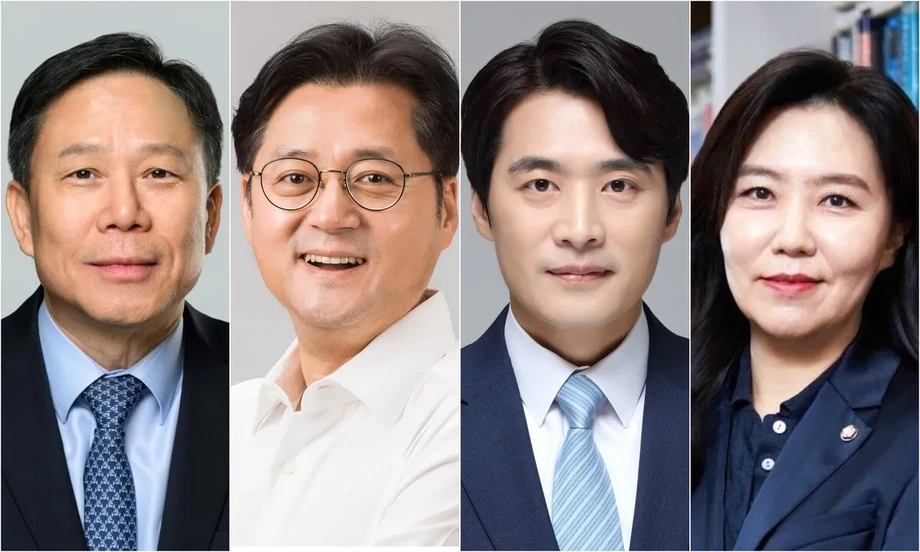
A Sweeping Reshuffle of Foreign Policy and Intelligence Leaders
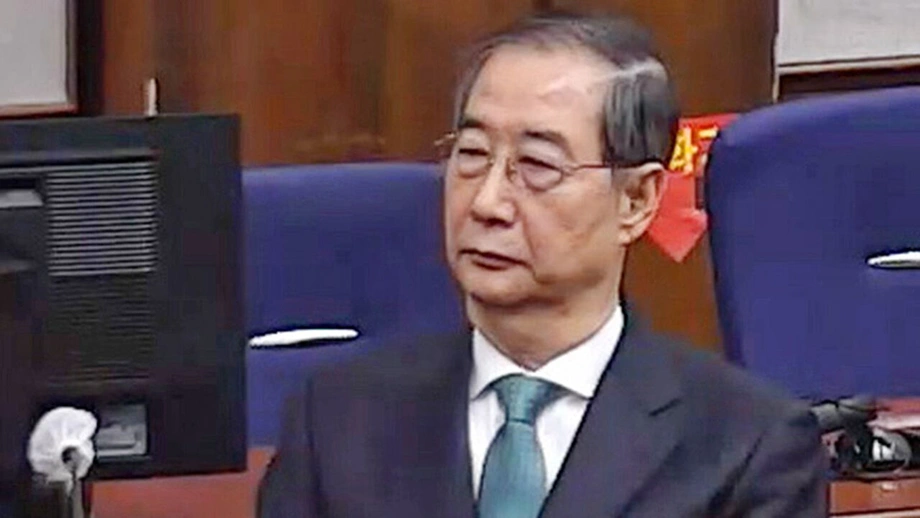
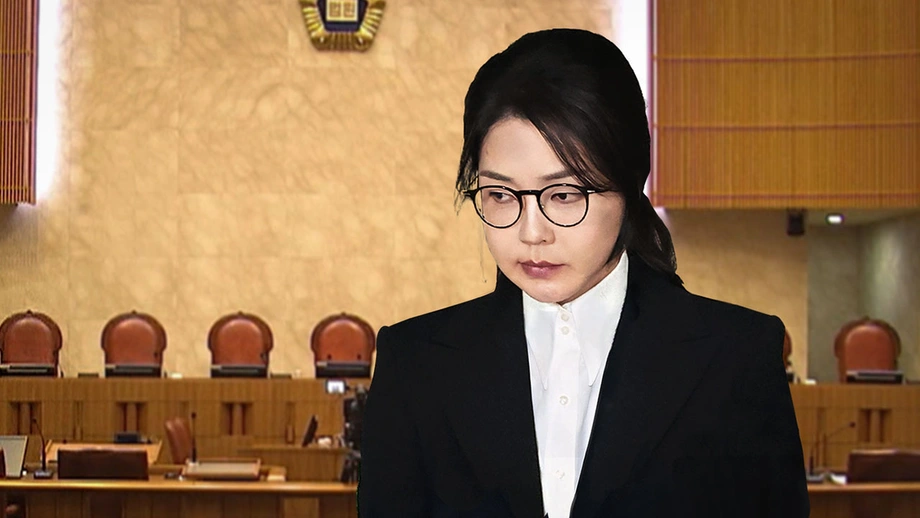
South Korean President Lee Jae-myung on November 23, 2026, replaced his top diplomatic, unification, and intelligence officials, nominating former Justice Minister Kang Kum-sil to lead the National Intelligence Service (NIS). The overhaul comes 1 year and 5 months after Lee took office following his victory in the June 2025 snap presidential election. Alongside the intelligence chief, Lee named new candidates to head the Ministry of Foreign Affairs, the Ministry of Unification, the Ministry of the Interior and Safety, and the Ministry of Culture, Sports and Tourism.
Contents
- A Sweeping Reshuffle of Foreign Policy and Intelligence Leaders
- Repairing Intelligence Rift with Washington Ahead of Miami Summit
- A Trailblazing Jurist Steps Into the Shadows of Espionage
- Deep Political Trust Versus Zero Intelligence Experience
- Veteran North America Hands Take Charge of Diplomacy and Unification
- Loyalists Elevated to Interior and Culture Ministries
- At a Glance
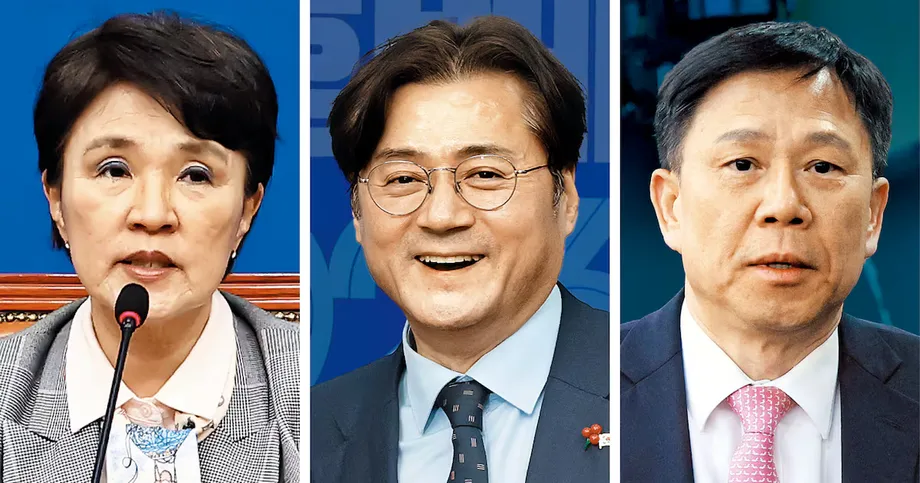
Presidential Chief of Staff Lim Kwang-hyun announced the five cabinet-level nominations during an afternoon briefing at Chunchugwan, the press center at the Blue House. Lim said the president selected the new team to inject fresh leadership into state affairs, accelerate policy execution, and ensure the public feels the tangible results of government initiatives. President Lee appointed Lim Woong-soon, the Second Deputy Director of the National Security Office (NSO), as Foreign Minister, and tapped former Blue House Senior Secretary for Political Affairs Hong Ihk-pyo to serve as Unification Minister.
On the domestic front, President Lee selected Democratic Party lawmaker Han Jun-ho to lead the Ministry of the Interior and Safety, while Blue House Senior Spokesperson Kang Yu-jung was nominated as Minister of Culture, Sports and Tourism. All five nominees must undergo confirmation hearings in the National Assembly before taking office, though under South Korean law the president can appoint cabinet ministers and the intelligence chief even if parliament does not adopt a confirmation hearing report.
Lim Kwang-hyun explained the administration's goals during the Chunchugwan briefing.
This personnel reshuffle focuses on adding vitality to state administration with new and fresh leadership for the future, while strengthening the speed of governance, execution power, and public responsiveness. Amid a turbulent international order, we will maximize the achievements of pragmatic diplomacy and proactively open the path toward peaceful coexistence on the Korean Peninsula, while firmly protecting public safety and swiftly pursuing major transformations felt by the people, such as region-led growth and a leap forward as a cultural powerhouse.
Repairing Intelligence Rift with Washington Ahead of Miami Summit
The simultaneous replacement of NIS Director Lee Jong-seok, Unification Minister Chung Dong-young, and Foreign Minister Cho Hyun clears out the administration's prominent "self-reliance" faction ahead of a high-stakes diplomatic calendar. In South Korean foreign policy, the self-reliance camp prioritizes independent inter-Korean engagement and reconciliation with Pyongyang, whereas the "alliance" faction favors tight coordination with the United States to deter North Korean nuclear threats.
Diplomatic observers view the removal of Lee Jong-seok and Chung Dong-young as an effort by the Blue House to repair strained ties with Washington before the Group of 20 (G20) summit in Miami, Florida, scheduled for December 14 and 15, 2026. Preparations are underway for a potential "golf summit" between President Lee and U.S. President Donald Trump during the Miami gathering.
Relations between the two allies' security agencies have been tested over the past year by three specific disputes:
- November 2025: The NIS under Director Lee Jong-seok clashed with U.S. authorities over the handling and response to a massive personal data leak at Coupang, an e-commerce giant listed on the New York Stock Exchange.
- March 2026: Unification Minister Chung Dong-young publicly disclosed during a National Assembly Foreign Affairs and Unification Committee session that North Korea was operating a uranium enrichment facility in Kusong, North Pyongan Province. The U.S. government judged this disclosure to be an unauthorized leak of combined South Korea-U.S. classified intelligence and has restricted intelligence sharing with Seoul ever since.
- June 2026: The NIS failed to attend the 5th South Korea-U.S.-Japan working group meeting on countering North Korean cyber threats held in Washington, D.C. While the NIS stated there was no misunderstanding with Washington, U.S. authorities restricted the agency's participation due to information security concerns.
Chief of Staff Lim pushed back against interpretations that the shakeup represents a doctrinal shift away from inter-Korean engagement toward a purely Washington-centric stance. Lim told reporters at the briefing that the personnel changes are designed to maximize national interests across trade, energy, and artificial intelligence as well as traditional security.
Lim addressed questions regarding whether the government's foundational foreign policy would change.
A firm South Korea-U.S. alliance is the baseline not only for the United States but also for our government, and the task of establishing peace on the Korean Peninsula is likewise our government's baseline. You can view this as our determination to consistently pursue these areas.
A Trailblazing Jurist Steps Into the Shadows of Espionage
If confirmed by the National Assembly, the 69-year-old Kang Kum-sil will become the first female chief of South Korea's primary spy agency since its founding as the Korean Central Intelligence Agency (KCIA) in 1961. Born in Jeju, Kang graduated from Kyunggi Girls' High School and Seoul National University School of Law. After passing the bar and completing the 13th class of the Judicial Research and Training Institute, she served as a judge from 1983 to 1995. In 1989, she led the establishment of Uri Law Research Society, an association of progressive judges within the judiciary.
After leaving the bench, Kang became South Korea's first female managing partner of a law firm when she led Jipyong in 2000. From 2001 to 2003, she served as vice president of Minbyun (Lawyers for a Democratic Society), the same progressive human rights legal organization where President Lee practiced law after overcoming childhood poverty as a factory worker. In 2003, at age 46, President Roh Moo-hyun appointed her as the administration's inaugural Justice Minister, making her both the youngest person and the first woman to hold the post. She later joined the Uri Party and ran for Mayor of Seoul in 2006, losing to Grand National Party candidate Oh Se-hoon.
Chief of Staff Lim highlighted Kang's legal career and international roles, which included serving as the Foreign Ministry's Ambassador for Women's Human Rights, when explaining why President Lee chose her to lead the intelligence agency.
Candidate Kang is a reform-minded former judge who served as the first female Justice Minister, leading prosecutorial reform, and is a resolute and rational legal professional who has worked across the international stage, including as Ambassador for Women's Human Rights at the Ministry of Foreign Affairs. With her conviction in defending the neutrality of powerful state institutions, she is the right person to strengthen democratic control over the National Intelligence Service and decisively resolve new security challenges, such as cyber threats, through international cooperation.
Following the announcement, Kang released a brief statement acknowledging the gravity of her nomination.
I have been nominated for a heavy responsibility at a time when global foreign affairs and security are severe. I will do my utmost for the national interest of the Republic of Korea and the well-being of the people.
Deep Political Trust Versus Zero Intelligence Experience
Within the ruling Democratic Party, officials attributed Kang's surprise nomination to the deep personal trust President Lee developed in her over two presidential campaigns. When Lee was Governor of Gyeonggi Province in 2021, Kang served as co-chair of the Gyeonggi Province Special Committee on Climate Response and Industrial Transition. She served as the head of Lee's campaign sponsors' association during the 2021 party primary and the 2022 presidential election, and returned as general election committee chair for Lee's victorious 2025 presidential campaign. During the campaign, Kang appeared on television broadcasts to argue that all ongoing criminal trials against Lee should be suspended.
After the 2025 election, Kang led the presidential special envoy delegation to France, holding a luncheon press conference with correspondents in Paris on July 17, 2025, after delivering Lee's personal letter. In January 2026, she was appointed as the Foreign Ministry's Global Climate and Environment Ambassador. Kang also served from 2024 to 2025 as the sponsors' association chair for current National Security Office Director Wi Sung-lac when Wi was a proportional representation lawmaker, leading a political insider to note that Wi recommended Kang for the NIS post.
A pro-Lee lawmaker within the Democratic Party explained the president's affinity for Kang.
Candidate Kang never demanded anything in return for helping during the presidential elections. President Lee placed great trust in Candidate Kang for having such backbone.
Despite that political trust, Kang's complete lack of experience in intelligence, counterespionage, or national security operations sparked immediate concern even within the ruling camp. Lawmakers and party officials described the nomination as "completely unexpected" and "beyond imagination." Critics question how a jurist whose primary administrative credential is prosecutorial reform two decades ago will manage a sprawling clandestine agency confronting North Korean nuclear advancements and delicate U.S. intelligence friction.
A senior pro-Lee lawmaker in the Democratic Party voiced skepticism about her ability to command the spy agency.
When Candidate Kang served as Justice Minister in the past, her biggest problem was failing to establish firm control over the prosecutorial organization. Will she be able to take command of the National Intelligence Service, which is far more political and complex than the Ministry of Justice?
Political commentator Choi Yo-han also questioned her qualifications for the specialized post.
About the only thing that explains Candidate Kang's selection is that she understands the president's governing philosophy well. The NIS director position requires handling diplomatic and security issues involving not only the United States, but also Russia, China, and North Korea, and I am skeptical whether Candidate Kang possesses the expertise to overcome such difficulties. It is questionable whether Candidate Kang showed organizational command when she served as the first female Justice Minister. With inter-Korean relations and South Korea-U.S. relations entangled, verification is needed on whether she can lead the NIS organization and coordinate diplomatic and security challenges.
Because Kang is unfamiliar with internal intelligence operations, a key Democratic Party official predicted the Blue House will exercise greater direct control over the agency through its 1st, 2nd, and 3rd Deputy Directors and the Director of Planning and Coordination. Currently, the NIS Director of Planning and Coordination—who oversees the agency's budget, personnel, and organization—is Kim Hee-soo, an attorney who previously served as President Lee's defense lawyer in the Ssangbangwool illegal remittance to North Korea case.
To counter criticism regarding her lack of diplomatic security credentials, Blue House officials pointed to her private-sector experience in China. While working as an attorney at Law Firm Won in July 2013, Kang was appointed as a special investment promotion advisor to the city of Qiqihar in China's Heilongjiang Province. A Blue House official noted that the practical experience and personal networks she built through her China-related activities could assist her duties as NIS director.
Veteran North America Hands Take Charge of Diplomacy and Unification
To replace Foreign Minister Cho Hyun, a specialist in multilateral diplomacy, President Lee turned to Lim Woong-soon, a traditional career diplomat widely regarded in Seoul as a dedicated "North America expert." Lim passed the 22nd Foreign Service Examination in 1988 and held key posts including secretary to the Foreign Minister, deputy director-general for the North Korean nuclear negotiation planning team at the Office of Korean Peninsula Peace and Security Affairs, personnel director, deputy consul general in New York, political minister at the South Korean Embassy in Washington, and Ambassador to Canada. Following the launch of the Lee administration, he was appointed Second Deputy Director of the National Security Office on June 15, 2025.
Chief of Staff Lim Kwang-hyun praised the Foreign Minister nominee's track record in alliance management.
Candidate Lim is a traditional career diplomat who served as minister at the embassy in the United States and has given concrete shape to national-interest-centered pragmatic diplomacy while serving as Second Deputy Director of the National Security Office in the People's Sovereignty Government. Based on an ironclad South Korea-U.S. alliance, he is the right person to further strengthen bilateral cooperation and broaden our diplomatic horizons across security, trade, industry, and advanced technology to maximize the results of pragmatic diplomacy.
For the Ministry of Unification, which manages inter-Korean relations, President Lee nominated 59-year-old Hong Ihk-pyo, replacing Chung Dong-young. Like Kang Kum-sil, Hong is viewed as carrying far less ideological baggage than the outgoing self-reliance faction leaders. Born in Seoul in 1967, Hong graduated from Gwanak High School and Hanyang University, where he earned a bachelor's degree in political science and diplomacy and a doctorate in political science.
Before entering electoral politics, Hong worked as a North Korean economy specialist and professional researcher at the Korea Institute for International Economic Policy (KIEP) and taught as an adjunct professor at the University of North Korean Studies. In 2007, during the Roh Moo-hyun administration, he gained hands-on inter-Korean experience serving as policy advisor to then Unification Minister Lee Jae-joung.
Hong entered parliament in the 19th general election in 2012 representing Seoul's Seongdong B district, winning re-election in the 20th and 21st general elections to become a three-term lawmaker. Within the Democratic Party, he served as chief spokesperson, director of the Institute for Democracy, and policy committee chair before being elected floor leader in September 2023. He also served on the National Assembly's Foreign Affairs and Unification Committee. In January 2026, President Lee appointed Hong as Senior Secretary for Political Affairs at the Blue House, a post he resigned from in early November 2026 ahead of the cabinet reshuffle.
Chief of Staff Lim described Hong as a seasoned policy expert capable of navigating inter-Korean tensions.
At a critical turning point for easing inter-Korean tensions and building trust, he is the right person to lead diverse and practical measures to create an era of peaceful coexistence on the Korean Peninsula.
Loyalists Elevated to Interior and Culture Ministries
The reshuffle blends figures from the traditional pro-Roh Moo-hyun and pro-Moon Jae-in factions with core loyalists from President Lee's own political inner circle. For Minister of the Interior and Safety, which oversees national police, disaster management, local governments, and elections, Lee nominated two-term Democratic Party lawmaker Han Jun-ho.
A former broadcaster and announcer at Munhwa Broadcasting Corporation (MBC), Han entered politics and served as the Democratic Party's floor spokesperson and as a Supreme Council member. During the 2022 presidential election, Han worked directly beside Lee as the candidate's chief of staff for accompanying operations. In the Democratic Party primary for Gyeonggi Province Governor ahead of the June 3, 2026 local elections, Han ran as a candidate widely labeled "Myung-pick" (President Lee's personal choice), though he was eliminated in the primary.
Chief of Staff Lim emphasized Han's legislative work across land, transportation, and artificial intelligence.
As a former journalist and two-term National Assembly member, he has built broad experience across diverse fields including land, transportation, and artificial intelligence, making him a next-generation leader equipped with an understanding of our governing philosophy and execution power. We expect him to reflect the voices of citizens on the ground into policy, protect public safety more thickly based on dynamic leadership, and breathe new vitality into region-led growth.
To lead the Ministry of Culture, Sports and Tourism, President Lee promoted his Chief Spokesperson, Kang Yu-jung. Before entering politics, Kang spent nearly 20 years in the cultural sector as a film and arts critic and as a professor at the College of Global Cultural Contents at Kangnam University. She also served as an organizing committee member for the Bucheon International Fantastic Film Festival (BIFAN) and was a member of the National Assembly's Culture, Sports and Tourism Committee before moving to the Blue House.
Chief of Staff Lim outlined the administration's expectations for Kang Yu-jung at the Culture Ministry, before offering a closing pledge on behalf of the entire presidential staff.
As a culture and arts critic and university professor, she honed her expertise in the cultural field for nearly 20 years, and is an expert equipped with state administration experience as a National Assembly Culture, Sports and Tourism Committee member and Blue House Senior Spokesperson. With her deep understanding of culture and arts and fresh perspective, she is the right person to strengthen the roots of basic arts, significantly raise public responsiveness across all ministry operations, and lead a cultural powerhouse that guides the world through K-culture. Creating changes felt by the people is the goal of the People's Sovereignty Government. Every member of the cabinet and the Blue House will without fail meet the expectations of the people through faster execution and clear results.
At a Glance
- National Intelligence Service Director Nominee: Kang Kum-sil (69), former Justice Minister under Roh Moo-hyun and current Global Climate and Environment Ambassador; if confirmed, she will be South Korea's first female spy chief since the agency's creation in 1961.
- Foreign Minister Nominee: Lim Woong-soon, Second Deputy Director of the National Security Office and former Ambassador to Canada and Political Minister in Washington, replacing Cho Hyun.
- Unification Minister Nominee: Hong Ihk-pyo (59), former three-term lawmaker, former Democratic Party floor leader, and former Blue House Senior Secretary for Political Affairs, replacing Chung Dong-young.
- Interior and Safety Minister Nominee: Han Jun-ho, two-term Democratic Party lawmaker, former MBC announcer, and Lee's 2022 campaign accompanying chief of staff.
- Culture, Sports and Tourism Minister Nominee: Kang Yu-jung, current Blue House Senior Spokesperson and former Kangnam University professor.
- Diplomatic Context: The replacement of outgoing intelligence chief Lee Jong-seok and unification chief Chung Dong-young follows friction with the United States over the November 2025 Coupang data leak response, the March 2026 disclosure of North Korea's Kusong uranium facility, and the June 2026 exclusion from a trilateral cyber threat working group in Washington, ahead of the December 14-15, 2026 G20 summit in Miami.