A Call to Action Inside the Judiciary
South Korea is facing a constitutional confrontation as frontline judges across the country mobilize against the governing Democratic Party and its campaign to impeach Supreme Court Chief Justice Jo Hee-de. What began as a political dispute over a high profile court ruling has escalated into the most severe clash between the legislature and the judiciary in the nation's history, raising the prospect of mass judicial resignations, collective leave, and a paralysis of the court system.
Contents
- A Call to Action Inside the Judiciary
- The Ruling That Sparked the Impeachment Drive
- Fierce Backlash Across the Bench
- Internal Calls for Caution and Self Reflection
- A History of Judicial Waves in South Korea
- Constitutional Mechanics and Legal Limits
- Political Blowback and Fractures Inside the Ruling Camp
- Legal Community Warnings and Shifting Public Opinion
- Key Points
Kang Dong-won, a presiding judge at the Seoul Family Court and chairman of the National Council of Judges, ignited the internal revolt on the night of November 22, 2026. Writing on Courtnet, the judiciary's internal intranet, under the title "Regret Over the Infringement of Judicial Independence," Kang urged his colleagues to prepare for direct resistance if the National Assembly passes an impeachment motion against the chief justice.
If the impeachment motion is ultimately passed, should we not also step forward with action? There are various methods we can use. I believe we must not stand by in silence.
Kang, a graduate of the 31st class of the Judicial Research and Training Institute, argued that targeting the head of the judiciary over a verdict threatens the foundation of South Korean democracy. Article 103 of the South Korean Constitution guarantees that judges shall rule independently according to their conscience and in conformity with the Constitution and the law.
A full bench ruling is made through the consensus of all Supreme Court justices, so moving to impeach the Chief Justice over this ruling is effectively moving to impeach the Supreme Court itself. It is an attempt to apply undue pressure on the entire judiciary, including the lower courts. If judges are impeached every time a ruling is not to someone's liking, judicial independence collapses. It is an act that destroys democracy and the separation of powers. If a precedent is set where the conclusion of a ruling becomes grounds for impeachment, judges in the future might start checking the reaction of politicians first while writing their verdicts.
Kang added a personal reflection on the working conditions of South Korean jurists, noting that judges work through the night and sometimes collapse from exhaustion and are taken to hospital emergency rooms, dedicating their youth to the bench not to pass down a powerless court to junior judges. In response to his message, the National Council of Judges moved up its regular second half meeting by one week from December 7 to November 30, 2026. The gathering at the Judicial Research and Training Institute in Goyang, Gyeonggi Province, will bring together elected representative judges from courts nationwide to debate an official response.
The Ruling That Sparked the Impeachment Drive
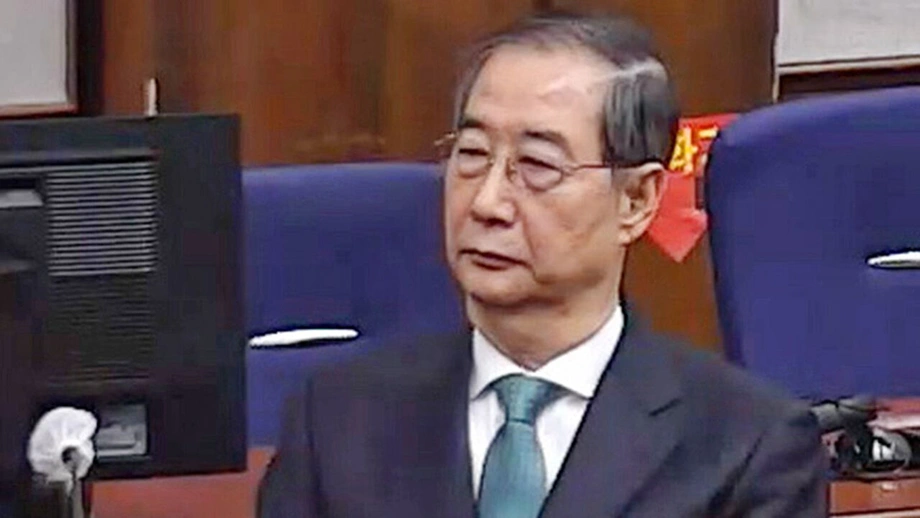
The conflict began on November 19, 2026, when the Supreme Court's full bench issued a ruling in the appeal of former Prime Minister Han Duck-soo, who faced charges of aiding an insurrection leader and engaging in vital duties of an insurrection tied to the December 3 martial law crisis. While the Supreme Court recognized the events as an insurrection, it overturned parts of the lower court's verdict and sent the case back to the Seoul High Court with recommendations for partial acquittal. On the same day, the court also delivered a ruling concerning capital market law violations involving former First Lady Kim Keon-hee.
Less than 21 hours later, on November 20, the Democratic Party adopted the impeachment motion against Chief Justice Jo as its official party platform during a general assembly of lawmakers. Democratic Party leader Kim Min-seok condemned the Han verdict as "historical treason" and vowed to focus the party's energy on both people's livelihoods and the removal of the chief justice.
Faced with immediate legal criticism that a court verdict cannot constitutionally serve as grounds for impeachment, the party's impeachment task force shifted its strategy. At a press conference on November 22, the task force announced it would exclude the substance of the Han Duck-soo ruling from the formal impeachment articles. Instead, lawmakers are reviewing procedural issues, such as alleged failures to meet sentencing deadlines mandated by special prosecutor laws and the judiciary's administrative response during the December 3 martial law declaration, with the goal of finishing the draft text this week and passing it in a plenary vote before the end of December.
- May 2025: The Supreme Court's full bench overturns a lower court acquittal in then presidential candidate Lee Jae-myung's election law violation case, returning it with guidance toward a guilty verdict and prompting initial Democratic Party threats to impeach Chief Justice Jo.
- December 2025: The Democratic Party pushes through three major judicial bills covering the crime of distorting the law, constitutional appeals against court trials, and an expansion of the number of Supreme Court justices.
- August 2026: The presidential office and Chief Justice Jo clash over the re-recommendation of Supreme Court justice candidates.
- November 19, 2026: The Supreme Court's full bench partially overturns and remands the insurrection case of former Prime Minister Han Duck-soo.
- November 20, 2026: The Democratic Party adopts the impeachment of Chief Justice Jo as official party policy.
- November 22, 2026: National Council of Judges Chairman Kang Dong-won calls for collective judicial action on Courtnet if parliament passes the impeachment motion.
- November 25, 2026: Changwon District Court schedules a full judges meeting to discuss judicial independence.
- November 30, 2026: The National Council of Judges holds its rescheduled regular meeting in Goyang to address the crisis.
Fierce Backlash Across the Bench
Kang's post triggered an outpouring of anger among frontline judges on November 23, with more than a dozen jurists posting public comments of support under their own names and warning that silence would reduce the courts to a subordinate branch of parliament. For the last two years, judges had remained largely passive during political disputes, issuing only brief statements of principle in December 2025 when the governing camp passed its three judicial reform bills and remaining silent during the August 2026 appointment dispute. Frontline judges say the move to impeach the chief justice over a trial outcome crossed a line.
Kim Seok-beom, a presiding judge at the Seoul Central District Court and also from the 31st training institute class, wrote on Courtnet that the judiciary holds a constitutional duty to check and control other state organs when their exercise of power violates the constitutional order.
The reason the judiciary is not formed through elections carries the constitutional meaning of restraining reckless attempts to control all state power under the pretext of majority rule. Legislative power is not the authority to tame other state institutions, and if we remain silent when they shake the judiciary because they do not like a ruling, such a judiciary would merely be a judicial committee under the legislature, and could not be called an independent judiciary.
Seong Geum-seok, a presiding judge at the Busan District Court from the 25th training institute class, condemned the governing party's approach in a comment on the internal board.
Impeaching a judge or Supreme Court justice who issued a ruling that does not suit their taste is a truly backward and dictatorial idea.
Kim Kyung-hee, a presiding judge at the Busan Family Court from the 38th class, pointed to the practical consequences for ordinary citizens seeking justice in the courts.
Moving to impeach the Chief Justice, who is a judge, when there is no clear violation of the Constitution or law, infringes even upon the people's right to a speedy trial.
On social media, Judge Ryu Yeong-jae of the Namyangju Branch of the Uijeongbu District Court questioned the governing party's shifting rationale on November 22. Ryu argued that aiming to suspend the chief justice's duties to block trials under the current Supreme Court system while formally citing different impeachment grounds amounts to an unconstitutional deviation dressed in the guise of the rule of law. Ryu added that it is sophistry to inflict another wound on constitutional government under the claim of healing the constitutional wounds of the December 3 crisis.
Anonymous judges speaking from the appellate and district benches described an atmosphere of acute crisis. One high court judge in the capital region noted that while judges had endured threats and distortions of their rulings for a long time, they were exploding now because politicians had laid hands on the trial itself. Another sitting judge revealed that discussions on anonymous judicial boards had already escalated to proposals for boycotting trials, warning that if judges decide to fight, a paralysis of courtrooms nationwide will be unavoidable.
Internal Calls for Caution and Self Reflection
Despite overwhelming opposition to the impeachment drive, judges are divided over how to respond and whether collective action risks politicizing the judiciary. After several colleagues questioned whether Kang should have issued such a strong call before the representative council met to deliberate, Kang appended the signature "Seoul Family Court Judge Kang Dong-won" to the bottom of his post to clarify that he was speaking in a personal capacity rather than as council chairman.
Jeong Uk-do, a presiding judge at the Seoul Northern District Court, posted a separate reply on Courtnet on the morning of November 23. While agreeing that the current behavior of politicians is excessive and requires an active response, he urged Kang to correct the slogan of "judicial independence" to focus specifically on the independence of individual judges and trials, and referenced the Supreme Court's passive stance during the martial law period.
If we put forward the independence of the judicial branch rather than the independence of judges and trials, it is bound to give the impression that judges are banding together to defend the Chief Justice. We are not members of an organization serving a supreme leader. We are stepping forward not to guard a leader, but to defend constitutional values. Self reflection is the very path to having our sincerity recognized and properly establishing our independence.
Concerns over procedural fairness inside the council were echoed by multiple senior jurists. Lee Bong-soo, a presiding judge at the Changwon District Court from the 31st class, questioned whether it was appropriate for the chairman to strongly reveal his personal opinion and suggest a specific direction before the meeting was even held, adding that voices of self reflection within the courts must be discussed together so the session proceeds fairly. Baek Ju-yeon, a presiding judge at the Suwon District Court, likewise commented that expressing a stance without prior deliberation was somewhat inappropriate.
Lee Jae-wook, a presiding judge at the Seoul Central District Court, went a step further in a separate post, suggesting that Kang consider delegating the chairing of the November 30 meeting to a vice chairman to avoid unnecessary doubts about the proceedings and outcome. Yu Jeong-woo, a presiding judge at the Busan High Court, cautioned that just because the legislative power crossed a line does not make it justified for judges to cross a line in return, urging colleagues to speak out for judicial independence without appearing to the public as engaging in organizational or collective selfishness.
Meanwhile, regional courts are beginning to place the crisis on their official agendas. The Changwon District Court announced it will discuss judicial independence at its regular full judges meeting on November 25, with all judges belonging to the court participating. While full judges meetings typically handle internal administrative matters like case allocation, placing an external political issue on the agenda is highly unusual. The court has not yet decided what specific agenda items or public statements might emerge from the November 25 discussion.
A History of Judicial Waves in South Korea
Legal observers are watching closely to see if the November 30 meeting triggers a fifth "judicial wave," the term used in South Korea for historic collective uprisings by judges. Since 1971, the country has experienced four major judicial waves, though none were triggered by a political campaign to impeach a sitting chief justice.
- First Judicial Wave (1971): After prosecutors launched retaliatory investigations against judges who had acquitted defendants in public security cases, 153 judges nationwide submitted their resignations. Then President Park Chung-hee intervened by ordering prosecutors to halt the investigations, and the judges withdrew their resignations.
- Second Judicial Wave (1988): When the administration of President Roh Tae-woo attempted to retain Chief Justice Kim Yong-cheol, who had been appointed during the previous authoritarian government of Chun Doo-hwan, 335 judges joined a collective signature campaign. Chief Justice Kim subsequently announced his resignation.
- Third Judicial Wave (1993): Young judges demanded internal judicial reforms following the transition to civilian rule, challenging the concentration of personnel authority in the hands of the chief justice and past rulings under military governments.
- Fourth Judicial Wave (2003): Judges revolted over bureaucratic seniority practices and male dominated appointments to the Supreme Court bench, forcing changes in how justices were nominated.
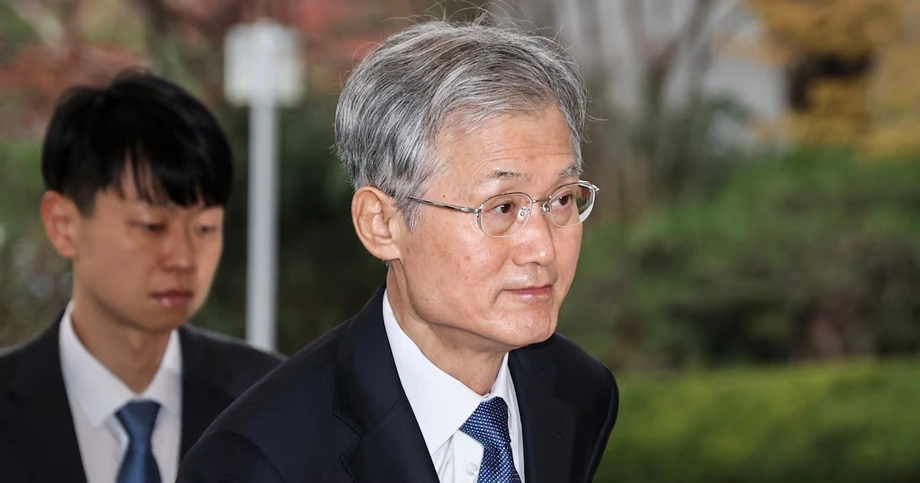
The National Council of Judges itself grew out of a later internal crisis. Formed in 2017 and made a permanent official body in response to allegations of judicial administrative power abuse under former Chief Justice Yang Seung-tae, the council was initially led by progressive judges, with its first chairman, Choi Ki-sang, now serving as a two term Democratic Party lawmaker. In 2018, the council even passed a resolution calling for the consideration of impeachment against judges implicated in trial interference. However, relations between the council and the Democratic Party deteriorated after the party forced through its three judicial bills in late 2025, leading to the election of the moderate Judge Kang as chairman.
Whether the council can reach a unified resolution on November 30 remains uncertain. When the body met in June 2025 to discuss the controversy surrounding President Lee Jae-myung's election law case, opinion splits among the representatives resulted in all five proposed agenda items being voted down without a single official statement issued.
Constitutional Mechanics and Legal Limits
Even if the National Council of Judges passes a resolution opposing the impeachment, its legal power to halt the process is nonexistent. Under the council's rules, the chairman can convene an extraordinary session if deemed necessary, and must do so immediately if at least one fifth of the members request one with stated reasons. A session requires a majority of members to attend, and resolutions pass with a majority vote of those present.
Attorney Kim So-jeong explained that while the council can deliver an approved statement or resolution to external bodies like the National Assembly as an official opinion paper, it holds no authority to exercise legally binding force over parliament. If the impeachment proceeds to a trial, Article 10 of the Constitutional Court Adjudication Rules allows state organs or public organizations with an interest in a case to submit opinion briefs. Attorney Choi Geon of Law Firm Geonyang noted that submitting such a brief to the Constitutional Court falls within the range of possible responses, though it would only serve as a reference and cannot bind the justices.
Crucially, under Article 65, Paragraph 3 of the Constitution and Article 134, Paragraph 2 of the National Assembly Act, the moment an impeachment motion is passed by parliament and the formal resolution is delivered, Chief Justice Jo's authority is automatically suspended until the Constitutional Court issues a final ruling. A former chief prosecutor now working at a law firm warned that suspending Jo would inevitably disrupt full bench deliberations, verdicts, and the appointment of new Supreme Court justices, calling it absurd for politicians who complain about delays in justice appointments and insurrection trials to worsen those delays by impeaching the chief justice.
Judges also face strict legal constraints if they pursue joint statements or press conferences outside the council. Article 7 of the Code of Judicial Ethics requires judges to maintain political neutrality in their duties and refrain from activities that harm it. Attorneys Kim and Choi both warned that if collective resistance becomes linked to specific political parties or figures, it could spark allegations of violating neutrality rules and undermine the goal of defending judicial independence.
Political Blowback and Fractures Inside the Ruling Camp
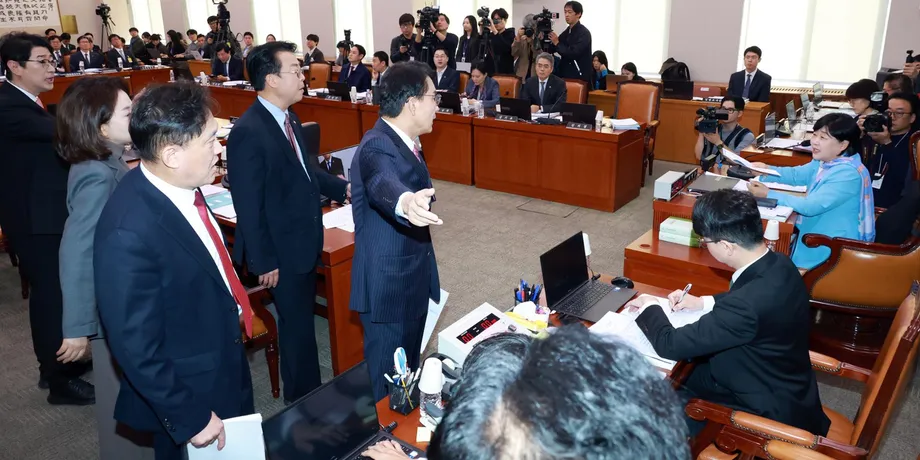
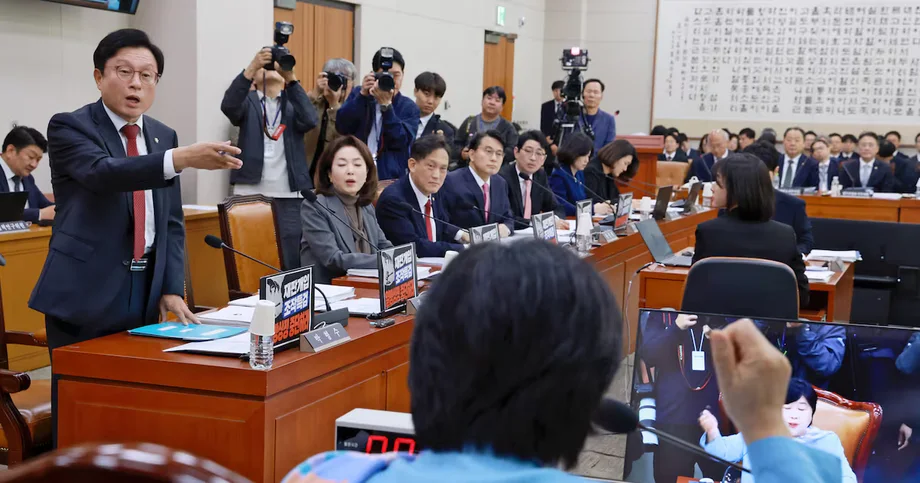
Democratic Party leaders responded sharply on November 23 to the talk of collective action by judges, while simultaneously trying to avoid a full scale war with the broader judiciary. Representative Yang Bu-nam, head of the party's impeachment task force, criticized Judge Kang's post during a morning appearance on MBC Radio.
They should show an attitude of self reflection on why things came to this state, what collective action are they talking about? It is a privileged behavior that intimidates the legislature and intimidates the people, and it is not appropriate. Do they think we will stop the impeachment we are pushing just because they take collective action?
Yang added that only the National Assembly can hold Chief Justice Jo accountable for what he called wrongdoings over the past two years, and stated the task force aims to finish drafting the impeachment motion by the end of this week at the latest. Representative Park Jie-won, a Democratic Party member of the National Assembly's Legislation and Judiciary Committee, used even stronger language on BBS Radio's "Jeong Hye-seung's Morning Journal."
The power of impeachment is an inherent authority of the National Assembly. For the judiciary to make extortionate threats like saying they will not remain silent or talking of collective action is wrong on the judiciary's part.
Asked about concerns that impeaching the chief justice could alienate moderate voters, Park replied that the backlash from the destruction of democracy and the judiciary is greater, adding, "We must shut up and impeach." Park acknowledged that the party had changed its impeachment grounds multiple times, describing it as a process where legal experts review the matter and put forward valid proposals at each stage. Democratic Party Supreme Council member Jeon Yong-gi added on YTN Radio that while each single issue might not be evaluated as a grave violation of law reaching the level of impeachment, there has never been such a political chief justice, arguing that a "disciplinary impeachment" is sufficient reason to sound an alarm for the public.
Behind the hardline rhetoric, significant dissent is surfacing within the governing party. First term Democratic Party Representative Kwak Sang-eon, who represents Seoul's Jongno district, publicly opposed the impeachment drive in a parliamentary interview and on Facebook on November 23, contradicting party claims that the platform had been endorsed unanimously.
My heart is extremely troubled that the Democratic Party decided this way and the leadership is pushing it through. Because the decision came right after the ruling overturning and remanding former Prime Minister Han Duck-soo's case, it can be perceived by the public as a refusal to accept a court verdict. Even when the grounds are sufficient, the impeachment of Chief Justice Jo must be restrained. For a giant governing party with a majority of seats to impeach the head of the judiciary means extending its influence beyond legislative and executive power to judicial power as well, which is problematic from the perspective of the separation of powers.
Kwak revealed that during the November 19 and 20 general assemblies, many lawmakers voiced opposition and demanded a formal vote on the platform. Noting that a plenary vote on an impeachment motion is conducted by secret ballot under parliamentary rules, Kwak stated he would vote according to regulations and questioned whether the party leadership would get the outcome it desires. Another multi term Democratic Party lawmaker admitted the decision felt swept up in the atmosphere, predicting fierce internal debate once the specific text of the motion is released, while a member of the party leadership sought to de-escalate by stating the party has no business fighting ordinary members of the judiciary.
Opposition leaders and civic groups also escalated their involvement on November 23. People Power Party leader Jang Dong-hyeok warned at a Supreme Council meeting that the Democratic Party is assembling impeachment grounds like Lego blocks in an empty "tin can impeachment" and "bulletproof impeachment" aimed at suspending the chief justice's personnel authority to prevent the resumption of President Lee Jae-myung's halted trials. Jang declared that if the governing party passes the motion in December, "this administration will end," and urged judges to take action immediately rather than waiting for a parliamentary vote. Earlier, former People Power Party leader Han Dong-hoon called the impeachment push a confession of insurrection. Conversely, on the afternoon of November 23, the civic group Citizens' Action for Restoring Judicial Justice filed a formal complaint with the Seoul Regional Serious Crimes Investigation Agency charging Chief Justice Jo with the crime of distorting the law and abuse of authority obstructing the exercise of rights.
Legal Community Warnings and Shifting Public Opinion
The backlash has spread beyond sitting judges to the wider legal profession and public opinion polls. On November 23, the Council of Former Local Bar Association Presidents, consisting of 33 legal veterans including a former president of the Korean Bar Association and former heads of regional bar associations nationwide, issued a joint statement opposing the impeachment motion.
Even a power elected through elections cannot exist above the Constitution, and all state powers must respect the principles of the separation of powers and the substantive rule of law. While administrations may change and systems may be altered, the fundamental constitutional values of the rule of law and judicial independence must never be shaken. The power of impeachment must not be exercised according to political interests without sufficient review of specific illegal grounds and objective evidence.
Public opinion data shows a consistent majority of South Koreans opposing the removal of the chief justice, including a reversal in polling typically favorable to the governing camp.
- National Barometer Survey (NBS, October 26 to 28, 2026): 45 percent opposed impeaching Chief Justice Jo, while 34 percent supported it, an 11 percentage point gap outside the margin of error.
- Media Tomato Survey (November 16 to 17, 2026): 44.6 percent of respondents said neither impeachment nor a parliamentary investigation was necessary, compared to 27.9 percent who favored pushing ahead with impeachment.
- Research Flower Telephone Interview Survey (CATI, released November 23, 2026): In the regular survey by the pro governing camp agency, opposition to Jo's impeachment reached 50.1 percent against 44.6 percent in favor, marking the first time opposition outnumbered support in the agency's telephone survey.
Key Points
- National Council of Judges Chairman Kang Dong-won posted a message on the judicial intranet Courtnet on November 22 urging judges to take collective action if the National Assembly passes an impeachment motion against Chief Justice Jo Hee-de.
- The governing Democratic Party adopted Jo's impeachment as party policy on November 20, less than a day after the Supreme Court's full bench partially overturned and remanded the insurrection case of former Prime Minister Han Duck-soo.
- Following legal criticism, the Democratic Party's impeachment task force decided to exclude the substance of the Han ruling from the motion, focusing instead on procedural violations and the judiciary's December 3 martial law response, with a goal of drafting the text this week and passing it in December.
- Frontline judges across South Korea posted public endorsements of Kang's warning, stating that impeaching a judge over an unpopular verdict reduces the courts to a legislative subcommittee and violates citizens' rights to a speedy trial.
- Other senior judges called for caution and internal self reflection, warning against organizational selfishness and questioning whether the council chairman should have suggested collective action before formal deliberations.
- The Changwon District Court will hold a full judges meeting on November 25 to discuss judicial independence, ahead of the National Council of Judges regular meeting in Goyang on November 30.
- Democratic Party lawmaker Kwak Sang-eon publicly broke ranks to oppose the impeachment drive, while 33 former bar association presidents issued a joint statement condemning the move and three recent polls showed up to 50.1 percent of the public opposing impeachment.