What Is Being Proposed and Why It Matters Now
Pakistan's Interior Minister Mohsin Naqvi told the Pakistan Economic Summit in Islamabad on July 30, 2026 that the country's system of governance had collapsed and needed a reset. He called for carving the four existing provinces into more administrative units. 'Unless units are made and they take ownership and a new leadership comes, this will not happen,' Naqvi said. Planning Minister Ahsan Iqbal has spoken of 12 to 15 provinces created through consensus. A model under discussion would divide Punjab into four provinces, Sindh into two, and Khyber Pakhtunkhwa and Balochistan into three each, for a total of 12. Communications Minister Abdul Aleem Khan has proposed splitting each province into North, Central and South units. Naqvi has also suggested Islamabad should be considered a separate province so its citizens can benefit under the National Finance Commission Award.
Contents
Defence Minister Khawaja Asif said on ARY News programme Sawal Yeh Hai on Sunday that discussions would take a definitive shape by the end of the year, with the process moving forward early next year. He declined to give a specific date but said the matter would not take two to four months. Asked about a reported target of the first week of January, he said that date was not too far off the mark.
Perhaps by the year-end, all this debate and discussion that is taking place will take some definitive shape. What shape it will take, I cannot say, but it won't take long. I can certainly say that it is not going to take two to four months.
Asif said the draft would be a joint document incorporating input from all stakeholders. He described politics as the art of the possible.
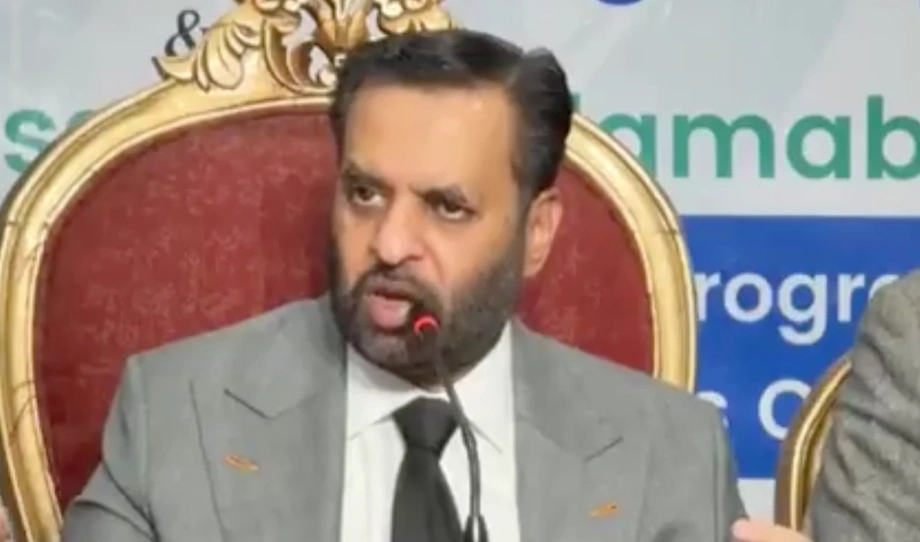
Supporters argue that the four provinces are too large to deliver services effectively to a population of about 250 million. They point to a 2010 constitutional amendment meant to decentralise powers and resources to districts and cities. Federal Health Minister Mustafa Kamal, a leader of the Muttahida Qaumi Movement-Pakistan, said powers and resources were taken in the name of the people and parked in the chief minister's house. He also said the federal cabinet had not formally discussed the matter and that he did not know how many new units were planned.
A Referendum That Would Not Change Any Boundary
Interior Minister Naqvi told reporters in Lahore that the question of creating new provinces should be put to the public.
If the people say they should not be made, I am 100 percent with them that they should not be made. If the people say they should be made, then let them be made.
On November 12, 2026, he proposed holding a referendum to settle the debate. Parliamentary Affairs Minister Tariq Fazal Chaudhry said on Friday that a referendum 'will happen' and that the PML-N would make every last effort to convince the PPP.
Article 48(6) of Pakistan's Constitution allows the prime minister to refer a matter of national importance to a joint sitting of parliament. If the joint session approves it, the matter could go to a referendum that poses a yes or no question to voters. Legal experts say the outcome is not binding on the government. Abdul Moiz Jaferii, a Karachi-based constitutional lawyer, said a referendum cannot replace the constitutional amendment process.
A referendum cannot be used as a substitute to such a specifically delineated process, nor do referenda allow for the asking of anything but a binary question from the population as a whole, the answer to which is not binding upon those asking it.
Creating a new province requires a constitutional amendment under Article 239. That needs two-thirds of the total membership of each house of parliament: 224 of the 336 National Assembly members and 64 of the 96 senators. Under Article 239(4), an amendment changing a province's boundaries must also win two-thirds support in that province's assembly before it goes to the president for assent. For Punjab, that would require 248 of 371 members; for Sindh, 112 of 168 members.
Pakistan has held three referendums, each under a military ruler. In 1960, about 80,000 local councillors known as Basic Democrats were asked whether they had confidence in Ayub Khan, the country's military ruler and first field marshal. In 1984, voters were asked whether they endorsed General Zia-ul-Haq's Islamisation programme, with a yes counted as a vote for him to stay on as president for five more years. In 2002, General Pervez Musharraf used one to secure a five-year presidential term.
Sindh Draws a Red Line
PPP Chairman Bilawal Bhutto-Zardari delivered a fiery speech at the Karachi Press Club last week rejecting attempts to impose changes to provincial boundaries without the consent of the people concerned. He said the PPP was not opposed in principle to new provinces if the initiative reflected public demand and followed constitutional and legal procedures. But he drew a firm line at Sindh, which his party has governed for 18 years.
The people of Sindh do not want Sindh's division.
He warned that any forced attempt to split the province could lead to bloodshed in Karachi and spread to Hyderabad, Mirpurkhas, Tando Allahyar and Nawabshah.
If the province is divided by force, society will be divided; it will lead to enmity, ordinary people will take up arms, and the bloodshed will not be limited to a single death.
The Sindh Assembly passed a resolution on September 3, 2026, formally notified on September 7, rejecting any division of Sindh, the removal of any of its territory or placing any part under a separate or federal administrative arrangement. The assembly also passed a resolution on September 4 rejecting attempts to divide the province or alter its geographical boundaries. The September 3 resolution invokes Article 239(4) and says the assembly will withhold consent to any alteration of Sindh's limits. It states: 'Sindh is one and shall remain one.' After the Sindh Assembly's rejection, the dispute has become a test for Prime Minister Shehbaz Sharif's governing coalition.
Sindh Chief Minister Syed Murad Ali Shah dismissed the proposal on Friday, telling reporters at Bhit Shah that the creation of new provinces amounted to little more than a stereotype that the people of the land would not accept.
A stereotype which people of this mystic land will not accept.
He pointed out that the existing arrangement already spans the political spectrum: Sharif as prime minister, the PML-N governing Punjab, the PPP governing Sindh, a coalition running Balochistan, and the PTI in control of Khyber Pakhtunkhwa.
PPP Secretary General Nayyar Bokhari said the matter would go before the party's Central Executive Committee only on the condition that any change follows the constitutional process rather than being imposed by executive decree. He challenged the government to bring the matter to parliament and satisfy the constitutional requirements, noting that a resolution calling for a South Punjab province was already sitting before the Punjab Assembly. PPP Senator Sherry Rehman said no discussion had taken place at the party's senior leadership level on holding a referendum. She said the Sindh Assembly had passed resolutions against division on several occasions, while the Punjab Assembly was entitled to support the creation of new provinces if it wished.
Coalition Cracks Widen
The dispute intensified after Defence Minister Asif launched a series of social media attacks against Bilawal on November 19 and 20. Asif shared video clips contrasting Bilawal's earlier calls for political consensus with his current criticism of the ruling setup. He labeled the PPP chairman a master of duplicity and rank opportunism. Asif also reposted drone footage of a palatial property in Lahore's Bahria Town, questioning its ownership, residents and funding sources in an apparent reference to Bilawal.
PPP Senator Sherry Rehman warned that Asif had crossed a red line with his remarks against the party and its leadership. PPP MNA Sharmila Faruqui condemned the derogatory language, saying political differences should be countered with arguments rather than personal attacks and urging Asif to show the political maturity, seriousness and civility expected of a senior parliamentarian.
Interior Minister Naqvi on Sunday issued a stern warning to a fellow minister over what he described as persistent criticism of his statements, in an apparent reference to Prime Minister's Adviser Rana Sanaullah.
The day I comment on this minister, he will not be able to show his face.
Rana Sanaullah has criticised Naqvi for raising the issue of new provinces at a business forum, arguing that businessmen were not the appropriate audience for such a politically sensitive and constitutional matter. Naqvi defended the business community, describing the participants as respectable citizens and among the country's highest taxpayers. 'If these businessmen are so bad, why do you take billions of rupees from them in the name of party funds at every election?' he asked.
Punjab Senior Minister Marriyum Aurangzeb said the PML-N leadership would make a final decision on new provinces only after consulting the public and debating in Parliament. Punjab Assembly Speaker Malik Muhammad Ahmad Khan called for a referendum to ascertain public opinion on the proposed division of Punjab. Defence Minister Asif urged President Asif Ali Zardari to intervene in the debate, calling for a unified national approach. Asif said the proposed division was administrative rather than political. He also defended what he called the country's hybrid system of governance, naming President Zardari, Prime Minister Sharif, army chief Field Marshal Asim Munir and four or five other senior figures as needing to meet to chart the way ahead.
What New Provinces Would Cost
Pakistan's provinces receive 57.5 percent of the federal pool of taxes. This financial year, that amounts to 8.64 trillion rupees ($31.2bn). Punjab receives 51.74 percent of the provincial share, Sindh 24.55 percent, Khyber Pakhtunkhwa 14.62 percent and Balochistan 9.09 percent. What they get is proportionate to their populations. The Constitution does not specify how an existing province's share should be divided among any new provinces created from it.
The Islamabad-based Policy Research Institute of Market Economy estimated in October that dividing Punjab into three provinces would cost 46.9 billion to 56.2 billion rupees ($169m to $203m) a year. A stress-test scenario in which all 30 of Pakistan's divisions became provinces would cost 609.2 billion to 730.3 billion rupees ($2.2bn to $2.64bn). The estimates excluded one-off set-up costs, police forces and full secretariats. PRIME also said equal Senate representation for each province would increase the upper house from 96 to 142 seats if Punjab alone were divided.
Water is another sensitive issue. Pakistan's 1991 Water Apportionment Accord governs how canal water is shared among the provinces. Any new province would need a share of that water, which is already allocated. The Constitution's Article 172(3), introduced through the 18th Amendment, provides that mineral oil and natural gas within a province or its territorial waters vest jointly and equally in that province and the federal government. A Senate panel has demanded an operational system to give provinces' oil and gas share, either through half of oil and gas company profits or half of the wellheads.
PML-N leader Daniyal Chaudhry said any new province must be financially self-sufficient.
The province that cannot run itself financially cannot become a province. If you again put the whole burden on the federation, there is no benefit.
Who Supports What
- PML-N: Supports consulting the public and parliamentary debate. Parliamentary Affairs Minister Tariq Fazal Chaudhry says a referendum 'will happen' and the party will try to convince the PPP. Defence Minister Asif says consensus is possible by the end of the year.
- PPP: Opposes any division of Sindh without popular consent. Not opposed in principle to new provinces if they reflect public demand and follow constitutional procedures. Says the matter must go to its Central Executive Committee after constitutional process is followed.
- PTI: Founding chairman Imran Khan favours new administrative units. Senate parliamentary leader Barrister Ali Zafar says Karachi, interior Sindh, central Sindh, south and north Punjab, and the Hazara region can become provinces, but only in accordance with the Constitution. The party is waiting for the draft of a proposed 28th constitutional amendment. Information Secretary Sheikh Waqas Akram dismissed the referendum as an absurd and futile exercise that cannot replace a majority vote or constitutional bill.
- MQM-P: Supports new provinces, particularly for Karachi. Federal Health Minister Mustafa Kamal says powers parked in the chief minister's house are the reason for the debate. MQM-P leader Farooq Sattar hopes for a referendum in December and an expansion of administrative units by early 2027.
- PML-Q: Chief Chaudhry Shujaat Hussain says the question of new provinces is linked to public convenience, good governance and administrative efficiency. He says strengthening existing administrative units could also address governance challenges.
Protests and Legal Challenges
On Sunday, November 22, 2026, nationalist parties under the Jiy Sindh Rahbar Committee held a Wahdat-e-Sindh March in Karachi from Gulshan-e-Hadid to near Avari Hotel. Participants rejected any division of Sindh or a referendum on the matter. Riaz Chandio, head of the committee, threatened to block highways, railway lines and communication systems if talk of dividing Sindh continued. The Awami Tehreek party accused Naqvi of using the language of new provinces to disguise an attempt to divide Sindh and demanded his resignation. Party president Vasand Thari and secretary general Sajid Hussain Mahesar said Naqvi had forfeited any moral or political standing to continue as interior minister.
The Lahore High Court Bar Association branded Naqvi's comments unconstitutional. In a joint statement, association president Babar Murtaza, vice-president Sohail Qaiser Tarar and finance secretary Malik Ali Raza Khokhar said the country's progress and survival rested on strict adherence to the Constitution, the rule of law and a judiciary free of interference. MQM founder Altaf Hussain claimed a silent struggle was underway between Pakistan's military establishment and President Zardari. Information Minister Attaullah Tarar defended the referendum proposal, saying the best way to know the public's opinion could be a referendum. Presidential spokesperson Murtaza Solangi said the president had not yet spoken on the matter.
What Happens Next
No draft constitutional amendment, agreed number of provinces or timetable has been made public. Senate elections are due early next year, followed by the federal budget in June. Mustafa Kamal pointed to that political calendar, saying whatever has to happen has to happen before the budget. Defence Minister Asif says a joint document will incorporate input from all stakeholders. PPP Senator Sherry Rehman says decisions taken by the Sindh Assembly or any other provincial assembly cannot be overruled. PTI Chairman Barrister Gohar Ali Khan says creating new provinces requires a constitutional amendment and that a referendum cannot serve as an alternative. The PPP's Central Executive Committee has not yet formally taken up the matter. President Zardari has not spoken publicly on the proposal.
The debate also connects to earlier disputes over resources. In October 2026, a Senate panel demanded that provinces receive half of oil and gas profits or wellheads, giving the Petroleum Division 15 days to consult provincial stakeholders and submit an implementation report. That demand rests on Article 172(3) of the Constitution. The panel also gave the Establishment Division two weeks to explain how it would secure provincial representation in federal employment. Those deadlines passed without a public report.
Key Points
- Interior Minister Mohsin Naqvi called on July 30, 2026 for new administrative units, saying the current system had collapsed and needed a reset.
- Planning Minister Ahsan Iqbal has spoken of 12 to 15 provinces. A 12-province model would divide Punjab into four, Sindh into two, and Khyber Pakhtunkhwa and Balochistan into three each.
- Defence Minister Khawaja Asif says discussions will take a definitive shape by the end of 2026, with a referendum possible in the first week of January or soon after.
- A referendum under Article 48(6) would not change any boundary by itself. Creating a province requires a constitutional amendment under Article 239, with two-thirds support in both houses of parliament and in the affected provincial assembly.
- The PPP, which governs Sindh, rejects any division of the province. The Sindh Assembly passed resolutions on September 3 and September 4, 2026 opposing division and boundary changes.
- Interior Minister Naqvi has warned a fellow minister over criticism, in an apparent reference to Rana Sanaullah, as coalition tensions have spilled into public view.
- The Policy Research Institute of Market Economy estimated that dividing Punjab into three provinces would cost 46.9 billion to 56.2 billion rupees ($169m to $203m) a year.
- No draft amendment, agreed number of provinces or timetable has been made public. Senate elections are due early next year, followed by the federal budget in June.