Sindh has already recorded its answer
A unanimous Sindh Assembly resolution passed on September 3, 2026 stands at the centre of Pakistan's widening dispute over new provinces: it rejects dividing Sindh, removing any of its territory or placing any part under a separate or federal administrative arrangement. Federal ministers are nevertheless pressing for a nationwide referendum, with Karachi's future driving a confrontation inside Prime Minister Shehbaz Sharif's governing coalition.
Contents
- Sindh has already recorded its answer
- What the Sindh Assembly rejected
- How the proposal became a coalition dispute
- Why Karachi is the flashpoint
- Warnings of violence sharpen the confrontation
- What a referendum can do
- The money and water behind a new map
- More provinces would also change political power
- Could stronger local government meet the same need?
- Key Points
The assembly's September resolution, formally notified on September 7, invokes Article 239(4) of Pakistan's Constitution. That provision requires approval from at least two thirds of the affected provincial assembly's total membership before a constitutional amendment changing its boundaries can go to the president.
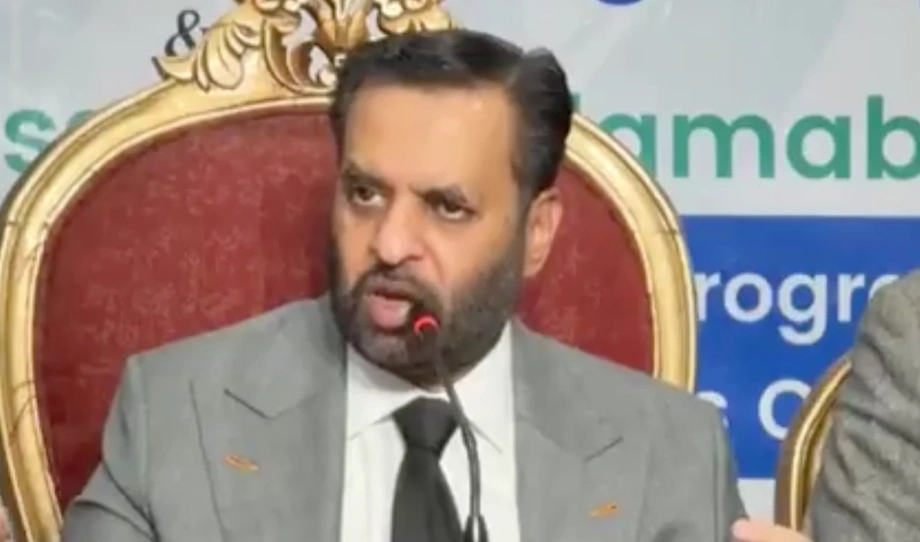
Health Minister Mustafa Kamal, a leader of the Muttahida Qaumi Movement-Pakistan (MQM-P), wants Karachi to become an administrative unit within a new province. His party is demanding a referendum in December 2026. The Pakistan Peoples Party (PPP), which governs Sindh and supports Sharif's federal government, insists that the province must remain intact.
The confrontation connects three decisions that require different forms of agreement: whether to consult voters, whether to amend the Constitution and how to distribute money, water and political representation if boundaries change. A nationwide vote could register public preferences, while the power to approve new boundaries would remain with the national and affected provincial legislatures.
For Karachi's residents, the practical issue is who would control spending and services in Pakistan's largest city and commercial capital. For Sindh's government, the dispute also concerns the province's territorial identity and its constitutional authority over its own boundaries.
What the Sindh Assembly rejected
Nisar Ahmed Khuhro, a provincial legislator and chairman of the Public Accounts Committee, moved the September resolution. Its wording reaches beyond the creation of a province: it also rejects detaching a district, division or region, or placing territory under a separate administrative arrangement.
The resolution says the assembly will withhold consent to any alteration of Sindh's limits and use its authority under Article 239(4) to protect the province's unity. It directs the Sindh government to send the text to Pakistan's president, prime minister, Senate chairman and National Assembly speaker.
The assembly grounds its position in Sindh's history as a constituent part of Pakistan. It recalls the Sindh legislature's March 3, 1943 resolution supporting Pakistan's establishment and its June 26, 1947 decision to join the new country. It also lists earlier resolutions defending territorial unity, including one passed on February 21, 2026.
The September resolution states:
Sindh is one and shall remain one.
The constitutional requirement gives this political position practical force. A proposal affecting Sindh would need 112 votes in its assembly of 168 members. Support in Islamabad would have to be matched by that provincial approval.
How the proposal became a coalition dispute
Interior Minister Mohsin Naqvi revived the debate at an economic summit in Islamabad on July 30, arguing that smaller administrative units could improve government services. He later proposed asking voters whether Pakistan should create more provinces.
Planning Minister Ahsan Iqbal has spoken of 12 to 15 provinces through consensus. Defence Minister Khawaja Asif has suggested that as many as 12 could be considered if boundaries follow administrative needs rather than linguistic, ethnic or political considerations. Pakistan currently has four provinces: Punjab, Sindh, Khyber Pakhtunkhwa and Balochistan.
The main developments have unfolded as follows:
- July 30, 2026: Naqvi publicly argued for new administrative units at an Islamabad economic summit.
- September 3: The Sindh Assembly unanimously rejected territorial division and separate administrative arrangements.
- September 7: The assembly formally notified its resolution for transmission to national leaders.
- November 17: MQM-P leaders intensified their campaign, describing December as a decisive month.
- November 18: Prime ministerial adviser Rana Sanaullah said the issue should move to the cabinet and parliament.
- December 2026: MQM-P wants a nationwide referendum before the start of 2027.
The government has published no agreed map, referendum question, draft constitutional amendment or official voting date. Kamal has said the cabinet had not formally discussed the matter, while the Pakistan Muslim League-Nawaz (PML-N), Sharif's party, has yet to set out a formal policy.
Why Karachi is the flashpoint
Kamal argues that Sindh's provincial government has concentrated authority and resources instead of passing them to cities and neighbourhoods. He says support for a new province extends across Karachi's communities.
In televised remarks, the federal health minister described the support he believes exists:
Look at the records in Karachi. People from all communities, Sindhis, Pashtuns, Baloch, Punjabis and Saraikis, are now supporting the idea that Karachi should become an administrative unit and part of a new province.
MQM-P chairman and federal education minister Khalid Maqbool Siddiqui has made resource distribution central to the campaign. He claims Karachi generates 66 percent of Pakistan's revenue and 97 percent of Sindh's provincial revenue. Kamal has alleged that the city received 22 trillion rupees over 17 to 18 years while remaining difficult to live in.
MQM-P also disputes population counts. Its leaders claim Karachi has 35 million residents and was undercounted in the 2023 census. Kamal separately claims the Muhajir community represents 38 percent of Sindh's population and was undercounted by 7.3 million. These are party claims within a dispute about representation and the allocation of public funds.
The party is mobilising supporters for an event it calls a Haqiqi Referendum on Karachi's Shahrah-e-Faisal and has demanded Chief Minister Murad Ali Shah's resignation. Sindh Senior Minister Sharjeel Inam Memon says public gatherings require government permission, with the authorities deciding their venue and date.
Warnings of violence sharpen the confrontation
PPP chairman Bilawal Bhutto-Zardari says any attempt to divide Sindh by force would provoke resistance and bloodshed. Speaking in Karachi, he warned:
If the province is divided by force, society will be divided, it will lead to enmity, ordinary people will take up arms, and the bloodshed will not be limited to a single death.
Kamal responded by placing responsibility for any violence on the PPP leader. PPP politician Saeed Ghani defended Bhutto-Zardari, saying his remarks had been presented misleadingly and accusing MQM-P's campaign of increasing hostility.
Memon has warned against division along ethnic and linguistic lines. Kamal has also urged workers to include all linguistic and religious communities, while accusing opponents of trying to turn them against one another.
The argument has exposed distrust over consultation. Bhutto-Zardari says neither he nor President Asif Ali Zardari had been consulted about the proposal. Naqvi has assured parties that they would be consulted before a decision was finalised and that changes would require coalition agreement.
Information Minister Attaullah Tarar has urged the PPP to negotiate as a partner in the same government. Asif, meanwhile, has defended public consultation alongside parliamentary debate without endorsing a specific Karachi boundary plan.
What a referendum can do
Article 48(6) allows the prime minister, with approval from a joint sitting of parliament, to refer a matter of national importance to voters through a question requiring a yes or no answer. Tarar describes that as a constitutional and legal way to establish public opinion.
The information minister stated his position this way:
If the people of Pakistan and Sindh want more provinces, they should be created; otherwise, they should not.
Memon argues that a referendum has no legal standing for creating provinces. Karachi constitutional lawyer Abdul Moiz Jaferii gives a more specific explanation: the referendum result would be advisory, and Article 239 would still govern any amendment changing provincial boundaries.
Jaferii said:
A referendum cannot be used as a substitute to such a specifically delineated process, nor do referenda allow for the asking of anything but a binary question from the population as a whole, the answer to which is not binding upon those asking it.
A constitutional amendment requires support from two thirds of the total membership of each parliamentary chamber: 224 of 336 National Assembly members and 64 of 96 senators. Boundary changes also require two thirds of the affected provincial assembly. These are thresholds based on the full membership, rather than only those attending a vote.
President Zardari and Sharif have reportedly agreed that parliament must approve whether a referendum takes place and what it asks. The public statement about their meeting addressed coalition coordination without detailing the province discussion. Sanaullah says Naqvi should first bring the issue to the cabinet before it proceeds to parliament.
The money and water behind a new map
Pakistan's provinces receive 57.5 percent of the divisible pool of federal taxes, amounting to 8.64 trillion rupees in the financial year described in the debate. The National Finance Commission arrangement, commonly called the NFC Award, sets the framework for sharing those resources.
Punjab receives 51.74 percent of the provincial allocation, Sindh 24.55 percent, Khyber Pakhtunkhwa 14.62 percent and Balochistan 9.09 percent. Applying Sindh's percentage to 8.64 trillion rupees produces an allocation of about 2.12 trillion rupees, illustrating the scale of the resources involved in any restructuring.
Creating provinces would require decisions about how an existing province's allocation should be shared among its successors. Governments would also need to divide assets, responsibilities and institutions. The 1991 Water Accord allocates Indus water among the provinces, making water distribution another major negotiating issue.
The Islamabad based Policy Research Institute of Market Economy (PRIME) estimated in October that splitting Punjab into three provinces would cost 46.9 billion to 56.2 billion rupees annually. Its scenario converting all 30 existing divisions into provinces put annual costs at 609.2 billion to 730.3 billion rupees.
Those estimates exclude initial establishment costs, police forces and full secretariats. Sindh Local Government Minister Syed Nasir Hussain Shah has cited the expense of additional institutions in opposing division. Each new province would require a functioning administration as well as a share of public revenue.
More provinces would also change political power
Pakistan's Senate gives provinces equal representation, so restructuring would affect national politics as well as local administration. PRIME estimated that dividing Punjab alone into three provinces would increase the Senate from 96 to 142 seats under its model.
Demands for provinces also extend well beyond Karachi. Sanaullah has named South Punjab, Bahawalpur and Hazara as regions with existing movements. Punjab Assembly Speaker Malik Ahmad Khan has challenged the PPP over its support for dividing Punjab while opposing Sindh's division.
Punjab's own history shows how many approvals a proposal must secure. Its assembly unanimously adopted resolutions supporting South Punjab and the restoration of Bahawalpur province in May 2012. The Senate passed a bill for a Bahawalpur Janoobi Punjab province in March 2013, but it lapsed when the National Assembly's term ended without action by that chamber.
Current discussions range from 12 to 15 provinces to much larger schemes based on existing administrative divisions. A reported model of 12 would divide Punjab into four provinces, Khyber Pakhtunkhwa and Balochistan into three each, and Sindh into two. Other proposals describe 32 provinces. Each would produce different boundaries, costs and political representation.
Critics also warn that fragmenting provincial political bases could weaken parties and increase military influence. The balance of power is therefore part of the dispute, alongside the promise of better public services.
Could stronger local government meet the same need?
Article 140-A requires elected local government and the devolution of political, administrative and financial responsibility. MQM-P leader Dr Farooq Sattar wants those obligations defined more firmly in the proposed 28th Constitutional Amendment.
Kamal alleges that the PPP blocked MQM-P efforts to strengthen local authority during negotiations over the 26th and 27th amendments. The PPP counters that Sindh's constitutional rights and territorial unity must be respected.
Jaferii argues that smaller administrative units can be created without changing provincial boundaries. PTI Secretary General Salman Akram Raja has similarly advocated empowering existing local governments, arguing that even a Punjab divided into three would leave very large populations in each province.
For a family seeking a functioning school, hospital or water supply, the practical test is where budgets and decision making end up. A new provincial capital and an empowered city government distribute authority differently. Policymakers would need to specify which services each would control, how funding would reach them and how residents could hold officials accountable.
December is MQM-P's preferred deadline. Asif's suggestion that a new system might arrive by the New Year was explicitly his personal assessment, made without inside information. The immediate political task is to turn competing public statements into a cabinet proposal that parliament and the affected provincial assemblies can consider.
Key Points
- Sindh's assembly unanimously rejected division on September 3, 2026, including separate or federal administrative arrangements.
- MQM-P wants a nationwide referendum in December and supports placing Karachi within a new province.
- The PPP opposes dividing Sindh, creating a dispute within Sharif's governing coalition.
- A referendum requires parliamentary approval; boundary changes require constitutional amendments and consent from the affected provincial assembly.
- A Sindh boundary amendment would need 112 votes in the provincial assembly, alongside two thirds support in each house of parliament.
- No agreed map, referendum question, amendment draft or official voting date has been published.
- Tax sharing, Indus water allocations, administrative costs and Senate representation would all require decisions.