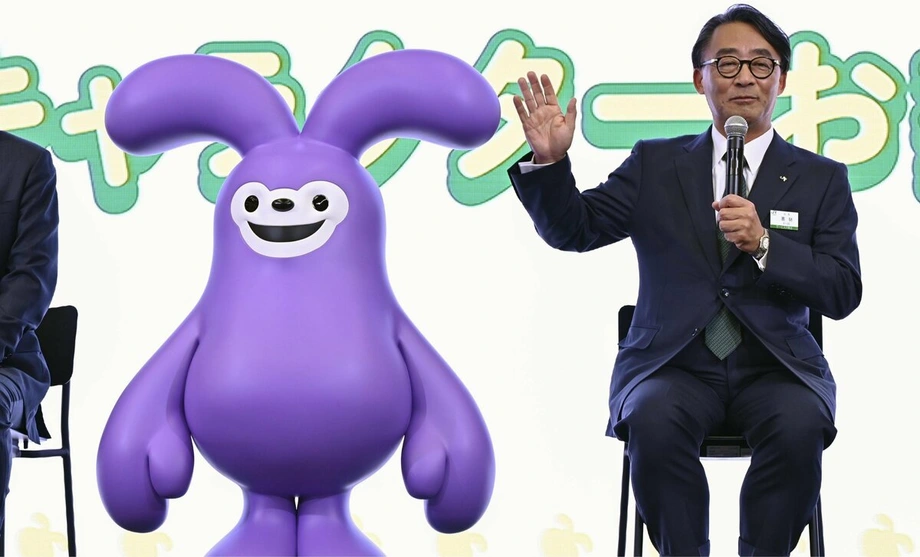
A new face wins on Suica's 25th anniversary
A purple rabbit has won 860,152 of the 1,664,399 votes cast to choose Suica's next mascot, giving East Japan Railway Co.'s familiar travel and payment service a strikingly different face. JR East announced the result on November 18, 2026, exactly 25 years after Suica began operating in 2001.
Contents
The unnamed character will officially take over on April 1, 2027, following a farewell and handover ceremony for the Suica Penguin on March 31. Before then, members of the public can suggest a name through December 15. The winning name is expected to be announced at the handover ceremony.
The rabbit received about 51.7 percent of all votes, more than the other two finalists combined. It defeated a squirrel and an orange character carrying a smaller mole in a bag worn across its body. Votes came from Japan and abroad.
The change accompanies Suica Renaissance, JR East's programme to expand the service beyond transport fares and small purchases into a broader payment and lifestyle application. The company is also preparing gates that let passengers pass without taking their phones out of their pockets or bags.
JR East President Yoichi Kise explained the company's ambition at the unveiling ceremony in Tokyo:
We want this character to be a symbol of moving forward into the new future that Suica is opening up.
For passengers, the most visible change arrives next spring. A character associated with station signs, advertisements and everyday payments for a quarter of a century will give way to a purple successor designed to represent a different stage of the service.
How the rabbit won the public vote
JR East narrowed nearly 20 original concepts to three finalists before asking the public to choose a favourite. The finalists, created by three different designers, were selected by a committee in late August and presented to voters in September.
Online voting ran from September 8 to September 23. The purple rabbit appeared as candidate B, alongside the squirrel and the orange character. Its final tally exceeded the combined 804,247 votes received by the other two candidates by 55,905.
The selection committee was chaired by broadcast writer and screenwriter Kundo Koyama. Its members included model Saya Ichikawa, character designer Yosuke Kihara, designer Tomoe Shinohara, animation creator Nike Shimaguchi, voice actor Kenjiro Tsuda and creative director Manabu Mizuno.
The public therefore chose among designs that had already passed through a professional selection process. Naming the winner will work differently: the number of times a name is submitted will be one consideration rather than the deciding rule.
Why a purple rabbit?
Illustrator Hiroaki Seto designed the winning character around the idea of a rabbit that listens to those around it and keeps leaping towards the future. JR East says the purple combines blue, representing security and reassurance, with red, representing excitement and inspiration.
The colour is a sharp departure from the green closely associated with Suica. The company wants the new character's appearance and movements to express the service's planned evolution, while remaining recognisable wherever the mascot appears.
Seto described how he approached the design at the unveiling ceremony:
In this character, I incorporated the possibilities of Suica's evolution together with JR East, as well as the ideas and feelings behind that evolution, into every aspect of its colors, shape and gestures,
Seto also welcomed the fan art that had appeared since voting began. He said he was pleased the character had already started interacting with people and hoped it would grow into a mascot loved by more users.
The public can suggest a name until December 15
JR East opened name submissions at 3 p.m. on November 18 and will accept them until 3:59 p.m. on December 15. Participants are asked to explain the origin of their proposed name and the ideas they want it to convey.
The selection committee will consider those explanations alongside the image JR East wants for the Suica brand. The final choice will therefore come from a committee decision informed by public suggestions, rather than simply from the most frequently submitted name.
People who submit a suggestion can receive a digital wallpaper, with one of three designs distributed at random. The formal name is expected to be revealed on March 31, 2027, when the penguin hands over its role.
The main dates connect the mascot contest with Suica's wider changes:
- September 8 to 23, 2026: The public voted on three finalist designs.
- November 18, 2026: JR East announced the rabbit's victory and opened name submissions.
- December 15, 2026: Name submissions close at 3:59 p.m.
- March 31, 2027: The penguin's farewell and mascot handover are scheduled, with the new name expected to be announced.
- April 1, 2027: The rabbit officially becomes Suica's mascot.
- Spring 2028: JR East plans to introduce gates allowing passage without taking out a smartphone at 40 stations.
A familiar penguin leaves after 25 years
The Suica Penguin, created by author and illustrator Chiharu Sakazaki, has represented the service since its launch in 2001. Advertisements and merchandise helped make it familiar well beyond the ticket gates where passengers first used Suica.
JR East had already announced the penguin's planned retirement in November 2025, tying its departure to an expansion of Suica's functions. The character remains in its role through March 31, 2027, the final day of Japan's fiscal year 2026. Its successor starts the following day, when fiscal year 2027 begins.
The farewell has prompted sadness as well as curiosity. Reiko Fujiwara, a woman in her 30s who learned about the winner after receiving a flyer from JR East representatives at Takanawa Gateway Station, described her surprise:
Until now, Suica has always been green, so to see that the new character is purple is a bit surprising,
Fujiwara also said the change felt like a large departure and that she was sad about the penguin's graduation. Her reaction captures a practical challenge for JR East: introducing a new visual identity to people who have known the same mascot throughout their use of the service.
Mixed first impressions, from surprise to fan art
Hiroyuki Nagahama, a man in his 50s asked about the new mascot, said becoming familiar with it could take time:
Looking at this character's face, my first impression is that it's pretty scary. But I'm sure when I get used to it, it'll be just like the penguin,
Nagahama was undecided about submitting a name, but saw the possibility of the rabbit becoming a nationally recognised character.
Online reactions ranged from praise for its colour and appearance to jokes about whether it looked like a rabbit at all. Japanese phrases translating as "poison rabbit" and "this guy is a rabbit?" appeared among trends on X, accompanied by altered images and fan creations.
The result gives JR East a mascot chosen by a narrow majority of voters, while the reactions show that affection for the penguin will take time to transfer. The naming process provides another opportunity for people to shape the new character before it officially takes over.
What changes beyond the mascot?
Suica Renaissance aims to broaden a service that many people still associate with tapping through a gate or buying a drink. An IC card stores and exchanges information electronically; with Suica, a passenger adds money in advance and uses that balance for eligible journeys and purchases.
JR East's previously announced plans included adding QR and barcode payments to the Suica app from autumn 2026 and increasing the balance limit from 20,000 yen to 300,000 yen. That planned ceiling is 15 times the earlier limit, allowing more room for larger purchases.
The next major transport change is the planned introduction of Suica gates at 40 stations in spring 2028. The rollout is intended to cover every Yamanote Line station, stations at Narita Airport, Tokyo Monorail stations at Haneda Airport and Monorail Hamamatsucho Station.
Compatible smartphones will use ultra-wideband, a wireless technology that measures position and distance precisely, alongside the communication technology used for close contact ticket checks. Passengers should be able to leave their phones inside a pocket or bag while passing through.
Before commercial use begins, about 400 commuters are scheduled to test the system at 14 stations from April 10, 2027, to February 29, 2028. The trial will check whether it records journeys accurately and handles busy conditions. Those dates put the first passenger tests just days after the rabbit becomes Suica's official face.
Key Points
- The purple rabbit won 860,152 of 1,664,399 votes, about 51.7 percent of the total.
- JR East announced the result on November 18, 2026, Suica's 25th anniversary.
- Name suggestions close on December 15, with a committee making the final selection.
- The Suica Penguin's farewell is scheduled for March 31, 2027. The rabbit takes over on April 1.
- The mascot change accompanies Suica Renaissance, including broader payment plans and new gates planned for 40 stations in spring 2028.