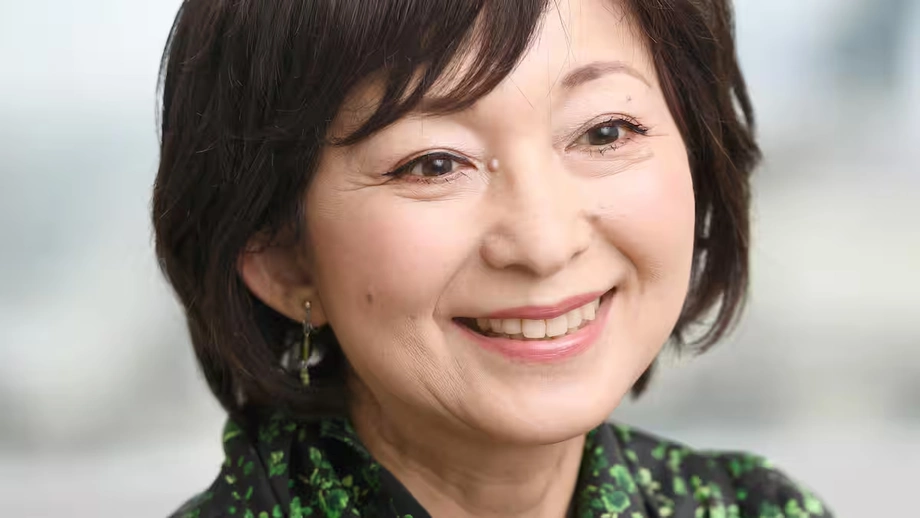
A familiar voice in Japanese music falls silent
Hiromi Ota, the Japanese singer whose 1975 hit Momen no Handkerchief sold more than 860,000 copies and continued to find new audiences through other artists, died at her Tokyo home on November 12, aged 71. Her husband, music producer Tomohiko Fukuoka, disclosed her death on November 18 and said the cause was breast cancer.
Contents
- A familiar voice in Japanese music falls silent
- From music lessons to a national television stage
- The handkerchief that became her signature
- A song passed between generations
- A career larger than one hit
- Television viewers and game players knew her too
- Treatment changed her public life
- Messages that kept fans close
- Friends remember a voice and a source of encouragement
- Key Points
Fukuoka said the family had completed a private funeral on November 18. Describing his wife's final moments, he said, in translation from Japanese:
She passed away as if falling asleep.
Born in Tokyo on January 20, 1955, Ota was known privately as Hiromi Fukuoka. She married Fukuoka, who had worked as her music producer, in 1985. She is survived by her husband and their two sons.
Her career stretched from television music ensembles and piano performances to major pop hits, acting, songwriting and a song remembered by video game players. She moved between folk, Japanese popular song and the style often called new music, reaching listeners through several different parts of Japanese entertainment.
Ota had continued communicating with fans during a long period of treatment. On November 1, 2025, the 51st anniversary of her debut, she thanked people for their messages and asked them to wait for her. That wish to return now sits alongside a musical legacy that extends far beyond the single song most closely associated with her name.
From music lessons to a national television stage
Ota grew up with piano and choral singing, studied vocal music and attended a high school with a music instruction course. In 1969, while in her final year of junior high school, she passed an audition for School Mates, a performing group that provided an early route into entertainment.
Her training later included a music school run by Watanabe Productions, where fellow students included Ran Ito and Yoshiko Tanaka, who would become members of Candies. In 1972, Ota won a regular place on NHK's music programme Stage 101.
Television gave her experience before her recording debut on November 1, 1974, with Amadare, released with Shiroi Kisetsu. Her ability to sing while accompanying herself on piano became an important part of her identity. She also received a newcomer award at the Japan Record Awards.
Ota's repertoire crossed categories that record companies and audiences often kept separate. Folk placed weight on storytelling, while kayokyoku, a broad term for Japanese popular song, reached mass audiences through records and television. Her work brought those approaches together in songs with accessible melodies and carefully drawn emotional stories.
The handkerchief that became her signature
Momen no Handkerchief, meaning Cotton Handkerchief, was written by lyricist Takashi Matsumoto and composer Kyohei Tsutsumi. Released in 1975 as Ota's fourth single, it had first appeared as an album track.
The song follows a young man who leaves his hometown for the city and the woman who stays behind. Ota sings both sides of their exchange, moving between his excitement about urban life and her hope that he will return unchanged.
Across four verses, the distance between them grows. He offers gifts and signs of his new life; she values their memories together more than jewellery or fashionable clothes. By the final verse, he has chosen the city. Her last request is for a cotton handkerchief to wipe away her tears.
The bright melody carries an increasingly painful story. That combination gave Ota room to express two people through one voice, making the song both immediately approachable and emotionally detailed.
The single sold more than 860,000 copies and reached No. 2 on the chart, during the enormous success of Oyoge! Taiyaki-kun. Ota then appeared on NHK's annual year end music programme Kohaku Uta Gassen for five consecutive years, from 1976 through 1980. Those appearances brought her voice into households across Japan.
A song passed between generations
Momen no Handkerchief continued to circulate through recordings and performances by artists from different generations. Its interpreters include Hiroji Miyamoto, Ikimonogakari, Mone Kamishiraishi, Ai Hashimoto, Masamune Kusano, Tomoyo Harada and Ringo Sheena with Nao Matsuzaki.
Other performers who have covered it include Keisuke Kuwata, Yoshimi Tendo and Fujii Kaze. The range extends across pop, rock and other styles, giving listeners several routes back to Ota's original recording.
Music producer Satoshi Takebe, paying tribute after her death, placed the song among his three favourite Matsumoto and Tsutsumi works. He also connected it to the later creation of Yuki Saito's Sotsugyo, describing the older song as part of the musical foundation from which that work emerged.
The continuing performances give a concrete measure of the song's reach beyond its original sales. People who were not born when Ota released it could encounter the same story through a contemporary singer, then discover the voice that first made it famous.
A career larger than one hit
Ota followed her breakthrough with Akai High Heel in 1976, Kugatsu no Ame in 1977, Saraba Siberia Tetsudo in 1980 and Kimi to Aruita Seishun in 1981. Together, those recordings established a catalogue that crossed the boundaries of folk, pop and kayokyoku.
In 1982, she paused her music career and travelled to the United States. After eight months, she returned to Japan and resumed singing. She also wrote about her American experience in the book New York Nante Kowakunai, a title that can be translated as New York Doesn't Scare Me.
Her creative work included writing songs for other performers, among them Agnes Chan, Masahiro Kuwana, Mimori Yusa and Mayo Shono. Those contributions placed her on the writing side of the music business as well as in front of audiences.
In 2004, she formed Nagomies with Shozo Ise, formerly of Kaguyahime, and Masumi Ohno, formerly of GARO. She also performed in orchestral pop concerts with Mayo Shono and Machiko Watanabe. Collaboration remained a recurring feature of her career, bringing her own songs into programmes shared with other established singers.
Television viewers and game players knew her too
Ota's work reached audiences outside the record charts. In the 2002 NHK morning drama Sakura, she played the mother of the heroine, portrayed by Shiho Takano. The role put her in the familiar setting of a continuing television story rather than a concert stage.
She returned to NHK's morning drama world through music in 2017, singing Koi no Uta for Hiyokko. Her connections with television therefore included early music performances, acting and songs heard within a drama.
Video game players knew another part of her work: Kokoro no Takarabako, the ending song for Chocobo Racing: Genkai e no Road. Tributes from players after her death recalled that performance, showing how a song attached to a game could become an enduring memory of her voice.
Those credits help explain the breadth of the response to her death. Some listeners remembered a single from the 1970s, others a television character or a game's ending. Ota's career gave each group a different point of connection.
Treatment changed her public life
Ota publicly disclosed breast cancer in September 2019, the year of her 45th debut anniversary. She had undergone surgery in July and started chemotherapy in August. Her treatment included eight months of chemotherapy and radiation therapy, while she continued working and completed anniversary concerts.
In April 2024, she announced that she needed hospital treatment and would suspend activities for the rest of the year. Two concert appearances scheduled for June were called off.
Fukuoka later explained that doctors had found cancer had spread to her brain in April 2024. Ota had written publicly about receiving treatment with ZAP-X, a system used to deliver radiation to targets in the brain without surgery.
Her messages at the time spoke about treatment and survival, while her husband's account after her death supplied the detail about the cancer's spread. The practical change for fans was immediate: concert plans stopped as she concentrated on medical care.
Her final years followed this sequence:
- September 2019: Ota publicly disclosed breast cancer after surgery and the start of chemotherapy.
- April 2024: She announced hospital treatment and a pause in performances.
- November 1, 2025: She marked 51 years since her debut and asked fans to wait for her.
- February 4, 2026: She made her final post on X, sharing four images.
- November 12, 2026: She died at home in Tokyo.
- November 18, 2026: Her husband disclosed her death and said the family funeral had been completed.
Messages that kept fans close
Ota continued posting on X after announcing her hospitalisation. Her messages marked birthdays and debut anniversaries, dates that had long connected her personal life with the people who followed her music.
On November 1, 2024, she wrote that treatment was continuing and that she was living with hope, even though she could not see far ahead. On her 70th birthday, January 20, 2025, she acknowledged how difficult her condition was and said she was trying to accept simply being alive as something good.
Her message on November 1, 2025, thanked fans for their early anniversary greetings. Ota then described her condition and her wish to remain connected with them, writing in Japanese words translated here:
My condition hasn't changed much, but I'm alive. Wait for me.
The message carried particular weight because the anniversary celebrated the beginning of her recording career. More than five decades after Amadare, she was still addressing the people who wanted to hear her sing again.
Friends remember a voice and a source of encouragement
Agnes Chan, who was also born in 1955 and had experienced breast cancer, remembered Ota as someone with whom she could discuss the illness. In a tribute posted on Instagram on November 18, Chan said they had last met at a concert associated with Takashi Matsumoto.
Chan recalled that Ota appeared well and sang with the beautiful voice she remembered. The two discussed breast cancer and encouraged each other. Chan described her immediate reaction to the news in words translated from Japanese:
I don't want to believe it. I hope it's a lie.
Singer Miki Asakura recalled sharing a concert with Ota and Mayo Shono. She described Ota as approachable and charming, with a firm musical identity, and said she had hoped they would perform together again.
Singer and songwriter Shoko Sawada also expressed grief, saying she had believed Ota would return. Music producer Akimitsu Honma posted a brief tribute on X soon after the news became public.
The memories connect several parts of Ota's life: the performer admired for her voice, the colleague welcomed on a shared stage and the friend who offered encouragement during illness. Alongside the many covers of her songs, those recollections describe a career sustained through personal relationships as well as recordings.
Key Points
- Hiromi Ota died at her Tokyo home on November 12, aged 71. Her husband said the cause was breast cancer.
- Her family completed a private funeral on November 18.
- She debuted in 1974 and became widely known through Momen no Handkerchief, which sold more than 860,000 copies.
- Her career included songwriting, collaborative concerts, television acting and the ending song for Chocobo Racing.
- She disclosed breast cancer in 2019 and suspended performances for treatment in 2024.
- Her husband, music producer Tomohiko Fukuoka, and their two sons survive her.