Airport safety failures keep Saemangeum plan blocked
The Seoul High Court on November 18, 2026, upheld the cancellation of the master plan for Saemangeum International Airport, finding that South Korea's transport ministry had chosen the site without properly assessing the danger of aircraft colliding with birds. The decision leaves a proposed airport covering 3.4 million square meters in Gunsan, North Jeolla, facing another major legal setback.
Contents
- Airport safety failures keep Saemangeum plan blocked
- Why the selection of 13 candidate sites mattered
- How the bird risk calculations became contested
- A migratory route creates a difficult safety problem
- Why a tidal flat seven kilometers away entered the case
- Who could bring the lawsuit?
- What is at stake for construction and regional investment?
- Cancellation and a construction suspension are different decisions
- Province seeks a way to continue as campaigners celebrate
- Key Points
The court's Administrative Division 4-2, presided over by Senior Judge Lee Kwang-man, dismissed the Ministry of Land, Infrastructure and Transport's appeal in case 2025누8271. It upheld the Seoul Administrative Court's September 11, 2025, judgment that the development plan should be canceled.
The appellate judges accepted that North Jeolla needs investment and stronger transport connections. Their central finding was that the ministry had given development benefits greater weight without adequately examining public safety and environmental protection. An airport's contribution to regional growth, they reasoned, depends first on whether aircraft can operate safely.
The Seoul High Court panel explained when that safety assessment should have happened:
From the site selection stage, there should have been an assessment of whether the risk of bird strikes could be avoided or sufficiently reduced, but the Ministry of Land, Infrastructure and Transport (MOLIT) did not assess it at all.
The ministry said it would study the judgment before deciding its response. North Jeolla's government continues to support an airport and is considering legal action and changes to the project. Campaigners, meanwhile, are urging the government to abandon a further appeal and preserve the Sura tidal flat, where the airport would be built.
Why the selection of 13 candidate sites mattered
The ministry's assessment around June 2019 compared 13 candidate sites. According to the court, it used criteria associated with the International Civil Aviation Organization, or ICAO, while leaving bird strike risk out of the location assessment.
A bird strike happens when a bird collides with an aircraft. Birds can damage engines and other aircraft parts. The judges stressed that even one accident can cause grave harm to passengers, crew and property, making the risk especially important when choosing where to build an airport.
The court found that authorities selected the location first and considered ways to manage birds afterward. A strategic environmental impact assessment prepared in September 2021 examined some bird risks and possible countermeasures, but the judges found that a meaningful comparison between candidate sites had not shaped the location decision.
Environmental consultation was completed conditionally in February 2022, following revisions. The ministry then published the master plan in June 2022. The appellate ruling makes the order of those decisions central: measures proposed after a location has been selected must be supported by an adequate examination of whether that location can safely accommodate an airport.
How the bird risk calculations became contested
The court found that a model intended to assess new airport locations showed Saemangeum's bird strike risk to be much higher than at other domestic airports. It also questioned the ministry's use of a model for airports already operating and its decision to limit the assessment area to five kilometers.
Nearby Gunsan Airport featured in the ministry's reasoning that the danger would be low. The proposed runway would be about 1.35 kilometers west of Gunsan Airport's runway. The court found that relying on the neighboring airport did not adequately address the particular conditions at the new site.
The plaintiffs argued that Saemangeum's bird strike risk could be as much as 650 times that of Muan Airport. The ministry challenged that comparison, saying the estimate assessed the proposed site before any bird prevention facilities were installed. It argued that deterrent equipment, management activities and alternative habitats could sufficiently reduce the risk.
The judges examined both the assessment methods and the proposed protections. Their conclusion was that the ministry had not thoroughly studied the site's characteristics or shown that its measures would adequately address them. The lower court had also found that the planning process understated the danger.
A migratory route creates a difficult safety problem
The Sura tidal flat lies on the East Asian–Australasian Flyway, a route used by migratory birds moving between feeding, breeding and wintering areas. Numerous wintering grounds and stopover sites surround the planned airport.
Figures cited in the dispute describe about 240,000 migratory birds using or visiting the tidal flat and 59 endangered species. The appellate court specifically referred to at least 31 legally protected bird species around the project site. Spoonbills and shorebirds are among the wildlife at the center of the campaign to preserve it.
The ministry's plan to deter birds raised another difficulty: measures intended to keep aircraft safe could interfere with species protected by law. The court found insufficient grounds for concluding that bird protection and bird strike prevention could work together as proposed.
The Korea Environment Institute and Korea Heritage Service also raised concerns about the countermeasures during factual inquiries in the appeal. For the project to proceed on a revised basis, authorities would need to address both sides of the problem: keeping birds away from aircraft while meeting obligations to protect their habitats and populations.
Why a tidal flat seven kilometers away entered the case
The Seocheon tidal flat, about seven kilometers from Sura, is a protected wetland and part of the UNESCO World Natural Heritage property known as Getbol, Korean Tidal Flats. The judges found that the airport's environmental effects could reach this ecologically connected area.
Building the airport could reduce places where birds feed, rest and breed, while disrupting their movements. Because birds travel between wetlands, the court expected those changes to affect populations and habitats beyond the construction boundary.
The judges also considered how declining bird populations and damaged habitats could reduce biodiversity and affect the structure and stability of the ecosystem. They referred to Article 35 of South Korea's Constitution, which addresses environmental rights and the duty to protect the environment.
The first judgment had already identified insufficient examination of effects on Seocheon. The appeals court found that similar concerns continued to be raised after the master plan was adopted, without an adequate explanation of how wildlife protection and aviation safety measures could coexist.
Who could bring the lawsuit?
The lawsuit began in September 2022 with 1,296 participants, including Gunsan residents and members of the coalition campaigning to cancel the airport. Only three residents were recognized as having legal standing, meaning the right to ask the court to decide the case.
Those three lived in an area covered by airport noise countermeasures. The appellate court upheld their standing and rejected appeals by residents whom the lower court had found ineligible to sue. This explains why the proceedings have been described both as a lawsuit involving three citizens and as a campaign involving 1,296 people.
The ministry argued that residents whose standing arose from potential noise damage should not be able to challenge the plan on other grounds. The court rejected that argument, allowing them to raise bird strike risks and other alleged legal defects in the master plan.
The case followed years of planning and more than four years of litigation. Its main stages were:
- January 2019: The airport was selected as a project for balanced national development and exempted from a preliminary feasibility study.
- June 2022: The ministry published the airport master plan.
- September 2022: Residents and campaigners filed the cancellation lawsuit.
- September 11, 2025: The Seoul Administrative Court ruled that the plan should be canceled.
- March 2026: A separate application to suspend implementation was rejected.
- November 18, 2026: The Seoul High Court upheld cancellation of the plan.
What is at stake for construction and regional investment?
The airport plan includes a runway measuring 2,500 meters, two taxiways, an apron where aircraft park, passenger and cargo terminals, and navigation safety facilities. HJ Heavy Industries leads the construction consortium. The project has been described as targeting construction completion in 2028 and opening in 2029.
Published estimates put the total project cost at 826.8 billion won, while another estimate gives 807.7 billion won. Construction alone has been put at about 560 billion won. These figures describe a large commitment of public resources alongside the safety and environmental issues considered by the courts.
The lower court also cited a benefit to cost ratio of 0.479. This measure compares estimated economic benefits with estimated costs: a ratio of 0.479 means roughly 48 won in measured benefits for every 100 won in costs. Regional development was nevertheless a central part of the government's case for the airport.
North Jeolla argued that the airport would support the wider Saemangeum development area, including Hyundai Motor's investment plan of 9 trillion won. The appellate judges acknowledged the region's need for economic vitality and changes since the first judgment, including the arrival of exporting businesses. They concluded that development benefits still required an adequate assessment of safe airport operations.
Cancellation and a construction suspension are different decisions
The latest judgment concerns the legality of the master plan, the government's formal framework for the airport's location and development. If the cancellation judgment becomes final, the June 2022 plan will be revoked.
A separate request to suspend implementation, filed by campaigners the day after the first judgment, was rejected in March 2026. The court found that the requirement of harm that would be difficult to repair had not been met. That application followed a different legal test from the lawsuit challenging the plan itself.
Administrative work has also been affected. Following the first judgment, the Jeonbuk Regional Environmental Office put environmental impact assessment procedures on hold. The airport's progress therefore depends on environmental review as well as the ministry's next legal decision.
The appeal follows the earlier airport safety dispute, which brought bird strike calculations and the project's development case before the November 18 hearing. The new ruling leaves the ministry deciding whether to seek Supreme Court review or pursue another response. No decision on a further appeal, revised site or replacement schedule has been announced.
Province seeks a way to continue as campaigners celebrate
North Jeolla Governor Lee Won-taek said the province would work with the government to find a way to continue airport construction while protecting safety and the environment. Provincial officials are examining the judgment with the transport ministry, including possible legal action and changes needed to restart the project.
A provincial official also indicated that retaining the existing location might not be essential. The Democratic Party's provincial organization called for additional bird strike and environmental studies, or new administrative procedures reflecting the judgment.
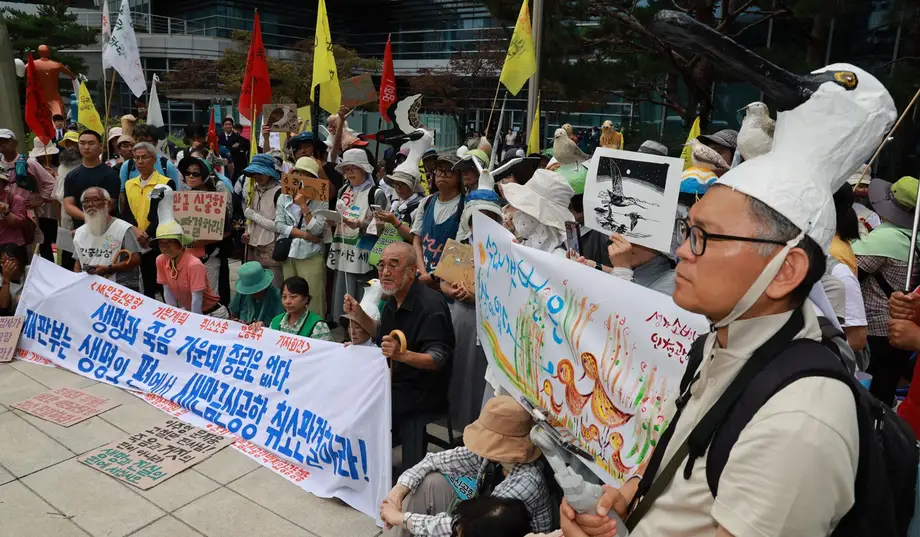
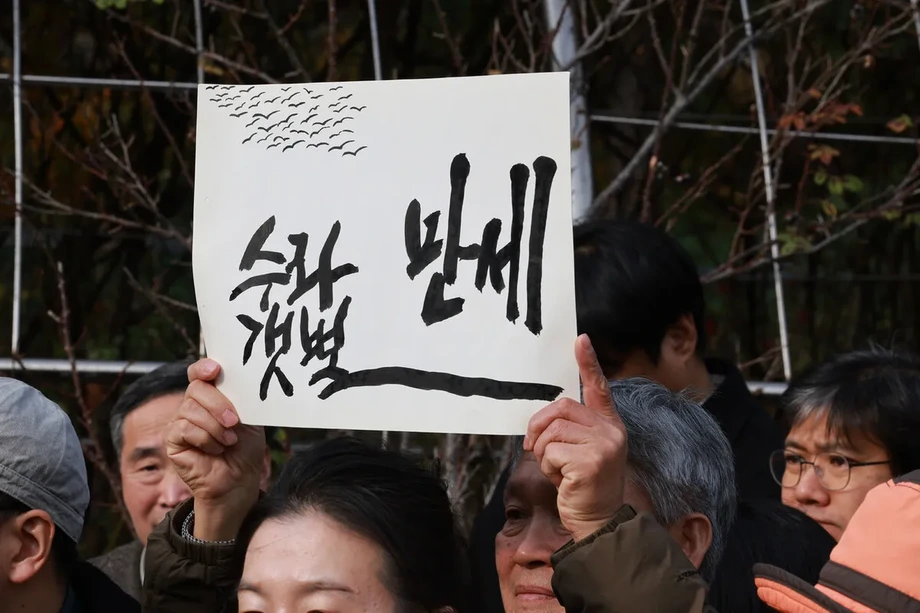
Campaigners greeted the ruling with cheers, embraces and tears. Kim Yeon-tae, a joint representative of the coalition opposing the airport, bowed deeply to fellow activists after the decision. Their lawyer, Choi Jae-hong, described the result at a press conference:
The Ministry of Land, Infrastructure and Transport spoke of the importance of science and technology, but the countless lives that visit the Saemangeum mudflats have prevailed.
The coalition urged the ministry to forgo a Supreme Court appeal and preserve Sura. Campaigners invoked the December 29, 2024, Jeju Air disaster at Muan Airport, which killed 179 people, as a reason to give aviation safety greater weight.
The Jeonbuk Federation for Environmental Movement called for public comparisons of the costs and benefits of using existing Gunsan Airport alongside railways and ports. It also sought an explanation of how bird risks were omitted or reduced in the planning assessments. The immediate choice for authorities is whether to continue defending the current plan or develop a different proposal that answers the court's findings.
Key Points
- The Seoul High Court upheld cancellation of the Saemangeum airport master plan on November 18, 2026.
- The court found that bird strike risks had not been properly assessed when comparing candidate sites.
- Judges also identified inadequate examination of protected birds and effects on the nearby Seocheon tidal flat.
- Three residents had legal standing in a lawsuit launched by 1,296 participants.
- The transport ministry is reviewing its response, while North Jeolla continues to support an airport.
- Campaigners want the government to abandon further appeals, preserve Sura and compare existing transport alternatives.