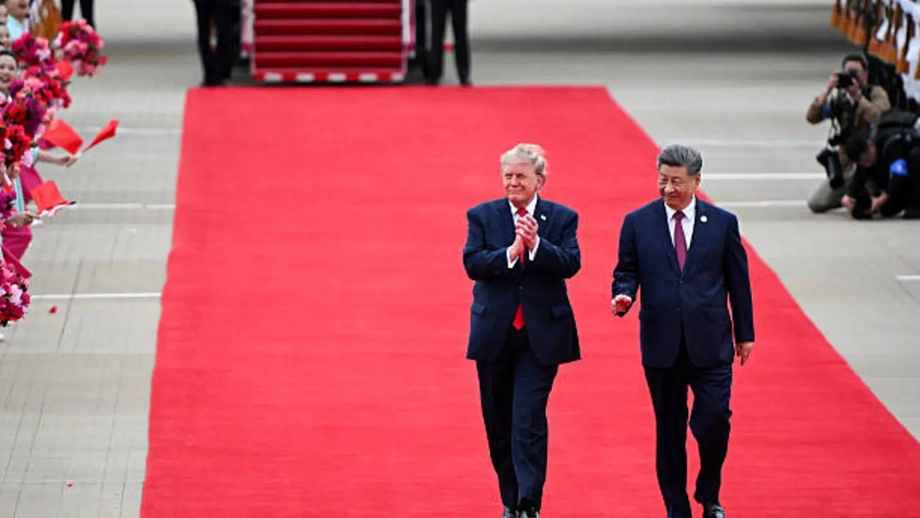
New Jet Sales Forecast Follows Talks With Xi
United States President Donald Trump said on November 23, 2026, that he expects China to buy another 250 Boeing commercial airplanes, adding to an agreement announced earlier in the year. Speaking during a television interview on CNBC, Trump framed the anticipated deal as part of his ongoing push to secure overseas aviation contracts for American manufacturers. His remarks came four days after he met Chinese President Xi Jinping on November 19 in Shenzhen, where leaders gathered for trilateral summit talks.
Contents
Trump told CNBC viewers that he believed Beijing would expand its purchases beyond the initial batch, while pointing out that Boeing still faces the task of building the aircraft it has already promised to deliver.
I'm the king of selling Boeings, but you know, you've got to make them. If you take a look at Boeing's backlog, it's unbelievable.
A manufacturer's backlog is the total number of aircraft orders a company has booked from buyers that have not yet been built and delivered. Trump added that Boeing had given him what he called the "salesman of the century award," and he stated during the broadcast that China was poised for a second order matching what he described as an earlier sale of 250 planes.
Trump made that claim directly while predicting the new agreement on air.
By the way, I sold 250 Boeings to China, and I think they're going to do another 250.
Trump's figure of 250 planes for the earlier deal differs from the 200 airplanes Boeing and US officials announced in May 2026. Neither Boeing nor the Chinese government confirmed a new agreement for 250 planes on November 23. Boeing declined to comment immediately on Monday, and Beijing has not released details of any fresh purchase.
How the Boeing Deal Evolved Through 2026
China and the United States first reopened major commercial aircraft talks in May 2026, when Trump traveled to Beijing for a summit with Xi. Ahead of that May gathering, American, Chinese, and Boeing officials had discussed a broad package covering as many as 500 aircraft. When the leaders met, China agreed to a provisional commitment for 200 Boeing planes alongside engines made by General Electric, a figure smaller than many industry analysts had anticipated.
Boeing Chief Executive Officer Kelly Ortberg described the May commitment for 200 airplanes as an "initial tranche," meaning the first installment of what could grow into a much larger series of orders. Trump said at the time that China could eventually raise its total Boeing purchases to as many as 750 aircraft. Progress on turning that May pledge into binding contracts continued through the autumn, with US Trade Representative Jamieson Greer stating in September 2026 that China was making good progress toward finalizing those 200 orders.
Commercial aviation talks between Washington and Beijing unfolded across several key dates in 2026:
- 2017 to May 2026: Boeing remained effectively shut out of new Chinese airline orders while European competitor Airbus expanded its share of the market.
- May 2026: At a Beijing summit between Trump and Xi, China made a provisional commitment to buy 200 Boeing jets and General Electric engines, following talks that had explored up to 500 planes.
- September 2026: US Trade Representative Jamieson Greer reported good progress in finalizing the 200 May orders.
- October 2026: The US Commerce Department slowed export licensing for airplane parts heading to China and restricted shipments to Chinese planemaker COMAC.
- November 19, 2026: Trump and Xi held bilateral talks in Shenzhen alongside the Asia-Pacific Economic Cooperation summit.
- November 23, 2026: Trump told CNBC he expects China to purchase another 250 Boeing airplanes.
China would reach 450 combined Boeing planes if it adds 250 aircraft to the 200 announced in May, leaving the total 50 planes below the 500 discussed prior to the Beijing summit and 300 fewer than the ceiling of 750 planes Trump mentioned that month. Using Trump's Monday figure of 250 earlier jets, a second batch of 250 would bring the total to 500 planes.
Why China Matters in the Battle With Airbus
China represents the single largest growth market for commercial aircraft manufacturers over the coming two decades. Industry projections indicate that Chinese airlines and buyers are expected to order approximately 9,000 new jets by 2045, more than any other region in the world. Even a combined order of 450 Boeing airplanes would account for 5 percent of the 9,000 jets China is projected to need by 2045, while the May commitment of 200 planes represents about 2.2 percent.
Boeing had been effectively locked out of that market since 2017 amid trade disputes and pauses in ordering between Washington and Beijing. During those nine years, European rival Airbus steadily grew its presence across China, winning fleet expansion contracts from Chinese carriers while Boeing struggled to rebuild its business in the country. Securing firm Chinese orders would restore Boeing to active competition with Airbus in a market neither company can afford to ignore.
Airlines and planemakers usually start with provisional commitments or letters of intent before signing binding purchase contracts that lock in delivery slots, exact aircraft models, and financing terms. Because Boeing must manufacture each jetliner to customer specifications and clear regulatory approvals, a large order announcement adds pressure on factory production lines that already hold years of unfulfilled deliveries.
Export Controls and US Bargaining Power
Washington paired those airplane sales talks with tougher trade rules aimed at China's domestic aviation sector. In October 2026, the US Commerce Department slowed down the approval of export licenses for American airplane parts bound for China. Export licenses are government permits required before companies can legally ship sensitive industrial technology or components to foreign buyers.
Federal officials specifically capped the volume of parts approved for shipment to COMAC, the commercial aircraft manufacturer owned by the Chinese government. Washington took that step to prevent COMAC from stockpiling essential Western components, turning China's reliance on American aviation suppliers into bargaining power during broader trade discussions.
Boeing and its suppliers operate across complex global supply chains for engines, flight electronics, and structural parts, meaning limits on export licenses can slow down assembly lines at competing manufacturers. By tightening parts approvals while simultaneously promoting finished Boeing aircraft and General Electric engines during summits with Xi, the White House has paired commercial sales pitches with industrial trade pressure.
Regional Jet Sales Alongside the Asia Trip
Trump's comments on China followed another major commercial aviation announcement tied to his November diplomatic tour in Asia. Just before his trip, Boeing and engine partner GE Aerospace finalized the Philippine Airlines deal, a commercial package valued at 12 billion dollars for up to 20 Boeing 787 Dreamliner passenger jets.
Philippine Airlines signed the formal contract on November 10, 2026, covering 15 firm Boeing 787-10 aircraft powered by GE Aerospace engines along with purchase rights for five more planes, ahead of a White House announcement on November 19. While US officials cited the 12 billion dollar value based on list prices, market analysts noted that typical airline discounts place the actual transaction closer to 3.4 billion dollars. For Trump, highlighting both the Manila transaction and prospective Chinese purchases formed a centerpiece of his economic message returning from Asia.
What Remains Unconfirmed About the Chinese Orders
Beijing and Washington have not yet settled or disclosed several basic details about China's Boeing purchases. Neither the Chinese government nor Chinese state airlines have published contract documents, aircraft model breakdowns, or delivery schedules for the additional 250 planes Trump predicted on Monday.
Boeing and Chinese buyers have also not publicly confirmed finalized contracts for the 200 airplanes pledged in May 2026, despite Greer's September assessment that talks were progressing well. Boeing has not issued a statement confirming whether new negotiations for 250 more aircraft took place during Trump's November 19 meeting with Xi in Shenzhen or when any finalized purchase agreement might be signed.
Key Points
- Donald Trump said on CNBC on November 23, 2026, that he expects China to buy another 250 Boeing airplanes.
- Trump's remarks came four days after he met Chinese President Xi Jinping in Shenzhen on November 19, 2026.
- In May 2026, China made a provisional commitment for 200 Boeing jets and General Electric engines, though Trump referred on Monday to an earlier sale of 250 planes.
- Boeing did not comment on Monday, and Beijing has not released details or confirmed firm contracts for a new batch of 250 planes.
- Boeing had been effectively shut out of the Chinese market since 2017 while Airbus expanded, even as China is projected to order 9,000 new jets by 2045.
- In October 2026, the US Commerce Department slowed export licenses for aircraft parts going to China and limited shipments to Chinese planemaker COMAC.
- Alongside his Asia trip, Trump highlighted a 12 billion dollar sale by Boeing and GE Aerospace to Philippine Airlines for up to 20 Boeing 787 jetliners.