Uzbekistan Rejects Siberian Water Proposal
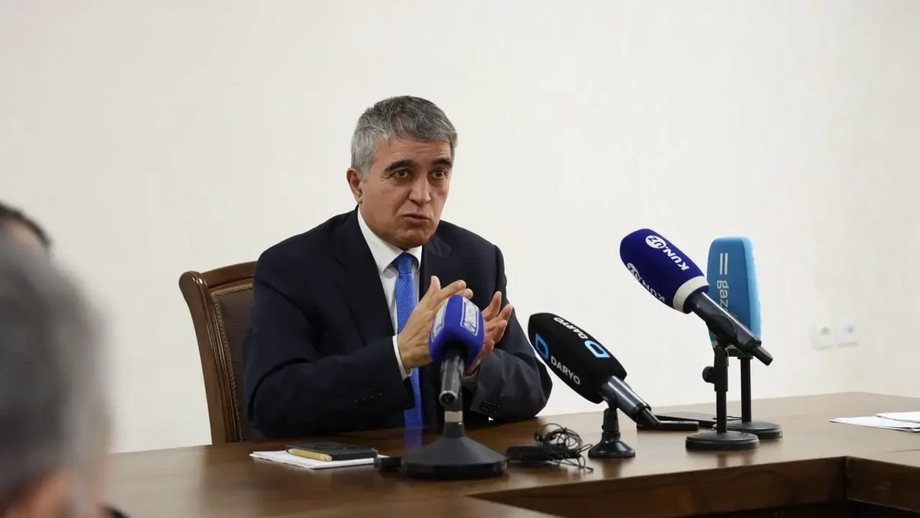
Uzbekistan has decided against a massive international project to divert water from Siberian rivers, choosing instead to invest in domestic water-saving technologies. Shavkat Khamraev, Minister of Water Resources, announced this decision on November 19, 2026, during a press conference in Tashkent. Russian scientists had proposed building a pipeline system to bring about 5 billion cubic meters of water annually from Siberian rivers, specifically the Ob River, into Central Asia. The Russian proposal involved a pipeline made of seven parallel lines, each stretching approximately 2,100 kilometers, with a construction timeline of at least 10 years. Uzbek authorities calculated that this ambitious engineering undertaking would cost roughly 100 billion dollars. Government officials concluded that spending this immense sum was unfeasible when domestic efficiency measures could achieve similar water security outcomes at a fraction of the cost.
Contents
The idea of turning Siberian rivers to irrigate Central Asian arid lands revives concepts from the Soviet era. The original Soviet project, which was eventually canceled in 1986, aimed to divert about 27 billion cubic meters of water per year. According to Ministry of Water Resources data, the revived concept put forward by the Russian Academy of Sciences in the autumn of 2025 would have required massive capital expenditure. Minister Khamraev noted that while the historical Soviet project could have benefited Uzbekistan, Russia, Kazakhstan, and partly Turkmenistan, the modern financial burden of 100 billion dollars made the Siberian pipeline impractical for the current economic landscape of Uzbekistan.
Water scarcity is a growing concern across Central Asia, driving nations to reevaluate how they manage liquid resources. Kazakhstan also faces heavy reliance on outside water sources, with approximately 45 percent of its river water originating across its borders. In the Turkestan and Kyzylorda regions of Kazakhstan, roughly 90 percent of the water in the Syr Darya River comes from neighboring countries, as noted by Kazakhstan Water Resources Minister Nurjan Nurjigitov. Kazakhstan previously discussed river runoff diversion with Russia in 2021, but the Russian side declined the request by pointing to various negative environmental and ecological consequences. While Uzbekistan has firmly chosen domestic conservation over the Siberian pipeline for now, Minister Khamraev did not completely close the door on future discussions, stating that if climate change severely depletes available water resources by the 2050s, nations might need to revisit additional external water sources.
Domestic Conservation and Modernization Strategies
Uzbekistan is focusing heavily on upgrading its internal irrigation infrastructure and promoting water-saving techniques to secure its agricultural and municipal needs. The country has already achieved significant water savings through modern irrigation methods, laser leveling of agricultural fields, and the concrete lining of irrigation canals. Official figures from the Ministry of Water Resources show that between January and October 2026, the country successfully saved 10.69 billion cubic meters of water. Nearly half of these savings resulted directly from advanced water-saving technologies and precise land leveling practices.
Financially, the domestic conservation path has proven far more affordable than importing Siberian water. Minister Khamraev explained that the water-saving measures implemented so far cost approximately 5 billion dollars. The government plans to inject another 5 billion to 10 billion dollars into the national irrigation system to generate even greater efficiency. Under the official water development program, national water savings are targeted to reach 14 billion cubic meters per year by 2028. Minister Khamraev reported these progress figures to lawmakers on November 11, 2026, during a session broadcast by the parliamentary channel Ochiq Parlament.
Maintaining aging irrigation networks requires substantial capital, prompting Tashkent to partner with international lenders. The government has engaged in extensive negotiations with Chinese contractors regarding the reconstruction of irrigation infrastructure across four regions, including Surkhandarya, Kashkadarya, Bukhara, and Namangan. These projects utilize loans from the Export-Import Bank of China. During parliamentary discussions, concerns were raised regarding the slow pace of absorbing these foreign funds. Minister Khamraev clarified that initial cost estimates provided by Chinese contractors were more than double the budgeted expectations, leading to prolonged negotiations to lower expenses to acceptable levels.
Managing Transboundary Water and Energy Exchanges
Managing water resources in Central Asia requires close cooperation among neighboring countries due to competing seasonal demands for water and electricity. Uzbekistan, Kyrgyzstan, and Kazakhstan coordinate their energy grids and reservoir release schedules to balance agricultural needs with power generation. Kyrgyzstan requires large amounts of electricity during the freezing winter months, which necessitates increased water releases from major facilities like the Toktogul Reservoir. Conversely, downstream nations like Uzbekistan and Kazakhstan require steady water supplies during the spring and summer agricultural growing seasons.
To prevent conflicts over transboundary rivers, the region relies heavily on diplomatic coordination and seasonal resource exchanges. Uzbekistan supplies electricity to its neighbors during periods of high demand and receives water back when crops need irrigation. Minister Khamraev emphasized that rigid demands from any single country complicate regional relations. He highlighted the importance of mutual listening and regional diplomacy, contrasting current cooperative efforts with the much tenser political climate seen between 2005 and 2015. Interstate cooperation was formally reinforced during the 95th meeting of the Interstate Commission for Water Coordination in Turkmenistan, where representatives from Uzbekistan, Kazakhstan, Tajikistan, and Turkmenistan approved regional water intake limits for the 2026 to 2027 non-growing season.
Long-term water availability in the region remains vulnerable to climate change and new infrastructure projects along major rivers. Glaciers feeding Central Asian river basins are retreating, and regional precipitation patterns are shifting. Additionally, upstream construction projects introduce new variables to the regional water balance. Tajikistan is progressing with the construction of the Rogun Dam on the Vakhsh River, a project expected to take at least another four to five years to complete, with gradual reservoir filling projected through roughly 2035. Minister Khamraev stated that Tajikistan is not withholding water destined for Uzbekistan. Meanwhile, Afghanistan is advancing construction on the Qosh Tepa canal along the Amu Darya River. Full water intake through the Qosh Tepa canal is expected to begin around 2030, after which Afghanistan could draw between 6 billion and 10 billion cubic meters of water annually, depending on annual river flow volumes.
Water Security for the Jizzakh Nuclear Power Plant
Uzbekistan is expanding its energy sector by constructing its first nuclear power plant in the Farish district of the Jizzakh region, a project partnered with the Russian state corporation Rosatom. The active construction phase of this integrated facility began on June 4, 2026, combining large reactors with small modular reactors to generate a total capacity of approximately 2,110 megawatts. Ensuring adequate water supplies for an industrial energy project of this scale in an arid region required careful planning and modern engineering solutions.
Minister Khamraev confirmed that the water supply question for the Jizzakh nuclear facility has been fully resolved. The primary source of water will be the South Mirzachul Canal, located near the construction site. Authorities evaluated alternative options, including water from the high-salinity Lake Aydarkul, but determined that utilizing the canal was far more practical. To minimize environmental impact, the facility will employ advanced dry cooling technology rather than traditional water-intensive evaporation cooling towers. Heat will be transferred directly to atmospheric air through specialized heat exchangers, preserving the delicate regional water balance.
Because the nuclear station will recycle its process water continuously through a closed-loop system, its overall freshwater consumption will remain extremely low. Minister Khamraev estimated that the plant will consume only 1 million to 2 million cubic meters of water annually. The broader infrastructure development supporting the complex includes the construction of 120 kilometers of industrial water supply pipelines and 21 kilometers of potable water pipelines, alongside extensive electrical grids and transportation routes, supporting a total estimated project cost of 9.5 billion dollars.
Timeline of Key Developments
- Autumn 2025: Russian Academy of Sciences proposes a pipeline to divert Ob River water to Central Asia.
- June 20, 2026: Uzbekistan, Kazakhstan, and Kyrgyzstan sign a trilateral protocol on water and electricity exchange.
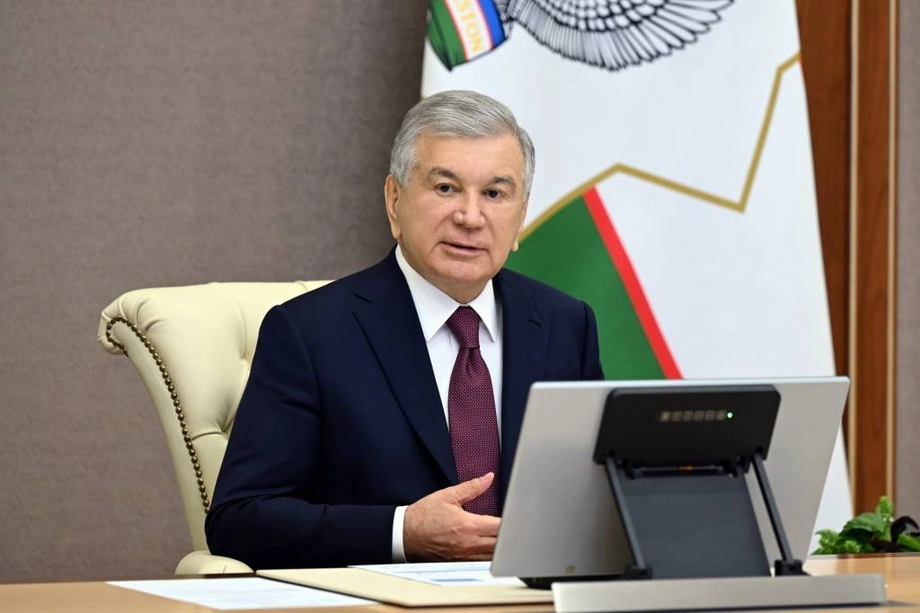
- September 2026: President Shavkat Mirziyoyev inspects construction infrastructure at the Jizzakh nuclear plant site.
- October 7, 2026: The Interstate Commission for Water Coordination approves regional water limits in Turkmenistan.
- November 11, 2026: Minister Khamraev reports to parliament that domestic water savings have reached 10.69 billion cubic meters.
- November 19, 2026: Minister Khamraev officially announces the rejection of the Siberian water diversion project during a press conference in Tashkent.
The Bottom Line
- Uzbekistan rejected the 100-billion-dollar Siberian water diversion project, opting instead for domestic water conservation.
- The country saved 10.69 billion cubic meters of water between January and October 2026 through modern irrigation and land leveling.
- Uzbekistan plans to invest an additional 5 billion to 10 billion dollars into upgrading its national irrigation infrastructure.
- Water supplies for the Jizzakh nuclear power plant are secured via the South Mirzachul Canal with a minimal consumption of 1 to 2 million cubic meters annually.
- Central Asian nations continue coordinating transboundary water releases and seasonal energy exchanges to manage regional scarcity.