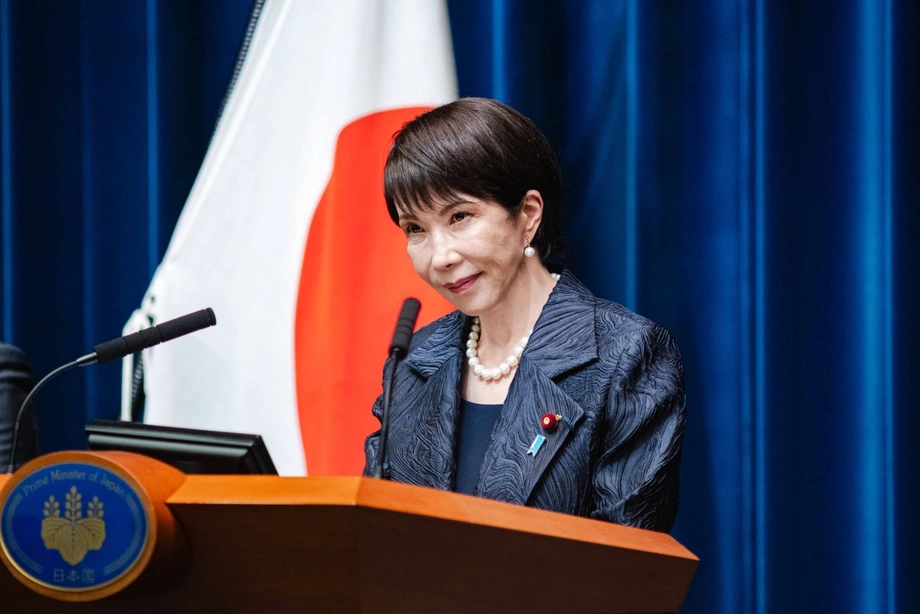
Direct Messages and Internal Shifts in Tokyo
Sanae Takaichi marked one year in office as Japan's prime minister and leader of the governing Liberal Democratic Party amid a quiet transformation of how power works inside the organization. Lawmakers who once relied on faction leaders for political survival now find themselves dealing directly with the party president. That shift has brought a mixture of ambition and anxiety to the members who populate the ruling party in parliament. A junior legislator experienced this firsthand on a day in early August 2026, when a smartphone notification arrived from the prime minister herself.
Contents
The message thanked the recipient for speaking up during a recent party debate on tax policy. The recipient had voiced support for a proposed consumption tax cut on food items during a meeting of the party tax commission. That meeting included several senior members who argued strongly against the reduction, and the prime minister herself was not present in the room. Furthermore, the lawmaker had supported a different candidate during the internal leadership election and held no personal bond with the prime minister. Receiving the message proved that every word spoken in closed party meetings reached the top office almost instantly.
先般の党内議論ではたびたび応援発言をしていただきありがとうございました。これから法案審議頑張ります
An official inside the prime minister's office noted that the leadership knows exactly who says what during internal policy deliberations. Historically, party committees operated with a degree of independence, sometimes pushing back against the wishes of the executive branch. Today, backbenchers enter committee rooms with the shadow of the prime minister's office hanging over every debate. Even within the leadership ranks, opposition to key proposals like the food tax cut melted away before the end of July, replaced by unanimous compliance.
The Anatomy of One-Person Rule
Tokyo University professor Izuru Makihara discussed the mechanics of this political shift during an interview conducted on November 18, 2026, in Tokyo's Meguro ward. Makihara, a political scientist who helped draft a research group proposal titled the handbook for managing the prime minister's office, explained how the landscape changed after political funding scandals dismantled traditional factions. Without faction bosses to distribute resources and corral votes, the ruling party fragmented into disconnected individuals. Power shifted decisively from decentralized bargaining to a top-down model centered entirely on the prime minister.
This centralization creates a different kind of internal discipline within the party. With over four hundred national legislators looking toward a leader whose personal popularity propelled many of them into office, dissent carries a heavier professional cost. Lawmakers realize that their political fortunes depend on staying aligned with the central leadership rather than building regional or factional backing. The result is an environment where career advancement flows from loyalty to the single executive rather than negotiation among peer groups.
From Coalition Crisis to Centralized Control
The consolidation of power represents a sharp contrast to the conditions surrounding the government when the leader first took charge, following a period similar to after last year's attacks on party unity and public trust. When former Prime Minister Shigeru Ishiba resigned after a brief tenure marked by consecutive election setbacks, the ruling party found itself struggling to maintain a parliamentary majority. The departure of Komeito, a coalition partner of twenty-six years, stripped the administration of its most reliable legislative buffer and forced the new leader to navigate a fractured parliament.
The leadership contest that brought the current prime minister to power required defeating Agriculture Minister Shinjiro Koizumi in a runoff involving nearly three hundred party lawmakers and roughly one million dues-paying members. Securing the party leadership was only the first step, as a separate vote in the Diet, Japan's parliament, was required to confirm her as prime minister. Operating without a reliable majority in the lower house required building ad-hoc coalitions and managing opposition parties that held significant leverage in legislative votes.
How the Policy Process Changed
Policy formation within the ruling party used to follow a bottom-up trajectory where committees thrashed out disagreements before bills ever reached the cabinet. Senior politicians who headed internal factions acted as gatekeepers and brokers, protecting the interests of their junior members in exchange for unwavering loyalty. That traditional machinery vanished with the funding scandals that forced factions to dissolve. Legislative proposals now move downward from the prime minister's office, leaving ordinary members to ratify decisions rather than shape them.
The consumption tax debate on food items illustrated this new reality. When the executive branch signaled its strong attachment to lowering taxes on food to help households cope with rising prices, resistance appeared among fiscal conservatives within the party. Yet, the anticipated rebellion failed to materialize during the committee sessions. Lawmakers who understood how the prime minister monitored their statements chose to voice support instead of opposition, ensuring a smooth path for the administration's agenda.
The View from Academia
Academic observers tracking Japanese politics point out that this level of concentration is unprecedented in modern political history. Without factional leaders to act as buffers, the relationship between the top executive and individual members becomes intensely personal. Lawmakers must interpret subtle signals and direct messages from the leadership to understand their standing within the party. This dynamic fosters an atmosphere where members anticipate the wishes of the executive before any formal instruction is issued.
The research into executive power compiled by academic study groups highlights the vulnerability of legislators who lack independent bases of support. When a party relies heavily on the personal popularity of its leader to win elections, the resulting crop of freshman politicians owes its seats entirely to that coattail effect. Those lawmakers possess little leverage to challenge policies they disagree with, knowing that their political survival remains tied to the continued popularity of the central figure.
The Essentials
- Prime Minister Sanae Takaichi completed one year in office, establishing a governing style that relies on direct contact with lawmakers rather than traditional party factions.
- Junior legislators reported receiving direct messages of gratitude from the prime minister following internal party debates, demonstrating close monitoring of member statements.
- Political scientist Izuru Makihara noted in a November 2026 interview that the collapse of party factions shifted policymaking from bottom-up negotiation to top-down control.
- Resistance to food consumption tax cuts among veteran lawmakers dissolved as members aligned their public positions with the known preferences of the prime minister's office.