China Targets 2030 for Lunar Resource Breakthrough
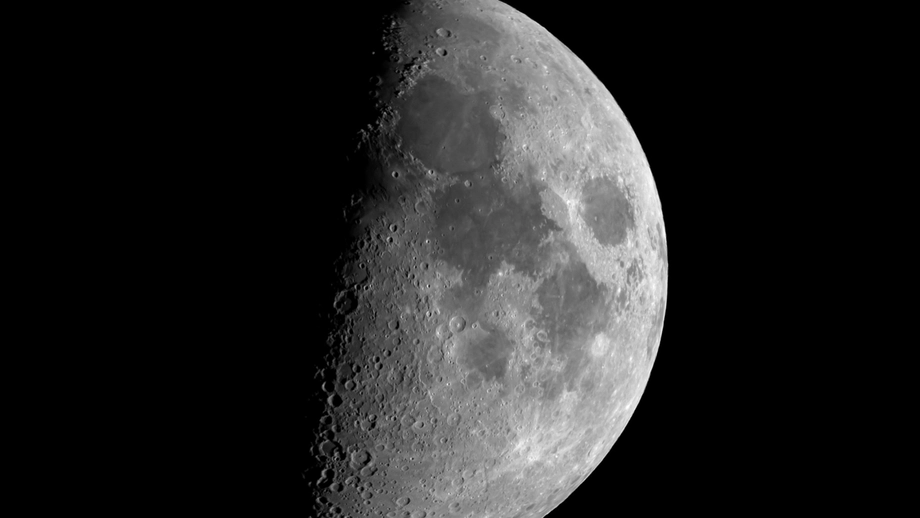
China is officially aiming to demonstrate extraterrestrial resource extraction on the Moon by the year 2030, marking a major shift from scientific exploration to industrial utilization. The ambitious goal involves extracting water ice from permanently shadowed polar craters and separating oxygen from lunar soil. Wu Weiren, chief designer of China's lunar exploration program and director of the Deep Space Exploration Laboratory, detailed the three-stage roadmap in a comprehensive study scheduled for publication in the academic publication Development and Prospects of Extraterrestrial Resource Utilization. The roadmap emerged during the inaugural deep space resource development academic conference, held in Hefei on July 7, 2025, where researchers outlined a long-term plan to turn the Moon into a sustainable staging ground for deep space travel.
Contents
Extracting raw materials directly from the lunar environment is known as in-situ resource utilization, or ISRU. This concept allows space missions to rely on materials already present at a destination rather than carrying every pound of water, fuel, and building supply from Earth. The 2030 milestone focuses on proving that key technologies can function successfully in actual extraterrestrial conditions. Rather than establishing an immediate, full-scale mining operation, the initial test serves as a critical first step toward building a permanent lunar infrastructure over the coming decades.
The proposed timeline unfolds across three distinct phases. The first phase targets 2030 for proving ice extraction or oxygen separation during an upcoming robotic Chang'e mission or a planned crewed lunar landing. The second phase aims for 2040, when China plans to construct a small demonstration facility capable of producing water, oxygen, and construction blocks from lunar regolith. The final phase envisions full-scale, industrial-sized extraterrestrial resource extraction by 2050.
Turning Lunar Soil and Ice Into Useful Supplies
The Moon holds two primary targets for early resource extraction: water ice and oxygen bound within minerals. Water ice is believed to exist in permanently dark, extremely cold regions near the lunar poles. Extracting this ice could provide drinking water for astronauts, but its chemical components offer an even greater advantage. Through electrolysis, water can be split into hydrogen and oxygen. Oxygen supports life-support systems, while hydrogen serves as a high-performance rocket propellant for spacecraft venturing deeper into the solar system.
Oxygen is also trapped directly within the top layer of loose lunar soil, known as regolith. This material contains oxygen locked inside metal oxides and silicate minerals. Extracting that oxygen requires thermal or chemical processing techniques, such as molten regolith electrolysis or hydrogen reduction. Processing lunar soil into bricks and structural components could eventually eliminate the need to transport heavy building supplies from Earth. Researchers emphasize that mastering these end-to-end systems is essential for long-term human habitation on the Moon.
The technical hurdles are significant. China's primary engineering gap lies not in individual laboratory measurements, but in system integration and validation across actual extraterrestrial environments. Engineers must design hardware that can operate reliably in a vacuum under extreme temperature swings and abrasive dust. Previous milestones by the country's space agency, such as the Chang'e-5 and Chang'e-6 sample return missions, have laid the groundwork, but harvesting usable quantities of water and oxygen remains a vastly more complex engineering challenge.
Strategic Orbits and Lagrange Points
Beyond the lunar surface, the roadmap highlights the vital importance of space positioning, specifically targeting Lagrange points and distant retrograde orbits. Lagrange points are gravitational balance points between large celestial bodies where a spacecraft can maintain a stable position with minimal fuel consumption. These locations act as ideal observation platforms, communication relays, and staging areas for missions traveling further into the solar system.
China has already proven the practical value of this strategy. The Queqiao relay satellite, launched in 2018, operates near the Earth-Moon L2 region behind the Moon, providing vital communication links between Earth and the Chang'e-4 lander on the lunar far side. Similarly, the United States demonstrated deep-space orbital control when an uncrewed Orion capsule entered a distant retrograde orbit around the Moon during the Artemis I test flight in 2022. Controlling access to these strategic locations is viewed as just as important as mining surface resources.
A Broadening Context of Space Competition
The push for lunar resources mirrors similar efforts to diversify raw material supplies on Earth. China has already conducted deep-sea mining trials in the Pacific Ocean at a depth of 5,330 meters using the robotic vehicle Kunpeng to collect critical battery metals from the ocean floor. Space resource development represents a logical extension of this resource-seeking strategy into the cosmos. Other spacefaring nations are pursuing similar paths, driven by the need to secure sustainable supplies for future exploration.
The United States has placed lunar resources at the center of its space strategy for decades. In 2004, the American government directed NASA to study lunar resource utilization. Later legislative steps, such as the U.S. Commercial Space Launch Competitiveness Act of 2015, granted American citizens ownership and sale rights over space-extracted resources. NASA's ongoing Artemis program relies directly on utilizing these resources to support permanent bases and prepare for future crewed missions to Mars.
Involving Private Industry and Establishing National Funds
Wu Weiren and his research team have called on Beijing to establish a dedicated national strategy and legal framework for extraterrestrial resource development. They noted that China currently lacks a medium- to long-term plan specifically tailored to exploiting resources beyond Earth. To bridge this gap, the researchers recommended creating a national funding mechanism through public-private partnerships. State missions would lead major programs, while private investors and commercial aerospace companies would contribute capital and market-driven innovation.
The study points out that private companies in China currently lack clear mechanisms for participating in large-scale space programs. Integrating commercial enterprises could accelerate technology development and lower costs, mirroring the successful public-private partnerships seen in the American space industry. Establishing clear legal frameworks and funding channels will be crucial as space resource development transitions from academic research into a multi-billion-dollar industrial sector.
This growing commercial interest parallels developments in other advanced technology sectors. Earlier, Chinese regulatory approval cleared a major multi-billion-dollar acquisition involving mobile gaming assets, demonstrating the scale of corporate transactions managed by national regulators. In the aerospace sector, coordinating state ambitions with private sector agility requires similarly careful institutional design to ensure that national security and commercial growth advance together.
Building on Previous Lunar Exploration Milestones
The 2030 extraction demonstration builds directly upon China's broader timeline for crewed lunar exploration. Recent technical presentations have outlined a clear sequence of missions designed to place Chinese astronauts on the Moon before the end of the decade. As previously detailed in plans for lunar landings, the human spaceflight program utilizes two separate Long March 10 rockets to transport the Mengzhou crew spacecraft and the Lanyue lunar lander into lunar orbit.
- Early 2027: Planned uncrewed flight test of the Mengzhou spacecraft.
- 2028: Uncrewed demonstration flight of the Lanyue lunar lander.
- 2029: Combined mission rehearsal in lunar orbit involving both spacecraft.
- Before 2030: First crewed lunar landing with two astronauts descending to the surface.
- By 2030: Demonstration of key resource extraction technologies on the Moon.
The intricate choreography of these missions requires precise rendezvous and docking maneuvers in lunar orbit. The Mengzhou spacecraft carries three astronauts from Earth, while two transfer into the Lanyue lander for the descent to the surface. After completing their scientific investigations and technology experiments, the landing crew launches back to rejoin the orbiting command module for the journey home. These rigorous testing steps ensure that the transportation hardware is fully proven before resource extraction payloads are integrated into future missions.
At a Glance
- China's lunar resource roadmap sets a target to demonstrate water ice or oxygen extraction by 2030.
- The three-stage plan extends to a small demonstration facility by 2040 and full-scale industrial mining by 2050.
- Researchers emphasize the strategic value of Lagrange points and distant retrograde orbits for future space infrastructure.
- The proposal calls for a national funding mechanism and greater private sector participation to build an emerging space resource industry.
- China currently lacks a dedicated national strategy for exploiting resources beyond Earth, prompting calls for top-level policy planning.