Unfair Tax Pressures on Low-Income Families
Families with the lowest incomes in Bangladesh carry an exceptionally heavy financial load through consumption taxes, according to a comprehensive study unveiled in Dhaka. The research reveals that the poorest 10 percent of households pay an amount equivalent to 20.37 percent of their reported income in value-added tax, commonly known as VAT. This indirect tax is charged on the purchase of everyday goods and services, meaning every time a consumer buys basic essentials like food, soap, or cooking oil, a portion of the price goes straight to the government. In stark contrast, the wealthiest 10 percent of the population pay just 2.8 percent of their income toward this same tax. The findings highlight a deep imbalance where everyday purchases take a much larger bite out of meager household budgets than they do from massive fortunes.
Contents
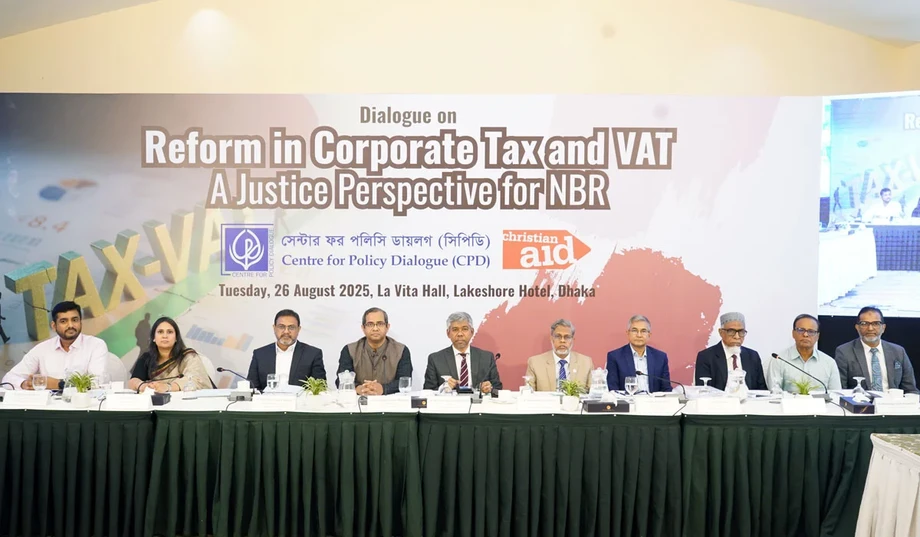
Geographic disparities further amplify the strain on vulnerable communities across the country. In rural areas, the pressure intensifies significantly as the VAT burden exceeds 23 percent of reported income for the poorest households. Urban low-income families experience a slightly lower, yet still substantial, rate of approximately 16.5 percent. Researchers from the Research and Policy Integration for Development released these alarming figures during a dedicated dissemination event held at the Sheraton Dhaka in Banani on Saturday, November 22, 2026. The study, titled Missing Revenues in Bangladesh: Tax Potential, Gaps and Distributional Consequences, received support from Friedrich-Ebert-Stiftung Bangladesh and was led by organisation chairman Mohammad Abdur Razzaque alongside research director Deen Islam and senior research associate Tahsin Rifat.
Consumption taxes are often described by economists as regressive because they charge the same percentage to everyone regardless of how much money they earn. When a wealthy person buys a bag of rice, the tax represents a microscopic fraction of their total wealth. When a daily wage earner buys that same bag of rice, the tax consumes a noticeable slice of their weekly earnings. The study notes that while poorer households may underreport their income in surveys—with reported consumption expenditure among the poorest decile reaching nearly five times their reported income—the fundamental disparity in how tax policies affect different social classes remains a pressing concern for policymakers seeking to reform the national economy.
Vast Wealth Concentration and Unrealized Income Tax Potential
Economic inequality in Bangladesh extends far beyond consumer spending and touches the very core of national wealth ownership. The research reveals that the richest 1 percent of households hold an astonishing 47.4 percent of the country's net personal wealth, while the top 10 percent control 76.4 percent. Conversely, the bottom half of the population possesses a mere 3.4 percent of personal wealth. This extreme concentration of assets contrasts sharply with tax contributions, as the top 10 percent of households earn more than 40 percent of total household income and should theoretically contribute over 93 percent of potential personal income tax revenue under existing legal rates. Their actual income tax payments average 11.03 percent of their income, leaving massive amounts of taxable money untouched.
Participation in the formal tax system remains remarkably low among the general population. Active individual income taxpayers account for just 3.57 percent of the total labour force, placing Bangladesh at the lowest level in South Asia. For regional perspective, active personal income taxpayers comprise 7.04 percent of the labour force in Pakistan, 13.43 percent in India, 29.74 percent in Bhutan, and 41.86 percent in Nepal. Tax return submission rates among electronic taxpayer identification number holders in Bangladesh stand at 43.1 percent for individuals and related categories, and a meager 23.6 percent for registered companies. Addressing this shortfall requires bringing high-income professionals, business owners, and property investors into the formal tax net.
During the presentation, Mohammad Abdur Razzaque emphasized the need for a fairer and more transparent revenue framework. He stated that taxation should focus on fairness rather than mere collection targets.
Growing inequality is a major challenge, and Bangladesh has already become a highly unequal society. Revenue collection should be judged not only by the amount raised but also by the fairness and transparency of the tax system, freedom from taxpayer harassment and the quality of public services.
To understand gross domestic product, or GDP, readers can think of it as the total economic value of all goods and services produced within a nation during a specific timeframe, serving as the primary yardstick for measuring overall financial health. When tax collection mechanisms fail to capture revenue from high earners, the government loses essential funds needed to build schools, hospitals, and public infrastructure.
Revenue Shortfalls and Compliance Gaps
Weak compliance and administrative shortcomings cost the public exchequer billions of dollars every year, leaving the national budget severely constrained. The research estimates that uncollected personal income tax and domestic VAT alone amounted to 5.89 percent of GDP in the 2021-22 fiscal year. In absolute financial terms, this collection failure meant the country lost over 2.30 lakh crore taka during that period. Potential personal income tax revenue stood at 4.85 percent of GDP against an actual collection of just 0.98 percent, leaving a wide gap of 3.87 percentage points. Similarly, potential domestic VAT collection was calculated at 3.82 percent of GDP compared with actual receipts of 1.80 percent, creating a shortfall of 2.02 percentage points.
Macroeconomic indicators show that Bangladesh maintained a tax-to-GDP ratio of just 7.3 percent in the 2022-23 financial year, representing one of the lowest ratios in the developing world. The study demonstrates that enforcing existing laws, widening the tax base, and curbing evasion could lift this ratio to approximately 13.5 percent without introducing any new taxes or raising current statutory rates. Businesses collect VAT from consumers during retail transactions but inadequate registration, concealed sales figures, and failures to deposit collected funds into the state treasury continue to drain public resources. Strengthening digital transaction monitoring, introducing electronic invoicing, and conducting risk-based audits are among the key recommendations put forward to plug these persistent leaks.
Earlier economic pressures have also compounded fiscal difficulties across the nation. The country experienced a severe revenue shortfall earlier in the current financial year, collecting 92,517 crore taka between July and September, which missed the quarterly target by 41,879 crore taka as a sharp drop in VAT receipts overwhelmed gains in income tax and customs collections. That performance followed a period of sluggish economic activity, rising inflation, and financial sector strains, including nonperforming loans that climbed to 33.2 percent in June 2026. Addressing these systemic challenges requires comprehensive structural changes to ensure that businesses and individuals meet their legal obligations without placing an unfair burden on lower-income households.
Government Perspectives and Proposed Reforms
Finance Division Secretary Md Khairuzzaman Mozumder addressed the gathering as the chief guest, offering official insights into the state of the national economy and future fiscal plans. He noted that poverty rates had risen from 18.57 percent to around 22 to 23 percent, driven partly by interest rates remaining below inflation for three consecutive years. Discussing long-term social goals, he announced that the government aims to allocate 5 percent of GDP each toward health and education by the year 2030, with planned increases of 1 percent for health and 2 percent for the social sector during the current year. He cautioned that higher public spending could make it challenging to maintain the budget deficit at around 3.6 percent of GDP, underscoring the urgent need to expand both tax and non-tax revenue streams.
State administrators have actively explored various avenues to recover missing revenue and restore fiscal balance. The government considered implementing a wealth tax this year but ultimately dropped the proposal over concerns that property owners might lack the necessary cash to pay taxes on valuable inherited assets. Officials are instead prioritizing the restructuring of existing progressive income tax rates and the readjustment of surcharges. Furthermore, the finance ministry is examining revisions to official land valuations to align them with actual market prices rather than registered values, as official figures frequently lag far behind reality.
Policy experts at the event also pointed to broader structural distortions affecting commerce and industry. Zaidi Sattar, chairman of the Policy Research Institute, highlighted the impact of currency depreciation on trade taxes. The local currency depreciated by approximately 40 percent against the US dollar between April and June, pushing trade taxes higher and squeezing both export competitiveness and import volumes. Experts noted that customs revenue has failed to keep pace with the rising taka value of imports, creating another significant area of missing revenue that requires immediate policy attention.
Broader Fiscal Strategies and Economic Recovery
Navigating the current economic landscape requires careful coordination between monetary authorities and tax administrators to foster sustainable growth. Recent policy adjustments have sought to balance consumer protection with fiscal responsibility, such as when the cabinet approved temporary cuts to import duties on essential food items ahead of religious festivals, reducing customs duty on dates from 25 percent to 5 percent through March 10, 2027, and lowering the total import tax burden on apples and oranges. These measures sit alongside administrative changes designed to stabilize the tax pipeline, including reversing an experimental quarterly filing system and restoring mandatory monthly VAT return submissions for registered businesses.
Building a resilient tax administration demands modernization and institutional investment. Syed Musfequr Rahman, member of the National Board of Revenue, stressed that revenue authorities require technological upgrades and cost-benefit analysis tools to detect sophisticated tax evasion schemes effectively. Enhanced coordination between domestic VAT collection units and income tax departments is essential for closing loopholes exploited by non-compliant entities. Former revenue officials echoed these sentiments, noting that genuine commitment to administrative reform remains vital for translating expert recommendations into tangible policy outcomes.
International financial institutions have also outlined comprehensive roadmaps to support long-term development. Comprehensive fiscal reforms could potentially raise average annual economic growth to 5.7 percent through fiscal year 2035 under full implementation scenarios, compared with more modest growth under limited reforms. Achieving these targets aligns with broader national objectives to transform the country into a trillion-dollar economy by 2034. Restoring public trust in how tax money is collected and spent remains the cornerstone of any successful revenue mobilization strategy, ensuring that citizens see the direct benefits of their contributions through improved public services, better infrastructure, and robust social protection programs.
The Bottom Line
- The poorest 10 percent of households pay 20.37 percent of their income in VAT, while the richest 10 percent pay only 2.8 percent.
- Bangladesh can raise its tax-to-GDP ratio from 7.3 percent to 13.5 percent by enforcing existing laws and curbing evasion without introducing new taxes.
- Active individual income taxpayers account for just 3.57 percent of the total labour force, representing the lowest proportion in South Asia.
- Gaps in personal income tax and domestic VAT collection resulted in potential revenue losses equivalent to 5.89 percent of GDP in fiscal year 2021-22.
- The richest 1 percent of households hold 47.4 percent of personal wealth, while the top 10 percent own 76.4 percent.