Why the 6.4 Percent Growth Stands Out
ILOILO CITY: Western Visayas grew 6.4 percent in 2025, the fastest expansion among the 18 regions of the Philippines and well above the 4.4 percent national growth rate. The Department of Economy, Planning, and Development Region 6 (DEPDev-6) said the result came from complementary economic strengths across its provinces and Iloilo City, and that it exceeded the target in the Regional Development Plan (RDP).
Contents
- Why the 6.4 Percent Growth Stands Out
- How Western Visayas Outpaced the Nation
- What the PHP 683.44 Billion Figure Really Measures
- Which Local Economies Carried the Region
- Why Services Became the Main Engine
- The Investment Gap Behind a Strong Year
- Does Growth Reach the Kitchen Table
- Underemployment Shows the Other Side of Recovery
- The National Backdrop Slowed in 2026
- Budget Pressure and the Recovery Question
- What Could Keep Western Visayas Competitive
- Key Points
The figure comes from the 2025 Regional Accounts of the Philippines, released by the Philippine Statistics Authority (PSA) on April 23, 2026. The regional economy reached PHP 683.44 billion. National Statistician and Civil Registrar General Claire Dennis S. Mapa said the regional accounts matched revised annual estimates released on April 8, 2026.
A gross regional domestic product (GRDP) growth rate measures how fast the value of goods and services produced inside a region rises in a year. A region can outgrow the country while still facing weak investment or household strain. That is the central tension in the 2025 story of Western Visayas: a top ranking on output, with clear pressure points underneath.
A short timeline shows how the figures and policy discussions unfolded:
- April 8, 2026: PSA released revised annual estimates.
- April 23, 2026: PSA released the 2025 Regional Accounts of the Philippines.
- Nov. 6, 2026: DEPDev, the Board of Investments (BOI), and the Department of Budget and Management (DBM) presented the economic outlook at a briefing in Iloilo City.
- Nov. 9, 2026: figures showed Philippine gross domestic product (GDP) growth slowing to 2.1 percent in the third quarter of 2026.
- Nov. 21, 2026: DEPDev-6 published its analysis of the 2025 Provincial Product Accounts (PPA).
How Western Visayas Outpaced the Nation
The national economy grew 4.4 percent in 2025, down from 5.7 percent in 2024. Western Visayas 6.4 percent expansion was two percentage points faster than the national rate and the highest among all regions.
Caraga ranked second at 5.704 percent, only slightly ahead of the Negros Island Region at 5.699 percent. Ten regions grew faster than the national average. They were Western Visayas, Caraga, Negros Island Region, Davao Region at 5.15 percent, CALABARZON at 5.10 percent, the Bangsamoro Autonomous Region in Muslim Mindanao at 5.0 percent, Northern Mindanao at 4.9 percent, SOCCSKSARGEN at 4.8 percent, Ilocos Region at 4.52 percent, and Central Luzon at 4.46 percent.
The weakest regional growth was recorded in Bicol Region at 0.5 percent, Eastern Visayas at 1.0 percent, and Zamboanga Peninsula at 2.6 percent. The spread between the top and bottom, 6.4 percent against 0.5 percent, shows how uneven the Philippine economy was in 2025 even before household conditions are considered.
What the PHP 683.44 Billion Figure Really Measures
The PHP 683.44 billion figure is the size of Western Visayas economic output in 2025. It counts the value produced in the region, not the money received by each household. GRDP is useful because it shows where economic activity is created, while household income and spending surveys show how people live with that activity.
Western Visayas also led all regions in per capita GDP growth at 5.7 percent. The Negros Island Region followed at 5.3 percent and Caraga at 4.6 percent, while the national per capita GDP growth rate was 3.5 percent. Per capita GDP divides total output by population, giving a rough measure of economic activity per person.
That figure is not a pay check. It helps compare regions with different populations, but it does not show how output is shared. For that question, poverty, employment and price data matter as much as the growth ranking.
Which Local Economies Carried the Region
Western Visayas now comprises Aklan, Antique, Capiz, Guimaras, Iloilo Province and Iloilo City. Negros Occidental and Bacolod City became part of the Negros Island Region, changing the makeup of the region behind the 2025 numbers.
All five provinces and Iloilo City posted positive growth. Antique, Capiz, Guimaras and Iloilo Province exceeded their growth targets. Aklan and Iloilo City grew more slowly than projected. DEPDev-6 said the mix of agriculture, industry and services across these local economies helped sustain the regional result.
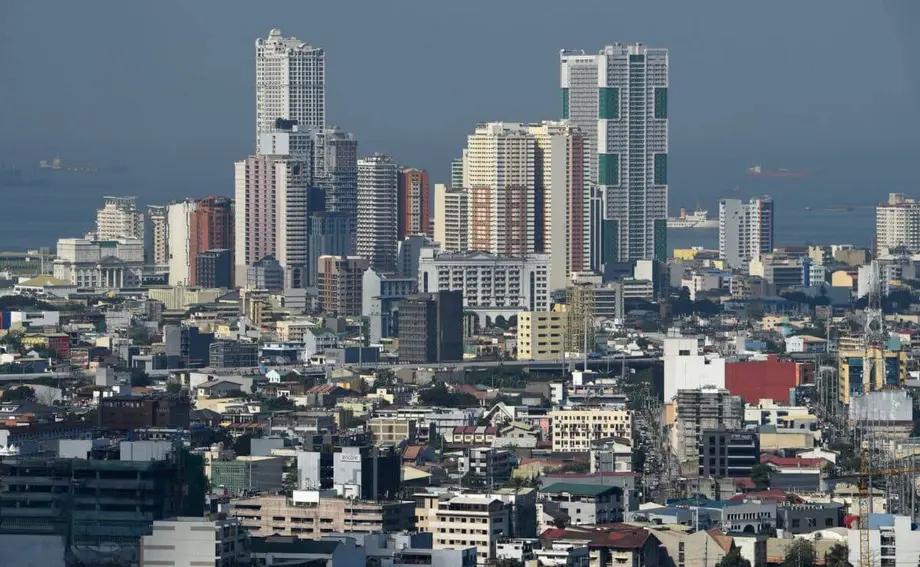
Iloilo Province and Iloilo City together accounted for 60.6 percent of Western Visayas total economic output. Iloilo Province remained the largest provincial economy and the main production base. Iloilo City remained the center for business, finance, education, health care and professional services.
Why Services Became the Main Engine
DEPDev-6, the regional economic planning agency, said in its Nov. 21 analysis that Western Visayas benefited from different local strengths working together rather than competing for the same role.
Western Visayas benefits from a complementary economic structure, where provinces and cities contribute through distinct areas of specialization. Rather than competing directly, local economies perform functions that collectively strengthen regional development.
Services accounted for the largest share of regional output and growth. They included tourism, trade, transportation, finance, education, health care and business services. Agriculture, forestry and fisheries remained vital to food security, rural livelihoods and regional production, especially in Capiz, Antique, Guimaras and Iloilo Province. Tourism industries were central to Aklan, while Guimaras and Antique expanded ecotourism and tourism linked to nature.
DEPDev-6 said sectors were advancing at uneven speeds and that older strengths needed upgrades to stay competitive.
The analysis also shows that while several traditional strengths remain important, they are not evolving at the same pace.
The agency added that some sectors were gaining ground while others needed better productivity, newer equipment and stronger links to markets.
Some sectors are becoming more competitive, while others require productivity improvements, modernization, and stronger market linkages.
National industry figures give a sense of where demand was strong in 2025. Human health and social work activities grew 11.6 percent, education grew 7.8 percent, and public administration and defense grew 6.8 percent. On the spending side, government final consumption expenditure grew 8.4 percent and exports of goods and services grew 8.2 percent.
The Investment Gap Behind a Strong Year
Gross capital formation in Western Visayas contracted 11.4 percent in 2025, the third largest investment decline among all regions. The national decline was 1.7 percent, and eight regions posted contractions. Caraga moved the other way with 8.5 percent investment growth.
Gross capital formation means spending on productive assets such as buildings, machinery, equipment and infrastructure. It matters because today's investment becomes tomorrow's capacity to produce goods, create jobs and serve consumers. A region can grow strongly in one year while weakening the tools that support growth in later years.
DEPDev-6 identified manufacturing and food processing as areas needing more investment to turn farm output into higher value goods, create better jobs and build stronger links between industries. The agency also pointed to productivity, value addition, infrastructure, climate resilience and economic diversification as continuing challenges.
Does Growth Reach the Kitchen Table
Family poverty incidence in Western Visayas fell from 9.8 percent in 2023 to 5.2 percent in 2025. The improvement came in the same period when the regional economy expanded by 6.4 percent to PHP 683.44 billion.
Under the official poverty standard, a family of five earning more than PHP 13,900 a month is not considered poor. That works out to roughly PHP 93 per person a day for basic necessities. Bagong Alyansang Makabayan Panay estimates that a family needs at least PHP 22,595.05 a month for basic expenses, with rent, healthcare and education not included. The gap is PHP 8,695.05.
The two figures answer different questions. The official line classifies poverty for statistics and policy. The group estimate describes the cost of daily essentials as it sees them. The National Anti-Poverty Commission acknowledges that ordinary families may need considerably more time before they feel the benefits of economic growth.
The gap helps explain why a family can be counted above the poverty line and still face hard choices over meals, medical consultations, school costs and electricity bills. The regional numbers show real economic expansion. They also leave open the question of how quickly that expansion changes daily life.
Underemployment Shows the Other Side of Recovery
Underemployment in Western Visayas reached 17.2 percent despite the 6.4 percent growth in 2025. Underemployment counts people who have work but want more hours, better pay or work that uses their skills. It can remain high even when many people technically have jobs.
On Nov. 6, 2026, senior officials from DEPDev, BOI and DBM presented the government economic outlook and development agenda at the Philippine Economic and Investment Briefing in Iloilo City. DEPDev highlighted Western Visayas as the fastest growing region in 2025. BOI outlined investment opportunities under the Strategic Investment Priority Plan. DBM presented the proposed PHP 7.2 trillion national budget for 2027 and measures to improve public financial management.
The briefing offered a confident view of investment incentives, infrastructure programs, industrial strategy and government reforms. The underemployment figure gives the household side of the same picture: output can rise faster than the quality and availability of work.
The National Backdrop Slowed in 2026
Third quarter GDP growth slowed to 2.1 percent in 2026, with the figures released on Nov. 9. Philippine GDP grew by about 2.6 percent in the first half of 2026. Household consumption increased 2.9 percent and manufacturing expanded 1.6 percent in that period.
Headline inflation reached 6.4 percent by June 2026. Inflation is the rate at which prices rise. When prices rise faster than wages, households can buy less with the same money and businesses face higher costs.
Government spending also shifted. Current operating expenditures rose 15.2 percent in the first half of 2026, while capital outlays fell 26.3 percent. Infrastructure and other capital outlays fell 40.8 percent. The current account deficit widened from about USD 10.18 billion in the first half of 2025 to USD 15.44 billion in the same period of 2026. A current account deficit means the country spends more abroad than it earns from abroad across trade and transfers, so the gap needs financing.
Budget Pressure and the Recovery Question
The proposed 2027 national budget is PHP 7.2 trillion. Research by the Institute of Contemporary Economics for a forthcoming policy paper, The State of the Philippine Economy, found that about 77.6 percent of the PHP 407 billion increase over 2026 would go to automatic appropriations. Higher interest payments alone accounted for 40.4 percent of the increase, leaving programmed appropriations growing by about 2.1 percent in nominal terms, before adjusting for inflation.
Automatic appropriations are spending items set by law, such as debt payments, that do not go through the same annual choices as other budget items. A larger share going to those items leaves less room for programs chosen each year, including infrastructure and services.
The BSP Investor Relations Group publication, August 2026 Philippine Economic Updates, acknowledged the slowdown while pointing to temporary external pressures, delays in infrastructure implementation, financial resilience and expectations of stronger growth in the second half of 2026. The Institute of Contemporary Economics read the same official statistics as evidence of broader deterioration. It also noted safeguards including a functioning banking sector, substantial international reserves and continued access to financing.
The policy divide is about how much of the slowdown comes from delayed public spending and how much comes from weaker consumption, investment, manufacturing and external balances at the same time.
What Could Keep Western Visayas Competitive
DEPDev-6 said stronger links among agriculture, tourism, manufacturing, logistics, creative industries and services with higher value could help sustain growth. The Regional Development Plan and Regional Physical Framework Plan frame that work as part of balanced development, with each province and city contributing a distinct function.
The practical tasks are specific: improve productivity, modernize equipment, connect farmers to processors and markets, invest in manufacturing and food processing, strengthen infrastructure, prepare for climate risks and broaden the economic base. Those steps would affect whether Western Visayas can turn one strong year into a longer run of growth that reaches more workers and households.
The RDP target figure was not given, the number of families that crossed the poverty line was not given, and no vote date was announced for the proposed 2027 budget. Complete regional accounts data are available at the PSA website.
Key Points
- Western Visayas grew 6.4 percent in 2025, the fastest among the 18 regions of the Philippines, compared with 4.4 percent national growth.
- The PSA released the 2025 Regional Accounts of the Philippines on April 23, 2026, showing regional output of PHP 683.44 billion.
- Per capita GDP growth in Western Visayas was 5.7 percent, ahead of the 3.5 percent national rate.
- Iloilo Province and Iloilo City produced 60.6 percent of the region economic output.
- Gross capital formation in Western Visayas contracted 11.4 percent, while underemployment reached 17.2 percent.
- Family poverty incidence fell from 9.8 percent in 2023 to 5.2 percent in 2025, but the official poverty line remains far below one group estimate of basic monthly costs.
- Philippine growth slowed to about 2.6 percent in the first half of 2026 and 2.1 percent in the third quarter, with inflation at 6.4 percent by June.