A factory visit packed into a 24 hour trip
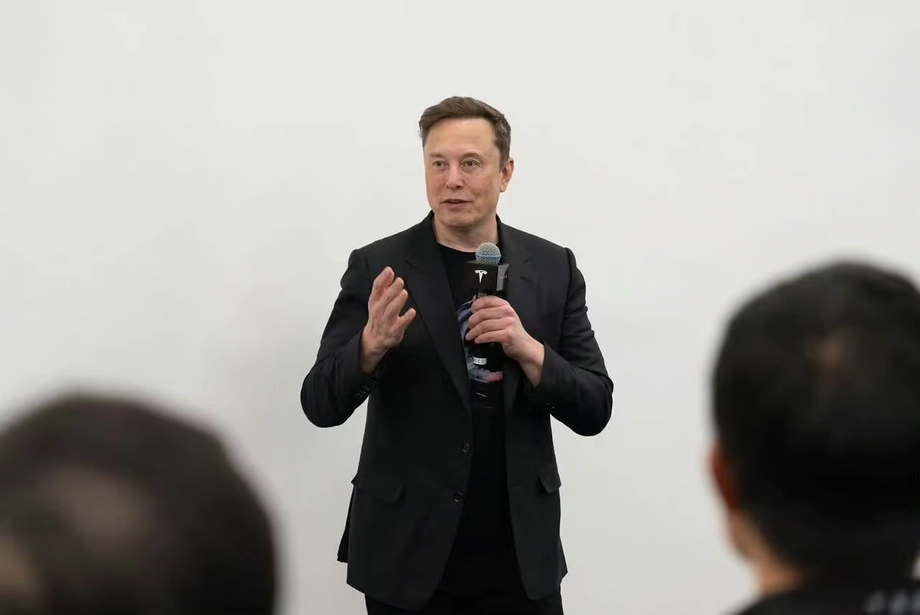
Elon Musk flew from Shenzhen to Shanghai on Nov. 19 to meet Tesla workers and thank its Asia Pacific and China teams, squeezing the factory visit into a China trip of about 24 hours. The trip came as Tesla's Shanghai factory shipped 810,889 Model 3 and Model Y vehicles in the first 10 months of 2026, up 21.4% from a year earlier, even as the company's China retail sales fell.
Contents
- A factory visit packed into a 24 hour trip
- What happened during the short visit?
- How can factory shipments rise while China sales fall?
- Shanghai is a manufacturing and export hub
- What did Musk tell employees?
- When will Tesla's supervised driving software reach more Chinese owners?
- What other plans surfaced in Shenzhen?
- What the numbers leave to watch
- Key Points
Tesla vice president Grace Tao said Musk met employees in person, praised the Shanghai factory's manufacturing strength and the team's execution, and discussed driver assistance technology and humanoid robots. Her post described progress in both areas as rapid, but gave no technical details, product launch dates or factory expansion plan.
Musk was in China with US President Donald Trump's delegation for events related to APEC Leaders' Week in Shenzhen. He arrived in the city on the evening of Nov. 18, in what was described as his first public visit there, then traveled to Shanghai before leaving the country.
The trip put two sides of Tesla's China business in sharp focus: a factory shipping more vehicles than a year ago, with a growing share bound for overseas buyers, and a domestic market where October retail sales dropped steeply.
What happened during the short visit?
- Nov. 18: Musk arrived in Shenzhen with the US delegation for APEC related events.
- Nov. 19: He met Ren Hongbin, chairman of the China Council for the Promotion of International Trade, and said Tesla would keep increasing production in China.
- Nov. 19: Musk flew to Shanghai, met factory employees and discussed driver assistance and humanoid robots.
In Shenzhen, Musk praised the city's technology sector and China's architecture, natural scenery and railway system. He also described himself as a super fan of China and said closer US-China cooperation could benefit both countries.
Before the Shanghai visit, Musk joined the New York Times DealBook Summit remotely. He had written, "I will be in China, so it will be digital me." The trip also included a meeting with Ren, who invited Musk to attend the opening of next year's China International Supply Chain Expo. Musk responded positively, according to the account of their exchange.
The visit produced a broad public signal of continued engagement, but the production pledge came without a number. Musk did not set a target for how much more Tesla would make in China or say when any increase would take effect.
How can factory shipments rise while China sales fall?
The 810,889 vehicles shipped from Shanghai between January and October included cars for Chinese customers and exports. It is not a count of vehicles sold inside China. That difference matters because overseas shipments have grown while domestic retail sales have weakened.
China retail sales for Tesla totaled 389,905 vehicles in the first 10 months, down 15% year over year. Exports from the Shanghai factory reached 420,984, up 101.28%. Together, those figures equal the factory's 810,889 shipments. In simple terms, exports slightly exceeded domestic sales over the period.
October showed the divide most starkly. Shanghai shipped 67,829 vehicles, including 59,012 exports and 8,817 sold to Chinese buyers. Exports made up about 87% of that month's shipments. Domestic retail sales were down 66.1% from October 2025.
The October figures show why total shipments alone can give an incomplete picture of demand in China. A factory can send more cars abroad even while fewer local buyers are purchasing them. Tesla's Shanghai plant is serving both markets, and the export increase has supported its overall shipment growth.
The sharp October decline in local sales and the 87% export share were covered in October sales and exports. The first 10 month figures show that the same contrast continued across the year: domestic retail sales fell, while exports more than doubled.
Shanghai is a manufacturing and export hub
Tesla's third quarter update lists installed annual capacity of more than 950,000 Model 3 and Model Y vehicles at the Shanghai factory. Installed capacity means the amount a factory is equipped to produce under its stated operating assumptions. It is not the same as the number actually made or shipped in a particular year.
The 810,889 shipments in the first 10 months came close to that annual capacity figure, though shipments and production are not identical measures. Cars may be built in one period and dispatched in another. The factory's role also reaches beyond supplying Chinese buyers: it is a major source of Tesla vehicles for overseas markets.
Tesla China said in an official social-media video that more than 95% of the parts used in Shanghai-produced Model 3 and new Model Y vehicles came from local suppliers. The video also said Tesla was committed to developing products for global markets while building localized supply chains, but did not give a number of local suppliers. The company has signed more than 400 local first tier suppliers, and over 60 of those suppliers also form part of Tesla's global supply chain.
That network helps explain why the Shanghai plant can serve as both a production base and an export center. Local suppliers provide components for assembly, while finished vehicles can be sent to customers in China or shipped abroad. The current figures show that overseas orders are taking a larger share of the factory's output than domestic retail sales.
What did Musk tell employees?
Tao said Musk spoke with Shanghai employees about planning their lives and using their time and resources to become useful, while developing and manufacturing products that help people. She said he encouraged the team to avoid short term speculation and focus on work they considered important.
Posts Musk shared from the visit included his message to employees: "Let's make the future look like the future." The visit therefore paired praise for the factory's current output with references to Tesla's ambitions in automation and robotics.
Tao said driver assistance is advancing quickly and that Tesla's humanoid robot is rapidly gaining skills. The comments gave workers an upbeat account of progress, but did not identify a new feature, show a performance measure or give a date for a product release.
The distinction is important for customers and workers trying to understand what may change next. A general statement about technical progress does not tell a buyer when a feature will arrive or which vehicles will receive it. Tesla made no detailed announcement about driver assistance or its robot during the Shanghai visit.
When will Tesla's supervised driving software reach more Chinese owners?
Tesla owners in China are still waiting for a broad rollout of the company's supervised self driving software. The system provides driving assistance while requiring a human driver to remain responsible and ready to take control. Tesla has not announced a date for wider availability in China.
Tesla chief financial officer Vaibhav Taneja said in October that the company was working with Chinese regulators to seek broader permission for the software. Musk had earlier expressed hope for full approval around early 2026, but the latest visit did not bring a new timetable.
The technology is a major part of Musk's plans for Tesla. The company reported 1.74 million active Full Self Driving subscriptions worldwide in the third quarter, while more than 75% of new Tesla buyers in North America signed up for the service at delivery, according to figures reported about the company's results. Those figures describe global and North American use, not adoption in China.
Musk also described a plan to develop an autonomous Model Y for six or seven passengers, without a steering wheel or pedals. No schedule was given. For Chinese customers, the immediate unanswered question remains when local rules will permit a wider release of Tesla's supervised driving software.
What other plans surfaced in Shenzhen?
Musk's meeting with Ren brought the clearest production commitment of the trip: Tesla will continue to increase output in China. The statement came as local retail sales fell, while the Shanghai factory's exports rose sharply. No expansion project, investment amount, production target or completion date was announced.
Ren's invitation to next year's supply chain expo pointed to the importance of industrial links between Tesla and Chinese suppliers. Tesla's 98% local parts rate and its network of more than 400 local first tier suppliers give the factory a deep base of local sourcing. The company has not said how much additional production would depend on changes to that network or to the factory itself.
In a separate Shenzhen interview, Musk said he wanted people in the United States and elsewhere to visit China and see it for themselves. His remarks about cooperation and his pledge to increase production were public statements of continued engagement, while the details needed to measure any future expansion remain undecided.
What the numbers leave to watch
The next clues will come from Tesla's sales and shipment figures, along with any formal announcement about capacity or investment. A recovery in Chinese retail sales would change the balance between local buyers and exports. Continued export growth could keep the Shanghai factory busy even if domestic demand stays weak.
For driver assistance, the next major marker is regulatory permission for broader use in China. Tesla has said it is working with regulators, but no decision date has been provided. For the proposed passenger version of the Model Y and for the humanoid robot, Musk and Tao shared no launch dates or detailed specifications.
The visit brought public praise for Tesla's Shanghai team and a promise to keep raising China production. The figures behind that promise show a factory increasingly supported by exports, while the company's domestic sales face pressure. How much output will rise, and when Chinese owners will receive wider access to the driving software, remain unanswered.
Key Points
- Musk flew from Shenzhen to Shanghai on Nov. 19 during a China trip of about 24 hours.
- Tesla shipped 810,889 vehicles from Shanghai in the first 10 months of 2026, up 21.4% year over year.
- China retail sales were 389,905, down 15%, while Shanghai factory exports reached 420,984, up 101.28%.
- In October, exports were about 87% of Shanghai's 67,829 shipments; China retail sales fell 66.1% to 8,817.
- Musk said Tesla would keep increasing production in China, without giving a target or timeline.
- Tesla announced no date for broader supervised driving software access in China.