A higher rating, with risks still in view
Uzbekistan's sovereign credit rating was raised to BB+ from BB on Nov. 20, 2026, bringing the country one step below investment grade. S&P Global Ratings kept its outlook stable, pointing to changes in economic policymaking, energy and state enterprise reforms, and a stronger supply of foreign currency reserves.
Contents
- A higher rating, with risks still in view
- How did the GDP revision change the debt picture?
- Why are state enterprises and private projects part of the rating?
- Gold is supporting reserves, but also concentrates risk
- Growth is strong, while transport costs are rising
- Can banking reform reduce the state's role?
- Bank sales may take longer than planned
- What investors will watch next
- Key Points
The upgrade applies to long term borrowing in both foreign and local currency. S&P also kept Uzbekistan's short term ratings at B and raised its assessment of transfer and convertibility risk from BB+ to BBB-. That assessment concerns the risk that the government could restrict the ability to convert local currency into foreign currency or move it abroad.
A BB+ rating can make borrowing more attractive to investors than a lower rating, while remaining below the grade commonly treated as investment grade. S&P's stable outlook signals that it sees the forces supporting the rating and the risks to it as broadly balanced for now.
The decision comes as Uzbekistan posts fast growth and accumulates reserves, but remains exposed to gold prices, foreign currency borrowing and the pace of reform in a banking system still dominated by state lenders.
How did the GDP revision change the debt picture?
A statistical revision announced on Nov. 13 raised the estimated size of Uzbekistan's 2025 economy by 15%, to 2,127 trillion soums, or about $169 billion. The revised estimate was 277 trillion soums, or $22 billion, higher than the previous figure. The changes covered economic data going back to 2017, including trade, services, agriculture, livestock and housing.
A larger measured economy changes the debt ratio even if the amount of debt itself does not change. S&P now expects net general government debt to average 24% of GDP in 2026 to 2029, down from its earlier forecast of 30%. It also expects the ratio to rise to about 26% by 2029 as investment spending continues. The average across the period and the forecast for its final year describe different points in that path.
The government has also reduced energy subsidies, from $1.5 billion in 2023 to $600 million in 2025. S&P expects the budget deficit to average about 3% of GDP in 2026 to 2029, compared with 3.5% in 2021 to 2024. Lower subsidies and rules intended to limit financial risks from state enterprises are part of the effort to keep public finances under control.
Why are state enterprises and private projects part of the rating?
State enterprises can create costs for the government even when those costs do not appear immediately in the national budget. A company may need a government guarantee, a new capital injection or help repaying a loan. S&P says reforms are intended to reduce these possible obligations, including legislation to regulate external borrowing by state enterprises.
The government is also pursuing a limit of $6.5 billion on annual commitments for private-public partnership projects in 2026. Such projects bring private companies into services or infrastructure, but can leave the state responsible for payments if a project runs into trouble.
The scale of the programme makes oversight consequential. Signed partnership agreements in 2025 were estimated at 21% of GDP, while the project pipeline for 2024 to 2030 is about $30 billion, with 93% of it in energy. Uzbekistan aims to raise renewable energy's share of its energy mix from about 20% to 54% by 2030. S&P has warned that problems carrying out these projects could add to the government's liabilities.
Gold is supporting reserves, but also concentrates risk
Uzbekistan's international reserves reached about $64 billion at the end of October 2026, more than double their level in 2023 and equivalent to roughly 32% of GDP. Reserves are foreign assets a country can use to meet external payments and support confidence in its currency. High gold prices have helped build them.
Gold accounts for about 30% to 40% of merchandise exports and 85% to 90% of usable reserves. That concentration helps when gold prices are high, while making export earnings and reserves more sensitive to a fall in the metal's price. S&P forecasts gold at $4,300 an ounce in 2026, easing to $3,500 by 2028.
Other sources of foreign currency include non gold exports, tourism and remittances from people working abroad. Remittances reached $18.9 billion in 2025, equal to 11.2% of GDP. About 78% came from Russia, and trade turnover between Uzbekistan and Russia was about $13 billion that year. Those links bring income, but also leave households and businesses exposed to changes in conditions in Russia.
S&P expects the current account deficit, the gap between the country's payments to the rest of the world and its income from abroad, to average 3.4% of GDP through 2029. Concessional foreign borrowing and, to a smaller extent, direct investment are expected to help finance it.
Growth is strong, while transport costs are rising
Real GDP grew 8.3% in the first nine months of 2026, up from 8% in the same period a year earlier. S&P forecasts 8% growth for the full year, followed by an average of 6.7% annually from 2027 to 2029. Construction, information and communications services, tourism and trade were among the largest contributors in the first nine months.
Public investment, household spending and social spending are expected to keep demand strong. Investment is about 36% of GDP, a high share, with government projects in energy, mining and infrastructure among the drivers. GDP per person is forecast at about $5,200 in 2026, up from $2,365 in 2019, though S&P still lists low income per person as a limit on the rating.
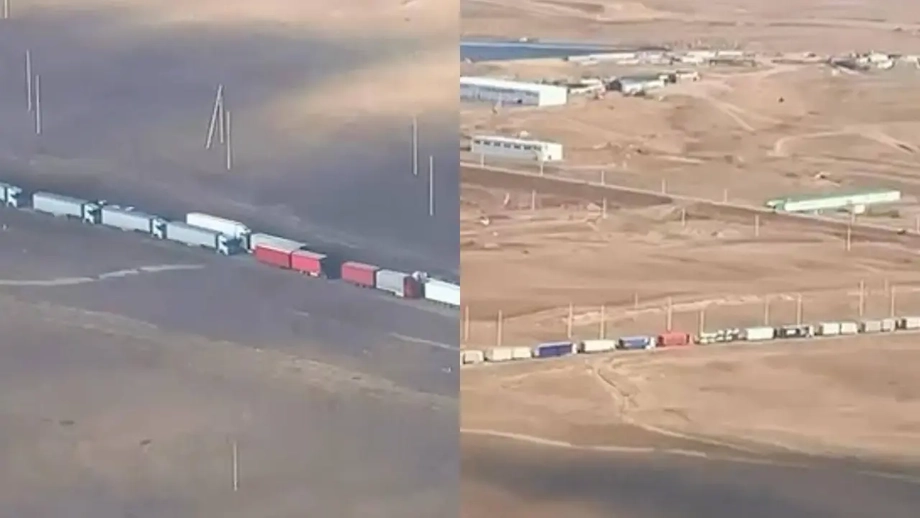
Trade has also faced longer and more costly routes. Disruptions to shipments through Iran amid conflict in the Middle East have pushed some exporters toward the Trans Caspian route, which crosses the Caspian Sea. S&P assesses the direct effect of the conflict on Uzbekistan's economy and public finances as limited, while warning that transport and energy costs could rise.
In April 2026, the European Union restricted two Uzbek enterprises over reported links to supplies for Russia's military industrial sector. S&P does not expect those measures to have a significant direct effect on Uzbekistan's economy or public finances, but the country's trade and remittance ties to Russia remain a source of exposure.
Can banking reform reduce the state's role?
State owned banks held 60.8% of banking assets on Oct. 1, 2026, along with 64.6% of loans, 57.8% of capital and 50.2% of deposits. S&P cited state lenders' 61% share of banking assets as a constraint, alongside delayed privatisations and loan dollarization, meaning loans denominated in foreign currency rather than soums.
The Central Bank reported that foreign currency loans were 38.3% of total lending on Oct. 1, down from 39.3% a year earlier. Their soum equivalent still rose from 228.7 trillion to 252.3 trillion soums as the total loan market grew. Foreign currency deposits fell as a share of all deposits, from 22.5% to 18.6%, even as their soum equivalent increased from 83.7 trillion to 93.1 trillion.
Central Bank chief Timur Ishmetov has said policy aims to build trust in the soum and expand borrowing and saving in the national currency. When a borrower earns soums but owes dollars, a weaker soum makes each foreign currency payment more expensive. S&P expects average inflation of 6.7% in 2026; the Central Bank has been tasked with keeping inflation at or below 6% in 2027 and later bringing it to 5%.
The Central Bank's draft monetary policy plan for 2027 to 2029 includes a stronger role for UZONIA, a benchmark interest rate for the money market, a review of its interest rate corridor and tools to help businesses manage currency and interest rate risks. Household debt is below 10% of GDP, which leaves room for lending to grow, while careful management of foreign currency exposure remains a challenge.
Bank sales may take longer than planned
Uzbekistan's 2030 strategy calls for selling five state banks, starting in 2027. O'zsanoatqurilishbank, also known as SQB, and Asakabank are being prepared for sale. Fitch bank sector director Pavel Kaptel said at a Tashkent event on Oct. 27 that the first sale could happen in 2027, though the process could slip to 2028.
Fitch has pointed to older problem assets and a retail lending business that is not yet well developed as obstacles. Preparations include moving problem assets to state entities and providing additional government capital to address past risks. The plan aims to reduce the number of state banks to seven by 2027, six by 2028, five by 2029 and four by 2030.
The planned May 2026 dual listing in London and Tashkent of the Franklin Templeton managed National Investment Fund, which raised $690 million, offered another sign of capital market activity. For S&P, stronger markets and bank reform matter because they could broaden access to finance beyond the state. The size of state lenders' current share shows how much of that transition remains ahead.
What investors will watch next
The rating's stable outlook rests on strong growth, a favourable public debt profile and large reserves, weighed against exposure to commodity prices and external shocks. Rising interest costs are another concern as the government shifts toward commercial and domestic borrowing. S&P's projected fall in gold prices makes the budget and reserves reforms especially relevant to the rating outlook.
Further rating gains are likely to depend on sustained deficit reductions and tighter controls on state lending to public enterprises. Investors will also be watching whether the government keeps partnership commitments within its proposed limit, whether bank sales proceed on schedule and whether the Central Bank can bring inflation toward its 5% goal while encouraging lending in soums.
Key Points
- S&P raised Uzbekistan's long term foreign and local currency ratings from BB to BB+, with a stable outlook.
- The revised 2025 GDP estimate is $169 billion, lowering S&P's projected average net government debt ratio to 24% of GDP in 2026 to 2029.
- Reserves reached about $64 billion at the end of October 2026, while gold makes up as much as 40% of merchandise exports.
- Growth reached 8.3% in the first nine months of 2026, but transport costs, remittance dependence and exposure to gold prices remain risks.
- State banks still hold about 61% of banking assets, and planned privatisations could be delayed until 2028.