Evening repair measures follow complaints across the capital
Uzbekistan's Energy Ministry said at 18:55 on November 14, 2026, that it had increased pressure at the entry points of pipelines supplying Tashkent, following widespread complaints about weak or absent gas supplies. The ministry expected pressure in neighbourhood distribution networks to recover gradually within two to three hours, putting its restoration target at roughly 21:00 to 22:00.
Contents
- Evening repair measures follow complaints across the capital
- What officials changed in the pipeline network
- How the disruption unfolded on November 14
- What the complaint figures tell residents
- Safety advice as pressure returns
- Domestic gas production has fallen sharply
- Import spending rises as export earnings fall
- Winter priorities put households and public services first
- Key Points
By 18:59, the utility reporting service SvetaNet had recorded 178 messages about gas interruptions, including 111 marked as confirmed. Another 444 messages had arrived through other channels. Most complaints recorded on the service's website came from Chilonzor and Mirzo Ulugbek districts.
The Central Dispatch Service, reached through 1055, attributed the pressure drop to insufficient pressure in gas arriving from Uztransgaz, the operator of the main gas transmission network. Its announcement preceded the ministry's statement by just over an hour.
Residents described interruptions across almost all districts of the capital, while the official dispatch notice referred to affected areas in parts of Tashkent. Complaints about low pressure also appeared in the central municipal dispatch group for the surrounding Tashkent region.
The disruption came as Uzbekistan approached winter with declining domestic gas production and rising spending on imports. A Cabinet resolution for the autumn and winter of 2026–2027 had already placed homes, schools, kindergartens, hospitals and other social facilities first in line for gas supplies.
What officials changed in the pipeline network
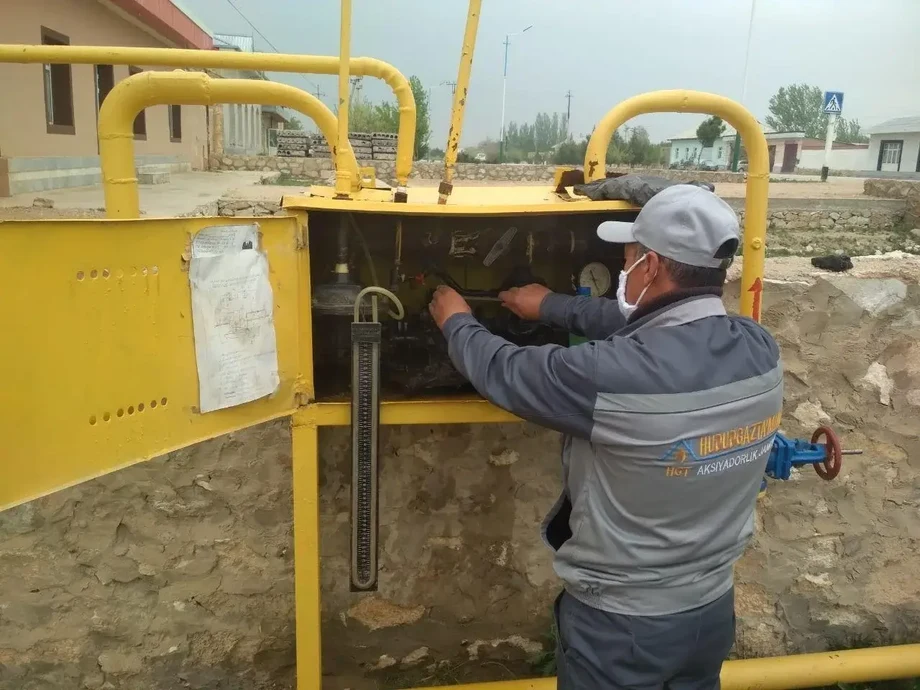
The Energy Ministry said urgent measures had been taken to address the pressure problem. Its specific intervention was to raise pressure at the inlet sections of pipelines feeding Tashkent, before allowing pressure to build through the city's distribution network.
Gas pressure is the force that moves gas through pipes toward consumers. Large transmission pipelines bring gas toward a city, and smaller distribution pipes carry it into neighbourhoods and buildings. When pressure entering that network falls, consumers farther along it can receive a weaker flow or lose their usable supply.
The ministry described a gradual recovery rather than an immediate return to normal service everywhere. For households, the practical issue was whether enough gas would reach their appliances to operate normally as pressure increased across the network.
The dispatch service identified low incoming pressure from Uztransgaz as the immediate problem. The ministry's own statement concentrated on the corrective action and the expected recovery time.
How the disruption unfolded on November 14
Complaints were visible from the morning, hours before the evening announcements. The published figures and official statements give the following sequence, with all times local to Tashkent:
- 09:55: The gas section of the reporting service displayed 77 messages, including 43 marked as confirmed, with another 338 messages shown from a channel.
- 17:47: An official notice in the municipal dispatch group attributed low pressure in parts of Tashkent to low pressure in supplies arriving from Transgaz.
- 18:55: The Energy Ministry announced that pressure had been increased at the entry points of pipelines supplying the capital and gave a recovery estimate of two to three hours.
- 18:59: SvetaNet displayed 178 interruption messages, including 111 confirmed, plus another 444 messages through other channels.
- Approximately 21:00 to 22:00: The ministry's estimate placed the expected return to normal supply in this evening window.
The morning complaints and evening intervention show that residents were reporting problems over many hours. Individual messages did not establish when service failed or returned at every address.
What the complaint figures tell residents
SvetaNet's evening figures showed substantially more recorded complaints than its morning snapshot. The count in the gas reporting section rose from 77 at 09:55 to 178 at 18:59, an increase of 101, while messages marked as confirmed rose from 43 to 111.
The service also displayed messages arriving through other channels: 338 in the morning and 444 in the evening. Those figures should be kept separate from the main reporting totals because a person could use more than one route to describe the same interruption.
Chilonzor and Mirzo Ulugbek accounted for most complaints on the website, giving a more precise picture of where users were reporting trouble. Residents elsewhere in Tashkent, and in the surrounding region, also raised concerns through dispatch groups.
Neither the complaint totals nor their confirmation status supplied a count of affected homes. The figures describe reports received by the service, while the number of households experiencing low pressure depends on how widely each interruption spread through the network.
Safety advice as pressure returns
The Energy Ministry urged residents to use gas equipment cautiously, check that appliances were in working order and follow safety rules. It also apologised for the inconvenience caused by the disruption.
For residents seeking information or wishing to report a supply problem, the published notices gave the telephone numbers 104 and 1104. The Central Dispatch Service issuing information about the pressure drop operates through 1055.
The restoration estimate remained a forecast. No confirmation that supplies had returned to normal across the capital, household total, or explanation for why incoming pressure had fallen accompanied the announcements.
Consumers therefore faced two immediate concerns: the return of a usable gas supply and the condition of their equipment while pressure changed. The ministry's safety request applied during that recovery period, alongside its promise to restore normal distribution.
Domestic gas production has fallen sharply
National Statistics Committee figures put Uzbekistan's natural gas production at 27 billion cubic metres in January–September 2026. That was 5.3 billion cubic metres, or 16.4%, below the 32.3 billion cubic metres produced during the same nine months of 2025.
The comparison with 2024 shows a longer decline. Production in the first nine months of that year was 33.7 billion cubic metres. By the corresponding period of 2026, output had fallen by 6.7 billion cubic metres, approximately 19.9%.
A cubic metre measures a volume of gas. These national production figures count gas extracted over nine months, while Tashkent's immediate difficulty concerned the pressure pushing gas through its supply network on a particular day. Both matter for reliable service: the country needs enough gas available, and the network needs to deliver it at usable pressure.
An unnamed person familiar with the energy sector said available gas volumes were about 20% below the previous year's level. The person also said Uzbekistan had stopped exporting natural gas to China in late October. Both claims were attributed to that unnamed person rather than to a government announcement.
Import spending rises as export earnings fall
Uzbekistan has increased gas imports, mainly from Russia and Turkmenistan, as domestic extraction has declined. During January–September 2026, the value of gas imports rose by 49.9% to $1.605 billion, including $152.2 million spent on propane.
Propane is a different fuel from the natural gas delivered through household pipelines, so the stated import bill covers more than the pipeline gas used by Tashkent residents. The financial total gives a measure of spending across those purchases.
Gas export earnings fell by 34.5% to $357.9 million during the same nine months. The reported import bill was about 4.5 times the value of exports, calculated from $1.605 billion in imports and $357.9 million in exports.
September alone accounted for $389.2 million in import spending, the highest monthly figure since the start of the year. That was about 24.2% of the total import bill for January through September.
Import expenditure measures money spent. The amount of gas purchased also depends on prices and the mix of fuels, making the production figures and trade values different parts of the national energy picture.
Winter priorities put households and public services first
The Cabinet's resolution on stable gas supplies for autumn and winter 2026–2027 gave priority to residential buildings and social facilities. Schools, kindergartens and hospitals were among the institutions named.
For those consumers, stable supply means gas reaching the premises reliably enough to meet everyday needs. In homes that use gas for cooking or heating, weak pressure can interrupt basic routines. At public facilities relying on gas, dependable delivery is part of keeping buildings and services operating.
Tashkent's November 14 disruption brought that winter supply priority into immediate focus. Officials increased incoming pressure and set an evening recovery target, while residents across several districts continued to register complaints.
The central development was concrete: the ministry said it had acted at the pipelines feeding the capital, and households were told to expect a gradual improvement over the following two to three hours. The wider setting was a country producing less gas at home while spending more on imports.
Key Points
- The Energy Ministry announced at 18:55 on November 14 that pressure had been increased in pipelines supplying Tashkent.
- Normal supply was expected within two to three hours, approximately 21:00 to 22:00.
- The dispatch service attributed the disruption to low pressure in gas arriving from Uztransgaz.
- SvetaNet recorded 178 interruption messages by 18:59, including 111 confirmed, with another 444 through other channels.
- Most website complaints came from Chilonzor and Mirzo Ulugbek districts.
- Residents were urged to check gas equipment, follow safety rules and contact 104 or 1104 for information or assistance.
- Uzbekistan produced 27 billion cubic metres of gas in January–September 2026, down 16.4% from a year earlier.
- The winter supply resolution gives priority to homes, schools, kindergartens, hospitals and other social facilities.