New factories open as a larger construction programme begins
Uzbekistan's President Shavkat Mirziyoyev inaugurated 55 projects worth $654 million and started construction on another 90 valued at $7.1 billion during a November 3 visit to Bukhara region. Together, the 145 projects form a development programme valued at about $7.8 billion, spanning factories, renewable electricity, tourism, housing and public infrastructure.
Contents
- New factories open as a larger construction programme begins
- Investment targets production and overseas sales
- Wind and solar capacity expand across the region
- Power projects also target waste and irrigation
- Textile projects seek more value from cotton
- Tourism plans combine heritage with new accommodation
- A congress hall and 424 hotel rooms take shape
- Water and roads bring the programme into daily life
- The next stages run from construction to 2031
- Key Points
The presidential press service said the programme is expected to create more than 14,000 jobs, produce goods worth 22 trillion soums a year, equivalent to approximately $1.84 billion, and provide capacity for $510 million in exports. Those figures describe the expected results once the projects are implemented, while the ceremony brought together facilities ready to open and developments entering construction.
About 38% of the projects, 55 out of 145, were being commissioned. The remaining 90 account for most of the announced investment value, making construction and delivery the next major task. No completion schedule for the full programme was announced.
For residents, the package reaches beyond new workplaces. It includes two water projects intended to improve supplies for 2 million people, seven road projects designed to increase transit capacity, and new electricity infrastructure to support a growing regional economy.
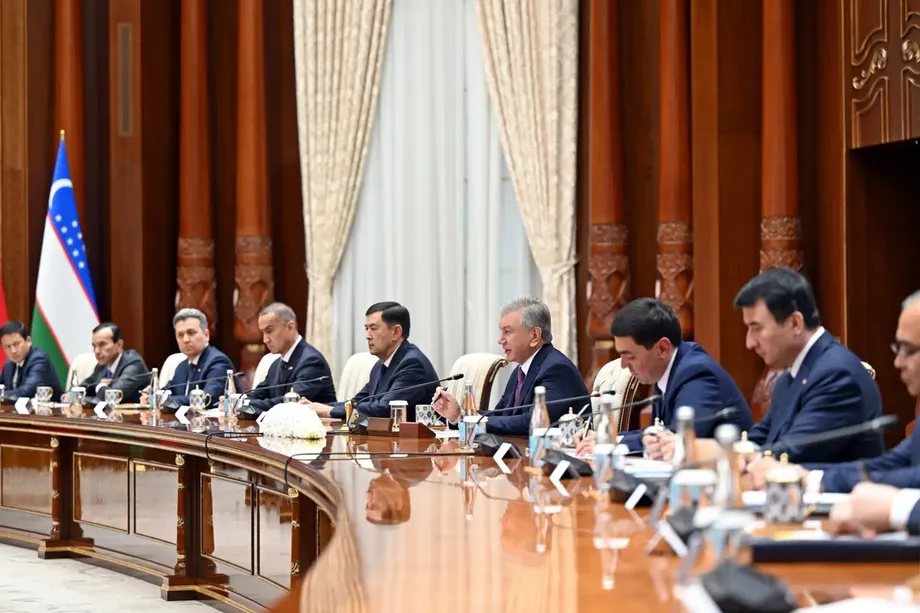
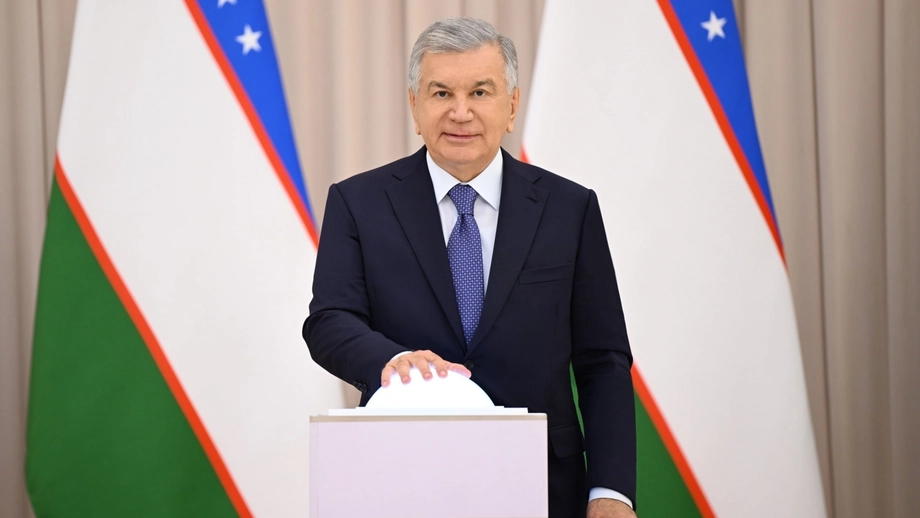
Mirziyoyev attended the launch during a working visit scheduled to last two days. His programme also included reviews of historical heritage preservation, tourism infrastructure, industrial and agricultural enterprises, and a meeting on the region's economic and social development. At the ceremony, he pressed a symbolic button to open the completed facilities and begin work on the next group.
Investment targets production and overseas sales
Bukhara attracted $9.5 billion in foreign investment over the previous nine years, Mirziyoyev said. He credited that investment and economic reforms with creating more than 6,000 production facilities and 120,000 permanent jobs, alongside higher household incomes and access to new markets for local businesses.
The new programme covers petrochemicals, textiles, building materials, machinery, energy, mining, pharmaceuticals and digital technologies. Agriculture, food production, logistics, housing, infrastructure, services and tourism are also included, spreading the planned activity across both manufacturing and everyday services.
Investors come from the United States, Canada, Germany, Japan, South Korea, Singapore, China, Vietnam, Turkey, the United Arab Emirates, Saudi Arabia, Russia and India. The Asian Development Bank, the Asian Infrastructure Investment Bank and Uzbek businesses are also participating.
Mirziyoyev, Uzbekistan's president, described the production goal in terms of replacing imported goods and finding customers abroad:
The goal is one: to produce goods that replace imports and are in high demand in foreign markets.
Replacing imports means making goods locally that businesses or households previously bought from another country. Exporting means selling locally produced goods abroad. The programme seeks to do both, with its $510 million export target giving factories a sales objective beyond Uzbekistan's domestic market.
Wind and solar capacity expand across the region
Bukhara has attracted $2 billion into green energy in recent years, according to the presidential account. Facilities already brought into operation include 1,000 megawatts of wind capacity, 750 megawatts of solar capacity and energy storage systems rated at 63 megawatts. Another 601 kilometres of major electricity transmission lines have been installed.
Wind and solar installations together therefore provide 1,750 megawatts of generating capacity. Megawatts describe how much power equipment can supply at a given moment; electricity production over a year also depends on operating conditions, including wind and sunlight.
Construction continues on the 300 megawatt Bosh-2 wind farm in Gijduvon district with ACWA. Wind projects involving Toyota Corporation in Jondor and Sinoma in Peshku have a combined planned capacity of another 1,000 megawatts.
Those three developments would add 1,300 megawatts of wind capacity. Compared with the 1,000 megawatts of wind capacity already operating, they would more than double the regional total to 2,300 megawatts once completed. The new transmission lines provide the connections needed to move electricity from generating sites to users.
Power projects also target waste and irrigation
Kogon district is due to receive a $165 million project with Chinese partners to generate electricity from household waste. The proposal connects two local services: handling discarded rubbish and producing power.
Germany's Leman is involved in a separate planned project worth $150 million to support reliable operation of pumping stations on the Amu-Bukhara canal. Pumping stations use energy to move water through a canal system, so their operation links electricity supply with water delivery.
The two projects show how the energy programme extends beyond wind farms and solar plants. One would use a municipal waste stream as fuel, while the other would support machinery that keeps water moving. Both are presented as planned developments rather than facilities opened at the ceremony.
Textile projects seek more value from cotton
Bukhara city is set to receive a textile complex under the Kurt Baver brand with capacity to produce 62,000 tonnes of goods annually. In Romitan district, Chinese investors are participating in a cotton and textile cluster valued at $400 million.
A cluster brings related stages of production together, potentially linking cotton growing, processing and textile manufacturing. For a region with established experience in cotton cultivation, the aim is to earn more from the material by carrying out more processing locally.
Investors have proposed developing 9,000 hectares of land as part of the textile projects. The stated targets include raising the share of products with high added value to 65% and creating an additional $100 million in export capacity.
Added value is the extra worth created when a raw material is turned into a more developed product. Processing cotton into textiles allows more of that work, and the income associated with it, to remain in the region. The 65% target sets out the intended direction of the textile expansion, alongside its production and export goals.
Tourism plans combine heritage with new accommodation
Bukhara's tourism programme includes 19 major projects worth $3 billion. Mirziyoyev set an ambition of reaching $5 billion in annual tourism service exports, linking the city's historic attractions with new places to stay, hold events and spend time.
Tourism service exports are the money foreign visitors spend on services inside the country, such as hotels, guided visits and other travel activities. The spending counts as an export because the customer comes from abroad, even though the service is delivered locally.
The ceremony took place at the developing Bukhara tourism centre. Plans there include the Boqiy Buxoro cultural and ethnographic park, an exhibition hall, modern hotels, and cultural and entertainment venues. Hotels operating under the Indigo, Holiday Inn and Hilton brands are also planned in the city.
The tourism centre would add new visitor facilities alongside the historical heritage that already draws travellers to Bukhara. Heritage preservation was also part of the presidential visit programme, placing attention on both existing monuments and the infrastructure needed to receive more visitors.
A congress hall and 424 hotel rooms take shape
Mirziyoyev also inspected construction of a congress hall and hotels intended to host international events and tourists. The congress hall is valued at $60 million and covers 14,500 square metres. Major concrete work has been completed, with work continuing on external utility connections, the facade and the roof.
A Hilton Garden Inn costing $37 million will have seven floors and 212 rooms. Its main structural work is complete, while internal walls, utility installations and facade finishing remain under construction.
A second hotel, operating under the Holiday Inn brand, is valued at $39.6 million. It will also have seven floors and 212 rooms, bringing the combined capacity of the two hotels to 424 rooms. A building with two floors intended as a business centre is being built beside the Holiday Inn.
The three stated project values total $136.6 million. Together, the hall and hotels would provide meeting space and accommodation for conference visitors, adding a business events element to the tourism investment. Mirziyoyev instructed officials to finish construction on time and meet quality requirements.
Officials also briefed the president on preparations for summits planned in Bukhara in 2027. He issued instructions on preparing the region's infrastructure for those gatherings, giving the construction effort a specific forthcoming event to serve.
Water and roads bring the programme into daily life
Two major water projects worth a combined $633 million have begun with international partners. They are intended to improve water supplies for 2 million residents, including 781,000 people expected to gain access to drinking water for the first time.
The presidential announcement set a goal of supplying the entire regional population with drinking water over the following five years, while extending sewer networks to major cities and district centres. The regional water coverage deadline was also reported as 2031.
For households receiving access for the first time, the expected benefit is a basic public service reaching their community. For places already connected, the projects are intended to improve the supply they receive. The announcement puts both groups within the wider water investment effort.
Seven road projects worth $565 million are also planned, with a stated goal of tripling Bukhara's transit capacity. Transit refers to traffic passing through a region on its way elsewhere. Better road connections would support that traffic alongside movements between local factories, farms, hotels and markets.
The next stages run from construction to 2031
November 3 brought together several different stages of development: newly commissioned businesses, projects beginning construction, and proposals intended to expand electricity, tourism and public services. The next dated milestones concern international gatherings and regional water coverage.
- Previous nine years: Bukhara attracted $9.5 billion in foreign investment, with more than 6,000 production facilities and 120,000 permanent jobs created, according to Mirziyoyev.
- November 3: The president inaugurated 55 projects worth $654 million and started construction on 90 projects valued at $7.1 billion.
- 2027: Bukhara is scheduled to host summits, with infrastructure preparations reviewed during the visit.
- 2031: Full regional drinking water coverage is the reported target, alongside the broader plan to expand sewer networks in major population centres.
Bukhara's programme connects industrial production with the services needed to support it. New factories need electricity and transport; expanded tourism needs accommodation and event space; residents need dependable water supplies. The announced investment places those activities within the same regional development push, while most of its financial value remains tied to projects now entering construction.
Key Points
- Bukhara's investment programme comprises 145 projects valued at about $7.8 billion.
- Fifty five projects worth $654 million were inaugurated, while construction began on another 90 worth $7.1 billion.
- The programme targets more than 14,000 jobs, annual production worth 22 trillion soums and $510 million in export capacity.
- Wind projects under construction would add 1,300 megawatts to the region's existing 1,000 megawatts of wind capacity.
- Nineteen major tourism projects are valued at $3 billion, alongside an ambition of $5 billion in annual tourism service exports.
- Two water projects worth $633 million are intended to benefit 2 million people, including 781,000 receiving drinking water access for the first time.
- Infrastructure preparations include summits planned for 2027 and a reported regional drinking water coverage target of 2031.