A cleaner drive, with a waste problem in the making
Electric vehicle sales in Indonesia rose 49% in 2025, even as the wider car market slowed, according to the figures in the original account. In the first three months of 2026, EVs made up nearly 15% of vehicle sales, compared with 8% in the same period a year earlier. Renewable energy has also grown, reaching 18% of the country's energy mix, above the government's 16.5% target for 2026.
Contents
- A cleaner drive, with a waste problem in the making
- When will retired batteries start piling up?
- Why a battery's condition matters
- Second use can delay disposal
- Hazardous waste rules do not yet make a circular system
- Who should pay, and who should collect?
- Recycling is necessary, but it is the last step
- What to Know
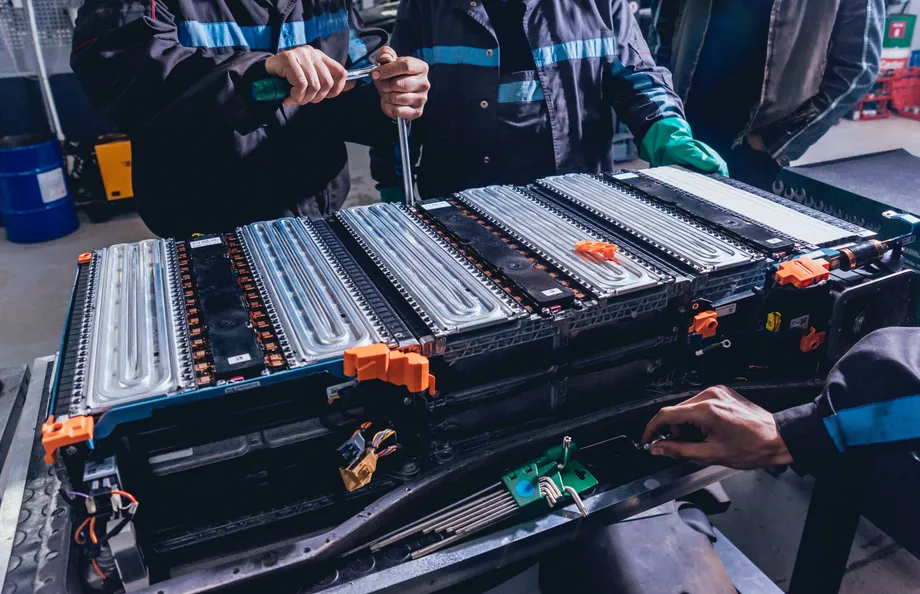
Those gains depend on batteries. They power cars and motorcycles, and store electricity from solar and wind projects so it can be used when the sun is down or the wind is weak. Yet batteries do not last forever. Indonesia is adding electric vehicles faster than it is building a system to collect, assess, repair, reuse and recycle their batteries safely.
The first substantial wave of retired car batteries could arrive sooner than a simple estimate based on an eight to 10 year lifespan suggests. A government policy study estimates that significant volumes may begin appearing in 2026 or 2027, and projects 7,766 end of life battery units in 2029. Its estimates use a model based on vehicle sales and battery retirement patterns in South Korea. Electric motorcycle batteries can reach the end of their useful life much sooner, often after one to three years.
The challenge is more than finding a place to recycle batteries. Indonesia needs a chain that can identify each battery, collect it, move it safely, test its condition and direct it to the right next use. Without that system, a transition away from fossil fuels could leave communities with a different waste and safety problem.
When will retired batteries start piling up?
Indonesia's electric vehicle market has grown sharply since official sales statistics began in 2020. Sales rose from 125 vehicles that year to 10,327 in 2022, after incentives were introduced, then reached 43,188 in 2024. That was 153% more than in 2023 and about 5% of the total car market.
The government's policy framework report estimates a rise in retired batteries from 13 units in 2026 to 119 in 2027, 1,345 in 2028 and 7,766 in 2029. These are projections, not a count of batteries already discarded. They show why decisions on collection and treatment need to be made before volumes become large.
Different battery types create different timelines. The average car battery may serve for eight to 10 years, although a battery can be replaced earlier for performance or safety reasons. The original account gives a shorter observed life for many electric motorcycle batteries: one to three years, with some higher quality units lasting three to five. A growing fleet of electric two wheelers can therefore produce used batteries well before the first large wave of retired car batteries.
Indonesia's first EV adoption began in 2022, making the period from 2026 onward a critical time to prepare. The numbers will depend on how long vehicles and batteries actually last, how many are replaced early, and whether batteries can be repaired or used again.
Why a battery's condition matters
A battery removed from a vehicle is not necessarily ready for the rubbish heap. Its State of Health, or SoH, is an estimate of how much of its original ability to store energy remains. A battery may no longer deliver the range or performance a driver expects but still work well for a less demanding job.
Jessica Hanafi, chair of the Indonesian Association of Life Cycle Assessment and Sustainability Professionals, has said batteries with around 70% to 80% of their original capacity may still be suitable for stationary energy storage, including systems supporting solar power. Batteries in good condition may be reused in vehicles, while damaged parts may be repaired, refurbished or remanufactured. Material recycling is needed when cells are too damaged or worn for further use.
The exact thresholds can vary with the test method and intended use. One proposed approach is to assess batteries individually, then sort them by condition. A Jakarta Greater Area logistics study uses a model in which batteries above 80% health go to remanufacturing, those at 60% to 80% go to recycling, and those below 60% are sent for disposal. The thresholds are a planning method, not a universal rule for every battery or application.
Battery chemistry matters too. Lithium iron phosphate, or LFP, has gained ground because it is generally less expensive and is considered safer than some alternatives. Its share of Indonesia's battery market rose from less than 10% in 2020 to about half in 2024, according to the policy framework report. LFP batteries contain no nickel or cobalt, so recovering valuable metals from them can be less profitable and technically more difficult than processing nickel, cobalt and manganese batteries.
Second use can delay disposal
Repurposing can extend a battery's working life. A pack that no longer meets the demands of a moving vehicle may still store electricity in a building or a local power network. In rural areas, second life batteries could support solar powered microgrids, which combine local generation and storage to provide electricity where access to the main grid is limited or unreliable.
Japan has already demonstrated this approach. In 2013, 4R Energy, a joint venture between Nissan Motor and Sumitomo Corporation, launched a stationary storage system on Yumeshima Island using reused EV batteries. The company deployed a second system on Koshikishima Island in 2015 to support solar and wind power and charge electric vehicles.
A 2025 academic study mapped a possible return network for EV batteries in the Jakarta Greater Area. It examined 254 vehicle dealers and evaluated potential sites for collection, remanufacturing, recycling and disposal. Its proposed network has five collection centres, one combined remanufacturing and recycling centre, and one disposal centre. The Jakarta logistics study estimated a minimum total cost of about 1.24 trillion rupiah, with processing accounting for 56.68% and transportation 29.30%.
The model also routed 1.029 tonnes of low health batteries and solid waste to disposal. Its cost estimate reflects the study's assumptions and proposed network, rather than a confirmed bill for a system now operating. Still, the results show why a recycling plant alone is not enough: batteries must first be gathered from many places and moved to suitable facilities.
Hazardous waste rules do not yet make a circular system
Indonesia does not yet have a dedicated, comprehensive system for the full life cycle of EV batteries. Batteries containing heavy metals are classified as hazardous and toxic waste, known as B3 waste, under the existing framework. Government Regulation No. 22 of 2021 includes rules for hazardous waste, while other environmental regulations govern storage, transport and treatment.
Companies handling this waste need permits, and treatment must take place at licensed facilities. Storage is generally limited to 90 days under the rules described in the policy framework report. Transportation requires approved arrangements, and businesses must keep records and report their waste. These controls help manage risks, but the current system is built mainly around hazardous waste treatment, rather than a clear process for testing and returning usable batteries to the economy.
Responsibility for collection is also unclear. There is no fully established, legally binding system requiring manufacturers or importers to take back EV batteries at the end of their life. Government guidance on producer responsibility for batteries is voluntary, and existing recovery networks remain weak. In practice, some used batteries and other electronic waste pass through informal collectors, where workers may lack protective equipment and safe methods for dismantling cells.
Lithium ion batteries can catch fire if damaged or handled incorrectly. Manual dismantling can also expose workers to hazardous materials, while leaking electrolyte and poorly managed battery parts can contaminate land or water. A national system needs to make safe handling practical, including for households and smaller repair businesses, rather than relying on isolated company arrangements.
Who should pay, and who should collect?
Extended Producer Responsibility, or EPR, is a system that makes companies responsible for organising or financing the collection and treatment of products they put on the market. Applied to EV batteries, it could clarify whether vehicle makers, battery makers or importers must arrange take back once a battery is no longer used in a car.
Jessica Hanafi has called for a battery management road map, standard tests for measuring SoH and a digital battery passport. A passport would record information such as a battery's maker, chemistry, use and condition, helping a repairer or recycler decide how it can be handled. Indonesia currently lacks a central system that tracks batteries through production, sale, use, reuse and disposal.
Bappenas is preparing an action plan for a circular economy in electric vehicles that includes battery waste management. The plan could help connect EV incentives and battery production with clear rules for collection and end of life treatment. Arwani Hidayat, head of the Indonesian Electric Car Community, has also urged faster regulation and closer cooperation among government, vehicle makers and recyclers.
These steps matter because the best destination for a battery depends on its condition and chemistry. One rule that sends every battery straight to recycling could discard useful capacity. A system with no clear owner for collection could leave batteries in storage, informal trade or ordinary waste. Testing standards and traceable records can help direct each battery to repair, a second use, material recovery or controlled disposal.
Recycling is necessary, but it is the last step
When a battery cannot safely serve another purpose, recycling can recover materials such as lithium, nickel and cobalt for use in new products. Recovered material can reduce the need for fresh mining, though recovery methods and economics vary by battery chemistry. Indonesia's ambitions to make batteries and process nickel could benefit from recycling, but industrial capacity must be connected to collection and safe transport.
The sequence matters. Batteries should first be designed to last longer, then repaired or reused where possible, repurposed for another job when vehicle performance is no longer enough, and recycled when other uses are exhausted. This approach is often described as reduce, reuse, repurpose and recycle. Recycling is a necessary final route, not a substitute for the earlier stages.
The environmental stakes begin before a battery is discarded. Jessica Hanafi has cited a life cycle assessment in which the battery accounted for 38.34% of an electric car's environmental impact, compared with 15.55% for the body, 7.75% for the chassis and 5.6% for the traction motor. That comparison covers the vehicle life cycle used in the assessment. It underlines why extending battery life and recovering materials can matter alongside replacing petrol or diesel engines with electric ones.
Indonesia's energy transition now has a narrow window to build the system around the batteries already entering the market. Collection points, trained handlers, safe transport, condition testing, second use projects and licensed recycling all need to work together. The first major wave of retired car batteries may be years away, but motorcycle batteries and early vehicle replacements make preparation a current task.
What to Know
- EV sales rose 49% in 2025, and EVs made up nearly 15% of vehicle sales in the first quarter of 2026.
- A government policy study projects 7,766 end of life EV battery units in 2029 and says significant volumes may begin in 2026 or 2027.
- Batteries with remaining capacity may be repaired, reused or repurposed for energy storage before recycling is considered.
- Indonesia regulates used EV batteries through hazardous waste rules, but it lacks a comprehensive, legally binding take back system.
- A Jakarta area study proposes five collection centres, a remanufacturing and recycling centre, and a disposal centre.