A narrow relief plan for millions of inactive taxpayers
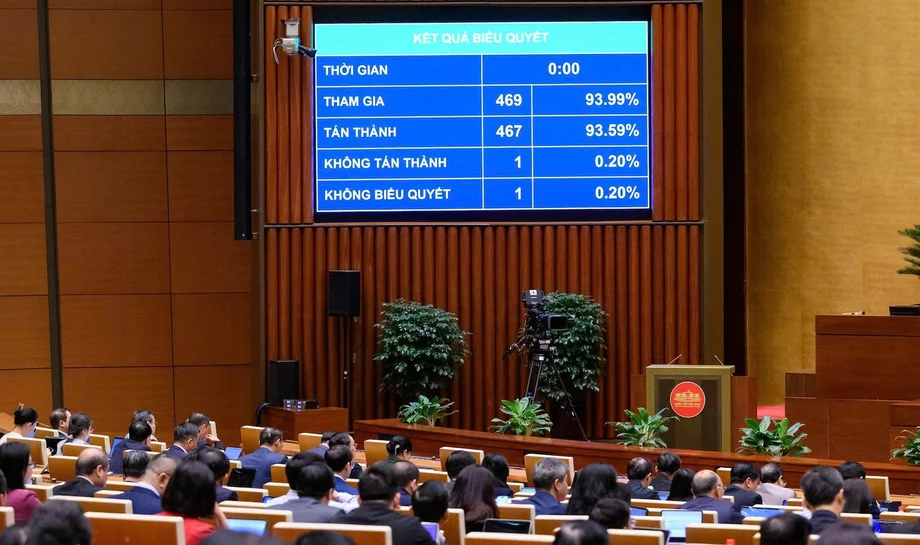
Vietnam's National Assembly voted 467 to 2 on Nov. 20 to add a proposed debt relief measure to the agenda for its second session. The plan would address unpaid business licence fees and related late payment charges for taxpayers whose businesses have stopped operating or whose registered address cannot be verified.
Contents
- A narrow relief plan for millions of inactive taxpayers
- Why the Government says the measure is needed
- Who could qualify, and what would be cancelled?
- The deadline and the proposed incentive to pay early
- How large is the debt being discussed?
- Lawmakers press for checks against abuse
- Tax and travel restriction systems also under review
- Other changes to the National Assembly schedule
- Key dates to follow
- What to Know
The draft targets two tax registration categories: status 03, for taxpayers who have stopped operating but have not completed the process to close their tax identification number, and status 06, for taxpayers not found at their registered address. Finance Minister Ngo Van Tuan said 2,518,440 taxpayers were in those categories on Oct. 23, 2026.
The National Assembly was due to hear the Government's proposal and a review by its Economic and Finance Committee on the afternoon of Nov. 20, then vote on the resolution on Nov. 21. The agenda change itself has passed; the relief policy had not yet been approved as of Nov. 20.
Business licence fees, sometimes called business licence tax, are a specific charge on businesses. The proposed measure is not a general cancellation of tax debts: it focuses on old fee obligations and related late charges for eligible taxpayers, with exclusions for debts tied to fraud and other violations.
Why the Government says the measure is needed
Many inactive businesses have not completed the paperwork to close their tax registration. Years of accumulated charges can make it harder for former owners to finish that process, even when a business has no books or assets left to meet its obligations. Tax authorities, meanwhile, must sort out which registrations still represent active businesses and which should be closed.
The Government says current tax debt rules do not cover all cases involving taxpayers in statuses 03 and 06. The draft is intended to let eligible taxpayers restore their registration or formally end it without being blocked by old fee debts and mounting late charges. Tax authorities have handled more than 777,000 tax identification numbers since the start of 2026, according to the Finance Ministry's account of the proposal.
Vietnam stopped collecting business licence fees from Jan. 1, 2026, but obligations from earlier years remain to be resolved. The Government has also linked the clean up of inactive taxpayer records to international information exchange, where reliable information about whether a legal entity is active matters. The Economic and Finance Committee has cautioned that the Global Forum on Transparency and Exchange of Information for Tax Purposes did not itself recommend cancelling tax debts. It said Vietnam's handling of inactive entities and taxpayer records is central to that work.
Who could qualify, and what would be cancelled?
Under the draft described to lawmakers, the measure would apply to taxpayers classed as status 03 or 06 by the relevant cutoff. The proposed cancellation covers business licence fee debt arising through Dec. 31, 2025, including older obligations once described in law as business licence tax, and associated late payment charges. The draft also addresses unpaid late charges remaining as of Nov. 21, 2026.
Taxpayers who had not declared earlier business licence fees would not have to file or pay those fees, or be charged late payment amounts, for eligible periods. The tax authority would use its own records to identify and process eligible debts, rather than require each taxpayer to submit a separate request for cancellation. Results would be made public, with notices sent through electronic tax transaction accounts where available.
Some debts would be excluded. The draft rules out late charges linked to unpaid principal arising from tax evasion, tax fraud or the use of unlawful invoices or documents. It also excludes cases connected to matters under inspection, investigation, prosecution or trial, as well as certain branches and representative offices of businesses that remain active or have only temporarily suspended operations. Taxpayers who continued to do business or incurred tax obligations while listed in status 03 or 06 would also fall outside the intended group.
For eligible late charges, the draft sets a process tied to paying the underlying principal debt and filing valid paperwork to restore or close the tax identification number. Applications received by June 30, 2028, could continue to be processed under the resolution if the principal has been paid. The tax authority would be responsible for checking eligibility and correcting a cancellation if it later found that a taxpayer did not qualify.
The deadline and the proposed incentive to pay early
The Government's draft would take effect on Nov. 21, 2026, if approved, and run through June 30, 2028. The measure would give taxpayers time to settle principal debt and complete the steps needed to restore or terminate their tax registration.
The committee reviewing the draft raised concern that cancelling all eligible late charges whenever principal is paid, even near the end of the period, could give taxpayers little reason to pay early. It asked lawmakers to consider a stepped schedule: cancel late charges for those who pay principal by Nov. 20, 2027, and cancel 50 percent for those who pay from Nov. 21, 2027, through June 30, 2028. The committee also suggested requiring repayment of cancelled amounts if a taxpayer resumes business or starts a new business.
The Government's proposed terms and the committee's suggested changes are not the same. The National Assembly's vote on the resolution will determine which rules, if any, become binding. The committee also called for the measure to be expressly limited to one use, so taxpayers do not come to expect periodic rounds of debt cancellation.
How large is the debt being discussed?
The figures presented to lawmakers describe different parts of the problem. The Finance Ministry estimated about 1.25 trillion dong in recorded business licence fee principal within the proposed cancellation, with about 438 billion dong in related late charges. It also estimated that nearly two million taxpayers had fee obligations for periods of inactivity that had not been entered in the tax system. If all those cases came forward, the principal and late charges considered for cancellation could total about 16.688 trillion dong.
Another estimate put late payment charges within the wider scope of consideration at about 9.99 trillion dong, including more than 3 trillion dong connected to land related revenue. At a hearing, lawmaker Nguyen Thi Suu cited about 27.805 trillion dong in tax managed debt across the 2,518,440 taxpayers in statuses 03 and 06. Those totals cover different categories and calculations, so they should not be read as a single bill that would automatically be cancelled under the draft.
The committee said the Government should provide a clearer assessment of the effect on each level of the state budget and estimate how many taxpayers in each group might benefit. It also called for measurable targets, including the number of tax registrations expected to be restored or closed. For readers, the central distinction is between the full debt recorded across inactive taxpayers and the narrower set of old fees and related charges that the draft would treat.
Lawmakers press for checks against abuse
Nguyen Thi Suu, a National Assembly deputy from Hue, argued that the programme should be judged by the number of tax registrations resolved and the quality of the resulting records, not just by the amount written off. She also called for a one time, time limited policy, said money already paid into the state budget should not be refunded, and urged safeguards to recover cancellations granted in error.
The policy's effectiveness must be measured by the number of tax identification numbers processed and the quality of the data, not only by the amount of money written off.
Suu proposed annual reports to the National Assembly on cancelled sums, principal debt collected and cases of misuse. She said officials should be accountable for each decision and that tax offices should explain refusals in writing. Her concerns reflect a practical challenge: simplifying old records must not create a way for active or dishonest businesses to escape valid obligations.
Nguyen Dinh Xuan, a deputy from Tay Ninh, proposed that tax authorities be allowed to close long abandoned tax registrations after publicly notifying the responsible people and giving them a period to respond. He said the usual process can be difficult to complete when owners cannot be found. His suggestion was raised in debate and is not a rule contained in the draft as described to the Assembly.
Tax and travel restriction systems also under review
Debate also touched on temporary restrictions on leaving Vietnam for people with tax obligations. Finance Minister Ngo Van Tuan said his ministry would work with the Ministry of Public Security to clarify the legal basis and connect their data systems. He said people who complete their tax obligations should have the restriction removed from the system.
The minister said the Finance Ministry set Oct. 23, 2026, as its data cutoff when preparing the draft to limit attempts to take advantage of the policy. The exact safeguards and how quickly records would be updated will depend on the final rules and how the agencies carry them out.
Other changes to the National Assembly schedule
The debt relief proposal was one part of a broader agenda revision presented by National Assembly Secretary General and National Assembly Office Chairman Le Quang Manh. Lawmakers moved the amended Postal Law from the second session to the third, giving the Government more time to review feedback and refine the draft.
The Assembly also dropped a separate proposed resolution on difficulties facing Hung Nghiep Formosa Ha Tinh Steel Co. The relevant provisions have instead been incorporated into the session's resolution. The timing of some debates and the order of votes were adjusted to match the pace of preparations.
The Standing Committee also proposed adding five matters to the session resolution if their documents are ready: collecting declaration information from foreign nationals before they enter Vietnam; issuing entry and exit travel documents for Vietnamese citizens travelling to China; using central budget funds to support projects by Army Corps 15; ending supervision of forest land conversion for the Song Than and Ban Mong reservoir projects; and setting policies to develop the Dung Quat Economic Zone in Quang Ngai. The Song Than project is in the area that was formerly Ninh Thuan province and is now part of Khanh Hoa province.
Key dates to follow
Oct. 23, 2026: The Finance Ministry's stated cutoff for its count of taxpayers in statuses 03 and 06.
Nov. 20, 2026: The Assembly approved the agenda change and heard the draft and committee review.
Nov. 21, 2026: The Assembly is scheduled to vote on the proposed resolution; this is also the draft's proposed start date if passed.
June 30, 2028: The proposed final date for qualifying paperwork to be received and processed under the measure.
What to Know
The Assembly added a special tax debt relief proposal to its agenda by a vote of 467 to 2.
The draft targets inactive taxpayers in registration statuses 03 and 06, not all taxpayers with unpaid debts.
Recorded fee principal in the proposal was estimated at 1.25 trillion dong, while possible totals vary with the debts and late charges included.
The Assembly was scheduled to decide on the resolution on Nov. 21, 2026.
Lawmakers called for a one time policy, safeguards against abuse and clearer reporting on who benefits.