A new nickel listing, and questions about its origins
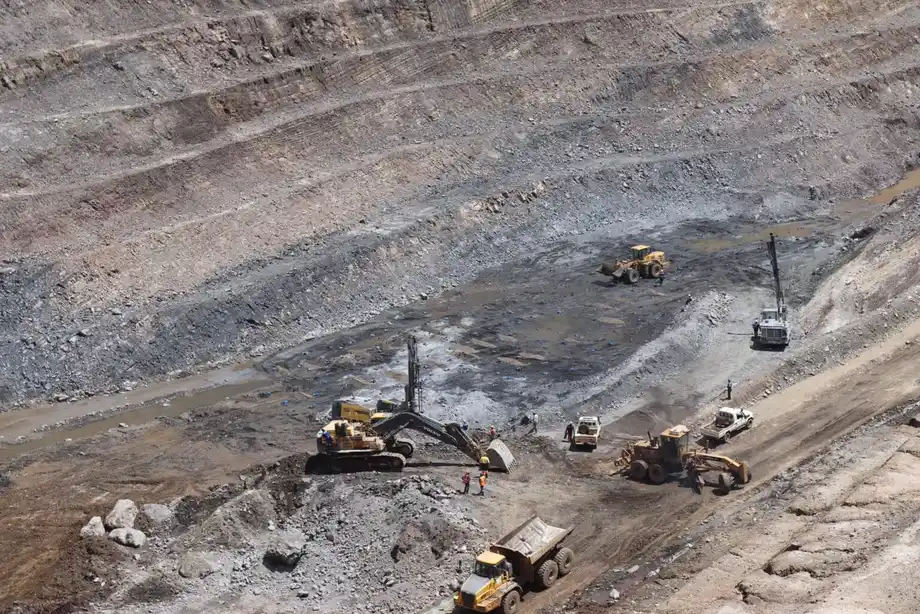
Two Indonesian nickel refiners approved to supply metal to the London Metal Exchange may be connected to mining supply chains that cleared as much as 7,270 hectares of primary rainforest, an investigation by the Environmental Investigation Agency says. The companies are PT CNGR Ding Xing and PT Eternal Nickel Industry, operating in a region where nickel production has expanded alongside forest loss, polluted waterways and repeated flooding.
Contents
The investigation traced the companies' ownership and possible supply links to mines in Sulawesi and North Maluku. It connects PT Eternal Nickel Industry, or ENI, to the Weda Bay Nickel mine in North Maluku, where more than 5,700 hectares of forest have been destroyed since 2006. It also links CNGR Ding Xing's network to PT Karyatama Konawe Utara in Sulawesi, where 621 hectares of primary tropical forest were cleared.
The 7,270 hectare figure is the investigation's estimate of forest that may be linked to the two supply chains. It is not a measure of forest loss at either refinery. Neither company publicly names its mine suppliers through the LME's LMEpassport platform, which records information about physical metal entering the exchange system.
Why does the LME listing matter?
On May 23, 2024, the LME approved its first Indonesian nickel brand for delivery against its main nickel contract. The DX-zwdx brand is made at a PT CNGR Ding Xing New Energy plant with annual capacity of 50,000 metric tons. It could be delivered against the contract immediately after approval.
Exchange delivery status matters because it makes a brand eligible for use in the LME's global trading system and its registered warehouses. The exchange's nickel stockpiles had more than doubled in a year to 84,042 tons, the highest level since February 2022. Nickel prices had fallen 45% in 2023 as Indonesian output helped create a surplus, then the benchmark contract rose 22% in 2024 through the time of the listing announcement.
The new brand also marked a change in Indonesia's role in the market. The country had become a major nickel producer, but had previously made relatively little of the high purity metal traded on the LME. Indonesia's expanding ability to turn ore into exchange grade nickel gives local producers access to a wider pool of buyers.
What do the exchange's rules require?
LME rules require listed metal brands to follow the OECD Due Diligence Guidance for Responsible Supply Chains of Minerals. The guidance sets out recommendations for companies to identify and manage risks in mineral supply chains, including risks connected to refined metal.
The EIA says the guidance does not set binding requirements on deforestation, biodiversity loss or Indigenous land rights. That leaves a gap between rules addressing issues such as conflict financing and child labour and the environmental and land impacts that may arise when mines clear forests.
Colin Robertson, the EIA's Forests Campaign lead for mining, said the exchange had requirements on some supply chain harms but needed to address forest destruction as well.
The LME has put in place solid requirements on metal sellers to address supply chain issues like conflict financing and child labour. Deforestation caused by mining is a growing problem and it seems to be a blind spot for the LME and for the mining and metals sector in general.
The EIA is calling on the LME to expand its responsible sourcing rules and require a binding zero deforestation standard on LMEpassport. The exchange told the EIA that its mandatory policy aligns with market expectations around OECD guidance. The LME had not responded to a request for comment by publication.
Forest loss and pollution around Weda Bay
The possible supply links sit within a wider industrial expansion in Central Halmahera, North Maluku. There, residents of Sagea village live about three kilometres from the Indonesia Weda Bay Industrial Park. Mining and processing have affected the river connected to Bokimaruru Cave, according to residents and environmental groups.
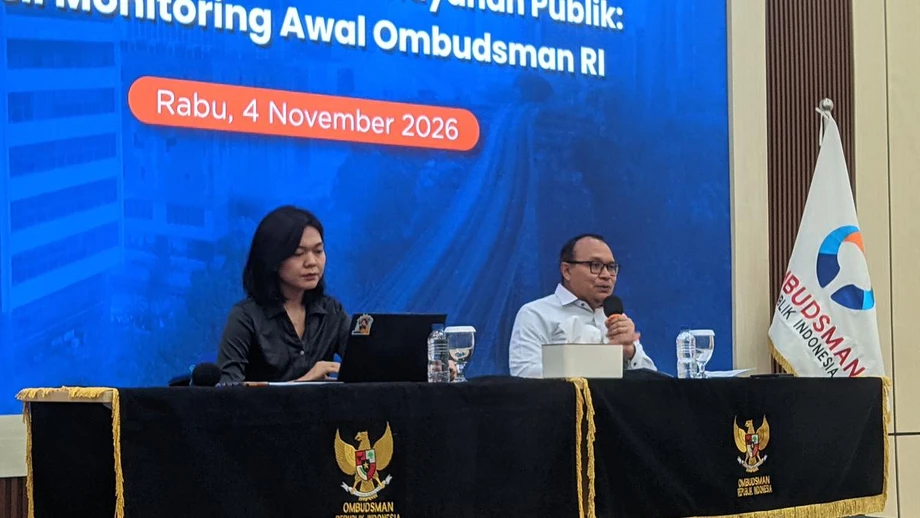
Supriadi, a Sagea resident, described the river's condition at a public discussion in Jakarta in late August. He said the pollution began in August 2023 and that residents were also worried about the safety of fish caught at sea.
Since August 2023, river pollution has been relentless. The river is murky almost all the time. There is also deforestation. At sea, fish can no longer be eaten because people fear contamination from nickel mining.
Residents in Lelilef Sawai, Lelilef Woebulen and nearby villages have also faced the loss of gardens and pressure on water and coastal areas as industrial sites have expanded. The experience on the ground is part of a larger land use change: Global Forest Watch data recorded 27,900 hectares of tree cover loss in Central Halmahera between 2001 and 2023, equivalent to a 13% decline in tree cover since 2000 and an estimated 22.4 million tonnes of carbon dioxide equivalent emissions.
Jatam, a mining advocacy network, counts 22 mining permits and the Weda Bay industrial area across Central Halmahera. Together, company concessions cover 95,736.56 hectares, or 42% of the regency's 227,683 hectares. The mapped area cleared for mining across the regency is 21,098.24 hectares.
How forest loss connects to flood danger
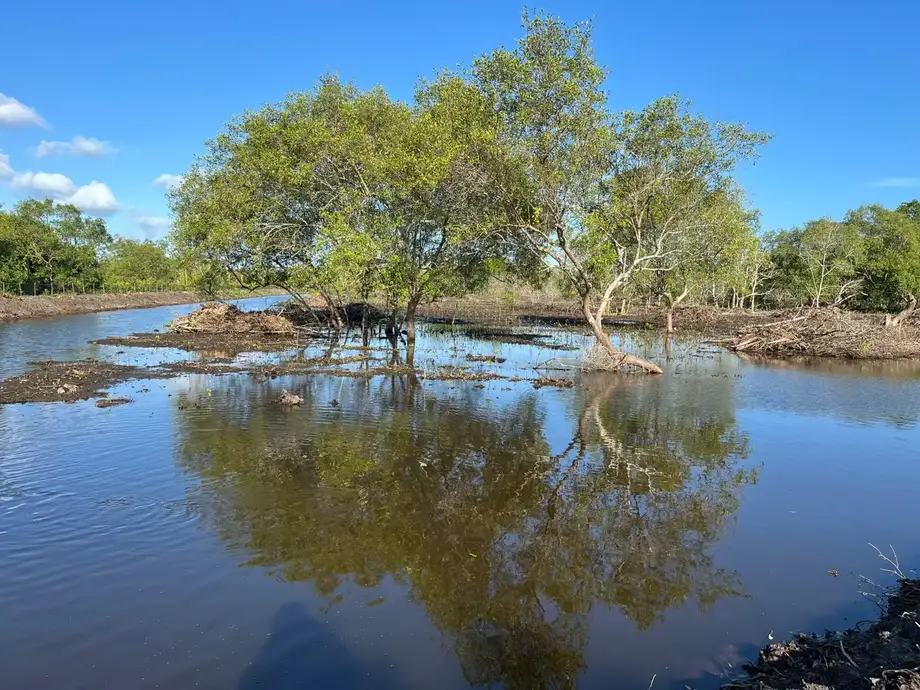
Forests slow rainwater and help soil absorb it. When vegetation is cleared, more water can run quickly into rivers, while sediment from disturbed land can make river channels shallower. Heavy rain then has less space to flow safely, increasing the chance of flooding. Environmental groups say mining and forest clearing have added to these pressures in Central Halmahera.
An analysis by the Perkumpulan Aksi Ekologi dan Emansipasi Rakyat, known as AEER, says 82,000 hectares of river basin land need restoration. It identifies 27 mining concessions covering 102,500 hectares that threaten 29 river basins. AEER also calculated that 7,167 hectares of deforestation occurred within ecological boundaries in mining concessions, while 8,166 hectares face flash flood risk.
North Maluku's disaster risk assessment for 2021 to 2026 puts the area with flood potential in Central Halmahera at 16,290 hectares. Jatam recorded more than 12 floods at least one metre deep between August 2020 and June 17, 2024. A major flood beginning August 21, 2024, inundated seven villages around Weda Bay and cut off access to them.
In a separate measure covering the whole regency, the Jatam database says mining land clearing reached 21,098.24 hectares. These figures describe different boundaries and risks: tree cover loss, land cleared for mines, areas at flood risk and river basins needing repair are not interchangeable measures.
Indigenous land and consent
The EIA investigation says concessions connected to the supply chains overlap with customary lands of the Indigenous Hongana Manyawa. Some Hongana Manyawa live in voluntary isolation. Free, Prior and Informed Consent, often shortened to FPIC, is the collective right of Indigenous Peoples to give or withhold consent to projects, laws or policies that affect their lands and livelihoods.
For people living in voluntary isolation, direct consultation is not possible without violating that choice. The concern raised by the investigation is that mining decisions affecting customary territory can proceed without the affected people being able to take part in the usual consent process.
In Central Halmahera, local environmental officials have said they monitor investment within the powers available to them. Abubakar Yasin, a section head at the regency's environmental agency, acknowledged environmental problems and said local authorities had limited room to reject projects approved by the central government. He said monitoring continued, although it was not yet sufficient.
Expansion continues as residents call for limits
Indonesia's nickel processing buildout is continuing. A package announced in October 2026 included 11 downstreaming projects at Weda Bay, with planned investment of US$10.2 billion for more nickel processing, aluminium production and battery manufacturing. The scale of the planned work adds to concerns about how much forest, river and coastal land will face pressure. Details of the announced Weda Bay expansion include four projects entering commercial operation and seven beginning construction.
AEER coordinator Pius Ginting has called for limits on mining production in Central Halmahera, arguing that the area's capacity to absorb environmental damage has been exceeded. He pointed to longer and more frequent floods and the combination of heavy rainfall, forest loss and sediment filled rivers.
The EIA wants the LME to make forest protection a binding condition for listed brands and to require clearer mine level sourcing information. The exchange has not announced a decision on the proposed change. The companies' publicly available LMEpassport information also does not identify their mine suppliers, leaving buyers and consumers without a clear way to trace the origins of the nickel.
Key Points
- The EIA says supply chains linked to two LME approved Indonesian refiners may be connected to as much as 7,270 hectares of primary rainforest loss.
- CNGR Ding Xing's DX-zwdx brand was approved for LME delivery on May 23, 2024, with production capacity of 50,000 metric tons a year.
- The EIA links ENI's supply chain to Weda Bay, where more than 5,700 hectares of forest have been lost since 2006, and CNGR's network to a Sulawesi mine where 621 hectares of primary tropical forest were cleared.
- Central Halmahera has experienced extensive forest loss, river pollution and repeated flooding, while AEER says 82,000 hectares of river basin land need restoration.
- The EIA is asking the LME to adopt binding zero deforestation rules and require greater supply chain transparency.