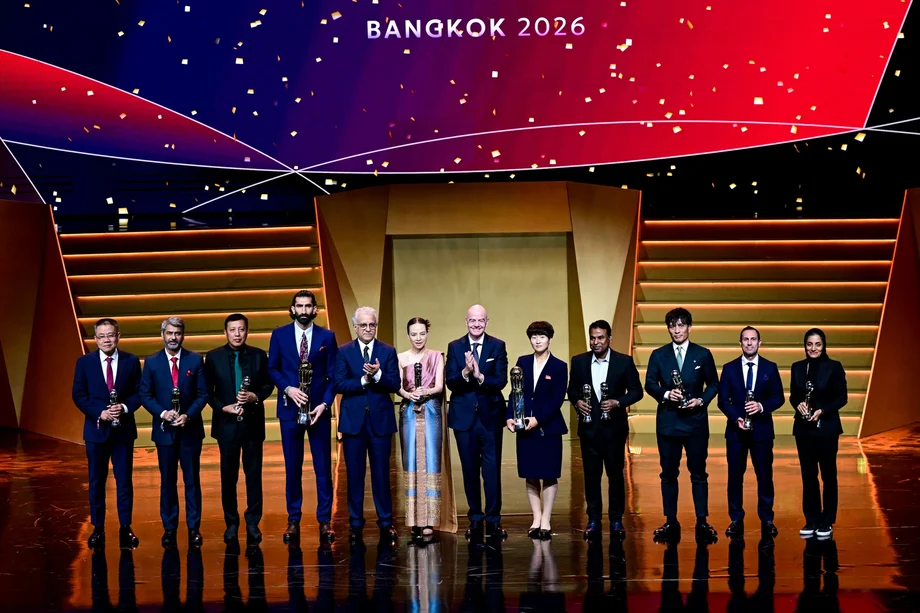
A goalkeeper claims Asia's top individual prize
Iran goalkeeper Alireza Beiranvand made history at the AFC Awards Bangkok 2026, becoming the first goalkeeper to win the Asian Football Confederation's Player of the Year award. The awards ceremony took place on November 19 at Aksra Theatre King Power in Bangkok, where North Korea's Kim Kyong Yong won the women's top player award.
Contents
- A goalkeeper claims Asia's top individual prize
- What made Beiranvand's season stand out?
- Kim wins on her first nomination
- Coaches and futsal players share the spotlight
- International and youth awards reflect success abroad
- Associations recognised for their work
- Why did the AFF retain its regional award?
- Grassroots awards focus on participation
- Key dates and what happens next
- Key Points
The gala was the 30th edition of the awards, which began in 1994, and recognised winners across 19 categories. FIFA President Gianni Infantino and AFC President Sheikh Salman bin Ibrahim Al Khalifa were among the football leaders at the event. The AFC's results announcement records the winners, including four players whose trophies will be presented later.
Beiranvand won ahead of Saudi Arabia's Feras Al Brikan and Salem Al Dawsari. The honour recognised his work for Tractor FC and Iran's national team. He is also the fifth Iranian to win the men's award, after Khodadad Azizi, Ali Daei, Mehdi Mahdavikia and Ali Karimi.
For a goalkeeper, the award is a rare form of recognition. The prize usually goes to players whose goals and attacking play draw attention, while goalkeepers are judged by the chances they stop. Beiranvand's win puts a player in that less visible role at the top of Asian football's individual honours.
What made Beiranvand's season stand out?
At the 2026 FIFA World Cup, Beiranvand made 15 saves as Iran narrowly missed the knockout rounds. He made seven of those saves in a goalless draw against Belgium, including a close range stop that helped preserve the point.
His club record added to the case for his award. Beiranvand kept five clean sheets in nine AFC Champions League Elite appearances for Tractor, which reached the round of 16. In Iran's domestic league, Tractor finished second and secured a place in the next season's continental competition.
Beiranvand described the prize as a source of pride for his country, rather than a personal achievement. The Iran international said the award belonged to the people of Iran.
Receiving this award is an incredibly historic, unforgettable, and emotional moment in my life. But above all, I feel an immense sense of happiness and pride in representing my country. I do not see this award as an individual achievement; it is an honour that belongs to the people of Iran.
Infantino and Sheikh Salman presented Beiranvand with the trophy. His win also marked a first for goalkeepers in the award's history, which stretches back to the competition's inaugural year in 1994.
Kim wins on her first nomination
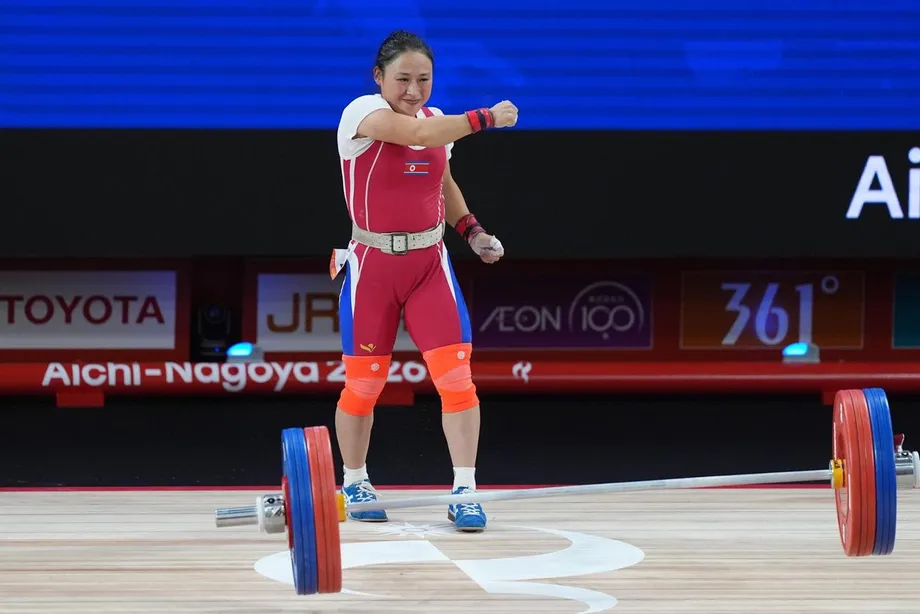
Kim Kyong Yong of Naegohyang Women's FC won the AFC Women's Player of the Year award on her first nomination. She became only the second North Korean player to receive it, following Ri Kum Suk, who won in 2017.
Kim's season included strong performances for both her club and national team. She scored four goals and made two assists at the Asian Cup in Australia. During Naegohyang's run to the Asian Women's Champions League title, she scored in each of the team's final four matches.
Kim thanked the people around her after receiving the award, naming her teammates, coaches, family and country. She said her next aim was to keep working for greater success and bring honour to her country and Asia.
Now that I have got this award, my dream has come true. I want to thank everyone around me, my teammates, my coaches, my family and my country. I will try harder and harder to get greater success so that I can bring honour to my country and glory to Asia.
North Korea also claimed the women's youth award through Yu Jong Hyang, a forward for 4.25 SC. Winning both women's player awards gave the country two of the night's individual honours and drew attention to the results of its club and national teams.
Coaches and futsal players share the spotlight
Go Kuroda won the men's Coach of the Year award after leading Japan's FC Machida Zelvia to the AFC Champions League Elite final. The club lost the final to Saudi Arabia's Al Ahli. Kuroda became the eighth Japanese recipient of the men's coaching prize.
Iranian coach Marziyeh Jafari retained the women's Coach of the Year award, becoming only the second coach to win it in consecutive years. Her work with Bam Khatoon FC and Iran's senior women's team helped secure the honour.
Thailand's Muhammad Osamanmusa won the Futsal Player of the Year award. The Bangkok born national team player, who plays for Spanish club Jimbee Cartagena, became only the second Thai winner. The first was Suphawut Thueanklang in 2013.
Osamanmusa's win was a home success at a ceremony held in Bangkok. The award recognises futsal, a fast paced form of football played indoors by teams of five, including the goalkeeper.
International and youth awards reflect success abroad
South Korea's Lee Kang in won the men's Asian International Player of the Year award for a second consecutive edition, the first player to do so. The award recognises Asian players who have made their mark while playing for clubs outside their home region. Lee was honoured after Paris Saint Germain's Champions League triumph.
Australia's Caitlin Foord won the women's international award after helping Arsenal win the Champions Cup, scoring the winning goal. She became the first player, male or female, to complete a particular three award combination: the AFC women's youth award in 2011, the women's player award in 2016 and the international player award in 2026.
Japan's Ryunosuke Sato received the men's youth player award after a breakthrough 2025/26 season. Yu Jong Hyang took the women's youth prize for North Korea. The awards were announced in Bangkok, but the winners will receive their trophies at a later event. The AFC has not announced a presentation date.
Associations recognised for their work
The ceremony also honoured football associations and organisations. Japan's football association received the Platinum award, Thailand's the Diamond award, India's the Gold award and Bangladesh's the Ruby award in the AFC Member Association of the Year category.
Thailand's federation received the Diamond distinction for a third consecutive year, according to the Thai federation. Its cited work included national teams, clubs and hosting the AFC Under 20 Women's Asian Cup. Federation president Nualphan Lamsam said the recognition reflected the efforts of people across the game, from administrators to players.
It is a great honour for FA Thailand to earn this award once again. It means a great deal to us because it signifies the hard work of everyone involved, from the administration to the players across all age groups.
India's Gold award followed a strong year for its national teams, especially in women's football. Indian representative teams won five regional titles and finished runners up three times. The senior women qualified for the AFC Women's Asian Cup through the qualifying route for the first time, while the under 17 women reached the continental tournament's quarter finals for the first time. The under 20 women qualified for their Asian Cup for the first time in 20 years.
Australia received the Women's Asian Cup Host Appreciation Award for delivering the tournament's 21st edition. The AFC also awarded its Diamond of Asia, its highest individual honour, after the death of Lim Kia Tong, former president of the Football Association of Singapore. Lim became the award's 19th recipient.
Why did the AFF retain its regional award?
The ASEAN Football Federation, or AFF, won Regional Association of the Year for a second consecutive year. It is the second regional body to retain the award, after the Central Asian Football Association won in 2022 and 2023.
The AFC recognised the AFF's administration and its work across competitions and development. Its activities included the ASEAN Hyundai Cup, the growing Shopee Cup club competition, and events for youth, women's and beach soccer. The AFF's award statement credited unity among its members as a source of its progress.
AFF President Major General Khiev Sameth said the federation's collective spirit was central to its success. He had recently been re elected for a third term, covering 2026 to 2030.
The secret behind the AFF's success has always been our unity. Our collective spirit is among the strongest in Asia, and I truly believe that if we continue to stand together like this, we can achieve much more in the future.
Grassroots awards focus on participation
The AFC President's Recognition Awards for Grassroots Football went to Japan at Gold level, Bangladesh at Silver and Myanmar at Bronze. Grassroots football means organised activity for people playing and learning the game at community level, rather than only in professional teams.
Myanmar's 2025/26 programme reached 7,860 children and involved 940 grassroots coaches. The figures show the scale of the work recognised by the Bronze award. Japan and Bangladesh received the two higher distinctions in the category.
The association awards cover a different part of football from the player prizes. They recognise the organisations that run competitions, support teams and create opportunities for people to take part in the sport.
Key dates and what happens next
The awards were previewed before the ceremony, and the event itself took place in Bangkok on November 19. Four individual awards were announced that evening but are due to be presented separately.
- November 16, the AFC published its event guide, listing the ceremony for November 19 at 7 p.m. Bangkok time.
- November 19, the 30th AFC Awards ceremony took place at Aksra Theatre King Power.
- At a later date, Lee Kang in, Caitlin Foord, Ryunosuke Sato and Yu Jong Hyang are due to receive their trophies. No date has been announced.
The winners span elite club football, national teams, futsal and the organisations that support the game. Beiranvand's historic goalkeeper award led the individual honours, while Kim and Yu gave North Korea both women's player prizes and associations across Asia were recognised for their work.
Key Points
- Iran's Alireza Beiranvand became the first goalkeeper to win AFC Player of the Year.
- North Korea's Kim Kyong Yong won Women's Player of the Year on her first nomination, and Yu Jong Hyang took the women's youth award.
- Go Kuroda and Marziyeh Jafari won the men's and women's coaching awards.
- Lee Kang in won the men's international award for a second consecutive year; Caitlin Foord completed a three award combination.
- The AFF retained Regional Association of the Year, while Japan, Thailand, India and Bangladesh received member association honours.
- Four announced winners will receive their trophies at a later event, with no date yet given.