A new option for adults with hard-to-treat lymphoma
Curocell's Rimqarto, South Korea's first domestically developed CAR-T cancer therapy, is expected to enter national health insurance coverage on Dec. 1, lowering the cost barrier for some adults with relapsed or treatment-resistant large B-cell lymphoma. Its one-dose insurance price ceiling is set at 280,016,050 won, or about 280 million won.
Contents
- A new option for adults with hard-to-treat lymphoma
- What does the 280 million won price mean?
- How did Rimqarto reach the coverage decision?
- What do the clinical results show?
- Final reimbursement terms are not yet available
- Manufacturing and hospital coordination matter
- The next step is testing use earlier in treatment
- Key dates
- What to Know
Reports say the eligible group includes adults with relapsed or refractory diffuse large B-cell lymphoma (DLBCL). The finalized official reimbursement notice, including its exact eligibility terms, has not been provided.
Rimqarto, whose generic name is anbalcabtagene autoleucel, is designed for people whose disease has proved difficult to control with earlier treatment. Its coverage follows a series of regulatory and insurance reviews, and Curocell says it is preparing with major hospitals for the planned start date.
What does the 280 million won price mean?
The 280,016,050 won figure is the official ceiling price for one administration of Rimqarto. It is not the amount every patient will necessarily pay out of pocket. Insurance coverage is intended to reduce patients' direct costs, but the exact patient contribution depends on the applicable coverage rules. The finalized official reimbursement notice setting the exact patient-contribution terms has not been provided.
The ceiling is 80,023,309 won, or 22.2 percent, below the published ceiling price of 360,039,359 won for Kymriah, another CAR-T treatment. That comparison concerns the two listed prices. It does not by itself show the difference in what individual patients pay or in the amount ultimately paid by insurance.
CAR-T treatment is made for an individual patient. Doctors collect the person's T cells, a type of immune cell, and have them genetically changed so they can recognize and attack cancer cells. The modified cells are then returned to the patient. Because each dose is manufactured for a particular person, arranging collection, production and delivery is a more complicated process than supplying a standard medicine.
How did Rimqarto reach the coverage decision?
Rimqarto received marketing approval from South Korea's Ministry of Food and Drug Safety on April 29, 2026, becoming the country's 42nd domestically developed new drug. Curocell had applied for product approval in December 2024. The therapy then moved through cancer and drug reimbursement reviews before price negotiations with the National Health Insurance Service were completed.
The Health Insurance Review and Assessment Service recognized reimbursement suitability subject to Curocell accepting its assessed price or a lower one. After the price talks concluded, the case went to the Ministry of Health and Welfare's Health Insurance Policy Deliberation Committee. The agreed ceiling price has now been set, with the company expecting coverage to begin on Dec. 1 after the remaining deliberation and notice procedures.
Rimqarto was included in a government pilot that allows drug approval, reimbursement assessment and price negotiations to proceed in parallel. The approach can bring those stages forward together instead of waiting for each one to finish before beginning the next. The treatment passed a cancer disease review in July, and reimbursement assessment advanced later in the year.
What do the clinical results show?
In the phase 2 part of the CRC01-01 study, the objective response rate was 75.3 percent and the complete response rate was 67.1 percent. The study assessed 73 patients for efficacy. Objective response means the cancer shrank by a defined amount or could no longer be detected by the assessment used. Complete response means no cancer was detected by those measures at that point in the study.
The results appeared in the medical journal Blood in June. Rimqarto targets CD19, a marker found on many B cells, including the cancerous B cells involved in these lymphomas. The treatment is also designed to suppress PD-1 and TIGIT, proteins that can limit immune cell activity.
The study also recorded serious side effects. Grade 3 cytokine release syndrome, a potentially dangerous whole body immune reaction, occurred in 8.9 percent of patients. Grade 3 or higher neurological events were reported in 3.8 percent, and the study reported no grade 4 cytokine release syndrome. Curocell is also expected to present longer follow-up results, with data extending to 44.5 months and a median follow-up of 14.6 months.
Final reimbursement terms are not yet available
The finalized official reimbursement notice, including its exact eligibility criteria, monitoring requirements and patient-contribution terms, has not been provided. Reports say coverage is for adults with relapsed or refractory DLBCL, but do not provide further details on these terms.
For patients, insurance coverage could make a treatment that previously carried a price of hundreds of millions of won more accessible. The benefit applies to the specified adult patient group, but the exact criteria have not been provided.
Manufacturing and hospital coordination matter
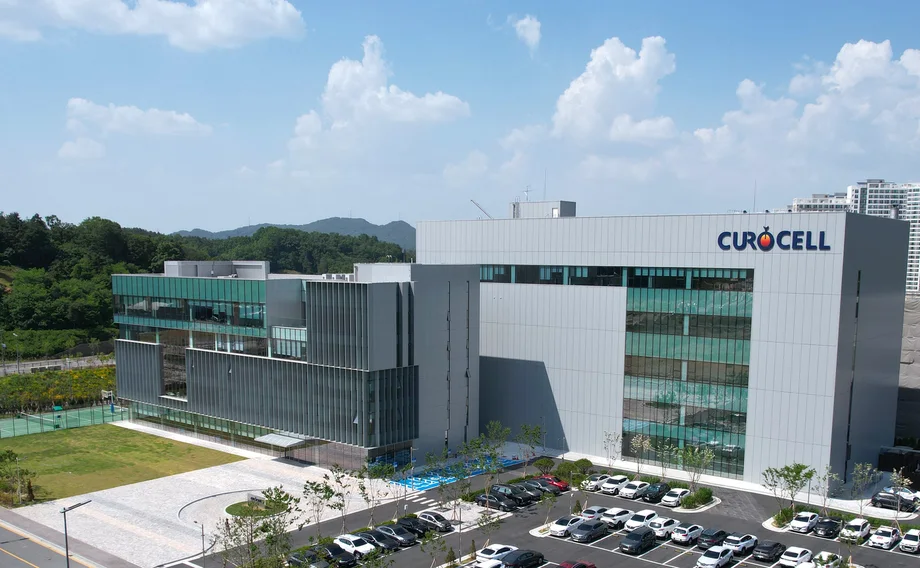
Curocell says it will use its commercial manufacturing facility in South Korea, which operates under good manufacturing practice standards. The company is coordinating with major hospitals, including tertiary hospitals, on the steps needed to collect each patient's cells, manufacture the product and arrange its return for treatment.
The timing matters because a patient's cells must be handled as an individual treatment. Curocell plans to manage schedules across collection, manufacturing, transport and infusion to limit delays. The company says its domestic production system could make it easier for hospitals without their own cell processing facilities to take part, and could reduce the need for some patients outside Seoul to travel to a small number of large centers.
That will depend on the hospitals and supply arrangements available in practice. Curocell has said it is preparing with medical institutions ahead of the planned insurance start, but has not announced how many centers will initially administer the treatment. A subsequent announcement from Curocell or a hospital could clarify how the rollout will begin.
The next step is testing use earlier in treatment
Curocell is seeking to expand Rimqarto's use to a second-line treatment setting. In October, it applied to amend the clinical trial plan for a phase 3 study involving patients with relapsed or treatment-resistant large B-cell lymphoma. The company aims to begin that trial in the first half of 2027.
A second-line use would mean treatment after one earlier line of therapy. The planned study will test whether the therapy can be used earlier in the treatment sequence; that broader use would require further clinical and regulatory steps.
Key dates
- December 2024: Curocell applied for marketing approval.
- April 29, 2026: Rimqarto received approval from the Ministry of Food and Drug Safety.
- July 2026: The treatment passed a cancer disease review.
- Later in 2026: Reimbursement assessment advanced and price negotiations with the National Health Insurance Service were completed.
- December 1, 2026: The company expects national insurance coverage to begin.
- First half of 2027: Curocell aims to start a phase 3 trial for possible second-line use.
What to Know
- Rimqarto is South Korea's first domestically developed CAR-T treatment.
- The one-dose insurance price ceiling is 280,016,050 won, 22.2 percent below Kymriah's published ceiling price.
- Coverage is planned from Dec. 1 for adults with relapsed or refractory DLBCL; the finalized notice's exact eligibility terms have not been provided.
- Phase 2 results showed a 75.3 percent objective response rate and a 67.1 percent complete response rate among 73 patients assessed for efficacy.
- Curocell plans to start a phase 3 trial for possible second-line use in the first half of 2027.