Strong survival rates, too few donated organs
South Korea recorded 3,096 deaths among people waiting for organ transplants in 2024, an average of about 8.5 a day. Researchers are now turning to a national registry of 26,571 transplant patients to help doctors decide which donated organs to use, who could benefit most and how to keep recipients healthier after surgery.
Contents
- Strong survival rates, too few donated organs
- The waiting list is growing as donations fall
- What 12 years of tracking patients can reveal
- How kidney data changed allocation rules
- Older patients and hepatitis B require closer assessment
- Living donors need care after surgery too
- AI plans focus on rejection and daily health
- Donation law and public acceptance take time
- Key dates in the registry and the shortage
- The Bottom Line
The effort brings together the National Institute of Health and the Korean Organ Transplantation Registry, known as KOTRY. Since 2014, the registry has gathered information from 88 transplant centers, building evidence that has already changed national kidney allocation rules and supported a proposed revision to lung transplant priorities.
South Korea's transplant outcomes are strong. Researchers presenting the work cited survival rates at 10 years of 91% after kidney transplantation and 80% after liver transplantation. They also described the country's transplant surgery volume as the highest in Asia and sixth worldwide. Yet those achievements sit alongside a shrinking supply of organs from deceased donors.
National Institute of Health figures put the number of donors declared brain dead at 370 in 2025, down from 478 in 2020. That is a decline of about 23%. An aging population is increasing demand while fewer donated organs become available.
Kim Myung-soo, a professor of transplantation surgery at Yonsei University College of Medicine, explained the immediate challenge at a joint briefing at Severance Hospital's Yu Il-han Hall in Seoul.
In the end, we have to think about how to use the limited resources we have as effectively and safely as possible.
KOTRY's approach is to make each donation count through better matching, more precise assessment of organs and closer care for both recipients and living donors.
The waiting list is growing as donations fall
South Korea had 39,261 people waiting for transplants in 2021 and 46,550 in 2025, an increase of 7,289, or about 19%. During the same period, the number of donors declared brain dead fell from 442 to 370, a decline of about 16%.
The waiting list reached 48,456 in August 2026. These figures describe two pressures moving in opposite directions: more people need an organ, while fewer deceased donors are available to provide one.
Family agreement is another concern. Briefing coverage included a donation consent rate of 31.2%, while a presentation comparing years gave 28.2% for 2025, down from 36.7% in 2021. The measurement period behind the 31.2% figure was not specified.
Researchers also cited roughly eight donors declared brain dead per million people in South Korea, compared with donor rates of around 40 per million in the United States and Spain. Donation after circulatory death contributes substantially to the donor totals in those two countries, making the routes through which organs become available an important part of that comparison.
What 12 years of tracking patients can reveal
KOTRY follows people over time rather than recording only what happens during surgery. This type of study, called a cohort, allows researchers to examine survival, transplanted organ function and complications months or years later.
The registry covers five organs: 15,167 kidney recipients, 9,058 liver recipients, 1,349 heart recipients, 670 lung recipients and 327 pancreas recipients. Kidney and liver recipients together account for about 91% of its 26,571 registered patients.
Researchers have produced 94 academic papers using the data. The program has also generated genomic information from 9,189 patients and donors. Genomic information describes a person's genetic makeup and can help researchers investigate why patients respond differently to treatment.
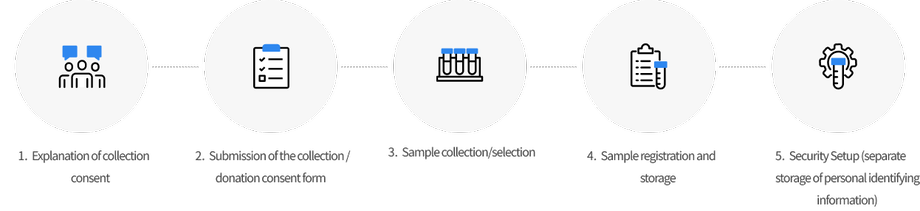
The program described tracking more than 15,000 blood and tissue specimens and also reported an archive of about 370,000 biological samples, including blood and DNA. The figures refer to differently described collections; a breakdown connecting the two totals was not given.
Clinical records and biological samples serve different purposes. Records show what happened to a patient, including treatment and complications. Blood, tissue and DNA can help researchers investigate biological reasons for those outcomes. Bringing them together gives doctors a stronger basis for decisions tailored to Korean patients.
How kidney data changed allocation rules
KOTRY's clearest policy result is the Korean Kidney Donor Profile Index, or K-KDPI. The tool assesses kidneys from Korean donors declared brain dead, helping doctors judge the likely performance of an organ rather than relying mainly on standards developed in other populations.
The national allocation system incorporated K-KDPI in 2021. The National Organ, Tissue and Blood Management Institute, known as KONOS, adopted a threshold of 70% or above on the index to classify kidneys under expanded donor criteria. Such a classification identifies organs that require a more careful assessment of their suitability for a particular recipient.
Domestic patient data helped explain why an organ considered less desirable could still be useful. For some recipients aged 40 or older who did not have diabetes, receiving a kidney assessed as having lower quality was associated with better survival than continuing to wait.
Dialysis, which removes waste and extra fluid from the blood when the kidneys cannot do so, keeps many patients alive while they await transplantation. Waiting nevertheless carries health risks. The decision facing a patient can therefore be whether to accept an available kidney or continue dialysis for an uncertain period.
KOTRY also developed K-EPTS, an indicator intended to predict a kidney recipient's expected survival after transplantation. Together, donor and recipient assessments can help doctors consider both the organ's likely function and the patient's likely benefit.
Older patients and hepatitis B require closer assessment
KOTRY's research extends to organs and patients that transplant teams have traditionally approached with greater caution. Its findings support more detailed assessment of donors aged 65 or older and donors carrying hepatitis B, with decisions shaped by the recipient's condition.
A study of 20 people who received livers from donors positive for hepatitis B surface antigen found no statistically significant difference in patient survival or transplanted liver survival compared with recipients of livers from donors testing negative. Surface antigen is a marker used to identify current hepatitis B infection.
The study involved a small group, making its size an important part of understanding the finding. For transplant teams, it adds evidence to decisions involving a virus that can damage the liver and requires careful management.
Heart transplant research addressed a different question: how to assess older recipients. An analysis of 628 heart recipients found that patients aged 65 or older who could walk at the time of transplantation had survival outcomes that were not significantly different from those of younger patients.
Walking ability gives doctors information about physical function alongside age. The finding supports examining a patient's condition in detail when considering transplantation.
KOTRY has also submitted a proposal to revise lung transplant urgency criteria. Those criteria help determine which patients should receive priority when a lung becomes available. The kidney assessment tool is already part of national policy; the lung proposal has been submitted to the government, with no adoption date announced.
Living donors need care after surgery too
South Korea's shortage of deceased donors makes living donation an important part of transplant care. Family members and other living people can donate a kidney or part of a liver, creating a responsibility to protect someone who undergoes surgery to help another person.
A KOTRY analysis of 5,490 living kidney donors found that people with high blood pressure before donation faced a higher risk of developing proteinuria afterward than donors with normal blood pressure. Proteinuria means protein is present in the urine and can be a sign of kidney damage.
The finding supports both careful assessment before donation and continued health checks afterward. For a living donor, the research has a practical purpose: identifying who may need closer monitoring once the operation is over.
Yang Jae-seok, a professor of nephrology at Yonsei University College of Medicine and a KOTRY research leader, described the registry's broader role at the briefing.
A cohort is less a project that produces eye-catching achievements than social infrastructure that supports other research and policies.
AI plans focus on rejection and daily health
KOTRY and the National Institute of Health plan to combine existing clinical records with genomic information, medical images and digital pathology. Digital pathology turns tissue slides into images that can be examined and analyzed by computer.
The planned work will also connect registry records with National Health Insurance Service data, Health Insurance Review and Assessment Service records, Statistics Korea mortality statistics and cancer registration data. These connections are intended to reduce gaps in tracking patients after transplantation.
Artificial intelligence models would use the combined information to predict rejection and other complications. Rejection occurs when a recipient's immune system attacks the transplanted organ. Patients take medicines that suppress that response, and the team hopes to develop models that can help tailor treatment to each person.
Medication decisions involve a balance. Doctors must control the immune response while managing treatment risks, including infection. Better prediction could help identify patients who need closer observation or a change in treatment.
The next phase also plans to collect information directly from patients about quality of life, fatigue and the burden of taking medication. These measures would add a view of everyday health to laboratory results, hospital records and survival figures.
The AI work remains a development plan. Its stated goals are prediction and more personalized care, and the briefing did not announce a date when a finished model would become part of routine treatment.
Donation law and public acceptance take time
Donation after circulatory death, known as DCD, is another proposed way to expand the supply of organs. It allows donation after death has been determined through the permanent stopping of circulation, under a defined medical and legal process. South Korea's current debate concerns adding this route alongside donation after brain death.
Bills to introduce DCD have been proposed repeatedly since 2023 but have lapsed for reasons including the end of legislative terms. Researchers said creating a workable system and gaining public acceptance would take time even after legislation.
Kim Myung-soo described that challenge at the briefing.
It is true that DCD accounts for a substantial portion of all donors in countries such as the United States and Spain, but establishing the system and gaining public acceptance inevitably takes a long time.
The research program and donation reform address different parts of the shortage. A new donation route could increase the number of organs available. Registry research can help doctors use available organs more effectively and protect patients after transplantation. For people already waiting, both the number of donations and the decisions made about each organ matter.
Key dates in the registry and the shortage
KOTRY's development stretches across more than a decade. Its main policy changes and the donation figures show how research has advanced while pressure on the waiting list has increased.
- 2014: KOTRY began collecting national transplant cohort data with support from the National Institute of Health.
- 2021: K-KDPI entered national kidney allocation policy. The transplant waiting list stood at 39,261, and 442 people donated organs after brain death.
- Since 2023: Bills proposing donation after circulatory death have repeatedly been introduced and lapsed.
- 2024: A total of 3,096 people died while waiting for transplantation.
- 2025: The waiting list reached 46,550, while donors declared brain dead numbered 370.
- August 2026: The waiting list stood at 48,456.
The next research phase will link more national datasets, digitize imaging and pathology information, and collect patients' accounts of their health. Its practical test will be whether those tools improve allocation decisions and care for recipients and living donors.
The Bottom Line
- South Korea recorded 3,096 deaths among people waiting for transplants in 2024, about 8.5 a day.
- KOTRY holds records for 26,571 transplant patients across 88 centers and five organ groups.
- The Korean kidney donor assessment index has informed national allocation policy since 2021.
- Studies support more detailed assessment of older recipients, selected donor organs and risks to living donors.
- Planned AI research will combine clinical, genetic, imaging and public health records to predict complications and guide care.
- Donor shortages persist, while proposals for donation after circulatory death still require legislative action and preparation.