Why similar factory utilization produced sharply different profits
Samsung Electro-Mechanics earned 369.4 billion won from its semiconductor package substrate business in the first nine months of 2026, about 2.7 times LG Innotek's 135.7 billion won. Yet both companies were running their substrate production lines near full capacity: Samsung at an average 90% utilization rate and LG Innotek at 94.4%, according to their third quarter filings.
Contents
- Why similar factory utilization produced sharply different profits
- What do the two companies make?
- How did the substrate businesses compare with the companies as a whole?
- Why are AI substrates attracting investment?
- Samsung is tying expansion to major customer demand
- LG Innotek is building capacity while moving into new markets
- What the profit gap says about the companies' strategies
- Key dates in the expansion race
- What to Know
The difference is less about how hard the factories were working than about what they were making. Samsung has a larger share of high priced substrates for artificial intelligence (AI) servers and computing systems. LG Innotek still relies more heavily on substrates used in smartphones and personal computers, while it works to expand into server and AI accelerator products.
Both companies' utilization rates rose sharply from a year earlier. Samsung's rate increased by 18 percentage points from 72%, and LG Innotek's climbed 17.7 points from 76.7%. The profit gap shows why factory utilization alone cannot reveal how much money a business is earning: product prices, manufacturing costs and the mix of customers matter too.
What do the two companies make?
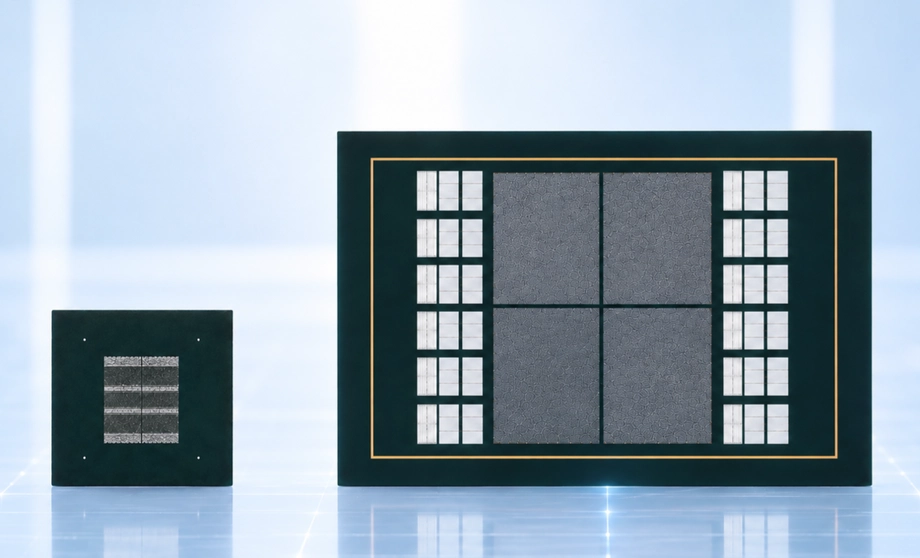
A package substrate is a thin, complex circuit board that sits between a semiconductor chip and the larger board inside a computer or server. It carries electrical signals and power between them. More powerful chips need more connections, and often a larger substrate with many layers of tiny circuits. Those requirements make advanced substrates difficult to manufacture and can raise their selling price.
Samsung's key growth product is FC-BGA, short for flip chip ball grid array. It is used with server central processing units (CPUs), AI accelerators and network equipment. AI accelerators perform the calculations used to train and run AI systems. The network equipment helps large numbers of chips communicate inside data centers.
LG Innotek's established strengths include RF-SiP, a package used for radio frequency communications, and FC-CSP, a compact package used in mobile processors and other chips. The company is also supplying FC-BGA for PC CPUs and is working to move into server and AI accelerator markets.
The product mix showed up in third quarter sales. Samsung's substrate revenue reached 939 billion won, up 58% from a year earlier. LG Innotek's package solutions division recorded 481.8 billion won, up 10.1%. Samsung's faster growth came alongside its stronger sales of higher value server and AI products.
How did the substrate businesses compare with the companies as a whole?
Samsung Electro-Mechanics reported third quarter revenue of 3.7633 trillion won and operating profit of 691 billion won, both company records for a quarter. Substrates made up about one quarter of its revenue. AI related demand for both substrates and multilayer ceramic capacitors, or MLCCs, helped lift the company result.
LG Innotek had higher total revenue, at 6.3671 trillion won, but its operating profit fell 53.4% to 94.8 billion won. Its package solutions division brought in 1.4174 trillion won in revenue during the first nine months and earned 135.7 billion won. That was already more than its full year 2025 operating profit of 128.9 billion won. The division's 9.6% operating margin was the highest among LG Innotek's business divisions, even as its revenue accounted for only about 8% of company sales in the period.
LG Innotek said currency movements weighed on its third quarter result. It bought materials when the won was weaker and shipped products after the exchange rate fell, creating foreign exchange losses. Its large camera module business also ties company sales closely to smartphone launches and one major customer, understood to be Apple. That customer's share of LG Innotek revenue was reported at 80.4%.
The contrast is therefore about more than a single product. Samsung's substrate business is a larger part of its company and is gaining from AI infrastructure spending. LG Innotek's substrate business is growing quickly, but its wider company earnings remain strongly affected by its smartphone camera business and currency changes.
Why are AI substrates attracting investment?
AI data centers need many powerful processors working together, and each processor needs a suitable package substrate. The market for package substrates is projected by research firm Prismark to grow from $19.2 billion in 2026 to $29.61 billion in 2030. The larger, more complex products used for AI systems are a central part of the industry push to expand capacity.
Manufacturers in Japan and Taiwan, including Ibiden, Shinko Electric and Unimicron, are established competitors in high performance FC-BGA. Samsung and LG Innotek are investing to win more business in a market where customers need reliable supplies of components that can take time to manufacture.
Shortages also affect other parts of the supply chain. Samsung Electro-Mechanics' MLCC production lines have been running at full capacity since the third quarter. MLCCs help keep voltage steady in electronic circuits, a key task in high power computing systems. TrendForce estimated delivery lead times for MLCCs at 40 weeks, compared with a usual 12 weeks.
Samsung's average selling price for semiconductor package substrates in the first nine months was 28.1% higher than the 2025 annual average; the comparable increase for MLCCs was 21.4%. The company also reported that customer advance payments under long term supply agreements reached $777 million at the end of the third quarter, up 43.9% in three months. Such payments can help fund capacity built to meet customer orders.
Samsung is tying expansion to major customer demand
Samsung Electro-Mechanics plans to spend 6.8 trillion won to expand AI substrate production in Sejong, Busan and Vietnam. Its broader plan calls for production to begin in stages from 2027, with revenue from the new capacity expected from 2028. The company said in its third quarter earnings call that demand remains ahead of what its planned expansion can supply.
Samsung and Nvidia announced a strategic partnership in October to develop dedicated AI substrate production capacity at the Sejong and Busan sites. The companies have since expanded their cooperation, and Nvidia is considering further financial support for the production infrastructure. Samsung's aim for a full scale mass production system tied to this capacity is 2029.
The partnership now also covers MLCCs, extending beyond substrates. Nvidia executive Colette Kress said during the company's Nov. 17 earnings call:
We have signed new agreements related to package substrates with Samsung Electro-Mechanics and others.
Nvidia Senior Vice President of Operations Deborah Shawquist said the cooperation builds on the existing substrate supply partnership and supports production expansion for Nvidia's accelerated computing platforms. Samsung President Jang Deok-hyun said the company would combine its substrate and MLCC capabilities to help Nvidia supply AI platforms. The companies have not disclosed the amount of any additional Nvidia funding or the exact production volumes for each site.
The partnership follows Samsung and Nvidia's October plan for dedicated AI substrate lines in South Korea. The earlier announcement set out a multi year supply arrangement and expansion at Sejong and Busan.
LG Innotek is building capacity while moving into new markets
LG Innotek is expanding its Haiphong factory in Vietnam, with completion targeted for May 2027. The first phase, valued at about 1 trillion won in the company plan, is for RF-SiP and FC-CSP production. Those are products the company already makes for communications and mobile devices. The facility is intended to work alongside its production hub in Gumi, South Korea.
The company's investment in its package solutions business reached 962 billion won by the end of September, compared with 336 billion won at the end of June. It has also announced a 600 billion won investment plan for its Gumi site. Further spending may be needed if it expands FC-BGA production on a larger scale.
LG Innotek has started supplying FC-BGA to a global CPU maker and is working to broaden sales beyond PC processors. Its stated plan is to enter the server and network switch market before moving toward high end AI accelerator substrates by 2028. The company is also discussing long term supply agreements with large global customers.
LG Innotek Package Solution chief Cho Ji-tae said in June that existing capacity could not meet demand. The company's longer range target is to generate more than 3 trillion won in package solutions revenue and 1 trillion won in operating profit by 2031. Its 2030 product goals have been described as 2 trillion won in FC-BGA revenue and 2 trillion won from existing substrate products.
What the profit gap says about the companies' strategies
Samsung's advantage today comes from a greater exposure to high priced AI and server substrates, as well as its larger substrate business. It is also using customer agreements and possible customer funding to support new factories. That approach links investment to a clear source of demand, though new production capacity takes time to build and qualify.
LG Innotek is starting from a different position. Its substrate business is already profitable and has exceeded its prior full year profit, but its product mix still includes substantial smartphone related demand. Moving from PC CPU substrates into server and AI products could improve its mix, but the transition depends on securing customers, completing new capacity and meeting demanding manufacturing requirements.
The two companies' utilization figures also point to a shared limit: existing lines have little spare room to absorb a rapid increase in orders. LG's higher utilization has not translated into higher profit than Samsung's, because a factory's output value depends on the products it makes, not simply the percentage of time it runs.
For customers, additional factories could mean more sources of advanced substrates as AI computing expands. For the manufacturers, the challenge is to turn large investment plans into products that meet customer specifications and generate returns. The specific funding amounts for some customer backed expansions, final output volumes and the pace of LG Innotek's future FC-BGA capacity have not been announced.
Key dates in the expansion race
June 2026: LG Innotek began the first phase of its Haiphong expansion and set a May 2027 completion target.
Oct. 21, 2026: Samsung Electro-Mechanics and Nvidia announced plans for dedicated AI substrate capacity at Sejong and Busan.
Nov. 17, 2026: Nvidia's Colette Kress said the company had signed new package substrate agreements with Samsung Electro-Mechanics and other suppliers.
2027 to 2029: Samsung's broader capacity is planned to enter production in stages, while full scale production for its dedicated system is targeted from 2029.
By 2028: LG Innotek aims to move into high end FC-BGA products for AI accelerators and servers.
What to Know
Samsung Electro-Mechanics earned 369.4 billion won in substrate operating profit through September, about 2.7 times LG Innotek's 135.7 billion won.
Production line utilization was 90% at Samsung and 94.4% at LG Innotek, as both companies faced strong demand.
Samsung has greater exposure to higher priced AI and server FC-BGA products; LG Innotek is expanding from mobile and PC substrates toward server and AI markets.
Samsung plans 6.8 trillion won in broader capacity expansion and is working with Nvidia on dedicated production in Sejong and Busan.
LG Innotek is expanding its Vietnam and Gumi capacity and aims to grow package solutions into a major profit source by 2031.