A final decided before play began
Pakistan were declared champions of the Men's Blind T20 Asia Cup in Dhaka on Friday, November 20, 2026, after rain prevented a single ball from being bowled in the final against India. India's team boycotted the trophy presentation, disputing the match referee's decision to award Pakistan the title on the basis of its stronger record in the league stage.
Contents
- A final decided before play began
- What did the league table show?
- Why did India challenge the decision?
- Technical committee backed joint champions, member says
- Leadership overlap adds to India's concerns
- India stayed away from the trophy ceremony
- How the final unfolded across two days
- The tournament also showed the sport's reach
- Key Points
The match was scheduled to start at 11:30 a.m. at Anvir Cricket Stadium in ABG Sports City. India's team manager, Dhiraj Sequeira, said rain had fallen since the previous day and the match was abandoned at 4:15 p.m. The teams did not take the field for a toss, which would normally decide who bats first.
The disagreement is about how to decide a final that never started. Pakistan had finished first in the league standings, while India argued that the tournament rules did not clearly say that those standings should decide an abandoned final. The World Blind Cricket Council's technical committee initially supported declaring both sides champions, according to committee member Rajanish Henry, but Pakistan were ultimately named sole winners.
What did the league table show?
Pakistan won all three of its league matches, beating Sri Lanka, Bangladesh and India, and finished with six points. India had four points from two wins and one loss. Bangladesh finished third with two points, while Sri Lanka ended without a point. The four teams were Bangladesh, India, Pakistan and Sri Lanka, and this was the tournament's second edition and first held in Bangladesh.
Pakistan had also beaten India in their league meeting, a close match that India's manager said was decided on the final ball. The final ruling relied on Pakistan's position at the top of the table and its superior net run rate. Net run rate is a way of comparing teams' scoring and runs conceded across earlier matches. It is often used to separate teams level on points. The decision also took account of the head-to-head result, according to an account of the ruling.
Those numbers gave Pakistan the stronger tournament record. India's objection was that a league table tie breaker should not automatically settle a final that had no play, especially if the playing conditions did not specify that outcome.
Why did India challenge the decision?
The Cricket Association for the Blind in India, or CABI, said net run rate applies to qualifying rounds and certain stages of a competition, but cannot simply be carried over to determine the winner of a final that did not begin. CABI argued that the regulations should set out whether an abandoned final is replayed on a reserve day, shared, or decided through another authorised method.
Sequeira said the net run rate clause had not appeared in the playing conditions given to India and was not discussed at a meeting between the match referee and team captains before the tournament. He said the rules referred to net run rate in the event of a tied match after a Super Over, a short extra contest used to break a tie, rather than a final abandoned before play.
The CABI argument also rests on Section 27 of the tournament's technical regulations. The association said that section deals with a tied final, with both of its sentences referring to that situation. CABI's position is that a tied match and a match abandoned before the toss are different cases, and that the regulations did not clearly provide a winner for the latter.
Sequeira said India appealed the match referee's decision to the technical committee, but the appeal was rejected. He said the captains had not been told that league net run rate would determine the abandoned final.
The India team manager described the absence of clear notice as unfair. Sequeira said the teams should have played on a reserve day or shared the title, and argued that the rule had not been communicated before the final.
This rule was never mentioned to us in the playing conditions provided to us, or mentioned in the meetings of the match referee with the captains a day before the tournament began.
Technical committee backed joint champions, member says
Rajanish Henry, WBCC secretary general and a member of the technical committee, said the panel first favoured naming India and Pakistan joint champions. He said he and the committee's Australian global director supported that option, and the Pakistani technical director later agreed. Henry said the decision was subsequently changed and the match referee declared Pakistan the winner, citing uncertainty in the playing conditions.
Henry said the committee had no reserve day to use and that the rules did not clearly state what to do when a final was abandoned without a toss. In his view, sharing the title was the most suitable solution under those circumstances.
Henry said CABI had threatened to cut its ties with the world body. He warned that disputes over decisions could damage efforts to grow blind cricket internationally, a sport in which players use a ball that makes a sound to help them locate it.
CABI general secretary Shailendra Yadav condemned the final decision. Yadav said the association believed the technical committee's position had been disregarded.
I am deeply disappointed and strongly condemn the manner in which Pakistan has declared itself the winner of the Blind Cricket Asia Cup final without a single ball being bowled.
Leadership overlap adds to India's concerns
The dispute has also raised a conflict of interest allegation from India. Syed Sultan Shah is chairman of the Pakistan Blind Cricket Council and heads the World Blind Cricket Council, the body that oversees blind cricket internationally. CABI has alleged that Shah overruled the technical committee's initial recommendation to declare both teams joint champions.
That allegation is central to India's doubts about the process, but the accounts of the dispute do not provide an independent finding that Shah intervened. Henry described how the committee's view changed and said the match referee made the final call because the playing conditions were unclear. Pakistan's role as a leading team and the overlapping leadership positions have made trust in the decision a key issue for CABI.
The match referee, identified as Tamim of Bangladesh, declared Pakistan champions. CABI said the association rejected that outcome and that its appeal was unsuccessful. The dispute therefore involves two related questions: what the rules said, and how the decision was reached after the technical committee discussed a shared title.
India stayed away from the trophy ceremony
India's players did not attend the presentation after consulting CABI. Pakistan received the trophy at the closing ceremony, where Rangpur Riders director Shezaad Akbar Sobhan presented it. Bangladesh Cricket Board director SM Abdullah Al Fuad attended as chief guest, while Henry and Bangladesh Blind Cricket Council international director Moin Iqbal were among the special guests.
Pakistan High Commissioner to Bangladesh Imran Haider congratulated the team and praised the players' skill and courage. He also said he hoped more tournaments would be held. India's boycott meant that the ceremony displayed the official result without the runners up present to accept it.
CABI said the ruling had overshadowed the final and that India "deserved justice". Its president, Mahantesh GK, said India's men's and women's blind teams were considering whether to abstain from future global tournaments against Pakistan. That was described as a possibility under consideration, not a final decision.
How the final unfolded across two days
November 19: Sequeira said rain began falling in Dhaka ahead of the final.
November 20, 11:30 a.m.: The India-Pakistan final was scheduled to begin, but no toss took place.
November 20, 4:15 p.m.: The match was abandoned because of rain, according to Sequeira.
After the abandonment: The match referee named Pakistan champions, India appealed and later boycotted the trophy ceremony.
The sequence left the teams with no chance to settle the title through play. Henry said there was no reserve day in the tournament arrangements, while CABI argued that the regulations did not clearly establish the league table as the way to decide the final.
The tournament also showed the sport's reach
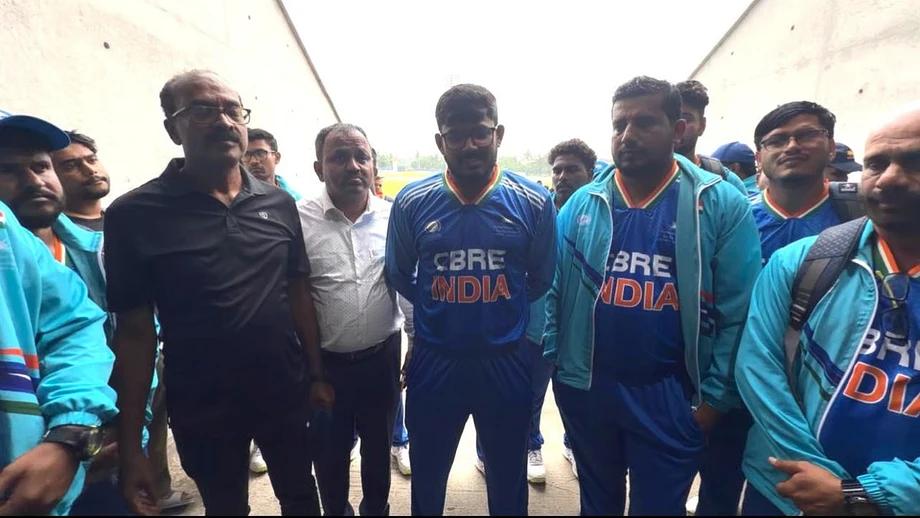
The championship brought together four national teams and offered a stage for players beyond the dispute. Sanjay, a member of India's team, said blind cricket was growing in the country, with around 29 teams and support from the business community.
Sri Lanka captain Dimuthu Perera praised the venue and organisers. He said arranging travel to Bangladesh had been difficult, but his side was glad to take part with a young squad. Sri Lanka finished without a point, while hosts Bangladesh earned two points and India and Pakistan advanced through stronger results.
The final's controversy now puts attention on the need for tournament rules to spell out what happens when rain stops a championship match before it begins. No further ruling, appeal timetable or reserve date was announced in the accounts of the dispute. For now, Pakistan holds the title awarded on its league record, while India and CABI continue to reject the decision.
Key Points
Pakistan were declared 2026 Blind T20 Asia Cup champions after rain washed out the final against India without a toss or a ball bowled.
Pakistan topped the league table with six points from three wins; India finished second with four points.
India challenged the use of league net run rate and said the playing conditions did not clearly cover an abandoned final.
WBCC secretary general Rajanish Henry said the technical committee initially supported joint champions, but Pakistan were ultimately awarded the title.
India boycotted the presentation, and CABI said its teams were considering whether to avoid future global tournaments against Pakistan.