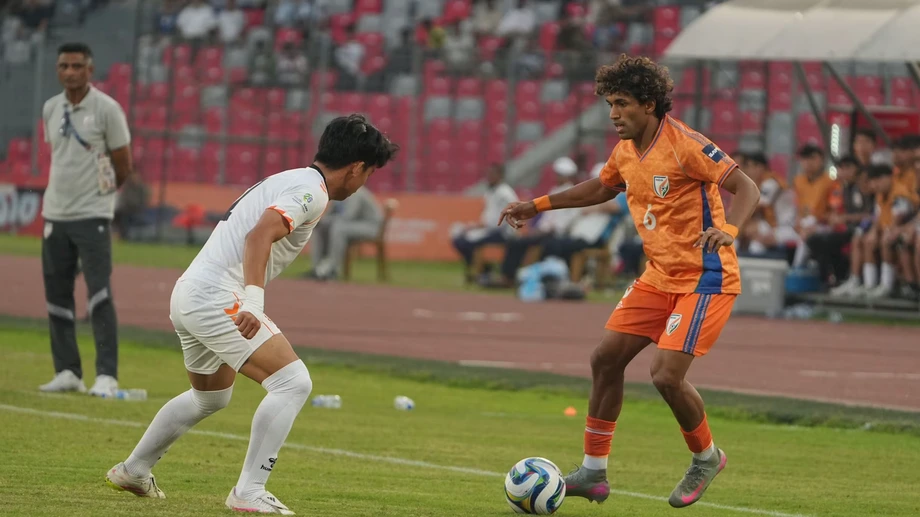
Match Overview: India Rallies from Deficit to Win 10th Title
India defeated Pakistan 2-1 in the SAFF Championship 2026 final at the National Stadium in Dhaka, Bangladesh, on Tuesday, November 17, 2026. The victory secured India's record-extending 10th SAFF Championship title and completed a historic three-peat, as the Blue Tigers had previously won in 2021 and 2023. Pakistan, making their first-ever appearance in a SAFF Championship final, took an early lead through Alamgir Ghazi's goal in first-half stoppage time.
Contents
- Match Overview: India Rallies from Deficit to Win 10th Title
- India's Path to the Final: Second-String Squad Shines
- Pakistan's Historic Journey to Their First SAFF Final
- Goal-by-Goal: The Final's Key Moments
- Head-to-Head: India Dominates Pakistan in Football Rivalry
- Awards and Individual Performances
- Tournament Context: SAFF Championship History
- What the Victory Means for Indian Football
- Key Points
India came back through Suhail Ahmad Bhat's equaliser in the 60th minute, capitalising on Pakistan's numerical advantage after Junaid Shah received a straight red card. Sandip Mandi's header in the 88th minute sealed the win.
India, defending champions, had topped Group B with wins over Pakistan and Maldives, before edging Bhutan 2-1 in the semi-finals. Pakistan finished second in their group and eliminated hosts Bangladesh 1-0 in the last four, with Abdul Samad Arshad scoring the decisive goal. From the opening whistle, Pakistan pressed forward, looking to exploit India's rotational changes. Naushad Moosa guided a developmental squad through the Dhaka showpiece, with the majority of India's first-team players, under head coach Khalid Jamil, away in New Zealand for international friendlies during the same window.
India's Path to the Final: Second-String Squad Shines
India reached the final with a second-string squad under the guidance of Naushad Moosa, while the majority of the first-team players were away in New Zealand playing friendlies under head coach Khalid Jamil. The split setup came about because most of India's senior squad was committed to a training camp in Auckland, leaving Moosa to work with a developmental group. Suresh Singh Wangjam was another notable absentee, having withdrawn from the tournament due to injury.
Despite these challenges, India went undefeated in the group stage, winning both their Group B matches against Pakistan and Maldives, before overcoming Bhutan 2-1 in the semi-finals to book their place in the final. India's group-stage performance was particularly impressive given the circumstances. The Blue Tigers topped Group B with maximum points from two matches, beating Pakistan 3-2 in the tournament opener through a Suhail Ahmad Bhat brace and a Manglenthang Kipgen goal.
Bhat and Pakistan's Najeeb Ullah Khan finished as joint top-scorers with four goals each at the tournament. In the semi-final, Vishnu PV and Chinglensana Singh Konsham scored as India edged Bhutan 2-1 to reach their third consecutive SAFF Championship final. The squad rotation policy meant India lacked some of their usual star power, but the players who came through delivered when it mattered most.
Naushad Moosa's tactical acumen was evident in how he set up the team to be defensively solid while looking for counter-attacking opportunities. The experience of playing together in earlier tournaments, combined with the hunger of the younger players, proved decisive in the semi-final victory over Bhutan. India's journey to the final was not without its testing moments. The team faced a stern test in the group opener against Pakistan, where Bhat's early goals put India in control, but a late Pakistan fightback made the scoreline closer than expected.
The Maldives match saw India grind out a 1-0 victory through a Bhat penalty, with the team managing the game intelligently despite rotation. Each match tested different aspects of the squad, from defensive organization to attacking creativity, and Moosa used the opportunities to blood new talent for future campaigns. The semi-final victory over Bhutan provided the perfect platform for India's final appearance. Coming from behind after Bhutan's early goal, India showed resilience to recover and win 2-1, with goals at crucial moments securing the passage to the championship decider. The win also meant India had now reached the final of three consecutive SAFF Championships, aiming to make it three titles in a row.
Pakistan's Historic Journey to Their First SAFF Final
Pakistan's journey to the SAFF Championship final was a story of resilience and historic firsts. Under former Peru international Nolberto Solano, the Shaheens finished second in Group B after losing to India and beating Maldives 3-0. The team then eliminated hosts Bangladesh 1-0 in the semi-final, with Abdul Samad Arshad scoring the late winner. The victory marked Pakistan's first-ever appearance in a SAFF Championship final, a milestone for a nation that had previously reached the semi-finals on four previous occasions, most recently in 2018.
Pakistan's path was not easy. In the group match against India, the Shaheens led through Alamgir Ghazi's first-half goal before Suhail Bhat's equaliser and a late India surge saw the Blues win 3-2. The 3-0 victory over Maldives showcased Pakistan's attacking potential, with Najeeb Ullah Khan scoring a hat-trick. The semi-final against Bangladesh was a tense affair, with the match level at 0-0 until Arshad's 86th-minute strike sent Pakistan through. The win gave Pakistan their best-ever finish in the tournament, surpassing their previous best of third place from 1997.
The five overseas-based players added to Pakistan's squad before the knockout rounds provided fresh tactical options. One of them, Abdul Samad Arshad, proved decisive with the winner against Bangladesh in the semi-final. The additional experience gave Solano more choices as his team prepared for the biggest match in their history at this level of the competition. Pakistan's head-to-head record against India stood at four wins from 30 meetings, but the final represented a new chapter in their rivalry.
Goal-by-Goal: The Final's Key Moments
The SAFF Championship 2026 final produced a dramatic turnaround that will be remembered as one of the competition's most exciting deciders. Pakistan struck first through Alamgir Ghazi's powerful curled effort in first-half stoppage time, leaving the nine-time champions trailing at the break. The goal came after a sustained period of Pakistan pressure, with India's defence looking organized but eventually succumbing to the Shaheens' attacking prowess.
India's response after the interval was swift and purposeful. Suhail Ahmad Bhat levelled the score in the 60th minute, capitalising on Pakistan's numerical disadvantage after Junaid Shah's straight red card for a studs-up challenge on Brison Fernandes. The equaliser arrived just eight minutes after the dismissal, as Bhat latched onto a cross from Lhungdim that took a slight deflection, leaving the Pakistan goalkeeper with no chance. The moment shifted the momentum decisively in India's favour.
The decisive moment came in the 88th minute when Sandip Mandi rose highest to meet Abdul Rabeeh's outswinging corner. Mandi directed the ball into the top-right corner, beyond the reach of Yousuf Butt, sending the Indian supporters into raptures. The goal sparked wild celebrations among the Indian players, who surrounded Mandi in a jubilant pile-on. Mandi was subsequently named Player of the Match for his match-winning contribution.
Throughout the match, Pakistan enjoyed greater possession in the first half, creating several chances through their flanks. India, though, grew into the game after the break and looked the more dangerous side with Pakistan reduced to 10 men. The numerical advantage allowed India to press forward with greater intensity, creating numerous opportunities. Bhat's celebration, featuring a 'Siu' gesture reminiscent of Cristiano Ronaldo, epitomized the energy and belief that had surged through the Indian camp.
Pakistan's resistance in the final half-hour tested India's resolve. With 10 men, the Shaheens dropped deeper into their own half, looking to absorb pressure and strike on the counter. Several late India attacks were repelled by a determined Pakistan defence, which blocked shots and cleared crosses with desperation. The cooling breaks, introduced at 28 and 77 minutes, provided brief respites in a high-intensity encounter that kept spectators on the edge of their seats.
Head-to-Head: India Dominates Pakistan in Football Rivalry
India's rivalry with Pakistan on the football field is one of the most storied in South Asian sport. The two neighbours have met 30 times in senior international competitions, with India holding a commanding 17-4-9 advantage in their head-to-head record. Of the 30 meetings, India has won 17 matches, Pakistan has claimed four victories, and nine encounters have ended in draws. The dominance is all the more remarkable given the political tensions that often shadow sporting encounters between the two nations.
Tuesday's final marked the first time India and Pakistan had contested a senior SAFF Championship final, although they have met in two men's age-group finals previously. In 2011, Pakistan won the SAFF Under-16 final 2-1, while India claimed the 2023 Under-19 title with a 3-0 victory. Manglenthang Kipgen, who scored in that 2023 age-group final, is also part of India's current senior squad, providing a connection between the generations.
The group-stage meeting between the two sides in this tournament provided another chapter in the rivalry. India's 3-2 victory on November 5, 2026, saw Suhail Ahmad Bhat score twice and Manglenthang Kipgen add the other goal. Pakistan mounted a late comeback but could not find an equaliser, with Bhat and Pakistan's Najeeb Ullah Khan finishing as joint top-scorers with four goals each at the tournament. The result gave India a psychological edge heading into the final, though the head-to-head record showed the matches have often been closely contested.
Despite India's overall dominance, Pakistan has proven capable of producing winning performances against the Blues. The four Pakistani victories have come in different eras and under different circumstances, showcasing the progress the nation has made in football development. The final represented an opportunity for Pakistan to rewrite some of the narrative, but the historical weight favoured the nine-time champions.
The upcoming final had additional significance as it would extend the head-to-head record. India, seeking a 10th SAFF title, aimed to further cement their rivalry dominance, while Pakistan hoped to add a prestigious first silverware in the competition to their cabinet. The match would also provide new data points in a rivalry that has seen periods of Indian dominance punctuated by occasional Pakistani victories, keeping the competitive balance intriguing for fans across South Asia.
Awards and Individual Performances
The SAFF Championship 2026 final and tournament produced several individual accolades that highlighted standout performances. Suhail Ahmad Bhat was named Most Valuable Player and finished as the top scorer with four goals, including a brace in the group-stage win over Pakistan and the equaliser in the final. Sandip Mandi's 88th-minute header in the final earned him Player of the Match honours, while India's Arsh Anwar Shaikh was recognized as the tournament's best goalkeeper. The Maldives team received the Fair Play award for their sportsmanship throughout the competition.
India's prize money for winning the title was $40,000, while Pakistan received $15,000 for finishing as runners-up. These amounts reflected the tournament's commitment to rewarding participating nations, with the total prize pool distributed among the six competing countries. The financial rewards complemented the prestige of adding another title to India's growing collection and achieving a historic three-peat in the process.
Individual awards extended beyond the final match. Suhail Bhat's four goals at the tournament included two in the opener against Pakistan, one from the penalty spot against Maldives, and the crucial equaliser in the final. His MVP award recognized his overall contribution throughout the competition, while Arsh Anwar Shaikh's goalkeeping performances were instrumental in India's defensive solidity. The fair play acknowledgment for Maldives underscored the importance of sportsmanship in the tournament. The tournament's top-scorer standings featured Suhail Ahmad Bhat at the summit with four goals, followed by Pakistan's Najeeb Ullah Khan also on four.
Tournament Context: SAFF Championship History
The SAFF Championship 2026 final was the culmination of a tournament with a rich history dating back to 1993. The competition, organized by the South Asian Football Federation, has grown into South Asia's premier football tournament, promoting regional development of the game. This 15th edition featured six nations competing in Dhaka, Bangladesh, after the host city was changed from Sri Lanka due to logistical issues. Nepal did not participate due to a FIFA suspension that had not been lifted by the tournament deadline.
India's nine previous titles had come in 1993, 1997, 1999, 2005, 2009, 2011, 2015, 2021 and 2023, establishing them as the most successful nation in the competition's history. Maldives has won the title twice (2008, 2018), while Bangladesh, Afghanistan, and Sri Lanka have each won once. The tournament format has evolved over the years, with changes to group structures, qualifying systems, and participant numbers reflecting the growing interest in football across South Asia.
The sponsorship landscape has also transformed the tournament. Title sponsors have included Ceylon Tobacco Company, Coca-Cola, BEXIMCO, Karbonn, Suzuki, Ooredoo, and most recently Tecno Mobile, whose branding featured on the 2026 edition. Sports marketing company Sportfive has been involved in the tournament since 2025, bringing professional event management to the competition. These partnerships have helped elevate the tournament's profile and improve organizational standards.
The 2026 edition will be remembered for several firsts: Pakistan's maiden final appearance, India's historic three-peat, and the introduction of VAR technology for the first time in SAFF Championship history. The use of video assistant referee technology added another layer of drama to the final, with Junaid Shah's red card resulting from a VAR review. The tournament also saw the highest attendance figures in recent editions, with 69,929 spectators across nine matches, averaging 7,770 per match.
What the Victory Means for Indian Football
The victory carried significant meaning for Indian football beyond the immediate trophy presentation. Completing a three-peat established India as the first nation to achieve three consecutive SAFF Championship titles, a milestone that will be discussed in tournament archives for years to come. The win also extended India's record to 10 championship titles, a lead that seems likely to grow given the relative progress of other nations in the region.
For the developmental squad and coaching staff, the victory validated the philosophy of blooding young talent while maintaining competitive standards. Naushad Moosa's ability to guide a second-string team to a third consecutive title would strengthen his reputation as a tactician capable of maximizing squad resources. The performance also provided valuable match experience for players who may feature more prominently in future national team setups.
The result also had implications for India's FIFA ranking and future tournament seeding. While the points gained from the victory would contribute to the national team's coefficient, the psychological boost from overcoming adversity in the final could translate into improved performances in upcoming international windows. The confidence of playing against top regional opposition and emerging victorious would not be underestimated by the coaching staff.
Key Points
- India defeated Pakistan 2-1 in the SAFF Championship 2026 final at the National Stadium in Dhaka on November 17, 2026.
- Suhail Ahmad Bhat equalised in the 60th minute after Junaid Shah's red card.
- Sandip Mandi's 88th-minute header secured India's record-extending 10th SAFF title.
- India completed a historic three-peat, winning three consecutive SAFF Championship titles.
- Pakistan made their first-ever appearance in a SAFF Championship final.
- India's head-to-head record against Pakistan stands at 17 wins, 4 losses, and 9 draws from 30 meetings.
- Suhail Bhat was named Most Valuable Player and top scorer with four goals at the tournament.
- Sandip Mandi was named Player of the Match in the final.
- Arsh Anwar Shaikh was recognized as the tournament's best goalkeeper.
- India received $40,000 in prize money; Pakistan received $15,000.
- The match was live-streamed on the Veto app and website, with no television broadcast in India.