A province running a growing water deficit
Punjab is losing groundwater faster than nature can replace it, while farms, towns and cities compete for limited supplies. An assessment covering five water years from 2012 to 2017 estimated that groundwater reserves were shrinking by about 5.5 billion cubic metres a year. It also found that Punjab needed an additional 10 billion cubic metres of usable water annually to close the gap between supply and demand and sustain its aquifer, the underground layer of rock and soil that holds water.
Contents
- A province running a growing water deficit
- Why groundwater matters so much
- What the falling water levels mean on the ground
- Solar pumps bring relief and a new pressure
- Climate and changing supplies add uncertainty
- Rules exist, but monitoring remains weak
- Measures that could slow the decline
- The Bottom Line
The figures describe a province that feeds much of Pakistan and relies heavily on water beneath its fields. Yet the assessment's water accounts end in 2017, while the number of pumps and the way farmers power them have since changed. The scale of today's deficit is not known precisely. The central problem is plain: Punjab depends on groundwater to keep crops growing, but withdrawals are putting that supply under pressure.
The United Nations food agency's assessment found demand exceeded supply across sectors, including agriculture and cities. It also described declining river and freshwater resources, gaps in water data, and rising competition among users. In the province, water scarcity is not simply about there being too little rain. It is also about where water goes, how efficiently it is used, and whether withdrawals are tracked and managed.
Why groundwater matters so much
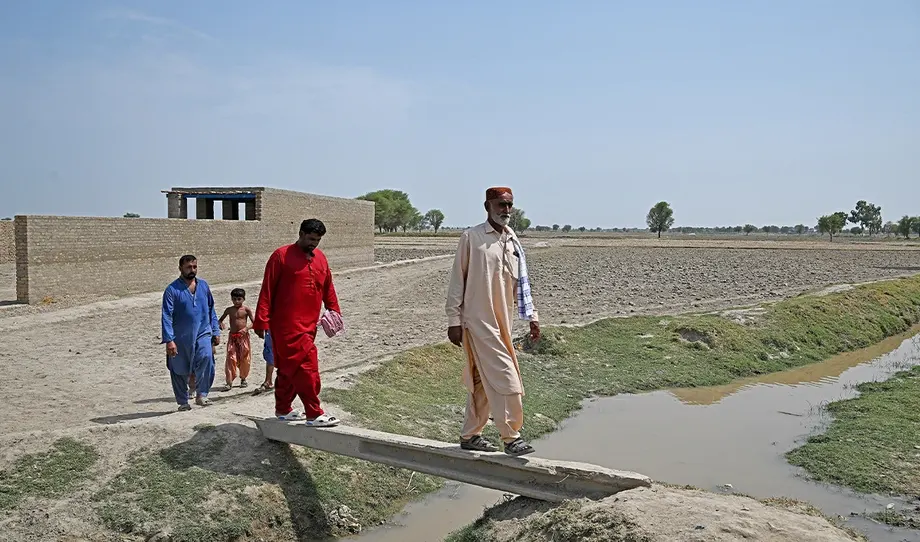
Groundwater is water stored beneath the surface. Farmers pump it through tube wells, while households and businesses also rely on it. In many parts of Punjab, wells provide 80 to 100 percent of the water used for farming. Across Pakistan, groundwater supplies about 90 percent of rural household water needs and more than 70 percent of urban household needs, according to the World Bank study.
Punjab accounts for about 90 percent of Pakistan's groundwater pumping. A policy study estimates that national groundwater abstraction, meaning the water pumped out, is about 65 billion cubic metres a year, compared with recharge of around 55 billion. Those national figures show an annual gap of about 10 billion cubic metres, although the balance varies greatly by place. Punjab's estimated yearly depletion of 5.5 billion cubic metres is a separate provincial figure, based on the 2012 to 2017 water accounts.
Wells became more important as farmers sought a dependable backup when canal water did not arrive. In Punjab, groundwater's share of farm water supplies rose from 8 percent in 1960 to 50 percent in 2010, and it exceeded half by 2020. Some farmers at the ends of canals receive less surface water and must pump more. That can mean higher costs and greater risk for small farms, which may not be able to afford a deeper well as water levels fall.
What the falling water levels mean on the ground
Water authorities' figures show how widespread the change has become. The area of Punjab where groundwater lay deeper than 60 feet reached 7,701 square kilometres in 2024, up from 641 square kilometres in 2004. In Lahore, the reported average depth increased from about 31 feet to 78 feet over those two decades. In Pakpattan, it rose from 29 feet to 73 feet. Groundwater became deeper in 30 of 31 districts between 2014 and 2024.
In Lahore, more than 1,800 tube wells pump about 4.32 million cubic metres of water a day. One study puts the city's water table decline at roughly one metre a year in recent years. Across Punjab, about 15 percent of irrigated areas already face critical declines, according to the policy study. A falling water table means a pump must reach farther down to lift water. That can raise the cost of irrigation and put wells beyond the reach of poorer farmers.
Water quality is another part of the crisis. Salinity, pollution and naturally occurring contaminants can make water unsuitable for drinking or irrigation. The groundwater is relatively good quality across much of Punjab compared with Sindh, but some areas of Punjab have saline water. Poor drainage can also leave salts in the soil and water. More pumping alone cannot solve a shortage if the water drawn up is unsafe or too salty for crops.
Solar pumps bring relief and a new pressure
Solar panels have made it cheaper for many farmers to run tube wells, particularly after electricity prices rose. For a farmer trying to save a crop, sunlight can replace costly grid electricity or diesel and make water available when needed. But a cheaper pump also removes some of the financial limits on how often a farmer can pump.
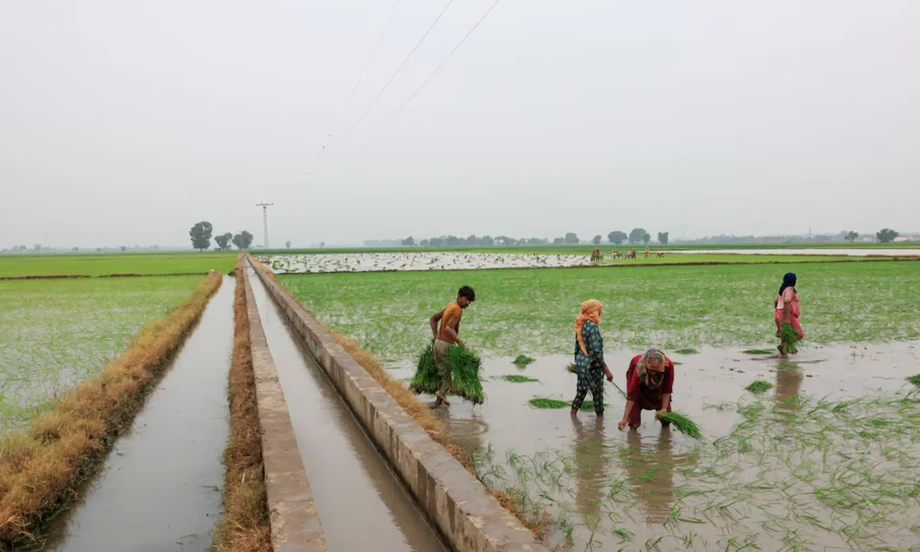
Estimates indicate that solar power now runs roughly 650,000 tube wells across Pakistan, including about 400,000 pumps switched from grid electricity and 250,000 newly acquired since 2023. Farmers interviewed in Punjab described irrigating rice paddies more often, sometimes several times a day. National agricultural land devoted to rice grew by 30 percent between 2023 and 2025, while land planted with less water intensive maize fell by 10 percent.
Those trends do not show exactly how much of the groundwater decline solar pumps caused. Rainfall and floods can replenish groundwater, and water use differs from farm to farm. Punjab's irrigation minister Muhammad Kazim Pirzada described solar power as clean energy while warning that it was also affecting the water table. The practical challenge is to keep the savings solar brings farmers from turning into unlimited pumping.
Climate and changing supplies add uncertainty
Climate change makes planning harder by disrupting rainfall and the timing of water flows. Higher temperatures increase evaporation and crop water needs. Shifts in rainfall, earlier snowmelt, floods and droughts can all affect how much water reaches rivers and seeps back into underground stores.
Punjab's water supply also depends on river and canal flows. The assessment found that river flows had fallen by about 30 billion cubic metres after the 1960 Indus Waters Treaty, and that the province has only 1.7 percent of its area in wetlands. The treaty allocates the waters of the Indus river system between India and Pakistan. India's suspension of its participation in the agreement in 2025 added to Pakistan's concerns about water security. The province still faces a domestic task: making better use of the water it receives and keeping track of what is taken from the ground.
National projections point to rising competition for water. A World Bank study projected agricultural demand increasing from 136.9 billion cubic metres in 2015 to 146.8 billion in 2025, a rise of 7.2 percent. It also projected per person water availability falling from 1,500 cubic metres in 2010 to 1,000 in 2025 and 900 by 2050. Population growth means that the same total supply must serve more people, even before climate effects are counted.
Rules exist, but monitoring remains weak
Pakistan has laws and policy goals for water, but rules are unevenly enforced and groundwater pumping is poorly measured. The National Water Policy of 2018 calls for better groundwater knowledge and management. The Punjab Water Act of 2019 provides a provincial legal framework. A policy study says enforcement is inconsistent and poorly resourced, while responsibility is divided among agencies focused on canals, city supply and the environment.
The scale of pumping makes oversight difficult. Pakistan had more than 1.5 million tube wells by 2024, with 79 percent in Punjab, according to the study. Many are unlicensed and unmetered, meaning authorities do not have a complete count of how much water each well takes. Punjab's monitoring network includes about 3,000 observation bores, but roughly half are nonfunctioning, and the remaining readings can contain errors.
A law can set duties, but it needs working monitoring and clear responsibility to shape what happens in a field. Without reliable measurements, officials cannot readily identify the most depleted areas, compare pumping with recharge or check whether restrictions are working. Farmers, in turn, may be asked to change practices without knowing how much water is available locally or whether their neighbours are pumping freely.
Measures that could slow the decline
The assessment recommends a provincial water commission to review water supplies, demand, policies and institutional responsibilities. It also proposes a coordination cell in the Planning and Development Department. Such bodies can bring agencies together, but their usefulness depends on having reliable data, technical staff and the power to put decisions into practice.
Other measures focus on using less water and replacing some of what is removed. Drip and sprinkler irrigation deliver water in controlled amounts, rather than covering whole fields with flood irrigation. These systems require investment and training, so affordable finance and practical help for farmers matter. Crop incentives could also be adjusted so that water intensive crops such as rice and sugarcane are not encouraged in places where aquifers are already under severe stress.
Recharge projects can help capture water that would otherwise run away. Options include restoring wetlands, building recharge wells and small storage structures, and harvesting rainwater in towns. Treating wastewater for safe reuse could reduce the pressure on freshwater supplies. The policy study also recommends licensing and metering wells, improving water accounting, and setting up a National Groundwater Council.
Canal maintenance is part of the solution too. More dependable deliveries could reduce the need for farmers, especially those at canal ends, to turn to wells. Pricing changes may encourage conservation, but they are more credible when farmers can see that water charges support repairs and reliable supply. The aim is to manage canal water and groundwater together, rather than treating them as unrelated resources.
The Bottom Line
- Punjab's groundwater depletion was estimated at 5.5 billion cubic metres a year in water accounts covering 2012 to 2017.
- About 90 percent of Pakistan's groundwater pumping takes place in Punjab, where wells supply much of the water used for farming.
- By 2024, groundwater was deeper than 60 feet across 7,701 square kilometres of the province, up from 641 square kilometres in 2004.
- Solar pumps reduce farmers' energy costs but can make frequent pumping easier, while water use and aquifer levels remain inadequately monitored.
- Better measurement, efficient irrigation, reliable canals, careful crop planning and groundwater recharge are among the proposed responses.