Eight dismissals, but five wickets left to survive
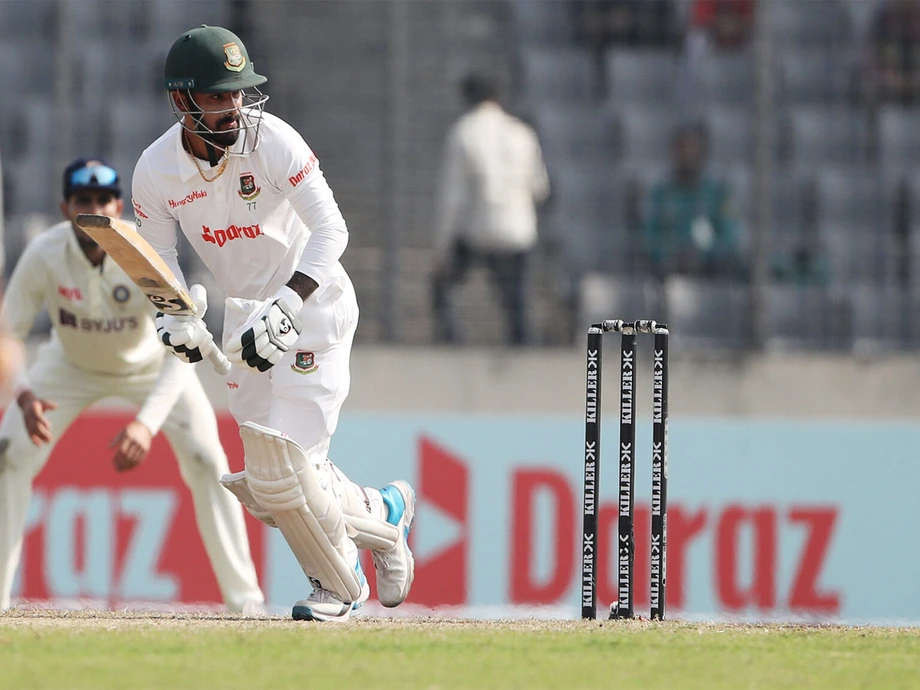
Litton Das became the first wicketkeeper to complete eight dismissals in a single Test innings on November 18, 2026, yet Bangladesh ended the fourth day at the Wanderers in Johannesburg facing a struggle to avoid defeat against South Africa.
Contents
- Eight dismissals, but five wickets left to survive
- How Litton moved beyond five record holders
- A century built during Bangladesh's first crisis
- Rickelton and Rabada turn the morning into South Africa's session
- Dropped catches and a no ball make Bangladesh pay
- South Africa's attack leaves Bangladesh at 100 for five
- Light, injury and the final day's timetable
- Key Points
The first Test was scheduled for November 15–19 at Wanderers Stadium, Johannesburg. Bangladesh won the toss and elected to bat, and Mahfijul Islam made his Test debut. Ahsan Raza of Pakistan and Alex Wharf of England were the umpires.
Six catches and two stumpings gave Litton the record, confirmed in the International Cricket Council's official milestone announcement. His achievement followed a first innings century, making this an exceptional match with both bat and gloves for the Bangladesh wicketkeeper.
The record category was most dismissals by a wicket-keeper in a Test innings. Litton's eight dismissals came in the second innings of the match, South Africa's first innings.
South Africa nevertheless controlled the contest. Ryan Rickelton's 102 and Kagiso Rabada's career best 72 helped the hosts reach 557 in reply to Bangladesh's 400, a lead of 157. Bangladesh then slipped to 100 for five before bad light ended play, still needing 57 runs just to draw level.
The available scorecard lists Bangladesh's first innings as 400 in 101.2 overs, South Africa's reply as 557 in 124.1 overs and Bangladesh's second innings as 100 for five in 34.2 overs at stumps on day four. It records Tanzid Hasan as Bangladesh's leading first innings scorer with 137 from 227 balls, and Marques Ackerman as South Africa's leading scorer with 157 from 164 balls.
Litton, unbeaten on 12, and Mushfiqur Rahim, on five, were left with the immediate responsibility of taking Bangladesh into Thursday's final day. Cracks in the pitch and increasingly uneven bounce made that task more difficult.
Bangladesh fast bowler Hasan Mahmud described how far the match had shifted during Wednesday's play:
When the day started, there was a possibility of Bangladesh winning. Now there is no possibility of Bangladesh winning, now it is a struggle to save the match.
A Test normally gives each side two innings over five days. Bangladesh's immediate problem was simple: if their remaining five wickets fell before they erased the deficit, South Africa would win without needing to bat again. Surviving the remaining playing time offered the visitors a route to a draw.
How Litton moved beyond five record holders
Litton entered Wednesday with six catches already completed. He had caught Aiden Markram, Zubayr Hamza, Matthew Breetzke, Wiaan Mulder, Marco Jansen and Simon Harmer during South Africa's innings.
His seventh dismissal came when Rickelton advanced out of his crease against off spinner Mehidy Hasan Miraz, missed the ball and was stumped for 102. That brought Litton level with five wicketkeepers who had previously shared the record.
Rabada then hit Mehidy for two successive sixes before attempting another attacking stroke. He also missed after moving down the pitch, allowing Litton to remove the bails for dismissal number eight. Rabada departed for 72 from 93 deliveries, including 10 fours and two sixes.
A stumping happens when the wicketkeeper breaks the wicket with the ball while the batter is outside the crease and is not attempting a run. Both of Litton's stumpings came off Mehidy's bowling, adding a different skill to the six catches that had built his record.
The previous record was seven dismissals, all catches, achieved by Pakistan's Wasim Bari in 1979, England's Bob Taylor in 1980, New Zealand's Ian Smith in 1991, and West Indies wicketkeepers Ridley Jacobs in 2000 and Joshua Da Silva in 2023.
Litton had already passed Bangladesh's previous best of five catches in a Test innings, shared by Mushfiqur and Imrul Kayes. His final tally meant he had a direct role in eight of South Africa's ten dismissals.
A century built during Bangladesh's first crisis
Litton's work behind the stumps followed an innings of 120 from 179 balls. Bangladesh had been 121 for five when he joined Towhid Hridoy, and their 206 run recovery partnership rebuilt the innings on the opening day.
Hridoy made 137 and Tanzid Hasan contributed 137 as Bangladesh eventually reached 400. Litton's 120 supplied 30 percent of that total, giving his wicketkeeping record a substantial batting contribution alongside it.
Litton, speaking after his century, explained how he approached batting with Bangladesh under pressure:
I always see these crisis situations as opportunities.
He also felt Bangladesh had left runs behind. Litton said he should have stayed for another 15 overs and that the team might have reached around 450 rather than 400. He dedicated the hundred to his daughter on her birthday.
The combination of a century and at least six catches had already placed him alongside South African wicketkeepers Denis Lindsay and AB de Villiers. Both achieved that double at the Wanderers: Lindsay scored 182 against Australia in 1966, while de Villiers made an unbeaten 103 against Pakistan in 2013. Each took six catches.
Rickelton and Rabada turn the morning into South Africa's session
South Africa began Wednesday on 386, 14 runs behind Bangladesh. By lunch, they had added 171 runs in 34.1 overs and finished their innings on 557. That was a scoring rate of just over five runs an over, fast enough to change the match before Bangladesh batted again.
Rickelton and Rabada supplied the decisive partnership, adding 117 for the eighth wicket. Their stand alone was equal to almost three quarters of South Africa's eventual lead of 157.
Rickelton's 102 from 165 balls, including 13 fours, was his fourth Test century, his second in successive matches and his first at his home ground. His innings followed Marques Ackerman's maiden Test hundred, while Hamza had contributed 83 earlier in South Africa's reply.
Rabada, batting at number nine, attacked fuller deliveries with drives and reached his fifty from 72 balls. His 72 added a major batting contribution to the five wickets for 70 runs he had taken in Bangladesh's first innings.
South Africa seam bowler Dane Paterson identified the Rickelton and Rabada partnership as the passage that shifted control. He described it as:
taking the game away
Rickelton's dismissal left South Africa with a lead of 93. Rabada was next out at 512 for nine, extending that advantage to 112. Bangladesh had finally removed both attacking batters, but South Africa still had another productive partnership to come.
Dropped catches and a no ball make Bangladesh pay
Bangladesh had opportunities to interrupt South Africa's progress much earlier. Rickelton was dropped on nought by Litton and again on 30 by Mahfizul Islam Robin before reaching his century.
Rabada also survived a chance on 38, when captain Najmul Hossain Shanto failed to hold an edge at second slip off Taskin Ahmed. The ball ran away for four. Rabada added another 34 runs before Litton eventually stumped him.
Hasan later bowled Paterson on 10, only for the dismissal to be cancelled because he had overstepped. A bowler must keep part of the front foot behind the popping crease when landing; crossing that limit makes the delivery a no ball.
Paterson used the reprieve to reach 29 from 27 deliveries. He and Temba Bavuma added 45 for the final wicket, pushing the lead from 112 to 157. Bavuma, who had retired hurt with a calf strain, returned to finish unbeaten on 68 after reaching his 27th Test half century.
Ebadot Hossain finally ended the innings when Paterson attempted another big shot and Hasan caught him at long off. Hasan finished as Bangladesh's leading bowler with four wickets for 118 runs, one wicket short of a haul of five.
South Africa's attack leaves Bangladesh at 100 for five
Rabada and Marco Jansen quickly put Bangladesh under pressure in their second innings. Jansen removed Tanzid, and Rabada bowled Mominul Haque as the visitors fell to 12 for two.
Bangladesh struggled to score as South Africa maintained accurate lines. They were 37 for two after 21 overs before Harmer's introduction brought another breakthrough. The spinner found Shanto's outside edge, and Markram completed the catch at slip.
Bangladesh reached tea at 58 for three. Harmer then bowled Mahfizul with a delivery that turned through the gap between bat and pad, removing the opener for 32.
Towhid Hridoy made 23 before Rabada forced him into a hurried response to a short ball. His top edge went high to Rickelton, leaving Bangladesh five wickets down. Rabada ended the day with two for 29, while Harmer had two for 30.
Paterson, assessing Bangladesh's remaining batting after Litton and Mushfiqur, summed up South Africa's position:
One more wicket and we are into the tail.
The tail means the lower order, usually occupied by players selected mainly for their bowling. With Bangladesh still behind, the partnership between their two experienced batters was therefore central to their chances of extending the match.
Light, injury and the final day's timetable
Bad light stopped play at 4.10 pm local time, and the players could not return. Earlier rain had restricted the third day to 28 overs, leaving South Africa with less time to turn their advantage into a victory.
Bavuma did not take the field during Bangladesh's second innings because of his calf problem. Markram led South Africa in his absence, managing four seam bowlers and Harmer. As the light worsened, the umpires required spin from both ends before taking the players off.
Bangladesh's route through the match, and the next scheduled fixture, was:
- November 15: Hridoy and Litton rebuilt Bangladesh's first innings with a partnership of 206.
- November 16: Bangladesh reached 400, and Litton began collecting his catches during South Africa's reply.
- November 17: Rain limited play to 28 overs, while Litton took his catch tally to six.
- November 18: Two stumpings completed Litton's record eight dismissals; South Africa reached 557 and Bangladesh closed on 100 for five.
- November 19: The scheduled final day of the Johannesburg Test.
- November 23 to 27: The scheduled second and final Test in Centurion.
Hasan also credited Litton's less visible contribution, including communication with bowlers and advice on the Decision Review System, which lets teams challenge certain umpiring decisions using video and ball tracking.
The Bangladesh fast bowler praised his teammate's work behind the wicket:
He always tries to be active on the field, tries to talk to everyone and when it comes to decision-making, DRS, he helps a lot.
Key Points
- Litton Das set a Test innings wicketkeeping record with six catches and two stumpings.
- He also scored 120 in Bangladesh's first innings total of 400.
- South Africa made 557, with Ackerman scoring 157, Rickelton 102 and Rabada a career best 72.
- Bangladesh ended day four on 100 for five, still trailing by 57 runs.
- Litton and Mushfiqur were unbeaten overnight, with Thursday scheduled as the final day.
- The second Test is scheduled for November 23 to 27 in Centurion.