New staffing plan looks beyond today's hospital vacancies
Sri Lanka has identified a need for about 7,000 doctor positions over 2027 to 2029, Health and Mass Media Minister Dr. Nalinda Jayatissa told Parliament on November 17, 2026, as the government seeks to update a health service staffing structure last revised in 2017.
Contents
- New staffing plan looks beyond today's hospital vacancies
- Where the current staffing gaps are largest
- Why the 2017 staffing structure needs replacing
- New doctors are waiting for appointments
- Specialist migration has left particular services exposed
- Training capacity and wider demand for care
- Recruitment problems extend to laboratory and therapy staff
- Medicines remain a point of dispute
- Key Points
The immediate shortage recorded against that older structure is smaller: 1,819 specialist and other doctor posts are vacant. Another 2,619 nursing positions and 355 medical laboratory technologist positions are unfilled, bringing vacancies across those four groups to 4,793.
The two sets of figures describe different planning needs. The current vacancies measure gaps against previously approved posts. The 7,000 positions reflect the ministry's assessment for the coming three years, taking account of expanded services, existing vacancies and the need to replace doctors who retire or die.
Jayatissa said the Ministry of Health had submitted its revised staffing assessment to the Finance Ministry's Department of Management Services about two months earlier. Approval was expected in December 2026, ahead of recruitment planned in phases from 2027 through 2029.
The debate also exposed pressure beyond doctor numbers. Recruitment in some health professions is caught in legal proceedings, specialist services are recovering from migration during the economic crisis, and the government and opposition offered sharply different assessments of access to medicines.
Where the current staffing gaps are largest
Jayatissa gave Parliament the following figures for approved positions, staff serving and vacancies under the 2017 staffing structure:
- Specialist doctors: 2,903 approved posts, 2,767 serving and 136 vacancies.
- Other doctors: 23,353 approved posts, 21,670 serving and 1,683 vacancies.
- Nurses: 47,997 approved posts, 45,378 serving and 2,619 vacancies.
- Medical laboratory technologists: 2,355 approved posts, 2,000 serving and 355 vacancies.
Nursing has the largest numerical gap among these groups. Laboratory technologists have the largest proportional gap: 355 vacancies out of 2,355 approved posts means about 15.1% are unfilled, compared with about 5.5% of nursing posts.
Laboratory technologists carry out tests that help doctors identify illness and choose treatment. Nurses provide care and monitoring throughout a patient's stay. Filling doctor posts therefore addresses one part of a wider staffing problem, with hospitals also needing the people who support diagnosis, treatment and recovery.
The figures are national totals. The ministry's review is also intended to establish what individual facilities need, including hospitals that have added wards, units and specialist services since 2017.
Why the 2017 staffing structure needs replacing
A staffing cadre is the officially approved list of jobs an institution can fill. A hospital may open a new ward or introduce a service, but recruitment can remain difficult if its approved list of positions has not changed to match that expansion.
Jayatissa said this had become an obstacle across the health service. The ministry gathered staffing information from Provincial Council hospitals, Primary Medical Care Units and Medical Officer of Health offices. Finance Ministry officials also visited hospitals at provincial level to assess their requirements.
The health minister described the response to Parliament:
Therefore, we took steps to carry out a new cadre revision.
The exercise reaches beyond large hospitals. Primary Medical Care Units provide local treatment, while Medical Officer of Health offices carry out public health work. Including them gives the review a broader scope than simply counting empty posts in major wards.
The planned sequence stretches from an outdated staffing structure to recruitment over three years:
- 2017: The previous health sector staffing revision set the approved posts still used to calculate current vacancies.
- About two months before the November announcements: The ministry submitted its revised assessment to the Department of Management Services.
- November 15, 2026: Jayatissa outlined recruitment plans at a medical facility opening in Karapitiya.
- November 17, 2026: He detailed staffing shortages and the proposed revision in Parliament.
- December 2026: The ministry expects approval for the revised staffing structure.
- 2027 to 2029: Recruitment of about 7,000 doctors is planned in phases.
New doctors are waiting for appointments
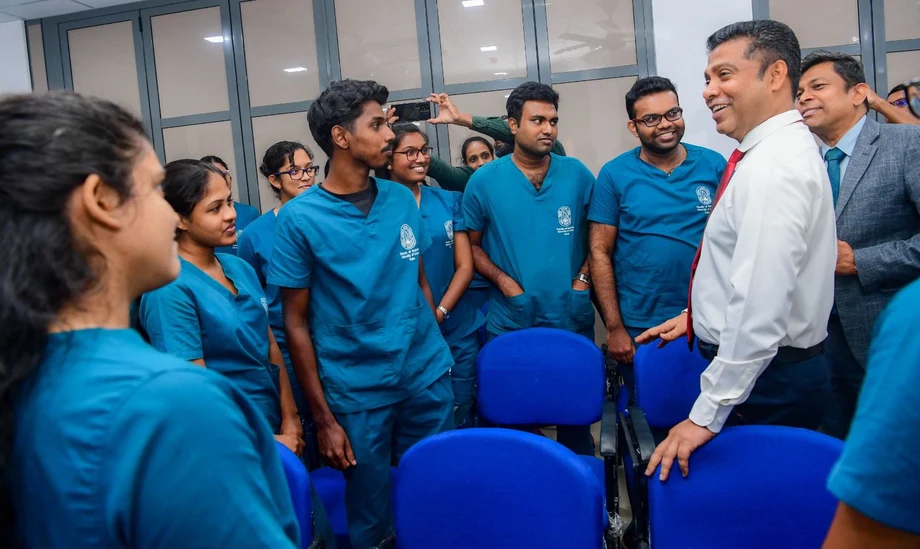
At the opening of the new Professorial Ward Complex, a building with 10 storeys at the University of Ruhuna Faculty of Medicine in Karapitiya, Jayatissa said 1,472 doctors who had completed their internships were awaiting appointments.
He also said nearly 2,000 appointments were expected after ongoing legal proceedings concluded. An internship is supervised practical training after medical study, allowing graduates to gain experience caring for patients before moving into their next professional role.
The minister's figures show that having trained doctors ready to work and having approved jobs available are separate steps. The revised staffing framework is intended to address difficulties in giving first appointments under the old structure. No date was given for the conclusion of the legal proceedings.
Jayatissa also announced plans to recruit 3,000 nursing officers and 500 graduates. These plans sit alongside the doctor recruitment programme and the existing vacancies in nursing and other health professions.
Specialist migration has left particular services exposed
Sri Lanka's specialist shortage includes the effects of doctors leaving during the economic crisis of 2022 and 2023. Jayatissa identified anaesthesia as a field under pressure, with anaesthetists making up a substantial share of doctors who migrated or did not return after overseas training.
Anaesthetists manage anaesthesia during operations and help keep patients safe while they undergo procedures. A shortage in that specialty can constrain the work of surgical teams, even where other staff and facilities are available.
The government has extended the retirement age for specialists to 63 to retain experienced staff. Doctors completing postgraduate training through the Postgraduate Institute of Medicine are also being appointed as senior registrars, an advanced stage of specialist training and service.
Jayatissa told Parliament that restoring specialist staffing would take time:
This shortage has to be filled gradually,
He said more doctors sent abroad for specialist training were now returning, while fewer were choosing to remain overseas. Some doctors who had left public service had applied to return, with reappointments being arranged subject to Public Service Commission approval.
The institute and ministry are also discussing which specialties will need more doctors in the future. That planning matters because a national total cannot show whether enough specialists are available in each field.
Training capacity and wider demand for care
Sri Lanka has about 25,000 doctors, including specialists and medical administrators, according to Jayatissa. Nearly 12,000 students are studying medicine across 12 medical faculties, with University Grants Commission medical faculties located in 11 of the country's 25 districts.
The government plans to bring most graduates who complete internship training into public service. Other graduates may enter private employment or work overseas. The students currently studying will move through their courses and practical training at different times, so recruitment planning must connect future graduates with future vacancies.
Demand is also rising for elderly care and treatment of chronic diseases, conditions that require continuing care rather than a single visit. That adds to the need to plan where staff work and which services they provide.
Lasitha Kannangara, media spokesperson for the Government Medical Officers' Association, cited a benchmark of 1.4 doctors per 1,000 people in an October analysis. The ministry's current proposal takes a facility based approach, reviewing staffing requirements across hospitals and community health offices.
Recruitment problems extend to laboratory and therapy staff
Jayatissa said recruitment into supplementary health professions had faced serious problems, with some professional groups going years without new staff being taken on.
He said graduates across different categories were being recruited and trained, but court action had interrupted recruitment of medical laboratory technologists and physiotherapists. Physiotherapists help people regain movement and physical function after illness or injury.
The 355 laboratory vacancies make that delay especially relevant. Laboratories support many hospital departments, so the need for technologists runs alongside demand for doctors and nurses. The minister's account describes several recruitment tracks, each with its own approval, training or legal requirements.
Medicines remain a point of dispute
Jayatissa told Parliament that all 13 medicines classified as lifesaving and required in government hospitals were available. Of 630 essential medicines, he said 31 were in shortage, equivalent to about 4.9% of that list.
The minister attributed those shortages to problems involving suppliers, raw materials and global manufacturers. He said the government was seeking foreign assistance, had begun local purchasing and was working with domestic manufacturers to produce medicines.
Opposition Leader Sajith Premadasa challenged the government's assessment, saying serious shortages persisted in sensitive treatment areas and that some medicines were unavailable in both public and private care. He called for action to protect free healthcare as a human right.
For patients, the particular medicine needed matters alongside the national stock figures. Staffing approval, recruitment and medicine purchasing are separate government tasks, but they meet in the same place: whether a hospital can provide the treatment a patient needs.
Key Points
- Sri Lanka plans about 7,000 doctor positions over 2027 to 2029, with staffing approval expected in December 2026.
- Current vacancies under the 2017 structure total 4,793 across specialists, other doctors, nurses and laboratory technologists.
- Some 1,472 doctors who completed internships are awaiting appointments.
- Specialist retention measures include a retirement age of 63 and arrangements for doctors seeking to return to public service.
- The minister says 31 of 630 essential medicines are in shortage; the opposition says serious treatment gaps persist.