Millions turn to solar as the grid loses paying demand
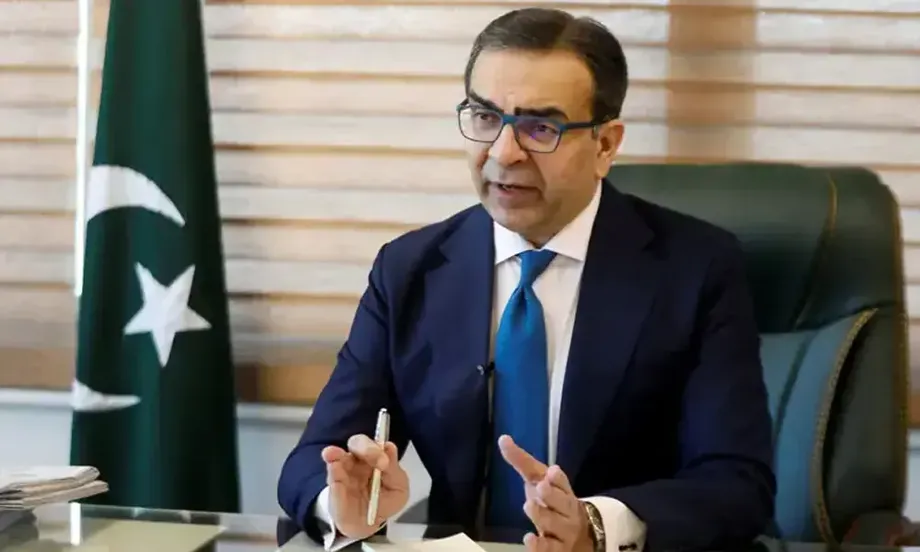
Pakistan's solar expansion has reached a turning point: households and factories are producing cheaper electricity for themselves, while the national grid must spread its remaining costs across fewer electricity sales. Energy Minister Awais Ahmad Leghari says the shift has cost other consumers more than $500 million a year over the past two years.
Contents
- Millions turn to solar as the grid loses paying demand
- Why panels became a household necessity
- How large is the solar expansion?
- Why selling less electricity can make each unit dearer
- What the new solar billing rules change
- Two different routes away from the grid
- Farmers and factories move beyond daytime solar
- Storage becomes the next investment
- Can market reform and climate finance keep the grid useful?
- The milestones and targets ahead
- Key Points
The financial strain now sits alongside a major regulatory change. On 9 February 2026, the National Electric Power Regulatory Authority (NEPRA) notified its Prosumer Regulations, 2026, replacing the 2015 rules. Electricity exported by participating solar owners is credited at the national average energy purchase price, while electricity bought from the grid is charged at the applicable consumer tariff.
Pakistan's experience brings together two urgent needs: affordable electricity for families and businesses, and a financially viable network that can supply power after sunset, during cloudy weather and to people unable to buy their own panels.
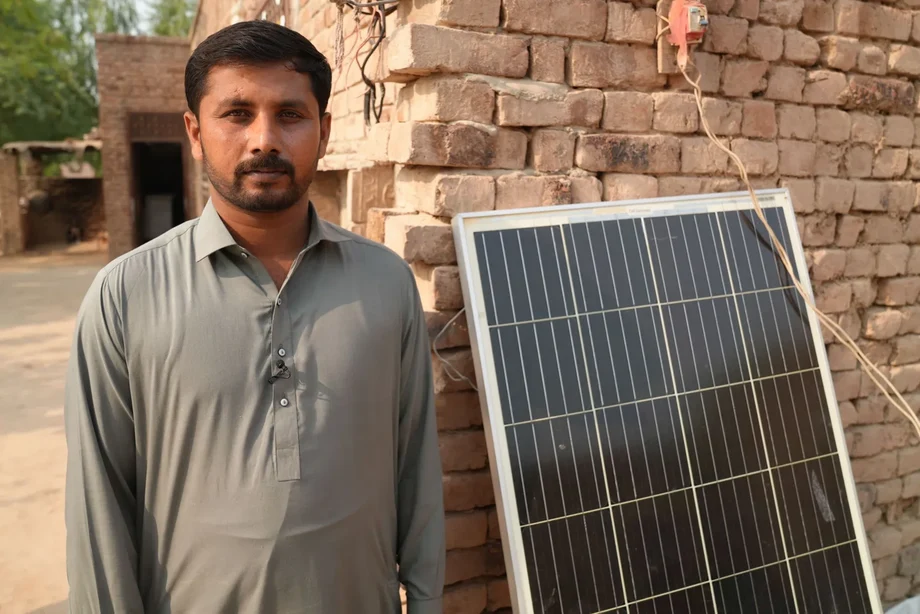
Faisal Shahzad, who lives with his extended family in rural Punjab, illustrates why people are making the switch. Among his wedding gifts was a solar panel rated at 340 watts. He says it powered an air cooler through summer days, reducing his need for grid electricity.
Electricity bills of 15,000 to 18,000 rupees are especially difficult in a country where the average monthly wage is just under 40,000 rupees. Against a 40,000 rupee benchmark, those bills equal roughly 38% to 45% of a month's earnings. Solar offers a way to reduce that recurring expense, provided a household can afford the equipment.
Why panels became a household necessity
Pakistan's solar surge grew mainly from decisions by families, farmers and businesses facing expensive, unreliable electricity. Government incentives helped create the market, but the immediate attraction was practical: lower bills and more dependable daytime power.
The World Resources Institute (WRI), in Jigar Shah's October 2025 analysis, identifies a 155% rise in electricity tariffs over three years alongside a nearly 50% fall in global panel prices. Solar imports were also exempt from duties and sales taxes until the middle of 2025.
Muhammad Hassan Dajana, industry liaison at the Pakistan based think tank Renewables First, describes a longer price decline of 93% for Chinese panels, alongside electricity tariffs that more than doubled in a few years. Together, cheaper equipment and expensive grid power made generating electricity at home increasingly attractive.
Shahzad says solar panels have joined the household goods commonly given at weddings. Describing the change in gift giving, he said:
Now they give a solar panel and an air cooler. It has almost become a must.
Local electricians, traders and technicians helped carry this market into rural communities. WRI describes installers learning through practical work and sharing knowledge through YouTube and WhatsApp, while neighbourhood supply networks brought panels beyond major cities. Small systems also reached homes without reliable grid access.
How large is the solar expansion?
Pakistan imported 17 gigawatts (GW) of solar panels in 2024, twice the volume imported in 2023, according to REN21's Pakistan snapshot. A gigawatt measures generating capacity, rather than the amount of electricity actually produced over a day or year.
REN21 puts cumulative panel imports over four to five years at nearly 45 GW, roughly matching the national grid's installed generating capacity. Registered systems account for a much smaller amount: an academic study of defection records 6.1 GW of net metering capacity and more than 378,000 participating consumers by June 2025. Much solar activity therefore takes place outside the registered export system.
Renewables First estimates solar's share of electricity generation rose from 1% in 2018 to 28% in 2025, with about seven million households owning panels; the academic study calculates 22.5% of grid output in 2025, or 36.6 terawatt hours (TWh). WRI's earlier October 2025 analysis had projected a 20% share by 2026. Measuring small systems that supply homes and factories directly remains a major statistical challenge.
The academic study also cites Ember data showing solar supplied 12.1 TWh out of 37.5 TWh of total generation in the first quarter of 2026, a 32.3% share. In that period, solar exceeded coal, gas, nuclear and hydropower individually.
Why selling less electricity can make each unit dearer
Pakistan's power contracts typically separate two costs. An energy charge pays for electricity produced. A capacity charge pays generators for keeping plants available, even when demand is too low to use them fully.
The Central Power Purchasing Agency buys electricity on behalf of the federal government under these agreements. REN21 explains that falling demand leaves fixed contractual payments spread across fewer units sold, increasing the cost attached to each unit.
Grid electricity demand fell from 124,628 gigawatt hours (GWh) in the 2021–22 financial year to 109,707 GWh in 2023–24. That is a decline of about 12%. Economic weakness, reduced industrial activity and solar adoption all contributed to the pressure on sales.
A utility death spiral describes the resulting cycle: higher bills encourage customers to generate their own power; lower grid sales leave less revenue for fixed costs; recovering those costs can then require higher prices. Families unable to afford panels face the greatest exposure to that cycle.
Leghari puts the burden on remaining consumers at more than $500 million annually over the past two years. REN21 also records a government estimate of 159 billion rupees, or $563 million, shifted to other consumers by December 2024 through net metering arrangements.
Private generators have faced criticism over expensive, inflexible contracts. Producers point to poor maintenance and wider network weaknesses. Leghari says most contracts have been renegotiated and the government is pursuing better storage, lower waste and improved efficiency.
What the new solar billing rules change
NEPRA's February 2026 regulations use net billing. A prosumer, meaning a customer who both produces and consumes electricity, receives a financial credit for exported power and a separate charge for electricity purchased from the network.
For a household, the practical calculation changes. A unit of solar electricity used immediately at home replaces a unit it would otherwise buy at the retail tariff. A unit exported earns the national average energy purchase price. The regulations specify the pricing formula rather than a single permanent rupee rate.
Arif Ehsan Malik, president of Faisalabad's chamber of commerce, says the revised purchasing arrangements make a substantial difference for small and medium businesses. Explaining his objection, he said:
Now they have started purchasing at a lower rate and selling back at a higher rate.
Leghari argues that the previous arrangement transferred costs to other grid users. He estimates retaining it would have burdened those consumers by 150 billion to 200 billion rupees annually within two years.
The new agreements run for five years and may be renewed for successive terms of five years. Owners must give at least 40 working days of notice before material changes to maximum output or connection equipment. Distributors may disconnect a facility for a fault, or give 30 days of written notice for routine network maintenance, repairs or modifications.
Two different routes away from the grid
The academic study identifies two solar markets. Registered systems are concentrated in relatively prosperous areas with better electricity service, where users mainly seek relief from high tariffs. About 85% of net metering capacity was located in the six best performing distribution jurisdictions.
Unregistered systems, including installations supplying buildings directly, are more prominent where service is weakest. The study describes some distribution areas with monitored outages exceeding eight to 10 hours a day, network losses approaching 40% and bill recovery as low as 39%.
WRI estimates that independent household solar systems total between 1 GW and 1.7 GW. In remote communities, these can provide lighting, fans and connectivity without waiting for new transmission lines. Solar can therefore expand access while also allowing wealthier existing customers to reduce their contribution to grid costs.
National energy accounting is struggling to capture this change. Renewables First's Pakistan Energy Market Review 2026 estimates that distributed solar displaced about 13 million tonnes of oil equivalent in primary energy requirements during the 2025 financial year. That unit expresses the energy content of fuels on a common scale.
The review puts electricity's share of energy use at 27%, with industrial electrification rising from 20% to 25% between the 2023 and 2025 financial years. Those measures describe electricity use within the wider energy economy, alongside fuels used directly in transport, heating and industry.
Farmers and factories move beyond daytime solar
Agriculture shows how rapidly demand can change. WRI records a 34.3% fall in agricultural grid electricity demand in 2024. Pakistan has an estimated 1.5 million to two million tube wells, which pump groundwater for crops, and about 80% had depended on diesel equipment outside the grid.
WRI cites estimates that half of the tube wells could switch to solar, adding 5.6 GW to 7.5 GW of capacity. Higher diesel costs strengthen the incentive, while solar pumps can serve farms that previously had little connection to the electricity network.
Kohinoor Textile Mills in Islamabad shows the industrial version of the shift. Utilities manager Sabawoon Khan says hundreds of machines run entirely on solar during sunny periods. Engines that burned heavy furnace oil have been taken out of service, while the company still buys grid power at night and when clouds or pollution reduce solar output.
Chief executive Taufique Sayeed Saigol says the company intends to retain its grid connection. Explaining the investment, he said:
We needed to reduce our energy costs and this was one way to do it.
Battery investment is extending that strategy. Kohinoor approved a battery system rated at 48.36 MW and another 9.34 MW of solar in August 2026. At least eight listed companies announced solar and battery projects during 2026, together adding about 78 MW of planned solar capacity.
Storage becomes the next investment
Organic Meat Company approved a 2 MW solar system and a 5 megawatt hour (MWh) battery at its Gadap factory in Karachi. A battery of that energy capacity could theoretically supply 2 MW for two and a half hours, before allowing for operating limits and losses.
The company will finance the equipment through an ijarah, an Islamic lease, over five years, with ownership transferring at the end for a nominal payment. Its project cost, commissioning date and expected savings have not been disclosed.
Other projects show different storage needs. DG Khan Cement announced 25 MW of solar with a 10 MWh battery, equivalent to about 24 minutes of the solar plant's full output. Fauji Cement's planned 50 MWh of batteries alongside 10 MW of solar represents about five hours.
Pakistan imported an estimated 1.25 GWh of lithium ion batteries in 2024, according to WRI. Battery imports reached $88 million in July 2026, a monthly record. Storage lets users carry daytime generation into later hours, making it more attractive when export credits are lower than the price of purchased electricity.
Industry still faces substantial grid costs. The average industrial tariff stood at 34.40 rupees per unit before taxes in October 2026. NEPRA projects grid sales of 101 billion units in 2026, down from 113 billion in 2023, a fall of about 11%.
Can market reform and climate finance keep the grid useful?
Pakistan is considering separating the ownership of distribution poles and wires from electricity supply, billing and collection. A proposal reported on 12 November 2026 would let private suppliers take responsibility for contracted capacity and matching groups of customers.
Faisalabad, Gujranwala and Islamabad distribution companies are being offered for sale, with Faisalabad a possible first test. The proposal requires approval from the power sector reform steering committee and federal cabinet. It would preserve protection for eligible consumers while allowing competing suppliers to offer other customers different tariffs.
Legacy capacity payments are put at 1.7 trillion rupees annually, including an idle capacity charge of 17 rupees per unit. Moving supply responsibilities to private companies would leave those underlying obligations in place, making service quality, collection and efficiency central to any savings.
At COP31 in Antalya, Prime Minister Shehbaz Sharif called for concessional financing and affordable technology transfers. Pakistan's financing needs have been put at about $138 billion by 2035 for power generation with lower carbon emissions, plus $50 billion to replace coal with solar.
Climate Change Minister Dr Musadik Malik urged direct support for households, storage and connections. He recounted how villager Karamat Ali sold 12 buffaloes and cows to buy panels, exchanging assets used for income and emergencies for cheaper electricity. Malik estimated rooftop solar had saved about $12 billion in LNG and gas imports, without giving a timeframe or calculation.
The milestones and targets ahead
Pakistan's transition now combines rapid private investment with changes to billing and market structure. The main milestones show how quickly the challenge has developed:
- 2024: Pakistan imported 17 GW of solar panels and an estimated 1.25 GWh of lithium ion batteries.
- June 2025: Registered net metering reached 6.1 GW and more than 378,000 consumers.
- December 2025: The academic study identifies a policy shift from net metering towards net billing.
- 9 February 2026: NEPRA notified its Prosumer Regulations, formally setting out net billing arrangements.
- November 2026: A proposed distribution and supply overhaul awaited government approval.
- End of 2036: Leghari targets up to 90% clean electricity, including renewables and nuclear.
Leghari also wants dependence on imported energy to fall from 26% to 4%. He says solar is included in forecasts covering the next 10 years and that departures from the grid have slowed. Plans include battery factories and more electric vehicles; electric motorcycles have exceeded 10% of motorcycle sales, alongside a target for electric vehicles to reach 30% of new vehicle sales by 2030.
Shahzad's ambition remains personal and concrete: another 10 to 15 panels, rooftop installation and batteries. Whether households like his continue buying substantial grid electricity will depend on what the network can offer in price and reliability, alongside the growing value of storing their own power.
Key Points
- Pakistan's solar expansion is cutting household and business bills while reducing grid sales.
- Leghari says the shift has cost remaining consumers more than $500 million annually over the past two years.
- NEPRA's February 2026 rules credit solar exports at the national average energy purchase price and charge imports at the applicable tariff.
- Battery investment is helping factories use more solar electricity beyond daylight hours.
- Proposed market reforms would separate network ownership from competing electricity suppliers.
- Pakistan targets up to 90% clean electricity by the end of 2036.