Families face higher bills for both food and cooking fuel
Pakistan's cooking fuel squeeze is spreading into food budgets, with liquefied petroleum gas selling for as much as Rs750 per kilogram in northern areas, roti reaching Rs17 to Rs20 in several localities, and LPG distributors closing shops across much of Punjab during a strike reported on October 24, 2026.
Contents
- Families face higher bills for both food and cooking fuel
- How far have market prices moved above the official rate?
- Punjab shop closures deepen the dispute
- Roti prices show how fuel costs reach the dinner table
- Flour shortages add another source of pressure
- Chicken and other foods squeeze household purchases
- What the weekly inflation figures show
- Why switching fuels offers limited relief
- How the pressure built during October
- Key Points
The Oil and Gas Regulatory Authority (OGRA) set October's LPG price at Rs279.34 per kilogram. Consumers in northern areas paying Rs750 are spending about 2.7 times that amount. In Islamabad, prices above Rs600 have pushed the cost of a domestic cylinder beyond Rs7,000, while households in other cities face large differences between neighbourhood prices.
The pressure reaches beyond the cylinder refill. Flour, chicken, onions and other essentials have become more expensive in many markets. Families must find money for the ingredients of a meal and the fuel needed to cook it, while some tandoor owners say expensive LPG has forced them to raise bread prices.
Pakistan Bureau of Statistics (PBS) figures for the week ending October 22 show how quickly two major expenses moved: LPG rose 22.44% and chicken rose 12.20% in a single week. The bureau's Sensitive Price Index, which measures a basket of essential goods and services, was 11.85% higher than a year earlier.
Consumers are demanding enforcement of official prices. Dealers say their own purchase costs are too high to sell at the regulated rate. In Punjab, that dispute has developed into shop closures, making access to cooking fuel another concern alongside its price.
How far have market prices moved above the official rate?
LPG prices vary sharply across Pakistan. Karachi quotations range from Rs500 to Rs550 per kilogram, while Peshawar prices have been put at Rs450 to Rs500. Other local accounts describe both cities reaching Rs550 after increases of Rs100 per kilogram. Hyderabad prices have reached Rs550, and Islamabad prices have exceeded Rs600.
Lahore consumers face especially wide variation. Prices have been quoted at Rs550 per kilogram, with other neighbourhood quotations ranging from Rs500 to Rs700. Across several cities, the most commonly cited range is Rs550 to Rs650, although northern areas have recorded Rs700 to Rs750.
At Rs550 per kilogram, a buyer pays Rs270.66 more than OGRA's October rate for every kilogram purchased. At Rs650, the difference reaches Rs370.66. Even a small refill therefore carries a substantial extra cost for a household buying fuel in limited quantities.
A federal minister has proposed a rate of Rs425 per kilogram, below many market quotations but above OGRA's notified price. Tandoor owners have also described Rs300 as the price they believe LPG should cost. For consumers comparing their bills with the regulator's October benchmark, the precise notified figure is Rs279.34.
Some consumers fear that domestic cylinders could cost more than Rs10,000 during winter. No confirmed future cylinder price or timetable for bringing market rates down has been announced.
Punjab shop closures deepen the dispute
LPG distributors in Lahore began a strike lasting two days over alleged harassment and fines, with most shops reported closed across Punjab, including the provincial capital, on October 24. The closures added a supply problem to the price problem already facing households.
Shopkeepers allege that Punjab's enforcement force, known as PERA, fines retailers for expensive LPG even though they receive supplies at high prices. They also say pumps worth Rs50,000 each were taken away and separate fines imposed.
The distributors accuse OGRA of failing to act against plant owners while police detain shopkeepers. Those accusations are the dealers' account of the dispute. Their complaint places the cost of obtaining LPG at the centre of the argument over retail enforcement.
Residents, meanwhile, want prices reduced and supplies available. A household facing a closed local shop may have to search elsewhere for a refill at the same time that prices differ widely between sellers.
Roti prices show how fuel costs reach the dinner table
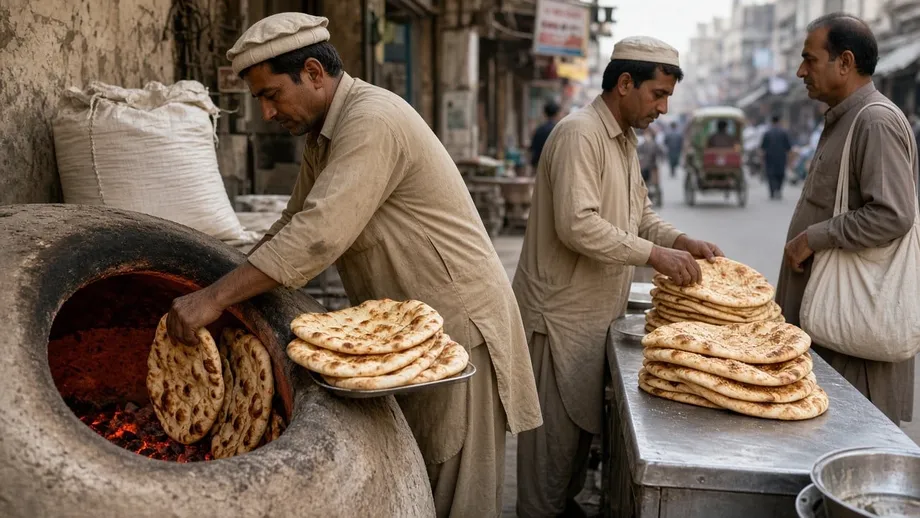
Tandoor owners in several areas have raised roti prices to Rs17 to Rs20. They say LPG costing as much as Rs600 per kilogram has made higher bread prices unavoidable.
For a tandoor, fuel is part of the cost of every batch of bread, alongside flour and other operating expenses. When flour and LPG become more expensive together, the business faces pressure from two essential inputs. Customers then pay more for a staple many buy every day.
Residents have appealed to price control magistrates and deputy commissioners to enforce official rates for both LPG and roti. They complain that sellers are setting prices on their own, leaving customers with little certainty about what they will pay.
Pipeline gas shortages make the situation harder. In Lahore, residents have described low pressure and interruptions stretching from breakfast hours into the evening, forcing some households to buy meals from tandoors and roadside eateries. The alternative to cooking at home is becoming more expensive at the same time.
Flour shortages add another source of pressure
Flour prices are rising amid problems in wheat supply as well as higher energy costs. Karachi and Lahore quotations have reached Rs190 per kilogram. Other market figures put a bag weighing 20 kilograms at Rs3,540 in Karachi and Rs3,133 in Lahore, equivalent to Rs177 and about Rs156.65 per kilogram respectively. These quotations cover different market purchases and show the range confronting buyers.
In Quetta, a bag weighing 20 kilograms has reached Rs3,330, or Rs166.50 per kilogram. Bags weighing 50 kilograms have exceeded Rs8,000 in Khuzdar, Chagai, Washuk, Kech and other Balochistan districts.
Balochistan's procurement difficulties add to concern about supplies. The province planned to purchase 575,000 bags of wheat but had obtained fewer than 100,000. That amounts to less than 17.4% of the planned purchase, leaving a gap of more than 475,000 bags.
The current increases follow earlier flour supply warnings on October 17, when industry representative Yaser Malik estimated Sindh's wheat availability at 4.84 million tonnes against demand of 6.53 million tonnes. The resulting gap of 1.69 million tonnes was about 26% of the province's needs. Malik, chairman of the Federation of Pakistan Chambers of Commerce and Industry's Flour Mills Sub-Committee, sought permission for private wheat imports.
That earlier warning also identified a 22% irrigation water shortage as a threat to the next crop, due for harvest in March and April 2027. Households therefore face an immediate flour bill while millers seek action on supplies before the next harvest.
Chicken and other foods squeeze household purchases
Chicken prices have reached Rs750 per kilogram in Karachi. Other city quotations put chicken meat at Rs600 to Rs700, while Hyderabad has recorded Rs720 per kilogram for broiler meat and as much as Rs750 for breast meat.
Hyderabad consumers said broiler meat cost about Rs520 per kilogram a week earlier. The move to Rs720 adds Rs200 to a purchase of one kilogram, an increase of about 38%. Retail descriptions also put the rise over several days at up to Rs180, reflecting a different comparison period.
Residents in Hyderabad say they are buying smaller quantities. Shopkeepers attribute retail prices to expensive supplies from poultry farms, followed by the operating costs that retailers add before selling meat. Farm eggs in the city cost Rs240 to Rs260 per dozen.
Onions have reached Rs200 to Rs250 per kilogram in some markets. In Quetta, vegetables, meat and milk have risen by as much as 20%. Local accounts also describe increases of Rs50 in flour and pulse prices and Rs100 per kilogram in chicken meat across several cities.
The poultry and wheat supply accounts point to several pressures operating together. Expensive fuel raises the cost of cooking and running businesses, while the price paid to farms or for grain also affects what reaches the shop counter.
What the weekly inflation figures show
PBS measures short term price changes through the Sensitive Price Index, which tracks 51 essential items across 50 markets in 17 cities. For the week ending October 22, the index rose 0.65% from the previous week. A figure of 6.5% has also been cited for the weekly increase; the detailed PBS figures put it at 0.65%.
The annual increase was 11.85%, up from 11.38% the previous week. This measures the change in that basket of essentials compared with the same period a year earlier. It gives a focused picture of everyday expenses rather than the broader monthly consumer inflation measure.
LPG was 107.12% more expensive than a year earlier, meaning its measured price had more than doubled. Onions rose 72.81%, electricity 58.59%, petrol 44.17%, chicken 38.99% and wheat flour 36.49% over the year.
During the latest week, prices increased for 19 tracked items, declined for 12 and stayed unchanged for 20. Alongside the sharp LPG and chicken increases, onions rose 4.19%, plain bread 1.66% and wheat flour 1%.
Several foods became cheaper during the week: tomatoes fell 21.99%, potatoes 1.38%, pulse gram 0.93% and eggs 0.58%. Petrol fell 3.63% and diesel 1.68%. Families experience different changes in their own spending depending on what they buy and how much of their budget goes to fuel, flour or meat.
Why switching fuels offers limited relief
Gas interruptions and weak pipeline pressure are pushing households towards LPG and firewood. Higher seasonal demand adds pressure as colder weather approaches, particularly in northern areas where LPG quotations are already among the highest.
Firewood sellers have raised prices by Rs200 to Rs300 per maund, a traditional unit used in local markets. Prices previously quoted at Rs1,400 to Rs1,600 per maund have reached as much as Rs1,800. Families seeking a cheaper substitute for LPG therefore face increases there too.
Rickshaw and Suzuki drivers also say LPG costs are eating into their earnings. Their complaint shows that the fuel squeeze extends beyond kitchens to workers who depend on vehicles for daily income.
Dealers blame expensive procurement and supply difficulties. Importers want prices revised weekly or daily rather than monthly so that official rates respond more quickly to changing supply costs. Consumers are seeking both affordable supplies and enforcement, while the strike shows how far retailers and authorities remain apart over who bears responsibility for high prices.
How the pressure built during October
Several developments within little more than a week connect the wheat shortage, rising household expenses and the LPG enforcement dispute.
- October 17: Flour industry representative Yaser Malik called for private wheat imports and identified a 1.69 million tonne supply gap in Sindh.
- October 21: Market accounts placed LPG at Rs600 per kilogram in several cities, domestic cylinders at Rs7,000 and flour at Rs190 per kilogram in Karachi and Lahore.
- October 22: Roti prices were put at Rs17 to Rs20 in several areas. The PBS measurement week ending that day recorded LPG rising 22.44% and chicken 12.20%.
- October 24: A strike lasting two days by LPG distributors was reported in Lahore, with most shops across Punjab closed.
The immediate demands concern reliable fuel supplies, enforcement of notified prices and action on the cost of buying LPG before it reaches retailers. Wheat procurement and the approach of winter add separate pressures that households will continue to feel through flour purchases, cooking costs and heating needs.
Key Points
- OGRA's October LPG rate is Rs279.34 per kilogram, while market quotations range from Rs450 to Rs750.
- Domestic cylinders cost more than Rs7,000 in Islamabad, and northern areas have some of the highest LPG prices.
- Punjab distributors staged a strike over fines and alleged harassment, with widespread shop closures reported on October 24.
- Roti has reached Rs17 to Rs20 in several areas, while flour and chicken prices are adding to food bills.
- PBS recorded weekly increases of 22.44% for LPG and 12.20% for chicken in the week ending October 22.
- The essential goods index rose 0.65% during the week and 11.85% compared with a year earlier.
- Balochistan procured fewer than 100,000 wheat bags against a planned 575,000, adding to flour supply concerns.