A seven year sentence and the loss of a vote
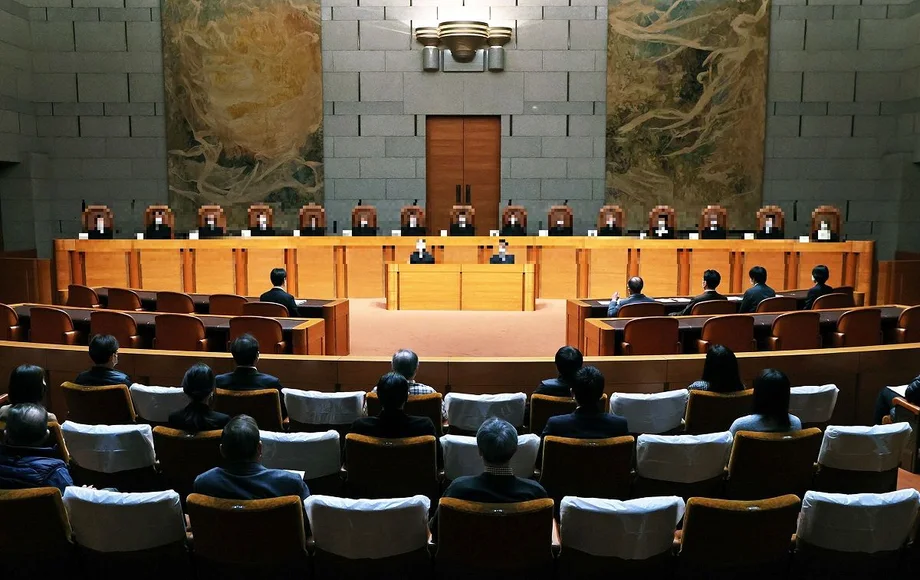
Japan's Supreme Court is scheduled to rule on November 18 on whether people serving prison sentences can be barred from voting as a group, in a case that also challenges their exclusion from the public review of Supreme Court justices.
Contents
- A seven year sentence and the loss of a vote
- What the election law takes away
- How the challenge reached the Grand Bench
- Why the Tokyo courts upheld the restriction
- What Osaka's 2013 judgment said differently
- Could voting be organised inside prisons?
- Why an unconstitutional rule did not bring compensation
- The people behind the legal arguments
- Key Points
The Grand Bench, presided over by Chief Justice Yukihiko Imasaki, will hear the appeal of Kentaro Yagihashi, 40, a former prisoner from Yokohama. Yagihashi voted from detention in the July 2019 Upper House election while awaiting judgment. After receiving a prison sentence of seven years, he was unable to vote in the October 31, 2021, Lower House election or the judicial review held alongside it.
The Supreme Court's official case summary identifies two central questions: whether the restriction violates constitutional voting rights, and whether parliament's failure to change it before the 2021 vote was unlawful under the State Redress Act.
Yagihashi seeks recognition of his right to vote in future national elections and judicial reviews, as well as 30,000 yen in compensation. The Tokyo District Court and Tokyo High Court rejected his challenge. The Supreme Court is expected to deliver its first constitutional judgment on this blanket restriction.
An earlier Osaka High Court decision reached the opposite constitutional conclusion in 2013, finding the restriction unconstitutional while still denying that claimant compensation. The coming judgment therefore concerns both who may participate in Japan's democracy and what remedy a court can give someone excluded from it.
What the election law takes away
Article 11, paragraph 1, item 2 of the Public Offices Election Act is the provision at the centre of the case. The version challenged by Yagihashi denied voting rights and eligibility to stand for office to people sentenced to imprisonment or a more severe punishment until execution of their sentence was complete.
The Supreme Court's summary specifies that the case concerns the text before amendments made by Act No. 68 of 2022. The wording then referred to the former categories of imprisonment with or without compulsory work. The amended terminology refers to the newer custodial sentence category, but the dispute concerns the exclusion attached to serving a sentence.
The rule operates across the category of prisoners it covers. It does not require an election offence or a separate decision by the sentencing judge about whether a particular person should lose the vote.
A second law extends the effect to the public review of Supreme Court justices. Article 4 of the National Review Act gives review rights to people entitled to vote in Lower House elections. Losing that electoral eligibility therefore also removes the opportunity to participate in deciding whether justices should remain in office.
Yagihashi's appeal brings those two forms of participation together: choosing national lawmakers and taking part in the constitutional process for reviewing the country's highest judges.
How the challenge reached the Grand Bench
Yagihashi was arrested in April 2018 on suspicion of fraud involving cryptocurrency obtained from a company executive. While detained at the Tokyo Detention House before judgment, he cast an absentee ballot in the July 2019 Upper House election. He received his prison sentence two months later.
His legal status then changed his access to the ballot. By the October 2021 election, he was serving his sentence and fell within the statutory exclusion. He filed his lawsuit at the Tokyo District Court in August 2022.
- July 2019: Yagihashi voted by absentee ballot from detention before judgment.
- October 31, 2021: He was unable to vote in the Lower House election and national review of Supreme Court justices.
- August 2022: He filed his challenge at the Tokyo District Court.
- July 2023: The district court upheld the restriction.
- March 2024: The Tokyo High Court rejected his appeal.
- October 14: The Supreme Court heard arguments, with lawyer Kyoko Yoshida representing Yagihashi.
- November 18: The Grand Bench is scheduled to deliver judgment.
The Supreme Court's decision is still pending. It will address a challenge that combines future access to voting with compensation for an election and judicial review that have already taken place.
Why the Tokyo courts upheld the restriction
The Tokyo District Court's July 2023 judgment accepted that excluding prisoners had a rational connection to the law's purpose. Its reasoning focused on prisoners having seriously disrupted the legal order through their own conduct.
The Tokyo High Court followed a similar approach in March 2024. It described the affected prisoners as people whom the authorities had determined needed treatment in institutions separated from society, and whose respect for social rules was lacking or greatly reduced.
On that basis, the high court accepted restricting their opportunity to participate in national politics until completion of their sentences. The Supreme Court's case summary records that the high court found no violation of the constitutional provisions raised, including Articles 15, 43, 44 and 79.
Those provisions concern the people's right to choose and dismiss public officials, universal adult suffrage, representative government, qualifications for voting and the review of Supreme Court justices. At the heart of the appeal is how strongly those guarantees protect a person who has been convicted of a crime.
Yagihashi challenges the connection between criminal punishment and voting eligibility. His position is that serving a sentence and losing a voice in government are separate matters, and that a rule covering all affected prisoners overlooks differences in their offences and circumstances.
What Osaka's 2013 judgment said differently
The Osaka High Court's September 2013 judgment provides a detailed competing approach. It concerned a man who could not vote in the July 11, 2010, Upper House election because he was serving sentences for offences including bodily injury, forcible obstruction of business and traffic violations.
The court applied a strict test drawn from a 2005 Supreme Court judgment on voting by Japanese citizens overseas. Under that approach, restrictions on voting require unavoidable reasons. Administrative inconvenience alone is insufficient when a fair voting process can realistically be arranged.
The Osaka judges rejected the government's argument that prisoners, simply because they were prisoners, could not be expected to exercise the vote fairly. They noted the variety of offences involved, including offences arising from negligence, and that most crimes were unrelated to voting.
The judgment also separated voting from standing for office. It accepted that confinement created unavoidable difficulties for campaigning and taking public office, while finding the blanket voting restriction unconstitutional under Articles 15, 43 and 44.
The Tokyo and Osaka decisions therefore differ on a fundamental issue: whether conviction and imprisonment provide enough justification for excluding an entire category of citizens, or whether the state must demonstrate why allowing them to vote would be impracticable.
Could voting be organised inside prisons?
The Osaka High Court examined practical arrangements rather than treating confinement as an automatic barrier. It pointed to absentee voting already available to people held in criminal facilities who had not been convicted and were eligible to vote.
Absentee voting allows an eligible person to cast a ballot without visiting the normal polling station on election day. Yagihashi used that route in 2019. The Osaka court reasoned that the existing arrangements showed how voting could be conducted inside secure institutions.
The judges also noted that Japan's law on constitutional referendums does not disqualify people simply because they are prisoners. They found that allowing prisoners to vote through absentee procedures or similar arrangements presented no technical difficulty sufficient to justify the blanket election restriction.
Access to information was another part of the analysis. The court cited prison legislation providing for access to books and opportunities to follow major current affairs through newspapers and broadcasts. Election bulletins and political broadcasts could be made available within those arrangements.
The judgment also addressed parole. A person released on parole could remain subject to the restriction until the sentence was complete, even while living outside prison and having access to information like other citizens. For the Osaka judges, that weakened the argument that isolation from political information justified the entire rule.
Why an unconstitutional rule did not bring compensation
The Osaka claimant sought 1 million yen for the distress caused by being unable to vote in 2010. Despite finding the restriction unconstitutional, the high court dismissed his appeal and left the rejection of his claims in place.
The court treated compensation as a separate legal question. Under Article 1, paragraph 1 of the State Redress Act, liability for lawmakers' actions or failure to act depends on a breach of a legal duty owed to an individual.
The judgment explained that compensation can arise in exceptional circumstances, including where an infringement of constitutional rights is plain, or where legislation is plainly essential to allow people to exercise their rights and parliament leaves it unaddressed for a long period without justification.
For the July 2010 election, the court found insufficient grounds to hold lawmakers liable. It examined the state of constitutional scholarship, parliamentary discussion and public debate at that time. It also dismissed the requests for declarations on procedural grounds.
Yagihashi's compensation claim concerns parliament's failure to act before October 31, 2021, more than eight years after the Osaka judgment. The Supreme Court must assess both the constitutional restriction and the alleged legislative inaction identified in his case. Its official summary lists those as distinct issues.
The people behind the legal arguments
Yagihashi has described developing a stronger interest in constitutional rights after being diagnosed with leukaemia in 2020. He said difficulties obtaining the treatment he wanted, and his experience of authority inside prison, led him to question how prisoners could make their voices heard. Those descriptions reflect his account of his treatment and prison life.
The older Osaka litigation began with a similar challenge from someone denied a ballot. Fumio Takemura, a lawyer with the Osaka Bar Association, was approached in 2010 by the man who had been unable to vote in that year's Upper House election. Takemura took the case and argued that the blanket restriction was unconstitutional.
Takemura's examination of the issue included comparative research identifying more than 20 countries that generally recognise prisoners' voting rights. That comparison shows that imprisonment and electoral participation can coexist under other legal systems, while Japan's courts must decide the issue under Japan's Constitution.
For Yagihashi, the immediate stakes are concrete: a legal ruling on whether he can vote in future national elections and judicial reviews, and whether the state owes compensation for his exclusion in 2021. For parliament, the judgment will determine whether the constitutional basis accepted by the Tokyo courts survives the country's highest judicial review.
Key Points
- The Supreme Court's Grand Bench is scheduled to rule on November 18 on Japan's blanket voting restriction for people serving prison sentences.
- Kentaro Yagihashi voted from detention before judgment in 2019 but could not vote while serving his sentence in October 2021.
- He seeks recognition of future voting rights and 30,000 yen in state compensation.
- The Tokyo District Court and Tokyo High Court upheld the restriction.
- The Osaka High Court found the blanket voting restriction unconstitutional in 2013, while denying compensation.
- The appeal also concerns participation in the public review of Supreme Court justices and parliament's failure to change the law before the 2021 vote.