Nationwide warning urges travelers to check protection before departure
Taiwan raised its measles travel advisory for the entire United States to Level 2 on November 17, 2026, after U.S. federal data recorded 5,412 confirmed infections and six deaths through November 12. Pregnant women and families with infants younger than 1 are being urged to avoid areas where measles is spreading.
Contents
- Nationwide warning urges travelers to check protection before departure
- How quickly has the U.S. outbreak grown?
- Hospital admissions and deaths show the human cost
- What losing elimination status means
- Falling vaccination leaves gaps the virus can enter
- Why pregnancy and infancy require special care
- What travelers should do before leaving
- Recognizing illness can prevent further infections
- Taiwan relies on vaccination, staff immunity and surveillance
- Key Points
The U.S. case count is already about 2.4 times the 2,289 infections recorded during all of 2025, making this the country's worst measles year since 1991. Taiwan's decision also coincided with the Pan American Health Organization (PAHO) announcing that the United States had lost the measles elimination status it earned in 2000.
Taiwan's Centers for Disease Control made the nationwide upgrade after its regular review on November 16, rather than assigning different warning levels to individual states. Level 2, the middle level in Taiwan's three level system, calls for extra precautions.
Lin Ming-cheng, Taiwan CDC spokesperson and deputy director general, said people planning U.S. trips should check their vaccination records and immunity before leaving. Infants aged 6 to 11 months who must travel should first see a doctor about an early dose of the measles, mumps and rubella vaccine, known as MMR.
Lin said Taiwan's strong vaccination coverage makes widespread transmission at home relatively unlikely. Close travel links with the United States still create opportunities for infected travelers to bring the virus back, making preparation before departure and prompt recognition of illness especially important.
How quickly has the U.S. outbreak grown?
The U.S. Centers for Disease Control and Prevention's measles surveillance data, updated November 13, show 43 new outbreaks in 2026. Of the 5,412 confirmed cases, 5,216, or 96%, were associated with outbreaks. Those include infections linked to outbreaks that began in 2025.
The federal agency defines an outbreak as at least three related cases. Its figures include 5,394 cases reported by 47 jurisdictions and 18 among international visitors. Jurisdictions include states, the District of Columbia and New York City, which reports separately from New York State.
Taiwan CDC official Kuo Hung-wei said 2,622 infections were reported between August 16 and November 8, with more than 100 new cases each week for 14 consecutive weeks. Pennsylvania, South Carolina and Utah were major centers of transmission.
Lin cited outbreaks in 17 states when explaining the advisory. The federal total of 47 jurisdictions covers every jurisdiction reporting confirmed infections during the year, a broader measure than the number of states cited as experiencing outbreaks.
The progression shows how an outbreak concentrated in a few places became a much larger national problem:
- March 6, 2025: U.S. authorities had recorded 222 cases across 12 jurisdictions, including 201 in Texas and New Mexico.
- March 7, 2025: The outbreak associated with Texas and New Mexico had reached 208 cases and two reported deaths.
- End of 2025: The national total reached 2,289 confirmed cases and 48 outbreaks.
- November 12, 2026: Federal surveillance recorded 5,412 cases, 43 new outbreaks and six deaths for 2026.
- November 17, 2026: Taiwan raised its nationwide U.S. advisory to Level 2, while PAHO announced the loss of U.S. elimination status.
Hospital admissions and deaths show the human cost
U.S. federal data list 591 hospital admissions among confirmed cases in 2026, about 11% of the total. Children younger than 5 had the highest hospitalization rate, at 17%, compared with 15% among adults aged 20 or older and 4% among people aged 5 to 19.
Pennsylvania's health department recorded 1,561 infections by November 16, including 61 new cases over seven days. Hospital admissions rose to 310 from 305 in the preceding update. Adults accounted for most infections, with people younger than 18 making up 32%.
The federal CDC counted six deaths nationally through November 12; state health department totals cited on November 17 put the toll at 10, while another tally put it at eight. Pennsylvania alone reported seven deaths by November 16, Wisconsin reported an infant's death, and New York reported its first known measles associated death in more than 30 years.
The federal and state counts use different reporting processes. The CDC switched to National Center for Health Statistics mortality data and says its death count can change as reviews are completed. It is also working with the Council of State and Territorial Epidemiologists on a standard definition for deaths due to measles. The agency did not identify the states where its six confirmed deaths occurred.
What losing elimination status means
PAHO determined that measles transmission had continued in the United States for more than a year. Elimination means a country has stopped sustained local transmission. Imported infections can still occur, but vaccination and outbreak control usually stop them from forming continuing chains.
PAHO's independent commission considered genetic evidence from cases unrelated to international travel, vaccination coverage, surveillance quality and the resources available to contain outbreaks. The organization also determined that endemic transmission, meaning continuing circulation within a country, had returned in Mexico and Bolivia.
Dr. Jarbas Barbosa da Silva Jr., PAHO's director, announced the regional finding:
The endemic measles transmission has now been re-established in Bolivia, Mexico and United States.
The United States must interrupt outbreak transmission for at least 12 months and demonstrate reliable surveillance to regain elimination status. Dr. Daniel Salas, executive manager of PAHO's Special Program for Comprehensive Immunization, said a U.S. corrective action plan was expected in the coming weeks.
Canada lost its elimination status in 2025 after an outbreak involving more than 5,000 cases. PAHO said Canada had since stopped transmission for 60 days, an initial step toward recovering its status. Noel Brewer, a University of North Carolina public health professor involved in assessing U.S. elimination evidence, described transmission moving between the United States, Canada and Mexico.
Falling vaccination leaves gaps the virus can enter
U.S. MMR coverage among kindergarten pupils fell from 95.2% in the 2019 to 2020 school year to 92.4% in 2025 to 2026, according to the CDC. That decline of 2.8 percentage points left approximately 280,000 kindergarten pupils at risk during the latest school year.
The CDC says coverage above 95% helps protect most people through community immunity. When enough people are protected, the virus has fewer opportunities to reach someone who is vulnerable. Local gaps matter: three quarters of counties and jurisdictions with available kindergarten vaccination data were below 95%.
Federal data classify 96% of confirmed cases in 2026 as unvaccinated or having unknown vaccination status. The category combines people with no vaccination record and people whose history was unavailable. Two percent had one documented MMR dose and 2% had two.
Two MMR doses are about 97% effective against measles, compared with 93% for one dose. The CDC describes the vaccine as very safe and effective. Lin put vaccination at the center of Taiwan's advice:
Vaccination is the best way to prevent measles.
Pandemic disruptions, missed routine appointments and vaccine misinformation have contributed to declining uptake. Health Secretary Robert F. Kennedy Jr. has repeatedly questioned measles vaccine safety, although he now says his department continues to recommend MMR as the most effective prevention.
Why pregnancy and infancy require special care
Taiwan's advice focuses on pregnant women and infants because measles can have especially serious consequences for them, while vaccination options are limited. MMR is not given during pregnancy, and infants younger than 6 months cannot receive it.
State health department information collected across the United States identified at least 167 measles infections during pregnancy in 2025 and 2026. Pennsylvania recorded 101 pregnant patients among its 1,561 infections in 2026. Utah reported 15 maternal infections that year, while Texas reported 14 in 2025 and one in 2026.
The national pregnancy total is incomplete. The federal CDC does not publish pregnancy status in its measles surveillance, and some states withhold that information for privacy. Pennsylvania also reported the death of a 21 year old woman with measles after she gave birth at home, and two newborns died after contracting the virus.
Dr. Naima Joseph, a maternal and fetal medicine specialist at Boston Medical Center, said measles during pregnancy can cause pneumonia, brain swelling and death, and can increase the risk of premature delivery. Pregnant patients may sometimes develop measles without the familiar rash, making recognition harder.
For infants aged 6 to 11 months who must travel internationally, an early MMR dose can provide protection. Under U.S. guidance, children vaccinated before their first birthday still need two later doses. A clinician should assess the child's circumstances and arrange the schedule.
What travelers should do before leaving
Lin urged adults born after 1966 who plan to visit the United States to ask a clinic whether they need an MMR dose at their own expense, preferably two to four weeks before departure. Protection takes at least two weeks to develop, so families should arrange appointments early.
The U.S. CDC's March 2025 advisory recommends that international travelers without evidence of immunity receive appropriate MMR vaccination before departure, regardless of destination. For eligible people aged 12 months or older who need two doses, the minimum interval is 28 days.
Taiwan's routine publicly funded schedule gives the first MMR dose at 12 months and the second at age 5 or before primary school. Parents considering an early travel dose should bring their child's records so a doctor can plan both immediate protection and later routine doses.
Pregnant travelers and parents of babies younger than 1 should consider avoiding outbreak areas, as Taiwan recommends. Other travelers should check their records, discuss uncertain immunity with a clinician and review conditions at their actual destination. Taiwan reviews its travel advisories every three months.
Recognizing illness can prevent further infections
Measles spreads through the air when an infected person breathes, coughs or sneezes. The virus can remain infectious in the air for up to two hours after that person leaves. Someone with measles can spread it from four days before the rash appears until four days afterward.
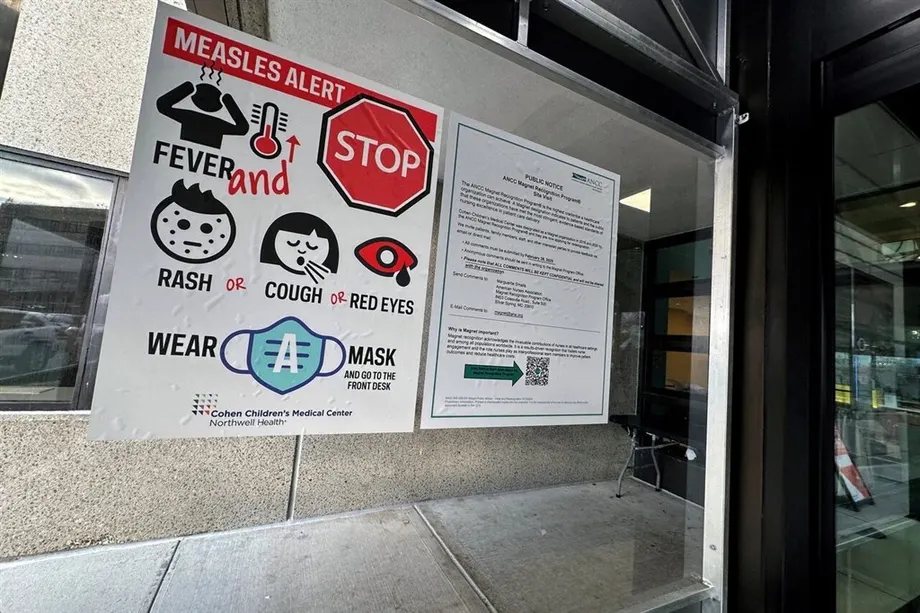
Early symptoms commonly include fever, cough, a runny nose and red eyes, followed by a rash. The rash usually develops about 10 to 14 days after exposure, although the interval can range from seven to 21 days.
The U.S. CDC advises travelers to watch for symptoms for three weeks after returning from international travel or an outbreak area. Anyone developing fever and a rash should telephone a healthcare provider before arriving and explain their travel and vaccination history. Calling first allows staff to arrange assessment away from shared waiting areas.
People exposed to measles should seek medical advice promptly. Depending on age, immunity and medical circumstances, MMR within 72 hours or immunoglobulin within six days may help protect susceptible contacts. Immunoglobulin supplies antibodies directly and can be an option for people who cannot receive MMR.
The CDC's September 2025 clinician update urged healthcare providers to recognize cases rapidly and limit spread, especially in communities with low vaccination coverage. Brown University Pandemic Center director Jennifer Nuzzo has also warned that some U.S. infections are likely going uncounted.
Taiwan relies on vaccination, staff immunity and surveillance
Taiwan has maintained routine coverage above 97% for two MMR doses among young children. Lin said that protection, together with measures targeting people more likely to encounter infected travelers, reduces the chance of imported cases spreading widely.
Recent efforts have focused on emergency departments, pediatrics, obstetrics and gynecology, and infectious disease services. Measles immunity among staff in those specialties was generally above 90%, while more than 80% of cabin crew and other flight crew at Taiwanese airlines had immunity.
Taiwan has sustained measles elimination since 2006, with no transmission chains lasting more than 12 months. Lin said surveillance and retrospective testing by contracted laboratories had identified no missed cases so far.
U.S. officials are also expanding their response. The Department of Health and Human Services said the CDC allocated an additional $100 million in October and deployed specialists to support states. The CDC and healthcare partners pledged to expand vaccine access, improve data sharing and measure progress.
Janet Hamilton, executive director of the Council of State and Territorial Epidemiologists, said rebuilding elimination will require reaching vulnerable adults as well as children, amid reduced trust and strained resources. For travelers, the immediate task is more practical: confirm protection early enough to act, and seek help quickly if illness follows a possible exposure.
Key Points
- Taiwan placed the entire United States under a Level 2 measles travel alert on November 17, 2026.
- U.S. federal surveillance recorded 5,412 confirmed cases, 591 hospital admissions and six deaths through November 12; state death totals were higher.
- Pregnant women and infants younger than 1 should avoid areas experiencing outbreaks.
- Infants aged 6 to 11 months who must travel should see a doctor about an early MMR dose.
- Travelers should check immunity before departure and allow at least two weeks for protection to develop after vaccination.
- PAHO withdrew U.S. measles elimination status after finding sustained transmission for more than a year.
- Taiwan says vaccination coverage above 97%, staff immunity and surveillance keep its risk of widespread transmission relatively low.