Children report tired eyes, lost sleep and arguments at home
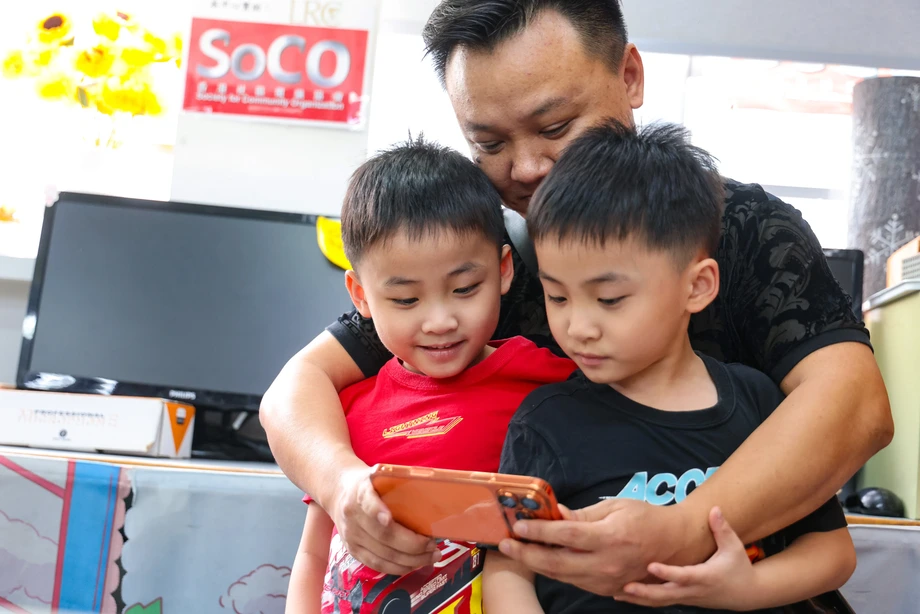
The Society for Community Organization (SoCO) has urged Hong Kong to consider banning social media use for children younger than 11 after a survey of 254 children from low income families found that 29.9 percent described themselves as addicted to electronic devices.
Contents
- Children report tired eyes, lost sleep and arguments at home
- What the survey found inside poorer households
- Screen time climbs sharply with age
- Why SoCO wants an age limit
- How the findings compare with Hong Kong's health data
- Schools are being asked to set firmer boundaries
- What the government has said and what comes next
- Health advice and social media rules address different needs
- Key Points
Presenting the findings on November 8, 2026, the charity said children spent an average of about six hours and 11 minutes a day using devices for schoolwork, entertainment and communication. Some 61.4 percent reported tired eyes, 40 percent said their sleep was affected and around 30 percent reported difficulty concentrating.
The proposal comes against a broader rise in recreational screen use. The Department of Health's annual student health report puts the proportion spending at least two hours on recreational screens on a typical school day at 60.6 percent in 2024/25. The figure was 41.8 percent among primary pupils and 81.1 percent among secondary students.
SoCO wants legislation, clearer rules for phones in schools and stronger education on responsible device use. Its findings also show why simply taking away a phone can be difficult: the same device often carries a child's homework, friendships and cheapest source of entertainment.
What the survey found inside poorer households
SoCO and the Children's Rights Association conducted the survey from February to July among children aged six to 18. Ten primary and secondary students also participated in focus groups. Around 67 percent of survey respondents were primary pupils and about 25 percent were secondary students.
Their families had a median monthly household income of HK$14,000. The median is the middle income when households are arranged from lowest to highest. The findings describe the children surveyed in disadvantaged households, rather than a representative sample of every child in Hong Kong.
Schoolwork was the most commonly reported use of electronic devices: 73.2 percent used them for online homework or exercises. Watching videos followed at 71.7 percent, while 57.9 percent played electronic games. Children also used social media to stay in touch with peers.
Entertainment occupied an average of more than two and a half hours daily. Fifty two percent spent at least two hours a day on recreational screens, and 32.3 percent spent at least three hours. Sixty five percent said they had argued with parents about using devices for entertainment.
Screen time climbs sharply with age
Older children in the survey spent considerably longer using devices than younger children. Average daily use across all purposes rose through each age group:
- Ages six to eight: 4.53 hours.
- Ages nine to 11: 5.65 hours.
- Ages 12 to 14: 7.63 hours.
- Ages 15 to 18: 8.53 hours.
The oldest group averaged four hours more each day than the youngest, using the survey's figures of 8.53 and 4.53 hours. These totals combine learning, entertainment and other activities. The Department of Health's recommendation of less than two hours daily for children aged six to 12 applies specifically to recreation.
Separating those activities matters for families trying to set workable rules. A child completing an online assignment needs access to a screen even when recreational time has ended. SoCO's call combines restrictions on social media with education about how devices are used.
Why SoCO wants an age limit
Eighty percent of surveyed children supported legislation regulating electronic device use among children and young people. A smaller share, 47.6 percent, supported regulating the age at which children can use social media.
SoCO suggested that the government consider a social media ban for children under 11. The two survey responses concern different policies: broad rules about devices attracted more support than an age threshold for social media.
The charity said parents in low income households were often occupied with work and domestic chores. Free videos and games offered readily accessible entertainment for their children. Limited access to affordable activities and places to play also formed part of the problem described in the survey coverage.
For those families, a restriction would change more than the number of minutes spent on a phone. It would require other ways for children to spend leisure time while preserving access to homework and family communication. The proposal has not specified which platforms would be covered, how ages would be checked or who would enforce the restriction.
How the findings compare with Hong Kong's health data
The Department of Health's figures show a substantial difference between school stages. In 2024/25, the share of secondary students spending at least two recreational hours on screens was 39.3 percentage points higher than the primary share, using the figures of 81.1 percent and 41.8 percent.
Among primary pupils, the figure fell from 43.3 percent in 2023/24 to 41.8 percent in 2024/25, a decline of 1.5 percentage points. It remained above the level of about 30 percent before COVID-19. Across primary and secondary students, the 60.6 percent recorded in 2024/25 compares with fewer than 50 percent in 2015/16.
Government questionnaires measure recreation on a typical school day and include television, computers, tablets, smartphones and video games. SoCO asked a smaller group, mostly primary pupils from disadvantaged families, about their daily device use. Each set of figures therefore describes a different population and pattern of use.
Vision is another concern in the government's assessment. In 2024/25, 14.5 percent of Primary One pupils and 55.1 percent of Primary Six pupils wore glasses. The department says prolonged screen use increases the risk of myopia, or short sight, and recommends outdoor activity to help prevent its onset and slow its progression.
Schools are being asked to set firmer boundaries
SoCO urged the Education Bureau to issue guidelines on smartphone use in schools and strengthen digital literacy education. Digital literacy means knowing how to use technology responsibly, including managing time and understanding online information.
In a statement issued in Chinese, SoCO set out its preferred approach to school phones:
Ideally, mobile phones should be banned altogether and only returned after school. Otherwise, schools should at least prohibit smartphone use during class hours, provide secure storage facilities, allow students to contact their families in emergencies, and offer flexible arrangements during lunch breaks and after school.
The recommendation would give schools responsibility for storing devices while keeping an emergency route between pupils and their families. Its fallback option allows different arrangements during lessons, lunch and the period after classes.
The Education Bureau already has an Information Literacy for Hong Kong Students learning framework. In its legislative response, the government described that framework as a way to build responsible and healthy use of the internet and electronic devices through school curricula.
What the government has said and what comes next
Secretary for Health Professor Lo Chung-mau addressed legislation in an April 2025 legislative reply. He said regulating electronic screen products through law would require consideration of public acceptance, methods of regulation and the practicality of enforcement.
Lo stated the government's position at that time:
The Government does not have any relevant legislative plans at present.
The government also said in a July response to a lawmaker that it had no plans to legislate social media restrictions for adolescents. Meanwhile, health advice is under review. The Department of Health's March 2026 announcement said an interdepartmental advisory group established in October 2025 was reviewing scientific evidence and experience overseas, with updated recommendations intended within 2026.
The main steps in the debate are:
- April 2, 2025: Lo told lawmakers there were no relevant legislative plans for restricting electronic screen use.
- October 2025: The Department of Health established its advisory group on screen and social media health effects.
- March 17, 2026: The department released its health findings for the 2024/25 school year.
- February to July 2026: SoCO and the Children's Rights Association surveyed children from low income families.
- November 8, 2026: SoCO presented the findings and urged restrictions.
- Within 2026: The department intended to issue updated health recommendations.
Health advice and social media rules address different needs
Hong Kong's existing guidance varies by age. Children under two should avoid screens except interactive video calls with parental guidance. Children aged two to five should have no more than one hour daily, with educational and interactive activities guided by parents.
Children aged six to 12 should keep recreational screen use below two hours daily. Adolescents are advised to manage their time and take regular breaks when lengthy screen use for study is unavoidable. The department recommends the 20-20-20 rule: every 20 minutes, look at something at least 20 feet away for 20 seconds.
Age limits for social media address access to particular services, while health recommendations address time, purpose and habits across devices. Lo's April 2025 reply described Australia's legislation barring social media use below 16 while leaving general screen use outside that restriction.
Similar policy debates are taking place elsewhere in Asia. India's Supreme Court sought the government's response in October 2026 to a petition proposing no social media accounts below 13 and graduated safeguards for older children. That case was listed for December 7. Hong Kong's immediate policy milestone is its promised update to health recommendations, alongside SoCO's push for legislation.
Key Points
- SoCO urged Hong Kong to consider banning social media use for children younger than 11.
- Its survey covered 254 children from low income families; 29.9 percent described themselves as addicted to devices.
- Children averaged about six hours and 11 minutes of daily device use across learning, entertainment and communication.
- Sixty five percent reported arguments with parents over recreational use.
- Government data put recreational screen use of at least two hours at 41.8 percent among primary pupils and 81.1 percent among secondary students in 2024/25.
- The Department of Health intended to update its screen and social media recommendations within 2026.