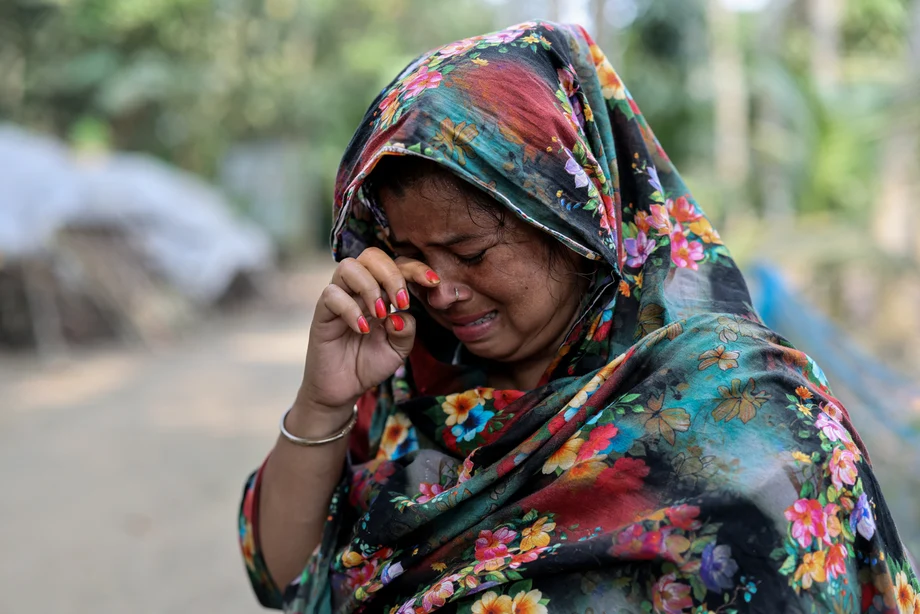
A missing voter entry becomes a threat to home and family
Sahida Fakir, 38, left her Mumbai home to buy vegetables on July 19 and told her younger son she would return within minutes. More than three months later, she was living in a village in Satkhira, Bangladesh, separated from her husband and two sons. Her family is asking Indian courts to bring her home.
Contents
- A missing voter entry becomes a threat to home and family
- Fakir's family records reach back to 1952
- How West Bengal's register shrank
- Muslims account for a large share of disputed removals
- An election took place before appeals were finished
- Millions of appeals meet a slow review system
- Workers describe detention while appeals are pending
- Delhi complaints focus on three neighbourhoods
- Karnataka groups challenge the deletion categories
- Key Points
Fakir said officers in plain clothes detained her, took the phone containing copies of her identity documents and eventually forced her across the border. Court filings identify the officers as members of the Mumbai police crime branch. Police told a court she was among 149 people deported in an operation targeting people authorities identified as Bangladeshi nationals.
Fakir described the moment she was taken:
Someone grabbed my hand from behind and ordered me to get into the vehicle.
Her case connects two government activities with very different consequences: revising electoral registers and removing suspected foreign nationals. An electoral register determines who can vote. Citizenship determines a person's legal membership of a country. Fakir's family argues that officials used her removal from the first to challenge the second.
Across India, the revision has removed 130 million names, the largest deletion of voters in the country's history. Ten families described relatives being detained, deported or questioned about citizenship after losing their places on electoral rolls. All had Indian identity or family documents, and relatives including parents or siblings remained registered.
The Bharatiya Janata Party (BJP), led by Prime Minister Narendra Modi, denies targeting legitimate citizens. Its leaders say the exercise is needed to remove invalid entries and identify people living illegally in India. For families awaiting appeals, the immediate consequences extend from missing an election to losing work, freedom and contact with children.
Fakir's family records reach back to 1952
Fakir's parents and grandparents appeared on electoral rolls in Swarupnagar, West Bengal, from India's first national election in 1952, according to family records examined during the investigation. Their names also appeared in the 2002-03 rolls, used as a reference in the latest revision. Fakir's voter identification showed she had been registered in West Bengal since at least 2008.
Her husband, Jumman, is pursuing her case. An August petition to the Supreme Court argued that removing her name from an electoral register could not settle her citizenship and challenged her removal through an "untested executive assertion."
Mumbai's Foreigners Regional Registration Office gave the Calcutta High Court a different account. It said Fakir produced a Bangladeshi birth certificate during an inquiry and failed to provide "valid or credible documentary evidence" of Indian citizenship. Fakir disputed this, saying officers took her phone and denied her the opportunity to show the documents stored on it. Indian law does not require citizens to carry valid identification at all times.
Fakir said she was pushed across an unfenced, unguarded stretch of border at 1 a.m., then walked for hours before a farmer found her crying and offered help. Mumbai police told the court she was handed to the Border Security Force on the Assam border and "subsequently deported to Bangladesh through the designated authorities."
Fakir described India as the home of her family across generations:
I never imagined, not even for a moment, that they would send me to Bangladesh.
Mumbai police, India's Home Ministry, the Prime Minister's Office and the Election Commission did not respond to requests for comment. Bangladesh's border force, home and foreign affairs ministries and Prime Minister's Office also did not respond. No date for a final decision on Fakir's return was given.
How West Bengal's register shrank
West Bengal's Special Intensive Revision (SIR), an extensive check of voter records, began with 76,637,529 registered electors as of October 27, 2025. The draft published on December 16 retained 70,816,630 names and removed 5,820,899, according to figures released by the state chief electoral officer's office.
Those first deletions amounted to about 7.6% of the register. The stated categories included approximately 2.416 million deceased voters, 3.265 million people classified as absent or having moved, and 138,000 duplicate registrations.
The total later reached 9.083 million deletions before the 2026 state election. Judicial officers decided about 2.716 million cases before voting. The December figure and the later total describe different stages of the same revision.
Some voters were flagged for spelling differences, unusual age gaps between parents and children, or difficulty connecting their records to the 2002 electoral roll. Officials described the last group as "unmapped," meaning they could not successfully link themselves to their own or a relative's entry in the older register. An artificial intelligence process was also used to flag records for "logical discrepancies," or information that appeared inconsistent.
For a voter, this could mean finding old family documents and explaining differences between records before a judicial officer. A tribunal, a special body appointed to hear these disputes, then offered a route to appeal an adverse decision.
Chief Election Commissioner Gyanesh Kumar said the aim was a "pure electoral roll," with eligible voters included and ineligible people excluded. Families challenging deletions describe a system in which longstanding documents and public service have sometimes failed to secure their place.
Muslims account for a large share of disputed removals
The Kolkata based Sabar Institute calculated that Muslims accounted for about 70% of the roughly 2.7 million names deleted after closer review in West Bengal. Data compiled by political parties before the election put the Muslim share of that group at around 65%. Muslims make up approximately 27% of the state's population.
The institute's 70% estimate is about 2.6 times the community's population share. Across the broader group of roughly nine million removals, an earlier analysis put Muslim deletions at 3.11 million, or about 34%. The narrower group subjected to closer review therefore showed a much greater concentration of Muslim voters than the full deletion total.
Hindu voters also lost registration in substantial numbers. In Paschim Bardhaman, where the electorate shrank by 16.9%, about 80% of those removed were Hindus, many from communities speaking Hindi with family roots in northern India. Dalit Hindus from the Matua community were heavily affected in North 24-Parganas and Nadia.
North 24-Parganas lost 1.26 million voters, about 15% of its register, while Murshidabad lost 749,000, or 13%. Kolkata's northern and southern areas recorded deletion rates of 29.6% and 27.5%. The figures show both broad disruption and particularly heavy Muslim representation among cases subjected to additional scrutiny.
An election took place before appeals were finished
The Supreme Court allowed West Bengal's April election to proceed while deletion disputes remained unsettled. Voting was held on April 23 and 29. The BJP subsequently took control of the state for the first time, ending nearly 15 years of Trinamool Congress rule.
Sabar Institute founder Sabir Ahamed said voter removals contributed to the result, alongside dissatisfaction with the incumbent government:
We cannot deny the anti-incumbency factor but the voter deletions played a big role in determining West Bengal election results.
BJP leader and federal minister Sukanta Majumdar defended the revision as necessary to ensure that Indian citizens choose their governments. He blamed the state government for slowing the process through litigation and rejected allegations that election officials favoured his party.
The main developments unfolded over several stages:
- December 16, 2025: West Bengal's draft roll recorded about 5.82 million deletions.
- February 2026: Judicial officers were assigned to examine disputed voter records.
- April 23 and 29: State voting proceeded with millions of deletion disputes unsettled.
- July 19: Fakir said she was detained after leaving her Mumbai home.
- August: Her family petitioned the Supreme Court over her removal to Bangladesh.
- September 16: Election Commission figures recorded about 3.831 million tribunal appeals and 126,000 decisions.
- November 5: Home Minister Amit Shah publicly linked voter deletions to expelling suspected irregular migrants.
Shah, speaking at a rally in Haryana, set out the BJP's position:
It is the BJP's resolve that we will detect infiltrators, remove them from the electoral rolls, and after that, we will pick them out one by one and expel them from the country.
Millions of appeals meet a slow review system
The Election Commission's affidavit to the Supreme Court recorded more than 3.831 million appeals before West Bengal's 19 tribunals by September 16. About 126,000 had been decided, approximately 3.3%, leaving about 3.705 million pending.
Figures covering decisions through September 10 showed that 92.94% of resolved appeals resulted in orders to retain the removed voter's name. For people awaiting review, the stakes are immediate: most of roughly 19,000 voters with pending appeals in areas holding recent by elections were unable to vote.
Former Indian Air Force officer Mohammad Shamim Akhtar discovered his deletion on March 27 and appealed on April 1. Nearly six months later, he was still checking the online portal for progress. Former army technician Muhammad Daud Ali, 65, and his three children were also removed despite documents including his passport and service records. His wife remained registered.
The review process requires judges to examine substantial files. A tribunal judge described applications carrying around 30 to 32 documents, followed by a written order. A case could take 20 to 30 minutes, with some tribunals resolving about 100 appeals daily and others only 10 to 15.
Portal problems, hearing notices and objections to login requirements involving Aadhaar, India's biometric identification system, added delays. A judicial officer said several judges had been unable to upload orders from September 21 amid a dispute over sharing Aadhaar information.
The Election Commission proposed expanding the tribunals from 19 to 42. Opposition parties and civil rights organisations called for municipal elections, including those in Kolkata and Howrah, to be delayed until disputes were addressed. No final timetable for clearing the backlog was given.
Workers describe detention while appeals are pending
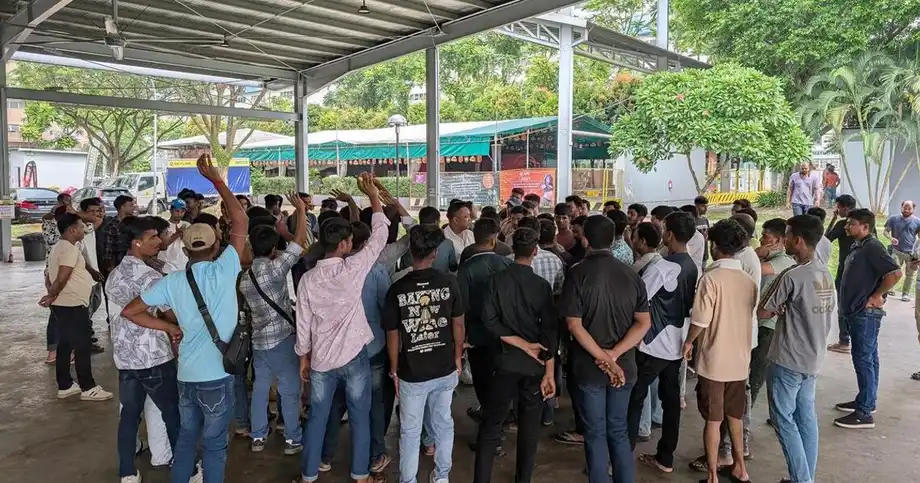
Utensil seller Nasiruddin Sheikh said police detained him and 22 others while he was working in Chhattisgarh, hundreds of kilometres from home. Nineteen were released after 14 days when authorities found their names on revised electoral rolls. Sheikh and three others remained detained for 32 days.
Sheikh and four other petitioners told the Calcutta High Court that they had been detained after deletion despite pending appeals. Sheikh recalled an officer explaining the reason:
A policeman told me, 'Your name is not in the voter list. You are a Bangladeshi.'
Sheikh said the detention facility contained a large hall with beds for more than 60 people. Detainees underwent medical examinations and biometric registration. He said he and the others were released on the night before their court hearing.
Police and state lawyers told the Calcutta High Court that West Bengal had no permanent detention camps. A guarded holding centre for suspected foreign migrants in Murshidabad nevertheless contained people visible at windows, clothing hanging inside, an ambulance and a covered police bus. Mosami Ray, who lives opposite, described seeing people brought there and families crying outside.
Human rights activist Kirity Roy said millions of deletion challenges were awaiting justice and described the tribunals as slow. For workers such as Sheikh, detention also means weeks away from the trade that supports their households.
Delhi complaints focus on three neighbourhoods
In Delhi's Mustafabad constituency, 20 BJP appointed Booth Level Agents filed 796 Form 7 applications seeking voter deletions. A Form 7 application asks election authorities to remove an entry; officials must then consider the request.
All 796 applications targeted Muslim electors. They were concentrated in 25 of Mustafabad's 294 polling booths, about 8.5%, across Nehru Vihar, Dayalpur and Chandu Nagar.
The booths appeared to have been selected for sizeable Muslim populations and claims that relatively few names had been removed from the draft register. Booth Level Agents represent political parties in work relating to local electoral lists. The BJP said it had not directed the applications.
Mustafabad adds a different concern to the debate: organised challenges against individual entries, alongside the mass checks conducted through the revision. For affected residents, such applications can create another requirement to defend their registration before election officials.
Karnataka groups challenge the deletion categories
The Karnataka Rajya Muslim Okkootaa (KRMO), an umbrella organisation of Muslim groups, alleged that 880,000 Muslim voters were removed across 64 Karnataka constituencies where the community has a substantial presence. Research firm Sankalp found that more than 27% of voters were deleted in constituencies represented by the state's 10 Muslim legislators.
KRMO said Muslims accounted for 12.9% of Karnataka's population but 17.1% of deletions classified as absent and 20.3% of those classified as enrolled elsewhere. Muslims accounted for 12.2% of deceased voters removed using government records, close to their population share.
The organisation argued that the larger shares in the absent and enrolled elsewhere categories reflected decisions by field officials rather than documentary evidence. It cited alleged totals of 170,000 deletions in Chamarajpet and 81,230 in Shivajinagar.
KRMO also questioned how more than one million voters had been added when the Election Commission received 785,716 Form 9 applications. It asked election authorities to explain the figures, restore the previous rolls and order a judicial inquiry.
Across these states, the immediate demands concern specific decisions: who was removed, why, how quickly an appeal can be heard and what happens to a person while it is pending. Fakir's family is seeking her return from Bangladesh. Millions of others are waiting to recover their ability to vote.
Key Points
- India's electoral revision removed 130 million names nationwide; West Bengal recorded about 9.083 million deletions.
- Sahida Fakir's family is challenging her removal to Bangladesh, citing voting records spanning generations.
- The Sabar Institute estimated that Muslims made up about 70% of West Bengal's roughly 2.7 million deletions after closer review.
- By September 16, only about 3.3% of West Bengal's 3.831 million tribunal appeals had been decided.
- Some workers described detention after voter deletion while their appeals were still pending.
- Targeted deletion applications in Delhi and allegations of disproportionate removals in Karnataka have widened the dispute.
- The BJP denies targeting legitimate citizens and says the revision is needed to ensure valid electoral registers.