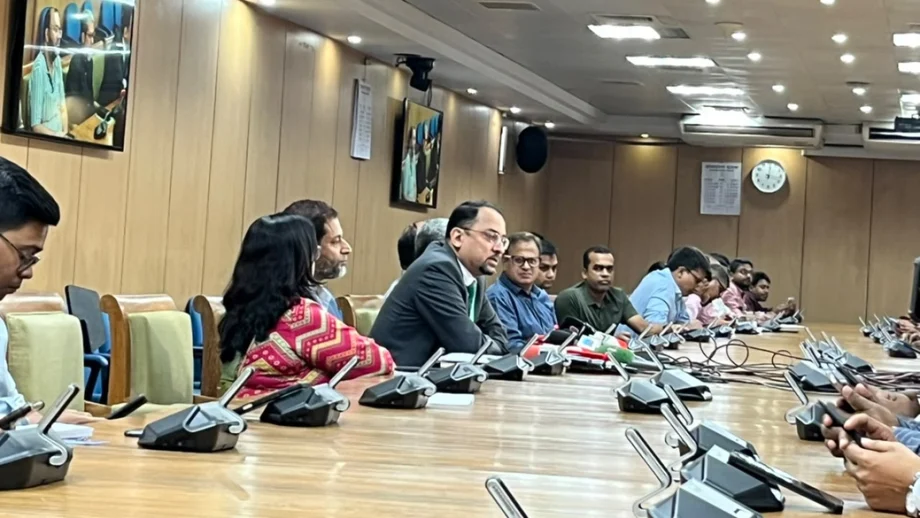
Overseas court action advances, but money has yet to return
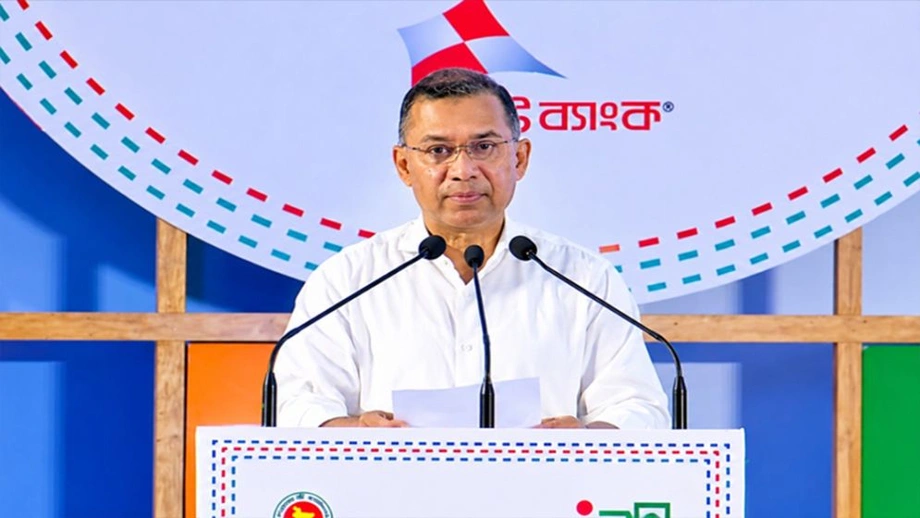
Bangladeshi courts have ordered the freezing of about Tk19,000 crore in assets held abroad, but those orders still await enforcement in the countries concerned, Bangladesh Bank asset recovery task force adviser Farhanul Ghani Chowdhury said at a November 16, 2026 briefing in Dhaka. Authorities are now trying to shorten international legal procedures and help banks pursue civil claims alongside criminal investigations.
Contents
- Overseas court action advances, but money has yet to return
- What the task force is authorised to do
- Why a freeze must hold across borders
- Two legal routes, with different demands
- Foreign cooperation depends on usable evidence
- Which cases are moving forward?
- Who pays for litigation abroad?
- The scale of the search and the pressure on banks
- The dates that frame the recovery effort
- Key Points
Chowdhury put the total value of assets covered by freezing orders at around Tk77,000 crore, citing a finance minister's statement to parliament. About Tk58,000 crore is inside Bangladesh. The overseas portion therefore accounts for roughly one quarter of the total, calculated from Tk19,000 crore out of Tk77,000 crore.
Some foreign assets have also been temporarily frozen through requests for international legal assistance. Chowdhury cited about £250 million in assets belonging to former land minister Saifuzzaman Chowdhury that were temporarily frozen in the United Kingdom, where proceedings remain underway.
Bangladesh Bank says work on legal documents, foreign court applications and cooperation between agencies has progressed, while tangible results in returning money remain limited. The immediate task is to turn temporary restrictions and domestic court orders into enforceable decisions abroad, then complete the further legal steps needed to recover assets.
For banks waiting to recover unpaid loans, the timetable is measured in years. Chowdhury estimated that criminal proceedings could take five to 10 years, while civil proceedings could take three to five years. Those estimates explain why authorities are pursuing several routes at once rather than waiting for a single investigation to finish.
What the task force is authorised to do
The Financial Institutions Division of the Ministry of Finance restructured the Inter-Agency Task Force on Stolen Asset Recovery and Management through Circular No. 53.00.0000.311.40.003.17-126, dated September 29, 2024. The Bangladesh Financial Intelligence Unit's task force mandate names the Bangladesh Bank governor as chair and assigns the unit responsibility for secretarial support.
The official description lists representatives from 10 bodies, bringing together ministries, investigators, tax authorities and government lawyers. They include the ministries of home and foreign affairs, the Financial Institutions Division, the Law and Justice Division, the Anti-Corruption Commission, the police Criminal Investigation Department and the Attorney General's Office. Two intelligence bodies within the National Board of Revenue and the financial intelligence unit also participate.
The circular assigns six functions: helping identify and investigate assets moved abroad; addressing obstacles to legal proceedings; pursuing recovery and return; managing seized or recovered assets; coordinating with foreign countries and organisations; and improving skills and coordination inside Bangladesh.
The task force therefore connects institutions that hold different pieces of a case. Banks possess loan records, investigators gather evidence, prosecutors prepare legal arguments and foreign authorities apply their own laws. Earlier operational accounts described the task force as forming in October 2024; the government circular dates its restructuring to September 29.
Why a freeze must hold across borders
A freezing order restricts the sale or transfer of an asset while legal proceedings continue. Returning that asset requires further decisions about ownership, the legal claim against it and what should happen to it under the law of the country where it is held.
Bangladesh Bank spokesperson Arief Hossain Khan described a case in which money moved to another country just 30 days after a temporary freeze, despite Bangladesh completing its part of the process on time. He did not identify the countries or the amount involved.
Investigators must also follow money through layers of companies, accounts and ownership arrangements. Chowdhury said authorities first need to identify destination countries and obtain orders that prevent assets from being sold or transferred. Each additional jurisdiction can require another set of documents and legal applications.
Bangladesh Bank says a temporary restriction must be supported by the evidence required under the relevant foreign legal system to secure a lasting order. International advisers are assisting with that work, while domestic law enforcement agencies remain responsible for completing their investigations.
Two legal routes, with different demands
Criminal proceedings focus on alleged offences and the assets connected to them. Bangladesh's investigators must assemble evidence that foreign authorities can use when considering requests for assistance, freezing or confiscation. A mutual legal assistance request, usually shortened to MLAR, is a formal request from one country for legal or investigative help from another.
Diplomatic channels currently carry much of this work, adding time as requests move between agencies and governments. The task force is examining ways to make the process shorter and more effective, while respecting the receiving country's legal requirements.
Civil proceedings allow banks to act as plaintiffs, meaning the parties bringing a lawsuit. Their claims can depend on loan agreements, guarantees and collateral documents. A guarantee is a promise to meet another borrower's obligation; collateral is property or another asset pledged to support repayment.
Bangladesh Bank says these documents are being checked against international standards and shared with foreign legal firms. In some cases, the paperwork has become acceptable to foreign courts, allowing applications to restrict assets overseas temporarily. The practical change is that banks can develop a claim based on their lending documents while criminal investigators continue their separate work.
Foreign cooperation depends on usable evidence
Earlier examinations of the recovery programme described at least 70 requests for mutual legal assistance, with responses from only two countries and problems involving incomplete evidence or drafting. Minutes of a November 17 interagency meeting recorded 19 MLARs and said Malaysia, Hong Kong and the United Arab Emirates had agreed to proceed. The counts were presented without enough detail to reconcile their scope.
The meeting minutes said the United States, the United Kingdom and Switzerland suggested alternative channels. A Bangladesh Financial Intelligence Unit official identified the Asia Pacific Group on Money Laundering and the Egmont Group as possible routes for exchanging financial intelligence. Such exchanges can help investigators locate accounts and connect transactions before seeking court action.
Bangladesh was also negotiating more formal arrangements. An agreement with Malaysia was close to completion, subject to amendments proposed by the Advisory Council. A draft agreement with Hong Kong awaited review by the law ministry before consideration by the council.
Transparency International Bangladesh Executive Director Iftekharuzzaman attributed delays partly to insufficient information from Bangladesh and partly to recipient countries benefiting from illicit funds. He said progress depends on Bangladesh's technical, legal and financial investigation capacity. His assessment places responsibility on both the quality of domestic case preparation and the willingness of foreign jurisdictions to cooperate.
Which cases are moving forward?
At the November 16 briefing, Chowdhury said three of six cases selected for the first phase had advanced considerably. Around 40 cases had been selected for a second phase, using criteria that included defaulted loans of at least Tk200 crore, information about transfers abroad and the likelihood that owners would leave Bangladesh.
The adviser also described an initial focus on 11 institutions and work on six institutions, three at an advanced stage. The programme therefore includes a broader priority list as well as a smaller set receiving intensive legal preparation.
Foreign firms are expected to examine banks' documents under confidentiality agreements and assess whether a claim is legally viable and suitable for outside funding. For the Sikder Group case, the relevant bank boards had given approval in principle, and legal documents were being prepared.
The November 17 meeting minutes described 11 priority recovery matters supported by 73 Anti-Corruption Commission cases and 17 Criminal Investigation Department cases. Charge sheets had been submitted in nine of the commission's cases and all 17 police cases, while more than 600 people had given testimony. A charge sheet sets out investigators' formal allegations for court proceedings.
The priority list also changed: the Gemcon Group matter was removed and the case involving former Premier Bank chairman HBM Iqbal, his family and associated entities was added. A joint team involving the commission, revenue authorities and police was formed to investigate those allegations.
Who pays for litigation abroad?
A proposed central budget of $20 million remained undecided seven months after it was raised at a March meeting with Chief Adviser Muhammad Yunus, according to an earlier examination of the programme. That review described delays in hiring international asset tracing firms and uncertainty over who could sign contracts.
The task force's coordinating role created a practical problem: it reportedly lacked independent authority to execute contracts, while participating agencies answered to different leadership. A central confidentiality agreement with foreign firms was delayed by disputes over authorisation.
Bangladesh Bank subsequently asked individual lenders to enter agreements with international legal firms. The governor instructed the managing directors of 32 banks to act, allowing firms to examine confidential client records and prepare proposals. Central bank coordination remains necessary where several banks are pursuing claims against the same business group.
Litigation overseas can cost several million dollars. The task force is seeking outside funders who would pay legal expenses in exchange for a share of recovered assets. Earlier proposals sought 30 to 40 percent. At those rates, a recovery of $100 would leave $60 to $70 before any other agreed deductions, making the contract terms important to the eventual return for banks.
The World Bank's Stolen Asset Recovery Initiative has been helping develop a framework for assessing proposals. Malaysia's recovery of billions through the 1MDB proceedings has also featured in discussions, including settlements involving Goldman Sachs, Riza Aziz and JPMorgan Chase. Bangladesh still has to build and finance claims that fit its own evidence and the relevant foreign laws.
The scale of the search and the pressure on banks
The task force has worked with an estimate of at least $100 billion allegedly laundered abroad. A White Paper Committee led by economist Debapriya Bhattacharya estimated that $234 billion left Bangladesh through 28 corruption channels during 15 years of Awami League rule, averaging nearly $16 billion annually.
Revenue authorities identified about Tk40,000 crore in overseas assets allegedly purchased with laundered money, following investigations across seven cities in five countries between January and August. Investigators also found 352 passports allegedly obtained through payments across nine countries. Turning those leads into recoveries requires identifying owners, tracing purchases and preparing the relevant legal claims.
The pressure extends beyond the recovery programme. Bangladesh Bank previously proposed annual bank rescue funding of Tk60,000 crore for five to eight years, against defaulted loans of Tk6,06,555 crore at the end of June 2026. Recovering assets would return value to creditors at a time when the banking system is seeking substantial public support.
Khan said officials were also examining how to prevent individuals' criminal activity from damaging associated institutions. That concern affects how recovery cases are organised: investigators must pursue alleged wrongdoing while banks and other businesses continue serving customers, paying workers and meeting lawful obligations.
The dates that frame the recovery effort
Bangladesh's programme has moved from restructuring and coordination toward preparing claims and seeking foreign enforcement. The main dated milestones are:
- September 29, 2024: The Financial Institutions Division issued the circular restructuring the interagency task force.
- March 2, 2026: Governor Md Mostaqur Rahman directed that recovery activities receive Fast Track status after meeting a task force consultant.
- November 16, 2026: The task force briefed journalists on freezing orders, case preparation and estimated recovery times.
- 2027 to 2028: The Asia Pacific Group on Money Laundering plans its fourth evaluation of Bangladesh.
The March instruction gave recovery greater administrative priority. Foreign court schedules, evidence requirements and responses to assistance requests will still shape how quickly particular cases advance.
The planned Asia Pacific Group evaluation will examine Bangladesh's risks and response to money laundering and terrorist financing. For the recovery programme, the immediate work remains more concrete: complete bank agreements, assess claims, secure funding, improve assistance requests and obtain enforceable foreign orders.
Chowdhury said detailed public updates could alert the people involved and obstruct recovery. That explains some limits on disclosure, but banks and the public are still waiting for completed returns rather than estimates of assets located or restricted.
Key Points
- Bangladeshi court orders cover about Tk19,000 crore in overseas assets but await enforcement abroad.
- Temporary foreign freezes include about £250 million in assets belonging to former minister Saifuzzaman Chowdhury.
- The task force estimates three to five years for civil recovery and five to 10 years through criminal proceedings.
- Three of six initial cases have advanced considerably, with around 40 selected for a second phase.
- Banks are being asked to work directly with foreign legal firms, while outside litigation funding is being explored.
- Stronger evidence, enforceable orders and financing remain central to bringing assets back to Bangladesh.