First vote planned for 1,026 councils
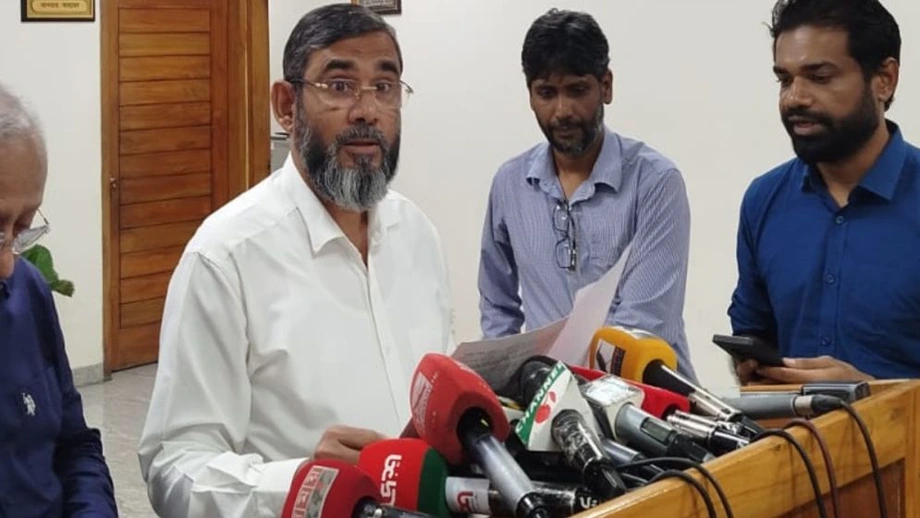
Bangladesh's Election Commission plans to begin voting in 1,026 union parishads across 131 upazilas on January 21, 2027, opening an election programme in five phases that would continue until May 27. The commission also intends to complete discussions with all registered political parties before December 10, 2026.
Contents
- First vote planned for 1,026 councils
- Five polling dates from January to May
- Why the final phase has room to grow
- Local schedules still matter
- Parties to be invited in registration order
- The law in force will govern the polls
- Security decisions will depend on local conditions
- Electronic voting machines will no longer be used
- Identity services face software and contract problems
- November brings the next decisions
- Key Points
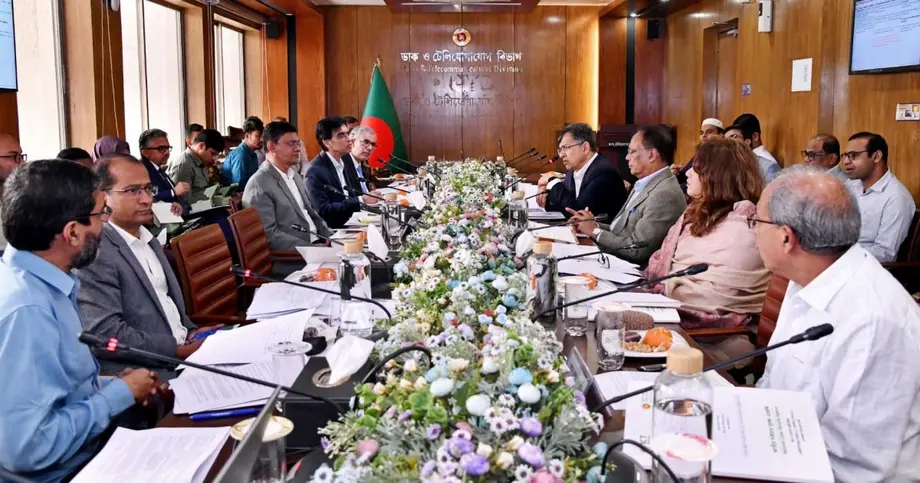
Election Commissioner Abul Fazl Md Sanaullah announced the plans after the commission's 14th meeting on November 16, 2026, at Nirbachan Bhaban in Agargaon, Dhaka. Chief Election Commissioner A M M Nasir Uddin chaired the meeting.
The programme is described as covering about 4,300 union parishads, the local councils serving rural communities. An upazila is an administrative area containing several unions, so a single upazila can have elections for several separate councils.
The detailed figures most frequently attributed to Sanaullah total 4,290 councils: 1,026 in the first phase, followed by 1,113, 1,002, 793 and 356. The commission deliberately left the final phase smaller so councils whose elections are held up by legal complications or other obstacles could be added later.
For residents, the next practical step is publication of the list showing which union votes in which phase. The commission expects to put that information, including polling dates, on its website by November 19.
The same meeting addressed the laws that will govern the elections, security preparations, problems affecting smart national identity card production and the disposal of electronic voting machines. Together, those decisions concern both the organisation of voting and the identity services the commission operates.
Five polling dates from January to May
The proposed calendar places the first two rounds in January and February, followed by three more in April and May. All five dates fall on Thursdays in 2027.
- January 21: First phase, covering 1,026 union parishads in 131 upazilas.
- February 4: Second phase, covering 1,113 union parishads in 129 upazilas.
- April 29: Third phase, covering 1,002 union parishads in 118 upazilas.
- May 13: Fourth phase, covering 793 union parishads in 93 upazilas.
- May 27: Fifth phase, covering 356 union parishads in 37 upazilas.
The first two phases together would cover 2,139 councils, almost half of the detailed total of 4,290. The second phase would be the largest, with 1,113 councils, while the fifth would initially contain fewer than a third of that number.
The calendar also contains a substantial break between February 4 and April 29. The commission's announcement gave the proposed dates without explaining the reason for that interval.
Why the final phase has room to grow
Sanaullah said some union parishad elections are currently blocked by legal complications or other problems. Keeping the fifth phase smaller gives the commission room to include those councils if they become ready for elections before that round.
The initial allocation of 356 councils is therefore a planning figure that may increase. A council facing an unresolved obstacle could be added to the final phase once that obstacle is removed, rather than requiring an entirely separate round.
The detailed figures attributed to the briefing also contain several differences. Alongside the main total of 4,290, a total of 4,307 was attributed to Sanaullah using 1,130 councils for the second phase instead of 1,113. Other figures given for the plan put the fifth phase at 350 rather than 356 councils, and the second phase across 119 rather than 129 upazilas. The promised list will give residents the specific council names and allocations.
Local schedules still matter
District election officers will announce the formal schedules for the councils concerned. Those schedules matter to candidates as well as voters because an election involves several steps before polling, including the submission and examination of nominations.
Sanaullah described flexibility around the opening date when explaining the role of district officers. The election commissioner said:
Assume that for the first-phase election, we have said 21 January, plus or minus 50 days. The district election officers will announce this.
Before the meeting, the expected timetable for district officers to announce schedules was described as 40 to 45 days before voting. Sanaullah's later wording allowed movement around January 21, making the union specific announcements particularly important for anyone preparing to stand or vote.
November 19 is the next promised publication date for the detailed list. Until that list and the relevant local schedules appear, January 21 remains the planned opening of the programme rather than a complete timetable for every council.
Parties to be invited in registration order
The commission plans three days of discussions with registered political parties in late November or early December. Invitations will follow the parties' registration order, and the talks are intended to finish before December 10.
Sanaullah said the discussions would focus on holding free, fair and peaceful local government elections. He compared the proposed process with the consultations held before the national election.
The election commissioner explained the plan in these words:
We will hold a dialogue with all political parties, similar to the one held before the national election, particularly ahead of the local government elections and the start of the Union Parishad polls. The dialogue will be completed before 10 December,
The consultations would take place before the planned January start, giving parties an opportunity to discuss election arrangements with the commission before voting begins. Registration order provides a stated sequence for invitations across the three days.
The law in force will govern the polls
Sanaullah said each election would be conducted under the laws in force when its formal schedule is announced. His answer followed questions about proposed changes to election legislation and recommendations made by the commission.
The election commissioner stated the rule directly:
On the day the schedule is announced, the election will be held in accordance with the laws that are in force,
For candidates and parties, the practical point is timing. A proposed amendment still has to become law before it can govern an election announced under it. The date of the formal schedule therefore determines which legal rules apply.
The commission's position gives district scheduling announcements a second role. Alongside setting the local election process in motion, they establish the point at which the applicable law is identified.
Security decisions will depend on local conditions
The commission had received no demand from political parties to deploy the army for local government elections, Sanaullah said. Army deployment had been discussed in connection with the national election, while the local polls had not yet brought a similar request.
Sanaullah said security arrangements would depend on the availability and effectiveness of law enforcement agencies. The commission would consider whether the forces concerned could carry out their duties in a particular area and maintain a suitable environment for voting.
That approach makes local capacity central to deployment decisions. The question for the commission is whether the personnel available in each area can keep the election peaceful and allow the process to proceed.
Sanaullah also said the commission did not expect the prevailing political situation or political programmes to disrupt the local elections. Asked about discussion of Sheikh Hasina's possible return to Bangladesh in December, he said he did not expect that to affect the polls.
He expressed the view that local elections could help improve law and order in some places. The commission said it would take the measures needed to maintain manageable security conditions during voting.
Electronic voting machines will no longer be used
The commission decided that electronic voting machines, commonly called EVMs, would no longer be used in any election. The meeting reviewed progress by a committee examining how machines already in storage should be disposed of.
Sanaullah said the work would begin in Gazipur, where the largest number of machines was stored. Officials would first establish the number and condition of machines held at different field locations, then proceed according to the committee's recommendations.
Disposal can involve different methods of dealing with equipment that is no longer required. Sanaullah said the committee's work would determine which approach the commission adopted.
Questions about environmental effects and financial losses had not yet been discussed by the commission, he said, because it first needed the committee's recommendations. He also referred to EVM matters being considered through election reform, inquiry and Anti Corruption Commission processes.
A further unresolved issue concerns a payment of 23 crore taka, equivalent to 230 million taka, to an institution connected with EVMs. Sanaullah said the previous commission had withheld that payment on specific grounds. The current commission wanted to understand those grounds and the full position before changing the earlier decision.
Identity services face software and contract problems
Smart national identity card production was another major item at the meeting. Sanaullah said the software used for printing had been experiencing problems for four to five days and officials were working to identify and resolve the fault.
He maintained that national identity card services had not been suspended and that card printing had not stopped. People whose NID applications had been approved could obtain a printable version through the website and laminate it for use, he said.
The commission also discussed longer running administrative problems. Sanaullah said a service contract had expired without renewal and an audit objection remained unresolved. An audit objection is a concern raised during a financial review that requires an explanation or corrective action.
Some work was continuing without a current contract, according to Sanaullah. The commission was examining how to resolve that position and support printing at full capacity. He said future work would be conducted under contracts while NID services, which he described as a national service, had to continue.
November brings the next decisions
The commission plans an NID workshop on November 18, two days after the meeting. It is intended to examine how to make services simpler and more accessible and address problems faced by users and officials inside and outside the commission.
Journalist representatives are expected to participate. Sanaullah said 10 of the 12 members of the Reporters Forum for Election and Democracy associated with the commission were expected to attend.
The next day, November 19, is the target for publishing the detailed union parishad election list. The party consultations are then expected in late November or early December, with completion before December 10.
For the election programme, the immediate task is turning the proposed allocations into named councils and formal local schedules. For identity services and stored voting machines, the next work involves resolving administrative problems and obtaining the recommendations needed for further decisions.
Key Points
- The Election Commission plans five phases of union parishad voting from January 21 to May 27, 2027.
- The main detailed allocation totals 4,290 councils, with 1,026 in the opening phase across 131 upazilas.
- The fifth phase starts smaller so elections delayed by legal complications or other obstacles can be added.
- The commission expects to publish the council list and polling details by November 19, 2026.
- Talks with registered political parties are planned over three days and should finish before December 10.
- The laws in force when formal schedules are announced will govern the elections.
- EVMs will no longer be used, while a committee considers disposal of stored machines.
- The commission says NID services continue despite software and contract problems.