Consumers retreat while companies keep investing
Japan's economy shrank at an annualized rate of 0.1% in July to September 2026, its first contraction in four quarters, as falling household spending and a larger bill for imports outweighed strong business investment. Preliminary figures released by the Cabinet Office on November 16 showed that inflation, disruptive weather and fading demand for cars and air conditioners weighed on activity.
Contents
- Consumers retreat while companies keep investing
- How small was the contraction?
- Why households bought less
- Rain and an earthquake disrupted spending
- Trade erased the contribution from domestic demand
- Companies increased spending on technology
- Inflation keeps the December rate decision difficult
- What could support the next quarter?
- The dates and forecasts to watch
- Key Points
Real gross domestic product, which measures production after adjusting for price changes, slipped 0.02% from April to June. Private consumption fell 0.3% for a second consecutive quarter, while business investment rose 1.6%. Exports declined 0.2% and imports increased 2.5%, leaving trade as a substantial drag on growth.
The figures present the Bank of Japan with competing pressures before its December 17 and 18 policy meeting. Households are struggling with living costs, yet companies continue to invest in automation and artificial intelligence. Several economists still expect another interest rate increase, following rises in June and September, although weak consumption could deepen divisions among policymakers.
How small was the contraction?
Japan's quarterly decline of 0.02% means the economy was close to standing still. The annualized decline of 0.1% expresses what would happen if that quarterly pace continued for a full year. It gives readers a common scale for comparing growth rates across periods.
The Cabinet Office's survey of 13 private financial institutions had pointed to annualized growth of 0.2%, with quarterly output broadly unchanged. A separate market poll put expected annualized growth at 0.3% and quarterly growth at 0.1%. Both sets of forecasts anticipated a better result than the figures released on November 16.
April to June growth was revised to an annualized 1.7%, compared with an earlier figure of 1.4%. The latest result therefore marks a pronounced loss of momentum after that expansion, even though the actual decline in output was very small.
Nominal GDP, measured using current prices, rose 0.4% from the previous quarter, equivalent to an annualized 1.6%. Money spent across the economy increased while production adjusted for inflation slipped. Higher prices help explain how those two measures can move in opposite directions.
Why households bought less
Private consumption accounts for more than half of Japan's GDP, making household decisions about shopping, travel and services central to the economy. Its 0.3% decline was slightly larger than the market forecast of a 0.2% fall, and followed another decrease in April to June.
Rising wages offered some support, but persistent price increases continued to stretch family budgets. When food, fuel and other essentials absorb more income, households have less room for purchases they can delay. Japan's latest figures show that stronger corporate spending has yet to translate into a broad recovery in consumer demand.
Hirohito Hatanaka, an economist at Daiwa Institute of Research, said weaker consumption had been decisive in pushing growth below zero.
"Had consumption been a bit stronger, GDP might have eked out a slight gain," he said.
Purchases of cars and air conditioners also slowed after a strong April to June period. The abolition of the environmental performance tax had helped car sales, while shoppers brought forward air conditioner purchases ahead of stricter energy efficiency standards due in April 2027. Some spending that might otherwise have occurred later had already taken place.
Rain and an earthquake disrupted spending
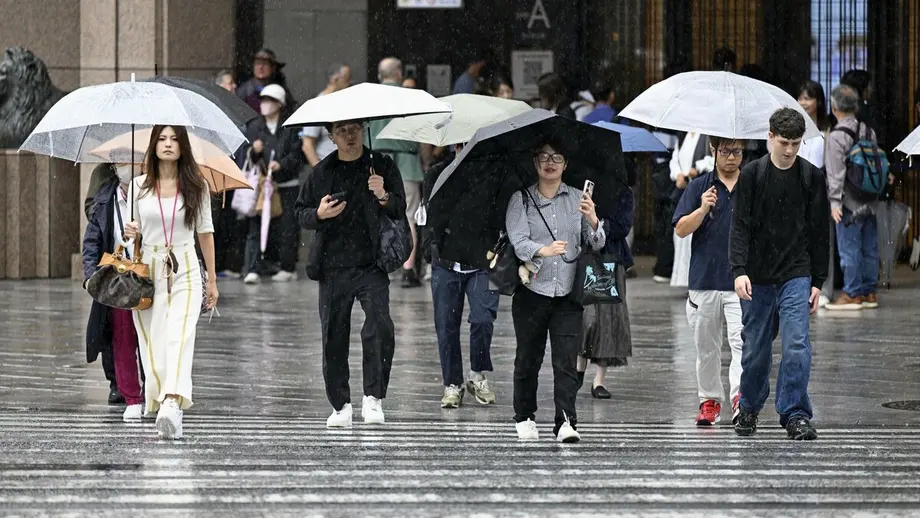
A magnitude 7.1 earthquake in Kumamoto Prefecture in late July and heavy rain, particularly in Chiba Prefecture in mid August, discouraged people from going out. Typhoons and prolonged rainfall added to the pressure on household activity during the quarter.
The Bank of Japan's latest Outlook report also identified typhoons, torrential rain and prolonged rainfall as reasons for weak household spending. According to the Japan Meteorological Agency, Tokyo recorded 37 consecutive days of rain from late August through early October, a record streak that extended beyond the end of the GDP reporting period.
Weather disruption arrived just as consumers were dealing with higher prices and the retreat from earlier purchases of expensive household goods. For shops, restaurants and other businesses dependent on customers leaving home, those pressures converged during the same three months.
Trade erased the contribution from domestic demand
Net external demand, meaning exports minus imports, subtracted 0.6 percentage point from quarterly GDP growth. Economists had expected a smaller drag of 0.4 percentage point. Domestic demand added about 0.6 percentage point, leaving the two forces almost evenly balanced before rounding.
Exports fell 0.2%, while imports rose 2.5%. Oil and other energy purchases recovered as Japan diversified procurement following disruptions associated with the war in the Middle East. Japan imports virtually all its oil, leaving its economy exposed to both supply interruptions and higher international prices.
The war involving Iran and the effective blockage of the Strait of Hormuz placed additional pressure on oil supplies. The strait is a major route for moving oil from the Gulf to international markets. Disruption there affects the cost and availability of energy bought by Japanese companies.
A weak yen compounded the problem. The dollar was trading at around 160 yen, compared with below 115 yen five years earlier. At those exchange rates, a purchase priced at $100 would cost about 16,000 yen rather than less than 11,500 yen, before any change in the dollar price of the product.
Imports are subtracted when calculating GDP because the measure counts production inside Japan. Spending on imported fuel can be necessary to keep factories and transport operating, while still reducing the contribution that net trade makes to measured growth.
Companies increased spending on technology
Business investment rose 1.6%, exceeding the market forecast of 1.5% and reversing a 0.9% decline in April to June. A Cabinet Office official attributed the increase to demand for technology that reduces labor needs, digitalization and projects related to artificial intelligence.
Private investment in buildings, equipment and other assets outside housing grew at an annualized rate of 6.8%. That figure expresses the quarterly investment increase on a yearly scale. Companies were expanding productive capacity even as consumers cut spending.
Housing investment moved in the other direction, falling 1.1%. Government consumption edged down 0.03%. The domestic economy was therefore uneven: corporate capital spending provided support, while households, housing and government consumption offered less help.
Kento Minami, senior economist at Daiwa Securities, said the small contraction was compatible with continuing moderate growth.
While growth was indeed negative this time, there is no need to be overly pessimistic about the result," he said. "My impression is that moderate growth is probably continuing.
Inflation keeps the December rate decision difficult
The Bank of Japan held its policy rate at 1.25% in October, and expectations ahead of the GDP release pointed toward an increase to 1.5% in December. Raising interest rates makes borrowing more expensive and can restrain demand, part of the central bank's effort to contain inflation.
The GDP deflator, a broad measure of prices associated with domestic production, rose 2.4% from a year earlier, down from 2.6% in the previous quarter. Household budgets nevertheless remained under pressure from energy costs and other price increases.
Kazutaka Maeda, senior economist at Meiji Yasuda Research Institute, argued that consumption weakness caused by rising prices supported the case for further rate increases. Minami also expected the GDP result to leave the central bank's tightening course intact.
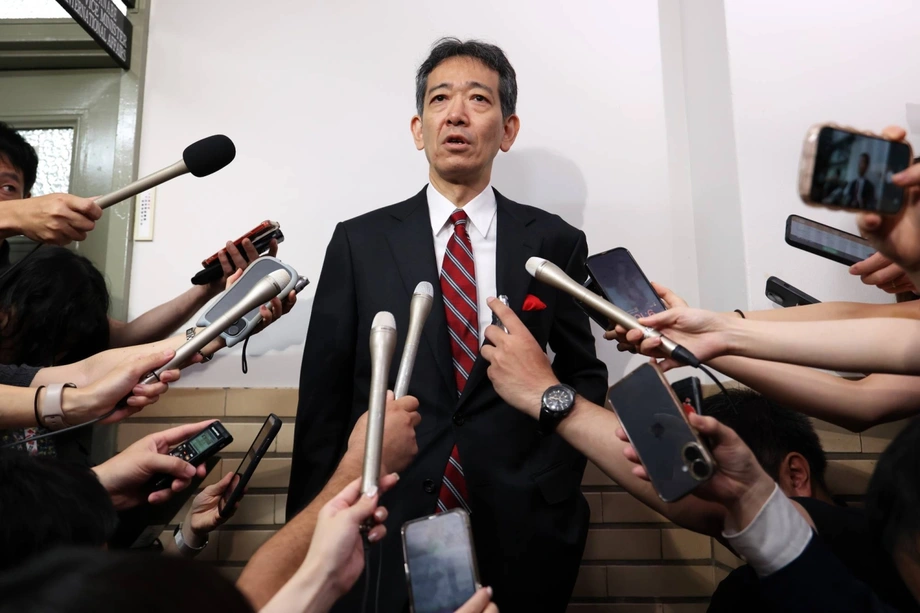
Ryosuke Katagi, a market economist at Mizuho Securities, warned that persistent consumer weakness could widen differences on the policy board. Hatanaka identified two members who might resist a December increase.
"Weak private consumption may make board member Toichiro Asada less likely to support a hike, while Ayano Sato could also oppose it," Hatanaka said.
Asada opposed the June and September rate increases. Hajime Takata, who had favored faster tightening at recent meetings, was scheduled to speak at 04:00 GMT on November 16. The December decision had yet to be made.
What could support the next quarter?
Employment, wages and government measures are central to the recovery expected by Economy Minister Minoru Kiuchi. In a statement, he set out the government's assessment of the months ahead.
"Looking ahead, improvements in the employment and income environment, as well as the effects of various policy measures, are expected to support a gradual recovery in the economy," Kiuchi said.
Kiuchi also called for close monitoring of the Middle East situation. Higher energy prices can reach households through fuel bills, electricity costs and the price of transporting goods.
Masato Koike, senior economist at Sompo Institute Plus, described the pressure on family finances.
"Strong wage growth should support consumption, but higher prices linked to Middle East tensions will continue to squeeze household purchasing power," Koike said.
Hatanaka warned that scaling back energy subsidies would leave few obvious supports for spending in October to December. Prime Minister Sanae Takaichi's government was also seeking passage of legislation to cut tax on food, with financing and public debt concerns leaving its prospects uncertain.
The dates and forecasts to watch
A revised GDP estimate was due in December. Updated consumption and investment figures could change the measured size of the quarterly movement. The immediate calendar also includes the Bank of Japan's next policy decision and the forthcoming change in appliance standards.
- April to June 2026: GDP grew at a revised annualized rate of 1.7%, helped by stronger demand for cars and air conditioners.
- July to September 2026: GDP fell an annualized 0.1%, while consumption declined for a second quarter.
- November 16, 2026: The Cabinet Office released its preliminary estimate.
- December 2026: A revised GDP estimate was due.
- December 17 and 18, 2026: The Bank of Japan was scheduled to hold its next policy meeting.
- April 2027: Stricter energy efficiency standards for air conditioners were due to take effect.
A Japan Center for Economic Research survey of 37 economists projected growth of 0.89% in fiscal 2026 and 1.02% in fiscal 2027. Those forecasts suggest continued expansion, but at a modest pace. Separately, International Monetary Fund projections placed Japan sixth in nominal GDP measured in dollars in 2027, behind India and Britain, compared with its current fourth position. That ranking uses current prices and exchange rates, while the quarterly contraction measures changes in production after adjusting for inflation.
Key Points
- Japan's real GDP fell 0.02% from the previous quarter, equivalent to an annualized decline of 0.1%.
- Household consumption dropped 0.3% as high prices, poor weather and fading demand for cars and appliances weighed on spending.
- Business investment rose 1.6%, supported by automation, digitalization and artificial intelligence projects.
- Net trade subtracted 0.6 percentage point from quarterly growth as imports rose faster than exports.
- Economists still expected a possible December interest rate increase, with weak consumption creating scope for disagreement.
- A revised GDP estimate and the December 17 and 18 Bank of Japan meeting were the next major dates.