Manila meetings bring trade and sea security together
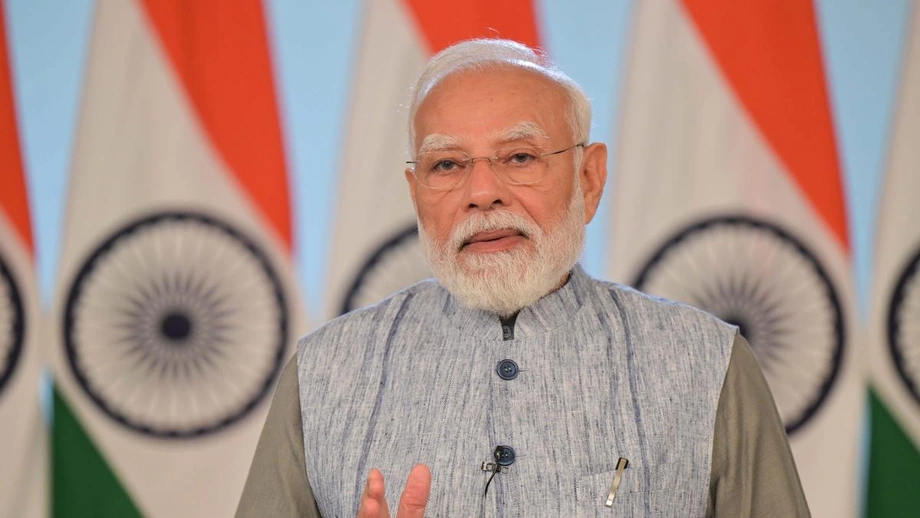
Prime Minister Narendra Modi is travelling to Manila for meetings on November 16 and 17, 2026, with maritime security, roughly $122 billion in India-ASEAN trade and a review of their economic partnership high on the agenda. Philippine President Ferdinand R. Marcos Jr. invited Modi to attend the 23rd ASEAN-India Summit and the 21st East Asia Summit as the Philippines chairs the Southeast Asian grouping.
Contents
- Manila meetings bring trade and sea security together
- What Modi is scheduled to do
- A partnership moves from promises to implementation
- Why adjoining seas are a shared concern
- South China Sea negotiations add urgency
- The $122 billion trade relationship faces a rules review
- Defence ties give the Philippines a direct stake
- Myanmar and development gaps remain on the agenda
- A wider security forum and a possible Quad meeting
- Community ties accompany the government talks
- Key Points
Modi said before departure that relations with the Association of Southeast Asian Nations are at the heart of India's Act East Policy and central to its MAHASAGAR vision. His message connects India's engagement with its eastern neighbours to its wider approach to security, development and cooperation across surrounding seas.
The visit comes during the ASEAN-India Year of Maritime Cooperation, with leaders also preparing for two anniversaries in 2027: 35 years of dialogue relations and five years of their Comprehensive Strategic Partnership. The immediate task in Manila is to review work already agreed, including the ASEAN-India Plan of Action 2026-2030, and identify where cooperation can move faster.
Modi described the relationship as one that has grown from old cultural connections into a partnership with practical economic and security responsibilities. In his departure statement, the Indian prime minister said:
Our ties, rooted in centuries of civilisational exchanges, have grown into a dynamic partnership spanning trade, connectivity, maritime security, technology and people-to-people relations.
For businesses, the discussions concern access to markets and dependable transport links. For coastal communities and governments, they concern safer waters, the movement of ships and the ability to manage dangerous encounters at sea. Development assistance and exchanges between people form another part of the agenda.
What Modi is scheduled to do
Marcos is due to host a dinner for visiting dignitaries on November 16. Modi will attend the ASEAN-India Summit and the East Asia Summit on November 17, with meetings involving individual leaders planned around the main sessions. He also intends to meet members of the Indian community in the Philippines.
The two summits serve different purposes. The ASEAN-India meeting focuses on India's relationship with the regional bloc. The East Asia Summit brings ASEAN leaders together with eight other participating countries to discuss broader regional and international concerns, including security and economic cooperation.
The schedule places the visit within a longer sequence of commitments:
- 2022: India and ASEAN established their Comprehensive Strategic Partnership.
- October 26, 2025: Timor-Leste joined ASEAN, bringing membership to 11 countries.
- 2026: India and ASEAN are marking their Year of Maritime Cooperation.
- November 16, 2026: Modi's Manila programme includes a dinner hosted by Marcos.
- November 17, 2026: Modi is scheduled to attend the ASEAN-India Summit and the East Asia Summit.
- 2027: The partners will mark 35 years of dialogue relations and five years of their Comprehensive Strategic Partnership, while ASEAN turns 60.
The visit is expected to be Modi's 13th participation in an ASEAN-India Summit since 2014. That repeated engagement gives leaders an annual opportunity to examine progress, address difficulties and set priorities across several areas at once.
A partnership moves from promises to implementation
The ASEAN-India Plan of Action 2026-2030 provides a central reference for the summit's review. A plan of action sets out work that governments intend to pursue over a defined period. In Manila, leaders are expected to discuss its implementation alongside progress under the broader strategic partnership.
India's Ambassador to ASEAN, Sreenivas Gotru, said he expected concrete outcomes to be announced during the visit. He described the annual summit process as combining discussions between India and ASEAN with wider regional meetings, supported by regular engagement with individual member governments.
Modi set out the purpose of the ASEAN-India discussions in his departure statement:
I look forward to working with fellow leaders to build on the progress of our Comprehensive Strategic Partnership and give further momentum to our shared aspirations for growth, connectivity and prosperity.
The work under discussion spans trade and investment, transport connections, digital transformation, defence, disaster preparedness and development assistance. A comprehensive strategic partnership is a framework covering several fields, so its practical value depends on the projects, arrangements and decisions governments carry out within it.
Why adjoining seas are a shared concern
India and Southeast Asia occupy neighbouring maritime regions. That geography is a central reason officials are placing sea security, safety and connectivity near the top of the Manila agenda. Ships moving through these waters carry goods between economies, while coastal populations depend on marine resources and secure access to the sea.
Rudrendra Tandon, secretary responsible for eastern affairs in India's Ministry of External Affairs, linked the relationship directly to this geography during a briefing before the visit:
We in India strongly believe that as an Indian Ocean country that abuts this very important Southeast Asian maritime zone, a strong strategic relationship with the ASEAN member states, as a collective as well as individually, is good for both of us.
Tandon said closer ties would help both sides respond to rapid geopolitical changes and contribute to peace and stability in Asia. He also described activities during the 2026 maritime cooperation year as a way to highlight their interests in adjoining seas.
The maritime agenda extends beyond naval security. It includes maritime safety, connectivity and the blue economy, a term for economic activity connected to oceans, such as fisheries and marine transport. Disaster preparedness and resilience are also among the areas officials want to advance, connecting regional diplomacy with the ability to respond when coastal communities face emergencies.
South China Sea negotiations add urgency
Marcos called for stronger maritime cooperation at the opening plenary of the 49th ASEAN Summit on November 15. He also urged progress toward an effective and substantive South China Sea code of conduct consistent with international law, including the United Nations Convention on the Law of the Sea, known as UNCLOS.
UNCLOS provides a legal framework for ocean use, including navigation and rights over marine resources. A code of conduct would set agreed expectations for behaviour in the South China Sea, where competing claims and encounters between vessels have repeatedly strained relations. India has also said an ASEAN-China code should be consistent with international law.
The negotiations enter the Manila meetings after Philippine Foreign Secretary Maria Theresa Lazaro said 80 percent of the proposed text was complete. As the South China Sea negotiations approached the summit, unresolved issues included which waters the agreement would cover. Foreign ministers agreed in 2023 to work toward completion within three years, making 2026 a deadline for that effort.
Those negotiations matter to people using the disputed waters. Philippine accusations against Chinese forces have included obstruction of supplies, vessel collisions and dangerous actions involving aircraft. Rules governing encounters at sea would address situations affecting fishing crews, government vessels and the delivery of essential supplies.
The $122 billion trade relationship faces a rules review
India-ASEAN trade stands at about $122 billion, according to Tandon. That commercial relationship gives the summit an economic task alongside its security discussions: advancing a review of the ASEAN-India Trade in Goods Agreement, commonly called AITIGA.
India wants an early conclusion to the review to address trade imbalances and improve access to markets. A trade imbalance means that the value of goods moving in one direction is larger than the value moving the other way. Market access concerns the conditions under which businesses can sell abroad, including tariffs, which are taxes on imports, and other trading rules.
Tandon said negotiations were continuing and acknowledged that discussions involving several countries take time. The $122 billion figure describes the scale of commerce, while the review concerns the rules governing that trade. For companies, changes to those rules could affect costs and opportunities to reach customers.
Officials also want stronger investment links, better connectivity and more dependable, diversified supply chains. A supply chain is the sequence of producers, transport services and suppliers needed to bring a product to a buyer. Having several reliable routes and sources can help businesses keep operating when one part is disrupted. Transport connections and trade rules therefore form related parts of the economic agenda.
Defence ties give the Philippines a direct stake
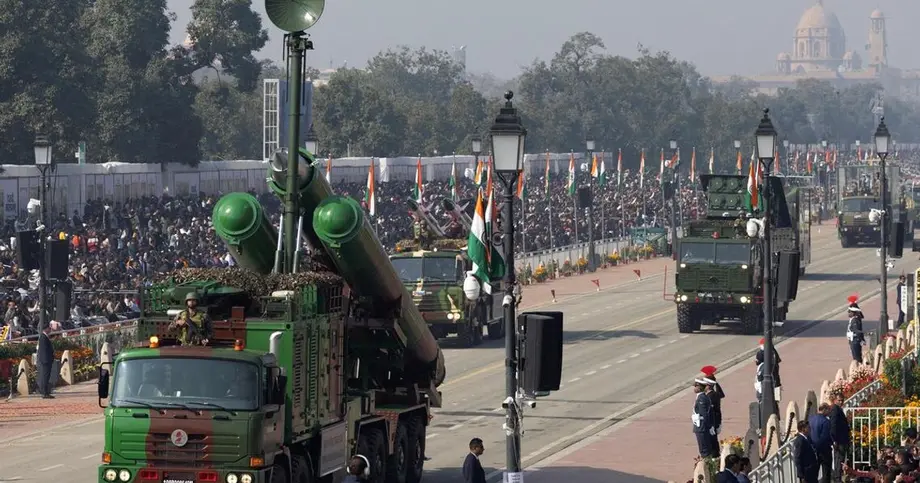
The Philippines already has a substantial defence relationship with India. In 2022, Manila signed a $375 million agreement for three BrahMos missile batteries deployed on land to engage ships, becoming the first foreign customer for the supersonic cruise missile.
A missile battery is a group of launchers and supporting equipment operating together. The three batteries covered by the agreement put a concrete defence programme alongside the broader diplomatic discussions about maritime security.
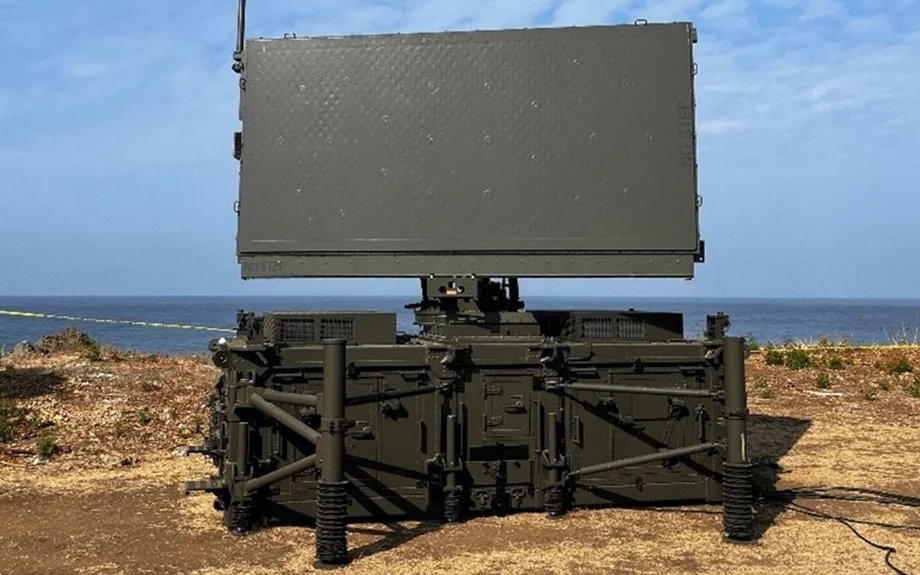
Philippine Defence Secretary Gilberto Teodoro Jr. has indicated interest in acquiring additional systems and said Manila had submitted a wish list to India. The existing purchase and that interest in further equipment show how relations between the two governments extend into defence procurement, as well as trade and regional diplomacy.
Marcos is also scheduled for talks with Trump on November 17, with Philippine officials having raised the prospect of announcements involving American defence capabilities. Manila's summit programme brings several security relationships into the same diplomatic setting, while each set of negotiations has its own agenda.
Myanmar and development gaps remain on the agenda
India's relationship with ASEAN also has a land dimension. India shares a border of 1,643 kilometres with Myanmar, giving developments there direct importance for border communities and regional transport plans.
New Delhi has opposed Myanmar's diplomatic isolation, citing geographic proximity and major connectivity projects, including the Kaladan Multi-Modal Transit Transport Project. Myanmar is expected to be represented in Manila by a foreign ministry official. Its situation is among the regional issues likely to feature in discussions.
India is also supporting capacity building through the Initiative for ASEAN Integration, with assistance intended to narrow development gaps in Cambodia, Laos, Myanmar and Timor-Leste. Capacity building means helping institutions and people develop the skills and resources needed to carry out their work more effectively.
Timor-Leste's admission on October 26, 2025, expanded ASEAN from 10 members to 11. Its inclusion among the countries receiving support places development cooperation alongside the bloc's enlargement. The initiative gives India a way to engage with differences in resources and institutional capacity across the grouping, while summit discussions address the partnership as a whole.
A wider security forum and a possible Quad meeting
The East Asia Summit will give Modi another setting to discuss regional and global challenges. Tandon described it as a forum led by ASEAN where leaders can exchange views in an informal setting on international security and issues of common concern.
Modi said his discussions there would focus on peace, stability and cooperation across the Indo-Pacific. The term links the Indian and Pacific oceans as a connected region for trade, security and diplomacy, reflecting the maritime geography officials have highlighted before the visit.
A Quad leaders' meeting is also being planned around the Manila gathering, potentially bringing Modi together with US President Donald Trump, Japanese Prime Minister Sanae Takaichi and Australian Prime Minister Anthony Albanese. US Assistant Secretary of State Dylan Johnson said work was under way to formalise it.
Johnson also said US Secretary of State Marco Rubio had held five meetings with Quad foreign ministers over the preceding two years, three of them within the past six months. India's foreign ministry, however, said it had no confirmed information on either a Quad summit or a Modi-Trump meeting; details of any new trade, defence or development agreements from Modi's visit had also not been announced.
Community ties accompany the government talks
Modi plans to meet members of the Indian community in the Philippines during the visit. The engagement adds a social and cultural dimension to a programme otherwise dominated by negotiations between governments.
The Indian prime minister credited the community with helping sustain relations between the two countries:
I also look forward to interacting with the vibrant Indian community in the Philippines, whose contributions strengthen the bonds of friendship between our two countries.
The next scheduled milestone is November 17, when the two summits will bring the partnership review and wider regional discussions before leaders. Their decisions will provide the immediate measure of progress before India and ASEAN enter an anniversary year in 2027.
Key Points
- Modi's Manila visit is scheduled for November 16 and 17, 2026, at the invitation of President Ferdinand R. Marcos Jr.
- The ASEAN-India and East Asia summits will address trade, maritime security, connectivity and regional cooperation.
- India-ASEAN trade is about $122 billion, and India wants an early conclusion to the goods agreement review.
- Leaders will examine progress under the Comprehensive Strategic Partnership and the Plan of Action 2026-2030.
- South China Sea rules, development assistance and Myanmar are among the regional concerns surrounding the meetings.
- A Quad leaders' summit is being planned, while India has yet to confirm it or a Modi-Trump meeting.