Hyderabad speech puts voter numbers at the centre of election dispute
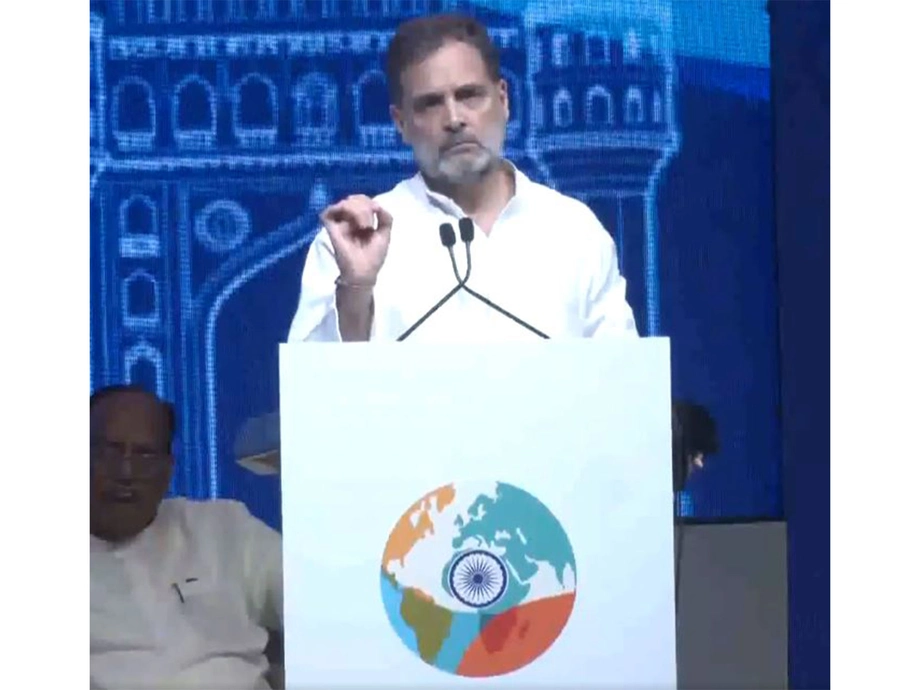
Rahul Gandhi challenged the legitimacy of India's 2024 general election at the Bharat Summit in Hyderabad on November 14, 2026, alleging that 140 million people who voted had subsequently been classified as nonexistent voters or nonvoters. The Leader of the Opposition in the Lok Sabha also accused the Bharatiya Janata Party of weakening democratic institutions and concentrating political and economic power.
Contents
- Hyderabad speech puts voter numbers at the centre of election dispute
- What Gandhi alleged about 140 million voters
- Maharashtra's competing figures
- Why Congress wants searchable voter lists
- How the confrontation developed
- Gandhi places the turning point in 2014
- Business wealth and party assets enter the argument
- An international audience and a domestic political challenge
- Key Points
His Maharashtra allegation brought a specific numerical disagreement into focus. Gandhi claimed seven million voters had been added between the state's parliamentary and assembly elections in 2024. The Election Commission of India, in its December 2024 response to Congress, put additions at 4.881 million and deletions at about 800,000, producing a net increase of 4.081 million.
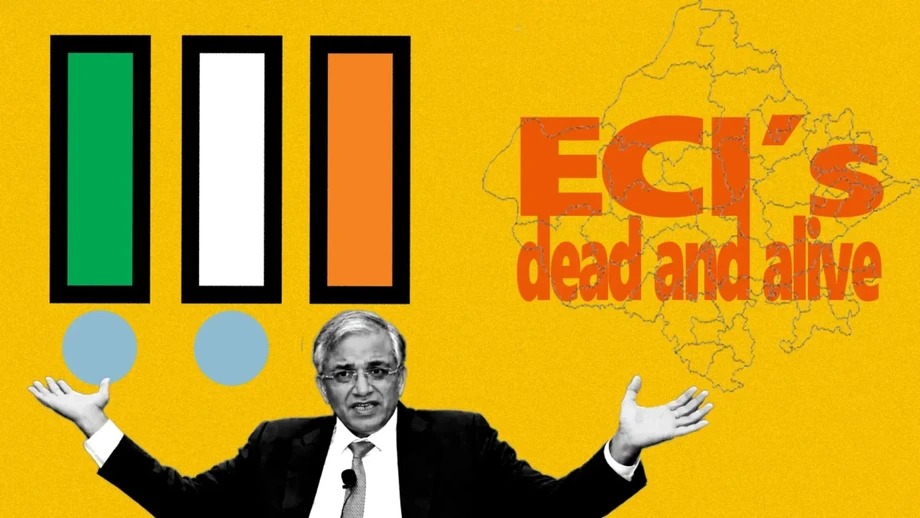
Gandhi, a Congress MP, presented the changes to voter lists as part of a wider argument about money, institutional independence and the opposition's difficulty competing with Prime Minister Narendra Modi's BJP. The Election Commission and BJP have rejected allegations of electoral manipulation, and the Commission has asked him to submit specific evidence through sworn declarations under election rules.
The speech came at the closing session of the summit, hosted by the Congress government in Telangana at the Hyderabad International Convention Centre's Novotel venue. Telangana Chief Minister A Revanth Reddy attended, alongside participants from an international gathering of around 1,000 delegates from nearly 70 countries.
What Gandhi alleged about 140 million voters
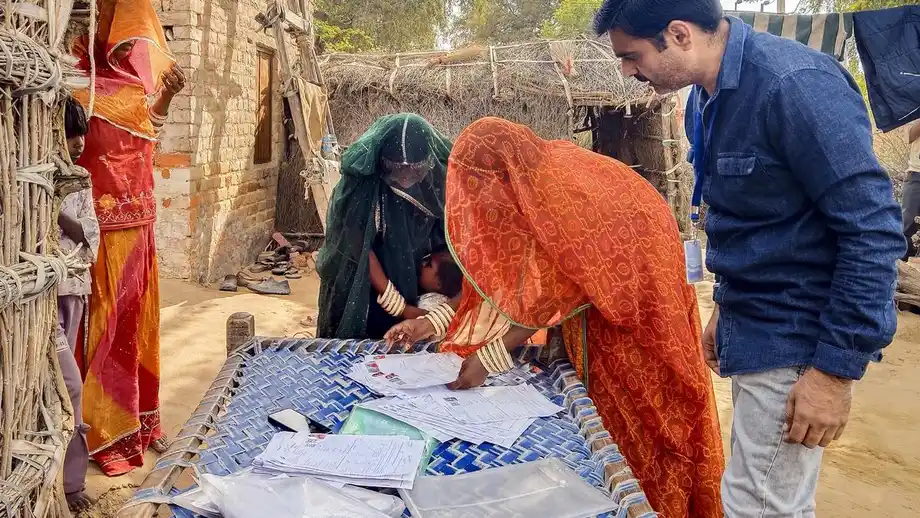
Gandhi linked his challenge to the Special Intensive Revision, or SIR, an exercise to review electoral rolls. An electoral roll is the official list of people registered to vote in a particular area. Changes to it determine who can receive a ballot at the next election.
Gandhi described the scale of the alleged reclassification in his address:
140 million people who voted in the 2024 Lok Sabha election were declared as either non-existent voters or non-voters a few months ago.
The Congress leader then asked how the 2024 election could be considered legitimate if the Commission had subsequently classified so many participants as ineligible. His claim connected an election already completed with revisions affecting the voter lists used for future contests.
The 140 million figure is Gandhi's allegation. A detailed breakdown identifying the affected voters, their constituencies and the reasons for their removal was not presented in the accounts of his speech. Those details matter because a registration list records eligibility, while turnout records show participation in a particular election.
The Election Commission says revisions remove duplicate and ineligible entries while preserving eligible citizens' registration. Congress says the exercise risks excluding people entitled to vote. For anyone whose name is removed, the immediate practical concern is checking their registration and using the applicable objection or appeal process to seek restoration.
Maharashtra's competing figures
Maharashtra supplied Gandhi's main example of an electoral reversal. The opposition Maha Vikas Aghadi performed strongly in the state's 2024 Lok Sabha contest, before the BJP led Mahayuti alliance won a decisive victory in the assembly election later that year.
Gandhi alleged that the opposition received the same number of votes in both contests and that seven million additional voters all supported the BJP. He described the interval as three months. The parliamentary election concluded in June 2024 and the Maharashtra Assembly election took place in November, about five months later.
The Commission's December 2024 figures put the disagreement in measurable terms. Its reported total of 4.881 million additions was 2.119 million below Gandhi's claim of seven million. After subtracting roughly 800,000 deletions, the Commission put the increase in the size of the roll at 4.081 million.
Additions and net growth measure different things. Additions count names entered on the list; net growth subtracts names removed during the same period. A comparison of the two elections therefore needs to keep new registrations, deletions and votes cast in separate columns.
Gandhi's assertion about how every additional voter voted is also central to his accusation. Indian elections use a secret ballot: election records can track registration and participation, while individual ballot choices remain private. Examining his allegation requires scrutiny of registration changes and results in the constituencies concerned.
Why Congress wants searchable voter lists
Congress has repeatedly demanded machine readable digital voter lists. In simple terms, these are files that computers can search and compare, allowing large numbers of entries to be checked without manually reading each page.
A usable digital list would make it easier to compare registration records across dates, identify additions and deletions, and examine where changes were concentrated. That is especially relevant to Maharashtra, where Gandhi's argument depends on both the size of the increase and its distribution across electoral areas.
The Election Commission has maintained that electoral rolls are prepared through a transparent process under established election laws. It has called on Gandhi to provide specific allegations in sworn declarations, which formally attach responsibility to the evidence being submitted.
BJP leaders have accused Gandhi of weakening confidence in constitutional institutions after electoral defeats. Congress has argued that access to data and a fuller response to alleged irregularities are necessary for public scrutiny. The dispute concerns both the contents of the rolls and the process through which complaints are examined.
How the confrontation developed
The Hyderabad speech followed months of conflict over voter registration and election records. The issue had already moved from party statements into demonstrations in New Delhi.
- 2014: Modi and the BJP came to power nationally, a turning point Gandhi now describes as a fundamental change in electoral competition.
- 2024: The Lok Sabha and Maharashtra Assembly elections produced sharply different results for the opposition in Maharashtra.
- December 2024: The Election Commission responded to Congress with figures for additions, deletions and net growth in Maharashtra's electoral rolls.
- October 2026: Opposition lawmakers protested against the SIR and demanded the resignation of Chief Election Commissioner Gyanesh Kumar.
- November 14, 2026: Gandhi renewed his election allegations at the closing session of the Bharat Summit in Hyderabad.
During the October election protests, Rahul Gandhi, Priyanka Gandhi Vadra and other opposition lawmakers were detained as they sought to demonstrate in New Delhi. The opposition INDIA bloc demanded suspension of the SIR, while the Commission defended the exercise as a means of maintaining accurate rolls.
Scrutiny also extended to record keeping. An examination of 2024 election records identified missing voter totals or differences between recorded participation and votes counted in 51 contests among 530 constituencies examined in Maharashtra, Haryana and Jammu and Kashmir. Some entries used the registered electorate in a field intended for actual turnout, illustrating why accurate categories and usable records matter.
Gandhi places the turning point in 2014
Gandhi argued that the election dispute sits within a larger transformation that began when the BJP won national power in 2014. He said large amounts of money entered politics and disrupted an earlier pattern of close contests and coalition governments.
The Congress leader described the change in campaign resources:
In 2014, we witnessed a completely new election, something we've never seen before. Millions and millions and millions of dollars injected into the political system.
Gandhi said the opposition spent nearly a decade trying to understand the changed environment. He also acknowledged that Congress struggled because its traditional methods of political communication no longer worked.
His argument went beyond campaign finance. He alleged that democratic institutions had weakened so much that India was no longer a democracy. That was the political judgment he put before the summit, alongside his accusations about the electoral process.
Gandhi also used the term fascists to describe people in politics, business and academia whom he accused of shouting rather than listening. He contrasted their conduct with a quieter majority and argued that direct contact with people remained a powerful political resource.
Business wealth and party assets enter the argument
Gandhi accused Modi of favouring industrialist Gautam Adani and alleged that business interests and political authority had become inseparable. He cited Adani's rise from around 600th in global wealth rankings to second place as part of that argument.
Gandhi described the relationship between the prime minister and the businessman in these terms:
The line between business and politics, between Adani and PM Modi, has evaporated. It does not exist anymore.
He also alleged that the BJP's assets had grown elevenfold over a decade. An elevenfold increase means a total reaching 11 times its starting level, or growth of 1,000 percent. His speech connected that claimed rise to the concentration of political and economic power.
The starting and ending asset totals, the precise accounting years and the wealth ranking dates were not specified in the account of his remarks. The accusations against Modi and Adani formed part of Gandhi's political case about unequal power and resources.
An international audience and a domestic political challenge
The summit gave Gandhi an audience extending beyond Indian party politics. The gathering focused on democracy, electoral integrity, economic inequality, social justice and global cooperation, while Bharatiya Janata Yuva Morcha workers protested outside the venue. BJP leaders also criticised the summit's political objectives.
Gandhi apologised to foreign delegates who could not attend and alleged that the Union government had prevented their participation. He presented their absence as another example of the restrictions he accused the government of imposing.
The Congress leader ended his wider political argument with confidence that his party and its allies would defeat Modi. He also claimed that the prime minister and Union Home Minister Amit Shah feared the opposition's challenge, describing an opposition victory as a "done deal."
His speech set out two connected goals: challenging the conduct of elections and mobilising support to remove the BJP from power through political competition. For voters, the concrete issues are access to accurate registration records, a clear route to contest errors and an election administration able to answer specific complaints.
Key Points
- Rahul Gandhi challenged the legitimacy of the 2024 Lok Sabha election at the Bharat Summit in Hyderabad on November 14, 2026.
- He alleged that 140 million participants had subsequently been classified as nonexistent voters or nonvoters.
- Gandhi claimed seven million voters were added in Maharashtra; the Election Commission reported 4.881 million additions and a net increase of 4.081 million.
- The Commission and BJP rejected allegations of manipulation, and the Commission requested specific evidence through sworn declarations.
- Congress wants machine readable voter lists to examine additions, deletions and changes between elections.
- Gandhi also accused the BJP of weakening institutions and concentrating economic power, while predicting an opposition victory over Modi.